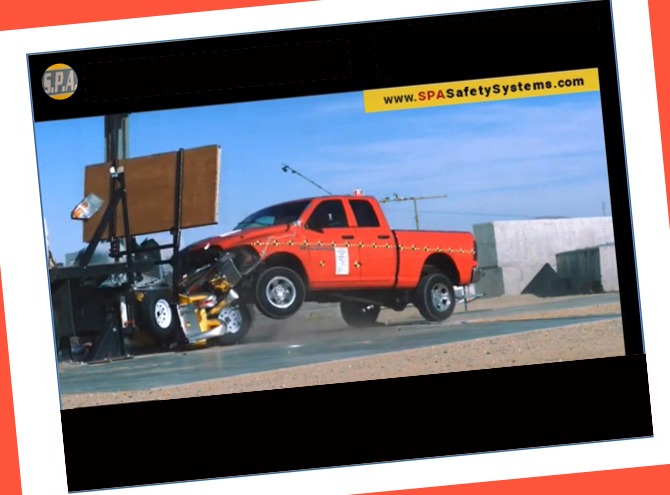
Last month, I sat across from a highway contractor in Newark who’d just lost a $2.3 million project because his work zone safety plan didn’t meet the new requirements. He’d been using traditional traffic control—cones, barrels, and flaggers—for 20 years. It had always worked until it didn’t. “Should’ve invested in a TMA truck three years ago,” he told me, staring at the rejection letter. “Would’ve paid for itself twice over by now.” That’s when the TMA truck ROI becomes a topic of discussion.
He’s not alone. Across America, highway contractors are facing a critical decision: stick with traditional traffic control methods or invest in Truck Mounted Attenuator (TMA) systems. The upfront cost difference is substantial. But the real TMA truck ROI calculation tells a completely different story than most people expect.
Let’s break down the actual numbers, because this decision affects your bottom line, your safety record, your insurance premiums, and your ability to win contracts in 2026.
Understanding the True Cost of Traditional Traffic Control
Traditional traffic control seems cheaper on paper. Rent some cones, hire a few flaggers, maybe add some barrels and signs. The daily costs look manageable. But that’s only part of the picture.
What Traditional Setup Actually Costs
A typical highway work zone using traditional methods requires substantial equipment and personnel. For a standard maintenance operation on a major highway, you’re looking at:
Traffic cones: 100-200 units at $15-30 each for quality cones. That’s $3,000 to $ 6,000 just for cones. They need to be replaced every 18-24 months due to wear, sun damage, and vehicles running over them.
Channelizing devices and barrels: Another $2,000- $ 4,000 for a proper setup. These get damaged constantly. Budget 30-40% replacement annually.
Flagger vehicles: Two trucks with amber lights, $100-150 daily rental each if you don’t own them.
Setup and breakdown time: 2-3 hours daily at full labor rates. This non-productive time costs $200- $ 400 per day.
A conservative estimate for traditional traffic control on a standard highway project runs $1,200-2,000 per day once you factor in everything. That’s $30,000 to $ 50,000 for a one-month project.
The Hidden Costs Nobody Calculates
The real expenses of traditional traffic control are often hidden until problems arise, and contractors often overlook them.
Liability exposure is massive. When a vehicle crashes into your work zone and injures someone, your traditional traffic control setup will be scrutinized. Lawsuits routinely seek millions. One serious incident can bankrupt a small contractor.
Insurance premiums reflect this risk. Contractors using only traditional methods pay significantly higher premiums for general liability and auto coverage. We’re seeing differences of $15,000 to $ 30,000 annually for mid-sized operations.
Project delays from traffic control issues cost serious money. Traditional setups take longer to deploy and adjust. Weather delays? You’re paying flaggers to stand around. Equipment failure? Everything stops while you replace a damaged barrel or sign.
Worker injuries from vehicles entering work zones happen far too frequently with traditional control. Beyond the human cost, each incident means workers’ comp claims, OSHA investigations, potential fines, and project delays.
DOT violations and fines are increasing. State DOTs are enforcing work zone safety standards more aggressively. Fines for non-compliant setups range from $500 to $ 5,000 per violation. Get cited multiple times, and you’ll face contract restrictions.
Lost contract opportunities might be the highest hidden cost. More state DOTs and prime contractors now require TMA trucks for certain project types. If you don’t have one, you can’t bid. That’s revenue you’ll never capture.
The Real Investment: TMA Truck Costs Breakdown
Let’s talk actual numbers for investing in a TMA attenuator truck.
Purchase Costs
A new TMA truck typically runs $85,000-150,000, depending on specifications. That’s the complete truck—base vehicle, attenuator system, arrow board, and necessary equipment.
Mid-range units around $100,000-120,000 represent the sweet spot for most contractors. You get reliable equipment that meets all MASH standards without unnecessary bells and whistles.
Used TMA trucks offer another option. Quality used units run $45,000-75,000 depending on age, hours, and condition. SPA Safety Systems maintains an inventory of trucks for sale, including well-maintained used options.
Financing Options
Few contractors pay cash for TMA trucks. Financing spreads the cost and preserves capital for other needs.
Traditional equipment loans: 4-7 year terms at 6-9% interest (2026 rates). A $100,000 truck financed over 5 years at 7% interest costs about $1,980 per month or $23,760 annually.
Operating Costs
Fuel: TMA trucks are working vehicles, not just transport. Figure 8-12 MPG depending on chassis and usage. At $3.50/gallon and 10,000 miles annually, that’s $2,900-4,400 yearly.
Attenuator cartridge replacement: The crash cushion cartridge must be replaced after impacts. Costs vary by system, but budget $8,000-15,000 per cartridge. Most contractors go years between actual impact replacements.
Insurance: Adding a TMA truck increases your insurance costs by $3,000-6,000 annually, but reductions in liability premiums offset this.
Registration and compliance: Annual registration, DOT inspections, and compliance requirements range from $500 to $ 1,200, depending on your state.
Rental Alternative
Not ready to purchase? TMA truck rentals offer flexibility. Daily rental rates range from $250 to $ 400, depending on region, duration, and included equipment.
For contractors who need TMA trucks occasionally, renting makes perfect sense. Use it for specific projects requiring attenuator protection, then return it when done.
The crossover point is typically around 80-100 rental days annually. If you’re renting a TMA truck more than that, purchasing becomes more economical.
Breaking Down TMA Truck ROI: The Real Numbers
Now we get to what matters—actual return-on-investment calculations based on real contractor experiences.
Direct Cost Savings
Labor reduction is immediate and substantial. A TMA truck eliminates the need for multiple flaggers in most applications. Instead of two flaggers at $400-560 daily, you need one trained operator at $200-280 daily. That’s $200-280 saved every single working day.
Over a year with 200 working days, that single change saves $40,000-56,000. Right there, you’ve covered 35-55% of your TMA truck purchase price in year one.
Equipment costs drop significantly. While you’ll still need some cones and signs for a complete work zone setup, the quantities decrease dramatically. Maintenance and replacement costs for traditional equipment decrease by 50-70%.
Setup efficiency improves dramatically. A traditional traffic control setup takes 1-3 hours, depending on complexity. A TMA truck deploys in 15-30 minutes. That’s 1-2.5 hours saved daily. At full labor rates for your crew, that’s $150-400 in additional productivity per day.
Project Efficiency Gains
Faster mobilization means you can handle more projects. The ability to quickly deploy and relocate work zone protection lets you efficiently shift between job sites. Contractors report being able to handle 15-25% more projects annually after adding TMA trucks to their fleet.
Reduced setup time translates directly to more productive hours. Those 1-2 hours saved daily mean your crew spends more time actually working instead of setting up traffic control. Over a year, that’s 200-500 additional productive hours.
Weather flexibility improves substantially. Traditional traffic control struggles in wind and rain—cones blow over, signs fall, flaggers can’t work safely in severe weather. TMA trucks provide consistent protection regardless of conditions, reducing weather-related delays.
Insurance and Liability Benefits
This is where the TMA truck cost benefit analysis gets really interesting, because the numbers are bigger than most contractors realize.
Liability insurance reductions range from 10% to 20% for contractors who implement comprehensive TMA truck usage. For a contractor paying $80,000 annually in liability premiums, that’s $8,000 to $ 16,000 in annual savings.
Workers’ compensation rates can decrease by 5-15% when you demonstrate improved work zone safety practices. The exact reduction depends on your state, carrier, and claims history, but contractors are seeing real savings.
One serious work zone incident costs $500,000 to $2 million, including medical costs, legal fees, settlements, increased insurance premiums, and lost productivity. A TMA truck that prevents even one serious incident over its lifetime has paid for itself multiple times over.
DOT violation reductions save money and reputation. Contractors using TMA trucks report 60-80% fewer work zone safety violations. At $500- $ 5,000 per citation, this adds up quickly.
Contract and Revenue Opportunities
Competitive advantage on bids is substantial. When bidding highway projects, having TMA capability gives you an edge. You can offer better safety plans, you qualify for projects that require attenuators, and you demonstrate a commitment to worker safety.
Prime contractor preference is increasingly favoring subs with TMA trucks. General contractors want subcontractors who bring proper safety equipment. Having your own attenuator truck makes you a more attractive partner.
Access to larger projects becomes possible. Many state DOT projects now require TMA protection for work zones on highways with speeds over 45 MPH. Without TMA capability, you literally cannot bid on these projects.
Contract pricing premiums exist for TMA-equipped contractors. Buyers recognize the value and will pay 5-12% more to contractors providing proper attenuator protection. On a $500,000 project, that’s $25,000 to $ 60,000 in additional revenue.
Real-World Case Studies: Actual TMA Truck ROI
Let me share some real examples from contractors we work with. Numbers have been rounded for privacy, but these represent actual results.
Mid-Size Highway Contractor – New Jersey
This contractor runs highway maintenance and small construction projects for state and county DOTs across New Jersey. They purchased their first TMA truck in 2023 for $115,000.
Year one results:
- Eliminated two full-time flaggers: $112,000 saved
- Reduced traditional equipment costs: $8,000 saved
- Won three new projects requiring TMA: $425,000 additional revenue
- Avoided two DOT violations: $3,500 saved
- Operating costs, including financing: $42,000
Net benefit year one: $506,500 in savings and additional revenue against $42,000 in costs. The truck paid for itself in less than four months.
Years two and three showed continued benefits. Insurance premiums decreased by $11,000 annually. They added a second TMA truck to handle increased project volume. Revenue attributed to TMA capability grew to $650,000 annually.
Small Paving Company – Pennsylvania
This smaller operation performs residential and commercial paving, along with some municipal street work. They were hesitant about the TMA investment due to size, but decided to purchase a used unit for $58,000 in 2024.
Their usage is less intensive—about 80 days annually. But the ROI was still compelling:
- Reduced flagger costs: $22,000 annually
- Won two municipal contracts requiring TMA: $180,00 revenue
- Avoided rental costs for previous years: $18,000
- Operating costs, including financing: $18,000
Net benefit year one: $202,000 against $18,000 costs. Even with limited usage, the truck paid for itself in just over three months.
The surprising benefit was reputation. Local municipalities now call them first for street projects because they know proper safety equipment will be on site.
Large Construction Company – Multi-State
This contractor operates across five Northeast states, doing major highway reconstruction and bridge work. They operated six TMA trucks and added three more scissor lift trucks in 2025.
At their scale, TMA trucks are standard operating equipment. The question isn’t whether to invest, but how many to maintain for their fleet needs.
Factors That Impact Your Specific ROI
Every contractor’s situation differs. Several factors significantly impact whether TMA investment makes sense and what your specific return looks like.
Project Type and Frequency
Highway work requiring work zone protection obviously benefits most. If 75%+ of your projects involve highway work zones, TMA investment is almost certainly worthwhile.
Municipal street work increasingly requires attenuator protection. Many cities now mandate TMA usage for street projects on roads with speed limits over 35-40 MPH.
Occasional highway projects might favor rental over purchase. If you only work on highways for 20-40 days annually, renting remains more economical than buying.
Geographic Location
State DOT requirements vary significantly. Some states mandate TMA usage more broadly than others. Research your state’s specific requirements and upcoming changes.
Regional rental availability affects the rent vs. buy decision. If TMA rentals are readily available at reasonable rates in your area, that changes the equation versus regions where rental supply is limited.
Weather and working season matter. Contractors in northern states with 7-8-month working seasons use different calculations than those in the south, which work year-round.
Making the Decision: When TMA Investment Makes Sense
After looking at all these numbers, when should a contractor actually pull the trigger on the TMA truck investment?
Clear “Yes” Scenarios
You should seriously pursue the TMA truck purchase if:
You’re running 80+ days of highway work annually. The math works strongly in your favor at this utilization level.
You’re losing bid opportunities due to a lack of TMA capability. Every passed opportunity is revenue you’ll never capture.
Your insurance carrier is pushing for improved work zone safety. Some carriers are requiring attenuator protection or threatening to increase premiums for contractors who don’t adapt.
You’re facing DOT violations or scrutiny over traffic control adequacy. Compliance issues tend to escalate—get ahead of them with proper equipment.
You’re planning a business expansion into highway work. TMA capability opens doors to larger projects and prime contractor relationships.
Clear “No” or “Wait” Scenarios
TMA investment probably doesn’t make sense if:
Your highway work is truly minimal—under 30 days annually. Rental handles occasional needs more economically.
Cash flow is genuinely tight. Don’t sacrifice business stability or ability to cover payroll for equipment that will take months to pay back.
You’re unsure about business direction. If you might exit highway work or your pipeline is uncertain, delay major equipment investments.
Rental availability is excellent in your market. If you can reliably rent quality TMA trucks at reasonable rates whenever needed, that’s a viable alternative.
Beyond ROI: The Safety and Reputation Value
Numbers tell most of the story, but not all of it. TMA trucks provide benefits that are difficult to quantify but extremely real.
Worker Safety and Morale
Your crew knows when they’re properly protected. Working behind a massive crash cushion is fundamentally different than working behind traffic cones. That psychological safety matters for morale and retention.
Recruiting benefits from demonstrating commitment to safety. Quality workers want to work for contractors who invest in their protection. TMA trucks send a clear message about your priorities.
Reduced stress on workers improves productivity and decision-making. Crews who aren’t constantly worried about being struck by a vehicle work more efficiently and make fewer mistakes.
Company Reputation and Brand
Professional image matters more than many contractors realize. Showing up with proper safety equipment signals that you’re a serious, professional operation. Clients notice.
Marketing value comes from demonstrating a commitment to safety. Your TMA trucks are visible advertisements for your company’s values. We see contractors featuring their attenuator trucks prominently in marketing materials and proposals.
Community relations improve when you’re clearly prioritizing safety on public roadways. Residents and officials remember contractors who safely and professionally disrupt traffic.
Risk Management
The value of sleeping better at night is real for business owners. Knowing you’ve taken appropriate precautions to protect your workers reduces stress and potential liability exposure.
Succession planning and business value increase when your safety record and equipment are solid. Buyers evaluating your company for acquisition will pay premiums for a strong safety culture and proper equipment.
Maximizing Your TMA Truck Investment
Once you decide to invest in a TMA truck, several steps will help maximize your return and ensure you get full value.
Proper Training and Certification
Operator training is essential. ATSSA offers TMA training programs that ensure your operators understand proper deployment, positioning, and safety procedures. Trained operators prevent equipment damage and maximize protection.
Maintenance training for your shop staff prevents small issues from becoming major repairs. Understanding attenuator systems, hydraulics, and arrow board electronics keeps your truck in service rather than on the sidelines.
Documentation and compliance training ensure you’re meeting all applicable standards and can demonstrate compliance if questioned.
Strategic Deployment and Scheduling
Maximize utilization by coordinating projects to keep your TMA truck working. Idle equipment generates no ROI—keep it deployed whenever possible.
Rental opportunities exist for contractors with extra capacity. Your TMA truck sitting idle between projects could be rented out to other contractors, generating additional revenue and improving ROI.
Maintenance and Longevity
Preventive maintenance extends equipment life dramatically. Following manufacturer recommendations and addressing small issues promptly prevents expensive breakdowns and extends your truck’s useful life from 8-10 years to 12-15 years.
Quality repairs matter when damage occurs. SPA Safety Systems provides parts and repair services to keep your equipment operating safely and reliably. Don’t cut corners on safety equipment repairs.
Leveraging for Business Growth
Use TMA capability in your marketing. Feature it prominently in proposals, on your website, and in discussions with potential clients. It differentiates you from competitors.
Target projects that require or strongly prefer attenuator protection. Don’t just wait for these opportunities—actively pursue them because you now have a competitive advantage.
Partner with contractors who need TMA capability but don’t own equipment. This creates additional revenue streams and strengthens business relationships.
Common Mistakes to Avoid
Contractors sometimes make avoidable mistakes when investing in TMA trucks. Learn from others’ experiences:
Buying Inadequate Equipment
Don’t cheap out on critical safety equipment. The lowest-priced TMA truck might not meet MASH standards or could be built on a chassis inadequate for your needs.
Verify MASH compliance for any attenuator system you’re considering. Non-compliant equipment won’t satisfy contract requirements and expose you to liability.
Consider your specific needs. A truck perfect for municipal street work might be wrong for interstate highway projects. Understand the different attenuator truck options and choose the appropriate one.
Neglecting Training
Operating a TMA truck requires specific knowledge. Don’t assume your experienced drivers automatically know how to deploy an attenuator properly. Invest in professional training.
Maintenance knowledge prevents expensive mistakes. Your mechanics need to understand these systems to service and repair them properly.
Safety protocol training for entire crews ensures everyone understands how to work safely with attenuator protection.
Poor Maintenance
Deferred maintenance on safety equipment is dangerous and expensive. Small issues become major failures if ignored. Follow manufacturer maintenance schedules religiously.
Inadequate Insurance
Update insurance coverage when adding TMA trucks. Don’t assume your existing policies automatically cover new equipment adequately.
Notify your carrier immediately about changes. Coverage gaps from failure to properly report new equipment can result in denied claims.
FAQs: TMA Truck vs. Traditional Traffic Control
What can be an unrealistic ROI expectation?
TMA truck ROI takes time to realize fully. Don’t expect immediate payback—the return builds over months and years of operation. Track your actual costs and savings carefully. Without good data, you can’t accurately assess whether you’re achieving expected returns.
What’s the appropriate rental-to-purchase path?
Rent TMA trucks for the first 6-12 months of projects requiring attenuators. This lets us build operator experience without maintenance responsibility, demonstrate our capabilities to potential clients, quantify actual usage patterns to support better purchasing decisions, and develop relationships with DOT and prime contractors.
Conclusion: The Math Speaks for Itself
When you run the real numbers, the TMA truck ROI isn’t a close call for most highway contractors. The combination of direct cost savings, insurance benefits, productivity gains, and new revenue opportunities creates compelling returns.
The question isn’t whether TMA trucks provide positive ROI. For contractors with sufficient highway work volume, they clearly do. The real questions are timing, financing strategy, and choosing the right equipment for your specific needs.
Don’t let the upfront investment scare you away from equipment that will save money, protect your workers, and grow your business. The contractors who invested in TMA trucks five years ago have already paid them off and are reaping ongoing benefits. The contractors who’ve waited are still paying for flaggers, dealing with violations, and missing opportunities.
Where do you want to be in five years?
Contact SPA Safety Systems at 973-347-1101 to discuss your specific situation and explore options for purchasing or renting TMA trucks. Our team understands the economics of highway work and can help you determine the best approach for your operation. We’ve helped hundreds of contractors navigate this decision and implement successful safety equipment programs.