Did you know there’s a work zone crash in the U.S. every 5.8 minutes? I’ve spent two decades on the shoulder of America’s highways, and I can tell you that statistic feels real. I’ve seen the near misses, and I’ve heard the screech of tires. And I know that the difference between a routine shift and a tragedy often comes down to the vehicles you put between your crew and moving traffic. Too many contractors think about the work first and the safety setup second. That’s a backward and dangerous approach. Effective work zone truck planning isn’t just about compliance; it’s the foundation of a safe, efficient, and profitable project.
Why Truck Selection Sets the Safety Tone
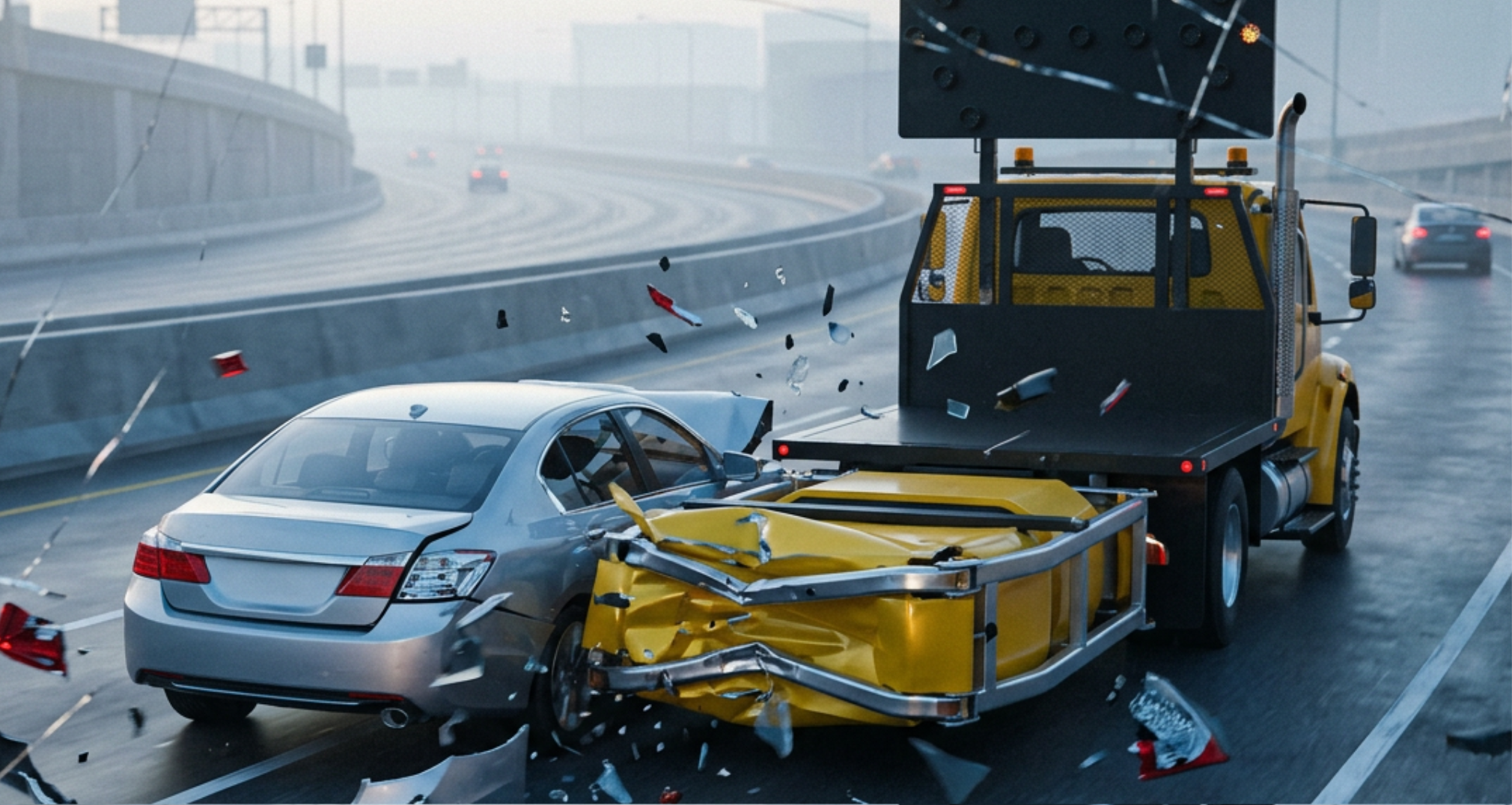
Let’s be blunt. A single lane-closure crash involving an injury can cost your company anywhere from $300,000 to well over $1 million when you factor in liability, litigation, insurance hikes, and project delays. Suddenly, the weekly rental fee for the right piece of equipment seems trivial.
The trucks you deploy do more than just carry cones or flashlights. They communicate with the public, define the workspace, and, most importantly, serve as a physical shield for your people. Choosing the wrong truck—or skipping one entirely—sends a message that you’re willing to gamble. That’s a bet you can’t afford to lose.
Core Trucks Types and Boards Every Work Zone Needs
Your fleet is your toolbox. Using a cone truck when you need a TMA is like using a screwdriver to hammer a nail. Let’s break down the core tools and their specific jobs.
TMA Crash Trucks
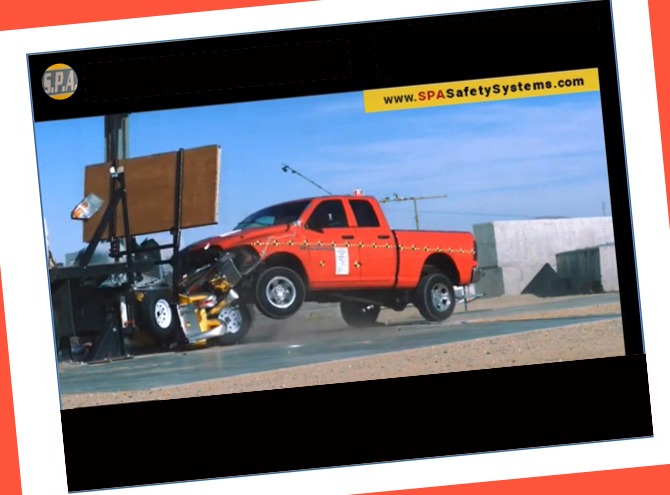
This is your crew’s guardian angel. A Truck-Mounted Attenuator (TMA) is designed for one brutal purpose: to absorb the impact of an errant vehicle, sacrificing itself to save your workers’ lives. TMA crash truck safety is non-negotiable for any operation on a live, high-speed roadway.
- Primary Tasks: Protecting stationary or slow-moving operations such as line striping, pothole patching, or guardrail repair, and shielding the beginning of a lane closure.
- Key Specs: Look for a scorpion-style attenuator rated for the roadway speed (TL-2 for lower speeds, TL-3 for highways). A bright LED arrow board on the truck is essential.
- Crew Benefit: Peace of mind. Knowing there’s a 20,000-pound shield at their back allows your crew to focus on their work without constantly looking over their shoulder. Our fleet of [TMA Crash Trucks] is rigorously maintained and meets all federal standards.
Cone/Barrel Deployment Trucks
A well-placed taper of cones is the first “hello” your work zone says to drivers. Dedicated cone trucks make this critical process faster, safer, and more precise. It’s a core piece of safe work zone trucks.
- Primary Tasks: Rapid and uniform deployment and retrieval of cones or barrels for lane closures, tapers, and channelizing traffic.
- Key Specs: A platform or “cone box” that allows a worker to safely place cones without repeatedly climbing in and out of a truck bed. Some models have automated arms.
- Crew Benefit: Dramatically reduces physical strain and the risk of slips, trips, and falls. It also keeps the worker protected within the truck’s footprint, away from adjacent traffic. Check out our [Cone & Barrel Trucks] to see how they can boost your crew’s efficiency.
Arrow Boards
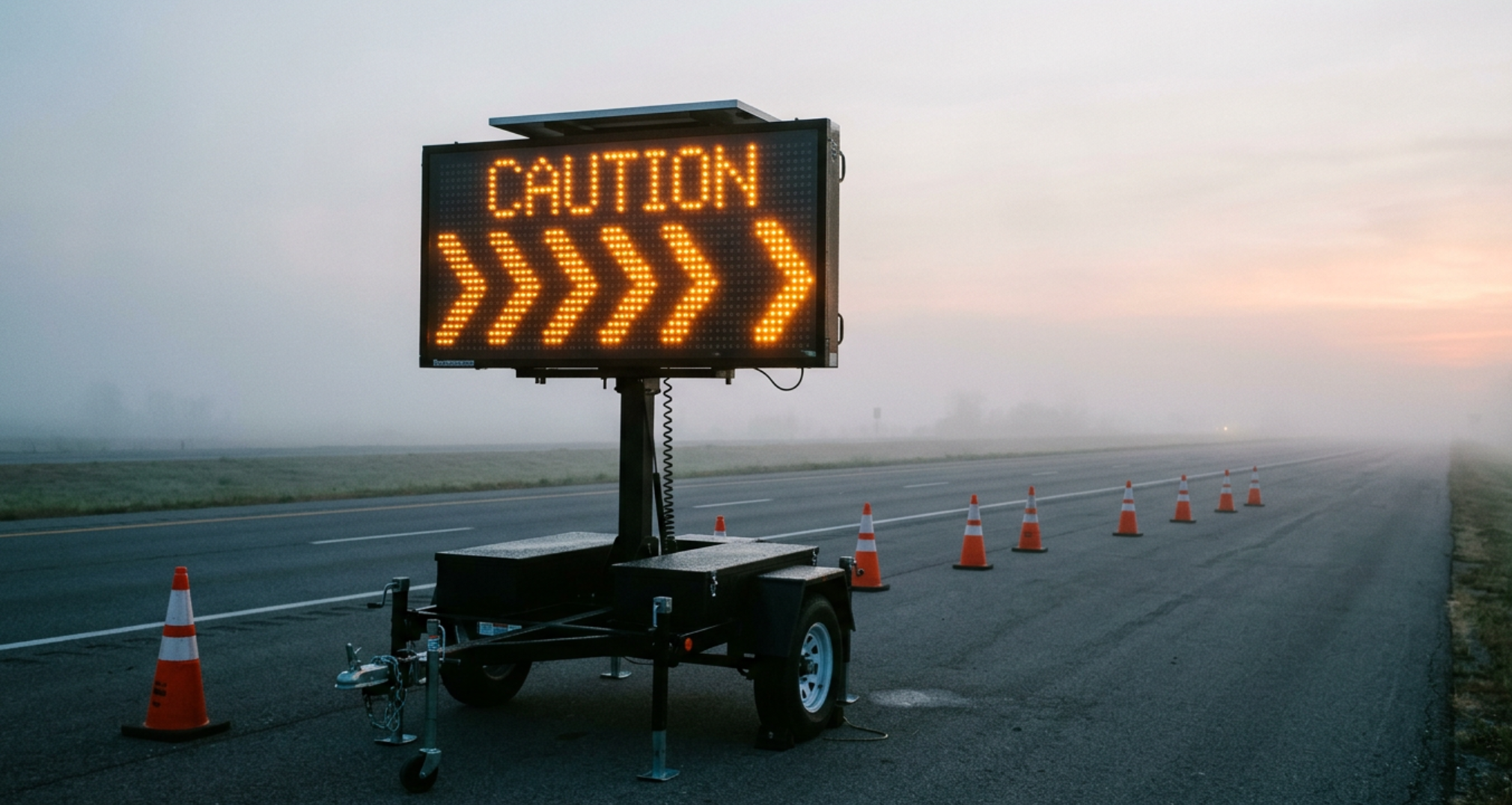
An arrow board is the simplest and most effective communication tool you have. It’s a universal symbol that cuts through driver distraction and tells them exactly what to do: “Merge Left,” “Merge Right,” “Caution.”
- Primary Tasks: Providing a warning for lane closures and directing the flow of traffic from a distance.
- Key Specs: Solar-powered for reliability, with bright, high-visibility LED bulbs that are clear even in bright daylight. The display should be easy to change.
- Crew Benefit: A properly placed arrow board truck reduces the number of late-merges and aggressive driving maneuvers, making the entire work zone calmer and more predictable for everyone. Our [Arrow Board Trucks] offer superior brightness and reliability.
Message Boards
When an arrow isn’t enough, a Variable Message Sign (VMS) or message boards give you the power to communicate specifics. “Road Work Ahead,” “Expect Delays,” “Exit 42 Closed.”
- Primary Tasks: Providing detailed, real-time information to drivers and announcing detours, upcoming closures, or special event traffic.
- Key Specs: Easy remote programming (via laptop or app), high-contrast display, and a solar-powered battery system that will last through your entire project.
- Crew Benefit: An informed driver is a less frustrated driver. By managing expectations, you reduce road rage incidents and improve overall traffic compliance, creating a safer environment for your team.
Scissor Lift Trucks
For overhead work like sign maintenance, bridge inspection, or lighting repair, a scissor lift truck provides a large, stable platform.
- Primary Tasks: Work requiring a large work area at a moderate height (20-50 ft) directly above the truck chassis.
- Key Specs: Platform capacity (how many workers and tools it can hold) and the ability to drive while elevated (a huge time-saver for linear tasks).
- Crew Benefit: Far safer and more efficient than ladders or traditional scaffolding. It provides a secure, railed-in platform for workers and their materials.
Bucket Trucks
When you need to get up and over an obstacle, the bucket truck (or articulating boom lift) is your tool.
- Primary Tasks: Reaching over barriers, working on traffic signals over live lanes, or accessing difficult-to-reach areas on bridges and overpasses.
- Key Specs: Maximum height and, more importantly, side reach (or “up-and-over” capability).
- Crew Benefit: Puts a worker in the precise position needed to perform a task safely, without overreaching or working from an awkward angle.
Step-By-Step Work Zone Truck Planning Template
Good planning doesn’t happen from the office. It occurs on the ground. Follow these five phases for every single job. This is the heart of proper truck planning for work zones.
- Site Survey & Task Analysis: Walk the site at the same time of day you’ll be working. Note traffic speeds, sight lines, shoulder width, and potential hazards. What specific tasks will the crew perform?
- Risk Ranking: What’s the biggest threat? High-speed traffic? An unsignaled intersection? A blind curve? Rank the risks from most to least likely. Your truck deployment should directly address the top risks first.
- Gear Match: Based on your tasks and risks, match the right trucks to the job using the table below. Don’t skimp.
- Staffing & Briefing: Ensure you have enough trained and certified crew members to operate the equipment and manage the zone. Hold a pre-shift safety briefing to walk through the plan.
- Final Walk-Through: Before the first cone drops, do one last drive-through. Does the plan still make sense? Is anything unclear?
Work-Zone Task Planning Matrix
|
Work-Zone Task |
Risk Level | Recommended Truck(s) | Est. Setup Time | Backup Plan |
|
Initial Taper Setup |
High | Arrow Board, Cone Truck, TMA (as blocker) | 20 min | Manual cone placement from a pickup with a spotter |
|
Overnight Paving |
Very High | 2 TMAs (one at taper, one shadowing paver) | 45 min | Police detail, reduce the work area |
| Guardrail Repair | High | TMA, Arrow Board, Work Truck | 30 min |
Short-duration closure, flaggers |
| Bridge Inspection | Medium-High | Bucket Truck, TMA | 40 min |
Scissor Truck (if access allows), lane shift |
| Pothole Patching | High | TMA (shadow vehicle), Work Truck | 15 min |
Mobile operation with police escort |
Cost vs. Liability Snapshot
When you compare the cost of prevention to the cost of an incident, the math is undeniable. Renting the right traffic control equipment is one of the highest-ROI decisions you can make.
|
Truck Type |
Average Weekly Rental Fee | Average Cost of a Single Disabling Injury Claim |
|
TMA Crash Truck |
≈ $2,500 | $85,000+ |
|
Arrow Board Truck |
≈ $750 |
$85,000+ |
| Cone Truck | ≈ $900 |
$85,000+ |
| Message Board | ≈ $800 |
$85,000+ |
Sidebar: How One Crew Cut Their Risk by 45%
A paving crew out of Paramus, NJ, was repaving a busy stretch of Route 17 at night. They were experiencing multiple “close calls” per shift from drivers failing to merge in time. After a consultation, we had them rent a TMA truck to shadow their paving train, and a dedicated arrowboard truck was placed a half-mile upstream. Within a week, their reported close calls dropped by nearly half. The foreman said the most significant change was the crew’s confidence; they could finally focus 100% on the job.
Compliance & Best-Practice Checklist
Your work zone must comply with federal, state, and local regulations. The key documents are the Federal Manual on Uniform Traffic Control Devices (MUTCD) and OSHA’s safety standards.
- MUTCD Compliance: This manual is the bible for traffic control. It dictates the size, shape, color, and placement of every sign, cone, and barrel. (FHWA, 2009).
- OSHA 1926.200: This standard covers construction signs and signals, requiring that traffic controls protect workers and that signs and symbols be visible and legible. (OSHA, n.d.).
- State DOT Specs: Your state’s Department of Transportation will have its own specific requirements that may be even stricter than the federal rules.
At S.P.A. Safety Systems, our entire fleet is maintained to exceed these standards. Our TMAs are inspected after every rental, our LED boards are the brightest on the market, and every truck is clean and highly visible. We can provide full spec sheets for any piece of equipment in our yard. Just ask us on our [Contact page].
FAQs: Work Zone Truck Planning
1. What insurance do I need to rent this equipment?
You’ll need a Certificate of Insurance (COI) showing General Liability and Rented/Leased Equipment coverage. We can provide your insurance agent with the exact requirements to make it simple.
2. Is special training required for operators?
Yes. OSHA requires operators of equipment like bucket trucks to be trained and qualified. Flagger certification is also critical. We can connect you with certified local trainers.
3. We need a TMA for an emergency job tomorrow. Is that possible?
This is what we do. Call us. We specialize in rapid deployment and can often accommodate next-day and even same-day emergency requests within our service area.
4. What if a rental unit has a problem on-site?
Our number is on every piece of equipment. Call our 24/7 service line. We’ll either troubleshoot it over the phone or dispatch a field mechanic or a replacement unit to you. Your uptime is our priority.
5. Do you offer on-site service and maintenance?
For long-term rentals, we can arrange for scheduled on-site preventative maintenance to ensure the equipment runs flawlessly for the duration of your project.
Don’t Gamble with Your Crew’s Safety
Planning a work zone is a high-stakes puzzle. The public is impatient, the deadlines are tight, and the risks are real. But you have a partner who has seen it all.
Don’t leave your crew’s safety to chance. Let’s build a smarter, safer work zone together.
Call S.P.A. Safety Systems now at (973) 347-1101 or send a quick email to austin@westchestermachinery.com. Let’s talk about your next project and ensure you have the right tools to bring every single worker home safe.