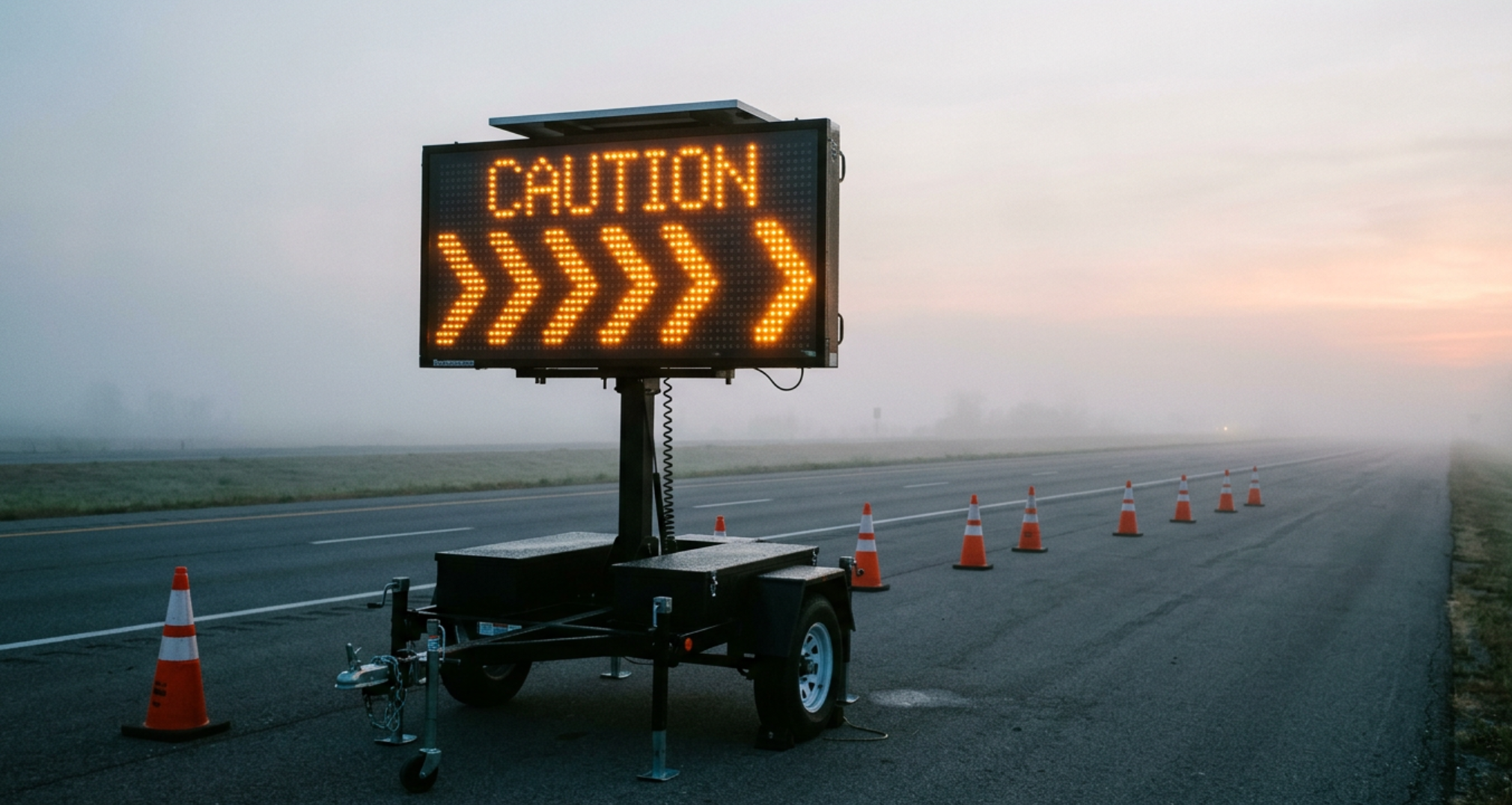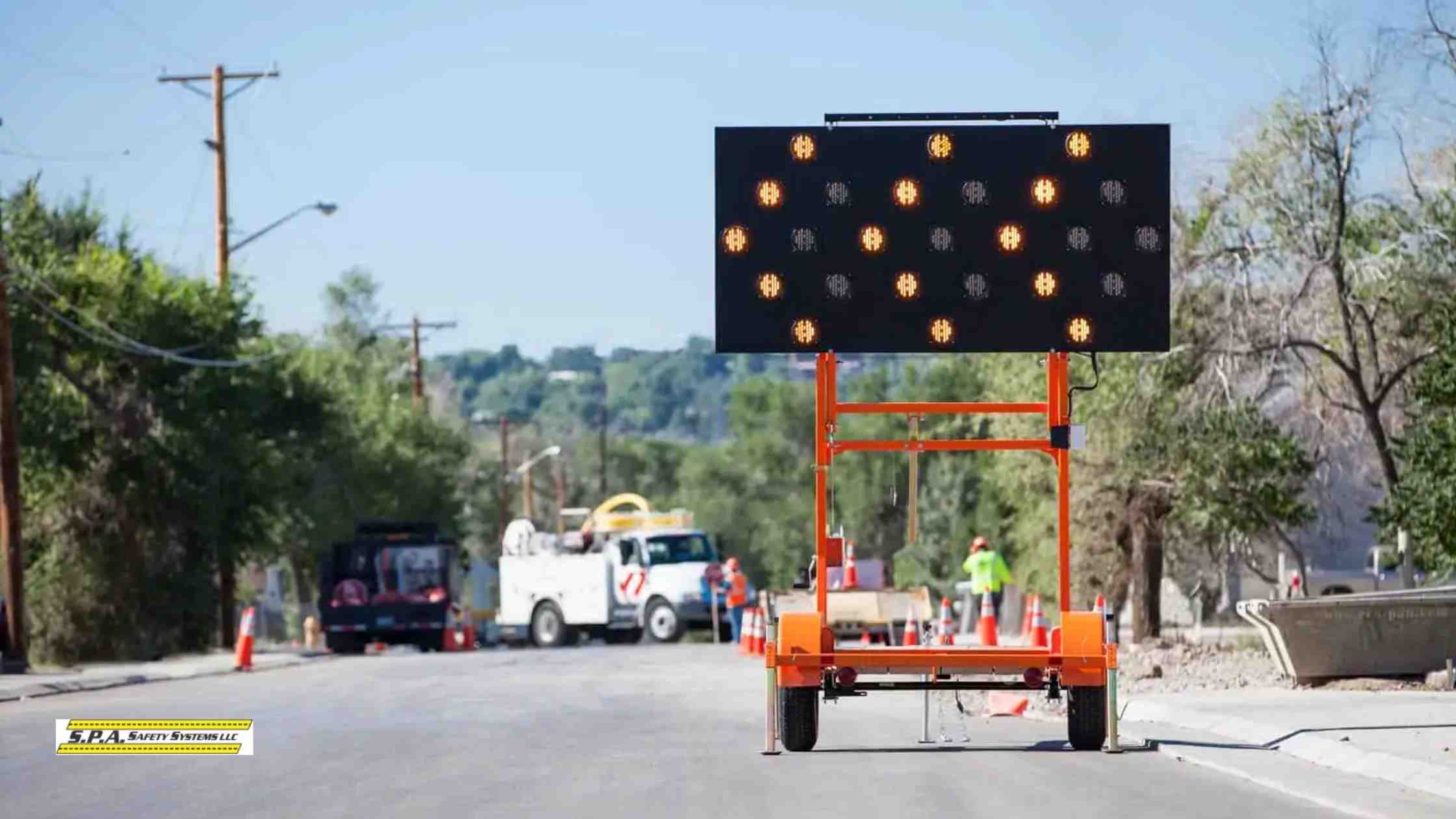
It was 2 a.m. on a moonless stretch of I-287. Rain slicked the asphalt. My flagger was in position, but I had a knot in my stomach. Then, I saw it in the distance: a pair of headlights, moving way too fast. They started to drift. Just as I keyed the radio, the driver saw our arrow board—a brilliant, flashing beacon cutting through the gloom—and swerved back into the open lane. That board didn’t just prevent a crash. It saved a life. That night hammered home a lesson I’ve carried for 20 years: for any flagging operation, superior arrow board safety isn’t a nice-to-have. It’s the most critical piece of equipment you have, second only to the skill of your crew.
Why Arrow Board Safety Matters More Than Ever
In today’s world of distracted driving, your work zone is more vulnerable than ever. Your cones and signs are passive warnings. An arrow board is an active command. It grabs a driver’s attention from a half-mile out and tells them exactly what to do: Merge. Now.
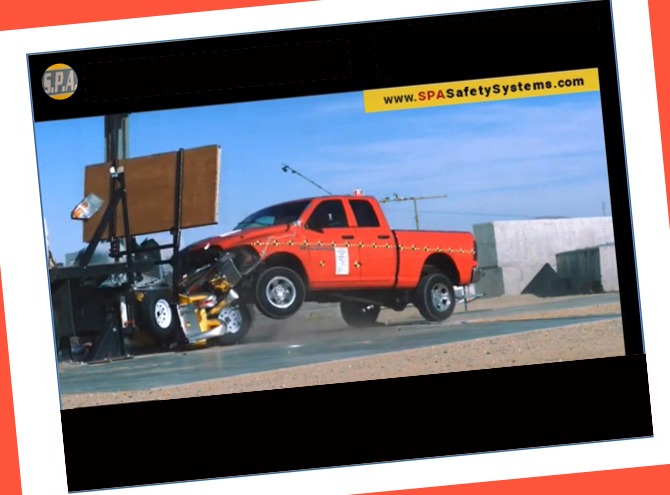
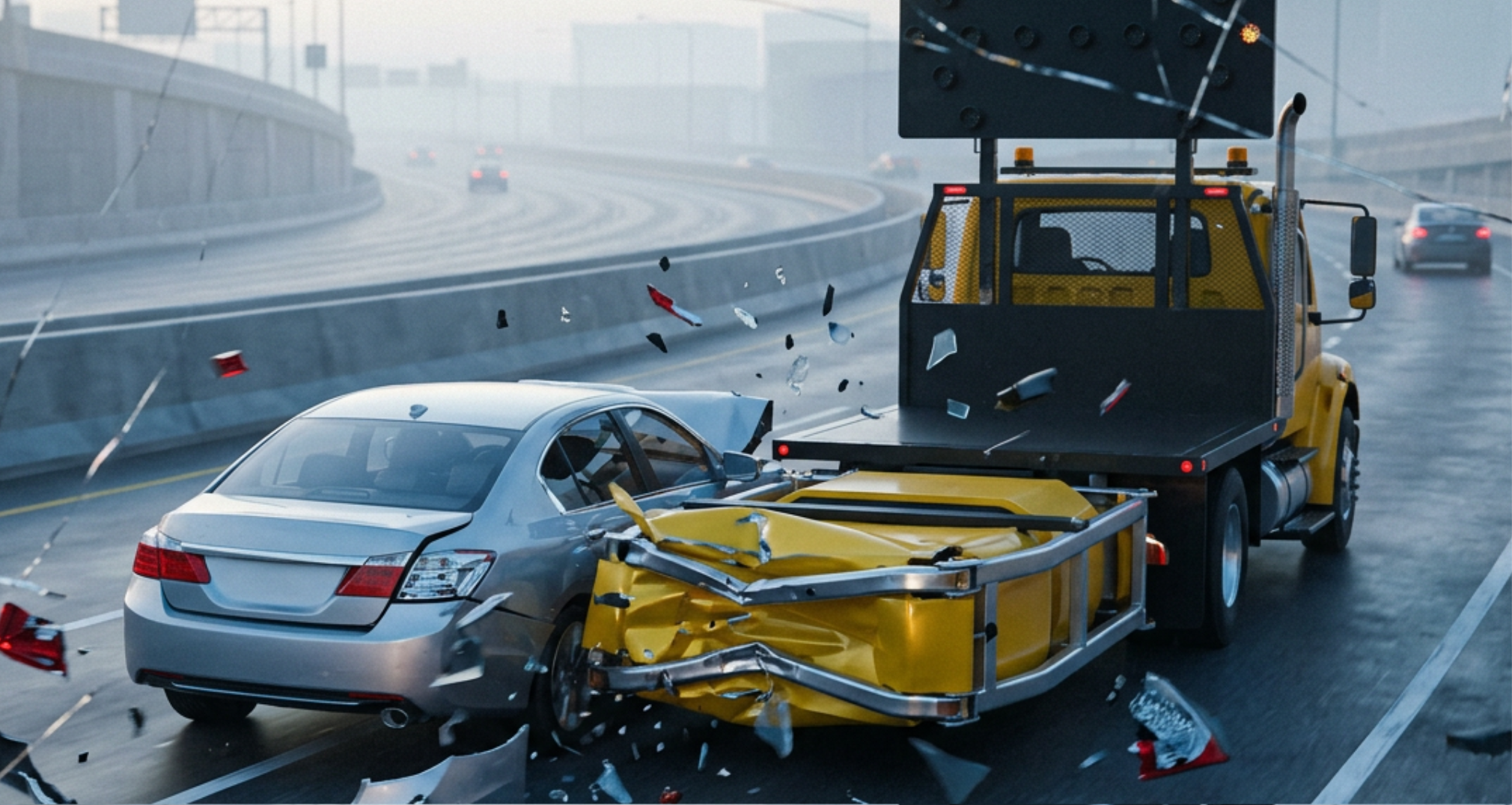
The statistics are sobering. The Federal Highway Administration (FHWA) reports that rear-end collisions are the most common type of work-zone crash, accounting for a significant share of fatal incidents. A bright, clear arrow board is your single best defense against becoming one of those statistics, providing the warning needed to prevent these often-devastating impacts. It’s the loudest voice you have on the road, protecting both the public and your people.
Key Arrow Board Features Flaggers Can’t Skip
Not all arrow boards are created equal. The difference between a cheap, dim unit and a modern, high-performance board can be the difference between a smooth shift and a catastrophe. Here are the non-negotiable features I look for.
High-Output LED Brightness
Your board has one job: be seen. Modern boards use high-output LEDs that are visible from over a mile away, even in bright sunlight. This is a core tenet of arrow board safety; it gives drivers maximum time to react.
Automatic Dimming for Dusk/Dawn
A board that’s brilliant in the sun can be blinding at night. Quality units have photocells that automatically adjust brightness based on ambient light. This prevents glare and ensures the message is always clear, not overwhelming, which is crucial for work zone visibility.
360° Swivel & Tilt Mast
Job sites are never perfect. A mast that can swivel and tilt allows your crew to aim the board precisely where it needs to be, regardless of where the trailer is parked. This is essential for complex traffic patterns or setups on sloped shoulders.
Lithium-Iron Battery Packs
Old-school lead-acid batteries are heavy, prone to failure, and a headache to maintain. Newer lithium-iron (LiFePO4) packs are lighter, charge faster, and provide longer, more reliable runtimes. This means less time worrying about power and more time focusing on the work.
Wireless Sequence Controller
Fumbling with a control box tethered to the trailer is inefficient and unsafe. A wireless remote allows your crew to change the arrow pattern (left, right, caution, etc.) from a safe distance, adapting to changing traffic conditions instantly.
Feature-to-Benefit Breakdown
| Feature | What It Is | Why It Matters | Crew Benefit | Project Benefit |
| High-Output LEDs | Ultra-bright, long-distance lamps | Cuts through sun, rain, and fog | Reduces crew anxiety about visibility | Drastically lowers rear-end crash risk |
| Auto-Dimming | Photocell adjusts brightness | Prevents nighttime glare for drivers | Eliminates manual adjustments | Maintains MUTCD compliance 24/7 |
| Swivel/Tilt Mast | Adjustable mast positioning | Aims for maximum impact | Faster, more flexible setup | Works on uneven ground & complex sites |
| Lithium Battery | Modern, lightweight power source | Reliable, long-lasting power | No dead batteries mid-shift | Increased uptime, lower labor costs |
| Wireless Remote | Handheld pattern controller | Allows control from a safe distance | Flagger can adjust without entering traffic | Faster response to traffic changes |
Sizing & Configuration Guide
Choosing the right size is critical and depends on the roadway. The MUTCD outlines three main types. For most flagging operations on highways and arterials, you’ll be choosing between a Type B or a Type C.
| Feature | Type B Board | Type C Board |
| Display Size | 60″ x 30″ | 96″ x 48″ |
| Lumen Range | High-output | Very high-output |
| Recommended Speed Zone | Intermediate speeds (e.g., 45 mph or less) | High speeds (e.g., over 45 mph) |
| Typical Power Runtime | 20-30 days (solar-assisted) | 15-25 days (solar-assisted) |
When in doubt, go bigger. You can’t over-communicate on a high-speed road. These are the most common portable arrow board rentals for a reason.
Cost of Downtime vs. Rental Fee
Finance might see an arrow board rental as a line-item expense. A good foreman sees it as the cheapest insurance policy you can buy. The math is brutally simple.
| Scenario | Associated Cost | 3-Year Projection |
| One Minor Work Zone Incident | Average Claim: $24,700 (incl. legal, repairs, lost time) | $24,700+ |
| Weekly Arrow Board Rental | Average Fee: $185 | $28,860 (Rented every week for 3 years) |
A single fender-bender costs more than renting a top-of-the-line arrow board every single week for a year. And that’s just the financial cost—it doesn’t account for the project delays, OSHA investigations, and the human toll on your crew.
Case Study: Paving Crew Slashes Setup Time
A paving contractor on a tight schedule for a New Jersey Turnpike resurfacing project was losing nearly an hour each night setting up and breaking down their lane closure. Their old diesel arrow boards were unreliable. By switching to two of S.P.A.’s solar-hybrid arrow boards with wireless remotes, they cut their setup and teardown time by 35%. The crew could position the boards and activate them from the truck cab, closing the lane faster and starting work sooner.
Compliance Corner
Compliance is non-negotiable. The two main documents you need to know are:
- MUTCD Chapter 6F: The Manual on Uniform Traffic Control Devices is the bible for traffic control. It specifies the design, application, and placement of arrow boards.
- OSHA Part 1926: This covers Safety and Health Regulations for Construction, including the employer’s responsibility to protect workers from traffic hazards.
A violation isn’t just a fine; it’s a signal of negligence that can be devastating in court. At S.P.A. Safety Systems, our entire rental fleet of [Arrow Boards] is meticulously maintained not just to meet, but to exceed MUTCD and OSHA visibility and performance standards. We stake our reputation on it.
Daily Arrow Board Inspection Checklist
Before every shift, run through this quick check. It takes five minutes and can save a life.
- Check Physical Condition: Look for any damage to the trailer, mast, or board housing.
- Inspect Lamps: Cycle through all patterns. Are all LEDs firing? Any dim or dead bulbs?
- Test Power Source: Check battery charge level. If solar, ensure panels are clean.
- Verify Controller Function: Test the wireless remote. Does it change patterns correctly?
- Examine Tires & Hitch: Check tire pressure and inspect the hitch for secure connection.
- Test Brakes & Lights: Ensure the trailer’s running lights and brake lights are working.
- Check Mast Lock: Confirm the mast lock pin is secure to prevent accidental lowering.
- Confirm Placement: Is the board positioned for maximum visibility per the traffic control plan?
FAQs: Arrow Board Safety
1. What insurance do we need to rent an arrow board?
You’ll need a standard Certificate of Insurance (COI) covering general liability and rented equipment. We can provide your agent with the exact details.
2. How long will the battery last on a cloudy day?
Our solar-assisted lithium units can typically run for 20-30 days without any sunlight. You’ll never have to worry about a dead board mid-shift.
3. We need a board for an emergency job. How fast can we get one?
We specialize in rapid deployment. For most of our service area, we can offer same-day or next-day delivery. Call us. We’ll make it happen.
4. Does my crew need special training to operate it?
Basic operation is simple, but your traffic control supervisor should be trained and certified on proper MUTCD placement and use. This is key for flagging road crew safety equipment.
5. What if the board fails on site?
Call our 24/7 support line. We’ll troubleshoot it immediately, and if it can’t be fixed over the phone, we’ll dispatch a replacement unit right away to keep your zone safe and your project moving.
Don’t Gamble With Your Crew’s Safety
An arrow board isn’t just a flashing sign. It’s your first line of defense. It’s a clear, unambiguous warning that protects your flaggers, your equipment, and every driver passing through your zone.
Don’t wait for a near-miss—or worse—to re-evaluate your setup.
Give us a call at (973) 347-1101 or visit our [Contact page] to send a quick message. Let’s talk about your upcoming project and ensure your crew has the best protection available. Check out our fleet of top-tier Arrow Boards and let’s get you equipped for safety.