
The Hidden Cost of Cheap TMA Trucks: Why Buying Used Could Bankrupt Your Company
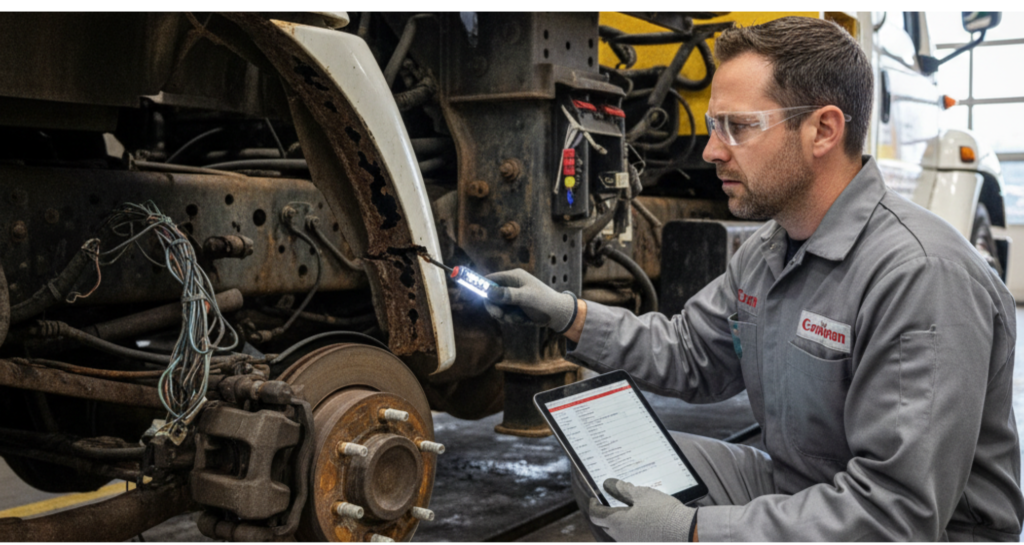
Every highway contractor knows the sticker shock that comes with pricing out a new TMA truck. When you’re looking at $150,000 or more for a brand-new attenuator truck from a reputable manufacturer like SPA Safety Systems, the temptation to save money with a used unit becomes almost irresistible. That classified ad for a “fully functional” TMA truck at $40,000 looks smart when money’s tight and you need equipment now for a new contract. Unaware of its consequences, you are tempted by the cheap TMA trucks. Here’s what nobody says until it’s too late: that bargain might be the worst decision your company ever makes. What separates a real deal from a total disaster are details most buyers never check. Contractors across the country learn this the hard way when their “great deal” becomes a liability threatening to sink their whole business. Why Used TMA Trucks Flood the Market Understanding why so many used attenuator trucks hit the market helps explain why prices seem so attractive. The MASH Compliance Crisis The biggest wave of cheap used TMA trucks came after the industry transitioned from NCHRP 350 standards to MASH (Manual for Assessing Safety Hardware) requirements. Contractors who bought equipment right before the switch found themselves holding trucks that could no longer be used on federal-aid projects. Rather than investing in upgrades or eating the total loss, many decided to offload the equipment to unsuspecting buyers who didn’t fully understand the compliance situation. State DOTs started removing older equipment around 2019 and 2020, when the FHWA made it clear they wouldn’t accept NCHRP 350 attenuators anymore. Overnight, thousands of trucks that had run perfectly fine became useless for work. Accident Damage and Hidden Repairs TMA trucks exist specifically to get hit. That’s their whole purpose. When they do their job correctly, the attenuator absorbs the impact and protects the workers downstream. But here’s what happens next in many companies. The truck gets sent to a local body shop or the company’s own maintenance crew, who repair the visible damage without properly recertifying the attenuator system. End of Lease Dumps Large rental companies cycle through TMA truck fleets on regular schedules. When equipment reaches a certain age or hour threshold, it gets sold off to make room for newer models. These trucks aren’t necessarily in bad shape, but multiple operators have beaten them up, with zero personal investment in proper maintenance. Renters tend to be harder on equipment than owners, running trucks past service intervals and ignoring minor problems that become major failures down the road. The rental company makes its money on the rental fees, not the resale value. Their goal is to quickly liquidate the used inventory to free up capital for new purchases. That means pricing these trucks aggressively low to move them fast. As a buyer, you’re getting a truck that’s been run hard by people who didn’t care about it, with maintenance records that may not tell the full story of what it’s been through. What to Look for When Considering Used Equipment If you’re absolutely determined to buy used, going in with eyes wide open and knowing what to check can mean the difference between a reasonable deal and a disaster. Verify Certification Status Directly with the Manufacturer Don’t trust the seller’s word about certification. Get the truck’s serial number and contact the manufacturer directly. SPA Safety Systems and other reputable manufacturers maintain lifetime records on every unit they build. They can tell you exactly what certification that specific truck holds, when it was built, and whether it’s ever been recertified after an impact. Demand Complete Maintenance Records A well-maintained truck should have a detailed service history showing regular oil changes, hydraulic system services, inspections, and repairs. The absence of maintenance records tells you the previous owner either didn’t maintain the truck properly or doesn’t want you to know what was done to it. Neither scenario is good. Get an Independent Inspection Hire a qualified mechanic who specializes in TMA trucks to inspect any unit you’re seriously considering. This costs a few hundred dollars and could save you tens of thousands. A good inspector will check the structural integrity of the attenuator, test all hydraulic and electrical systems, examine the chassis for frame damage, and review the overall condition of the truck. Understand the True Age and Usage Odometer readings don’t tell the whole story on a TMA truck. A truck with 50,000 miles that spent most of its life sitting stationary on highway shoulders might have more wear on its hydraulic systems and attenuator mechanisms than a truck with 100,000 miles that was driven between job sites but saw less actual deployment time. Ask how many impacts the attenuator has taken. A truck that’s been hit five times in three years is either working in a very dangerous environment or there’s something wrong with how it’s being deployed. Either way, that attenuator has taken a beating. Find out whether it was recertified after each impact. If the seller doesn’t know or can’t prove recertification happened, assume it didn’t. Why New Equipment from SPA Safety Systems Makes Financial Sense Buying new from an established manufacturer may look expensive up front, but it makes sense when you consider the full picture. Companies like SPA Safety Systems have been building TMA trucks since the industry began and literally set the standards that everyone else follows. Guaranteed Compliance and Certification When you buy new from SPA Safety Systems, you get equipment that’s fully MASH compliant with all the documentation you need to prove it: no questions, no worries, no inspector rejections. The truck comes with certification paperwork that meets all DOT requirements in the country. You can bid on any project with confidence, knowing your equipment meets the requirements. This peace of mind has real financial value. You’re not gambling on whether your equipment will be accepted; you’re not explaining to clients why your truck was rejected. At the same time, you are working and making money from day one
Automated Cone Trucks Are Here: Will They Replace Your Cone Crew by 2028?

Highway construction is shifting faster than anyone predicted. Automated cone trucks went from concept to reality in just a few years. Right now, companies are running self-driving systems that deploy traffic control without putting workers in live traffic. It works, it’s getting better, and every traffic control contractor is asking the same thing: what happens when machines replace cone crews? This isn’t theoretical if you run highway work. The equipment’s already out there. DOTs are updating specs to allow it. Competitors could be pilot-testing it now. In two years, traffic control deployment will look nothing like it does today. You need to know what’s actually happening, ignore the sales pitch, and figure out what it means for your operation. Falling behind now means catching up later might be impossible. What Automated Cone Trucks Actually Do Before diving into whether robots are stealing jobs, it helps to understand what these systems actually are and how they function in real-world conditions. The Basic Technology Automated cone placement systems mount on standard highway trucks, often on the same chassis as traditional manual cone trucks. The system includes a magazine that holds anywhere from 50 to 200 traffic cones, a robotic arm or deployment mechanism, GPS guidance, and control systems that manage the placement sequence. The truck drives down the road at speeds between 5 and 15 miles per hour, depending on the system and conditions. As it moves, the automated mechanism picks cones from the magazine and places them at precise intervals programmed into the control system. GPS coordinates ensure the cones get dropped exactly where the work zone plan specifies. Some systems can also pick up cones on the return pass, loading them back into the magazine without anyone leaving the truck. The driver stays in the cab watching the system and controlling speed and position. Current setups still require a human operator for safety, judgment calls, and situations the automation can’t handle. These aren’t full self-driving vehicles. What They Can Handle Right Now Current automated systems shine on simple highway stretches with decent pavement and visible lane markings. Long straight runs where you’re putting in a basic taper or closing a shoulder? Machines do it well. They drop cones faster than manual crews, nail the spacing every time, and keep workers out of traffic. The systems handle both daytime and nighttime operations. Some contractors report that automated placement at night is actually easier in some ways because there’s less traffic to navigate around and visibility isn’t as critical when the machine is doing the placement. The consistency of automated systems means every cone goes exactly where it’s supposed to go, which matters when you’re creating a work zone that thousands of vehicles will drive through. GPS lets these trucks run complicated layouts you program beforehand. Map out your plan in the office, load it to the truck, and the system executes it exactly. Manual crews can’t hit that level of precision, especially at night or in heavy traffic when everyone’s stressed. Where the Technology Still Struggles Automated systems hit real limits once you leave ideal conditions. Urban street work with constant turns, intersections, and obstacles throws them off. The sensors and guidance built for highway work get lost in the mess of city streets. Rough pavement, potholes, and uneven surfaces cause placement issues. The mechanisms rely on relatively smooth conditions to deploy cones upright and in a stable position. When the truck hits a pothole at the exact moment a cone is being placed, that cone might tip over or land several feet from where it’s supposed to be. Manual crews automatically adjust for these conditions, but machines keep following their programming. The Labor Cost Reality Check The main selling point for automated cone trucks is cutting labor costs. But when you crunch the numbers with real-world assumptions, the math gets messier than vendors let on. What You Actually Save in Labor A standard cone crew is three to four people: one driver and two or three setting and pulling cones. Depending where you are, that’s $25 to $45 per hour fully loaded with wages, benefits, workers’ comp, and taxes. Four people at $35 an hour total $140. A four-hour job costs $560 in labor for cone work alone. Five jobs a week, 45 weeks a year, and you’re burning about $126,000 annually on cone operations. An automated truck still requires a driver and typically one helper to handle problems and assist when the automation can’t complete a task. Your labor cost drops to about $70 per hour for two people, down from $140 for four. That’s a savings of $70 per hour, or $280 per day if you’re running four-hour jobs. Annually, this works out to roughly $63,000 in labor savings. That sounds significant until you remember that you spent an extra $200,000 or more buying the automated equipment and you’re paying an extra $15,000 per year in maintenance. Your breakeven point is somewhere around four to five years, assuming everything goes perfectly and you have enough work to keep the equipment busy. The Hidden Labor Costs That Don’t Go Away You still need cone crews with automation. Urban jobs, tricky intersections, tight spaces, and obstacles all need manual placement. You’re not ditching your crew. You’re just using them less on highways while still needing them everywhere else. That means carrying both: automated gear for straightforward highway work and manual crews for complicated stuff. You’ve piled on costs without eliminating what you wanted to cut. Some contractors get stuck after spending heavily on automation while carrying nearly identical labor costs because they can’t actually eliminate positions. Training costs are also higher with automated systems. Not only do operators need initial training on the equipment, but they also need ongoing education as software updates and capabilities expand. Your labor pool becomes more specialized, which can create scheduling problems when your trained automated equipment operator is sick or on vacation and you can’t easily substitute another worker. Workers Comp and Insurance
How SPA Safety Systems Help with the MASH Transition
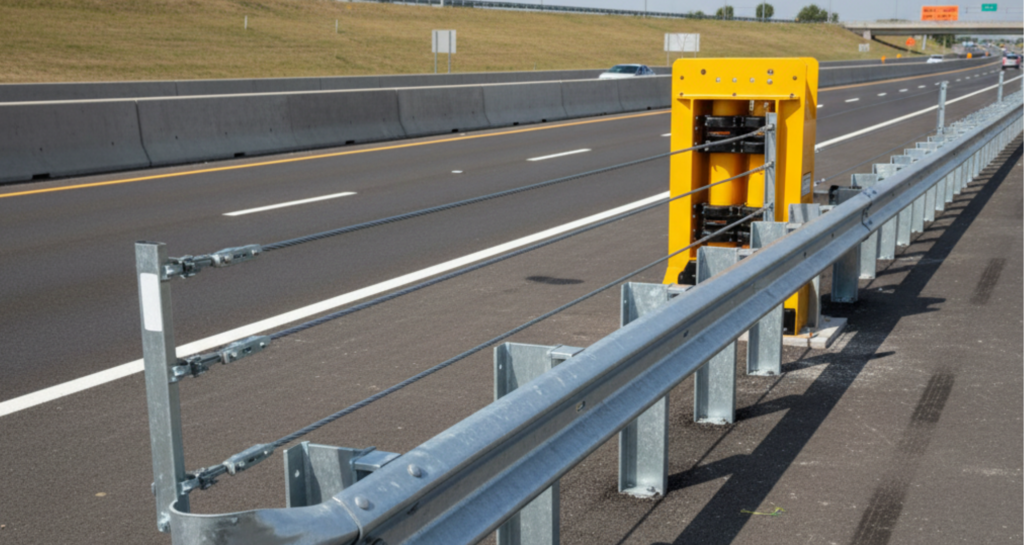
Navigating the shift from NCHRP 350 to MASH compliance is complicated, but you don’t have to figure it out alone. SPA Safety Systems has been helping contractors through this transition since MASH standards first appeared. We understand the technical requirements regarding MASH 2016 vs NCHRP 350, the timeline pressures, and the financial challenges involved. Fleet Assessment and Compliance Planning We’ll evaluate your current equipment and give you straight answers about what’s compliant and what’s not. No sales pressure, just honest assessment of where your fleet stands and what your options are. Our team works with your project pipeline to develop a phased upgrade plan that aligns with your business needs. Maybe you don’t need to replace everything at once. We can identify which trucks need immediate attention based on the projects you’re pursuing and which ones can wait another year if budget is tight. MASH-Certified Equipment Options SPA Safety Systems offers a range of MASH-compliant TMA truck configurations designed to suit different job requirements, fleet needs, and budgets. Our trucks are built to meet MASH Test Level 3 standards for highway work-zone applications, with options to tailor the chassis, truck-mounted attenuator, and supporting equipment around the way your crew actually works. We take care of the entire process from start to finish. That means helping you select the right vehicle, coordinating the build, completing certification, and delivering a fully finished truck that is ready to go to work. You will not have to chase down separate chassis dealers, upfitters, and attenuator manufacturers—we manage the details so you can stay focused on running your operation. Financing and Trade-In Solutions We work with multiple equipment financing partners who understand highway construction and traffic control. We can help you structure deals that make sense for your cash flow, whether that’s traditional financing, leasing, or rent-to-own arrangements. Our financing partners work with contractors of various sizes and credit profiles. We’ll also take your old NCHRP 350 equipment in trade, even though the market for it is tough. We can use older trucks for parts or refurbishment, which means we can offer trade-in value when other buyers won’t touch your old gear. Trading in old equipment reduces your upfront cash requirement and simplifies the transition. Service and Support Through the Equipment Life MASH compliance doesn’t end when you take delivery of new trucks. Maintaining that compliance requires proper service, documentation, and occasional recertification. Our 19,200-square-foot facility in Flanders, New Jersey, provides complete service and repair for all the trucks we sell. We maintain detailed service records that prove your equipment has been maintained to manufacturer specifications. That documentation becomes critical if you ever need to demonstrate compliance during an audit or following an incident. We can also handle annual inspections and provide the certification paperwork many DOTs now require for TMA trucks operating on their projects. If something breaks in the field, we’ve got the parts inventory and technical expertise to get you back up and running fast. Downtime on highway projects costs serious money. Our parts department stocks critical components, and our service team understands the urgency when you’ve got a project shutdown waiting on a repair. Timeline for Making Your Fleet Compliant You know you need to upgrade, but when? The answer depends on your specific situation, but here are the decision points that should drive your timeline. Immediate Action Required If you’re currently working on projects that specified MASH compliance and you’re using NCHRP 350 equipment, stop immediately. The liability exposure is unacceptable. Rent compliant equipment, subcontract the traffic control, or work with SPA Safety Systems on emergency equipment delivery. Contractors bidding on work in early adopter states (California, Texas, Florida, Washington, Colorado) need compliant equipment right now. You can’t compete in these markets with old gear. If these states represent significant parts of your business, equipment upgrades should have happened years ago, but the second-best time is immediately. Six-Month Planning Window If your current project pipeline doesn’t require MASH compliance but you’re seeing it in upcoming bids, you’ve got about six months to make moves. Start the process now because lead times matter. Use the six-month window to nail down financing, finalize specifications, and place orders. You want trucks delivered before you actually need them urgently. Last-minute equipment purchases mean you’re negotiating from a position of weakness and may have to accept whatever’s available rather than getting the configuration you really want. One-Year Transition for Multi-Truck Fleets Larger contractors with five or more TMA trucks probably can’t replace everything at once without serious cash flow strain. Plan a staggered upgrade over 12 to 18 months that replaces trucks in priority order based on which projects and markets they serve. Replace trucks working in strict-compliance markets first. Next, upgrade units with the highest mileage or the most expensive to maintain. Finally, replace the newest NCHRP 350 trucks that might have a bit more useful life. This approach spreads the financial impact while progressively reducing compliance risk. FAQs: MASH 2016 vs NCHRP 350 If I buy a used TMA truck from another contractor, how can I be sure it actually meets MASH standards and not just NCHRP 350? Get the serial number and call the manufacturer directly before you buy. Companies like SPA Safety Systems keep records on every unit they’ve built and can tell you the exact certification. Look for the permanent label on the attenuator that shows MASH 2016 compliance with the FHWA eligibility number. If the label is missing or looks tampered with, don’t buy it. Anything manufactured before 2016 is almost definitely NCHRP 350, and even 2016-2018 models are questionable because manufacturers were clearing old stock. Get written proof from the seller that specifically guarantees MASH compliance, not just generic paperwork saying the equipment works fine. My insurance agent hasn’t said anything about MASH compliance, so does that mean my current coverage is fine even with older NCHRP 350 trucks? Just because your insurance agent has not raised the issue does not automatically mean you are protected. Many
Rent vs. Buy: The Real Cost Analysis of TMA Trucks for Small to Mid-Size Contractors
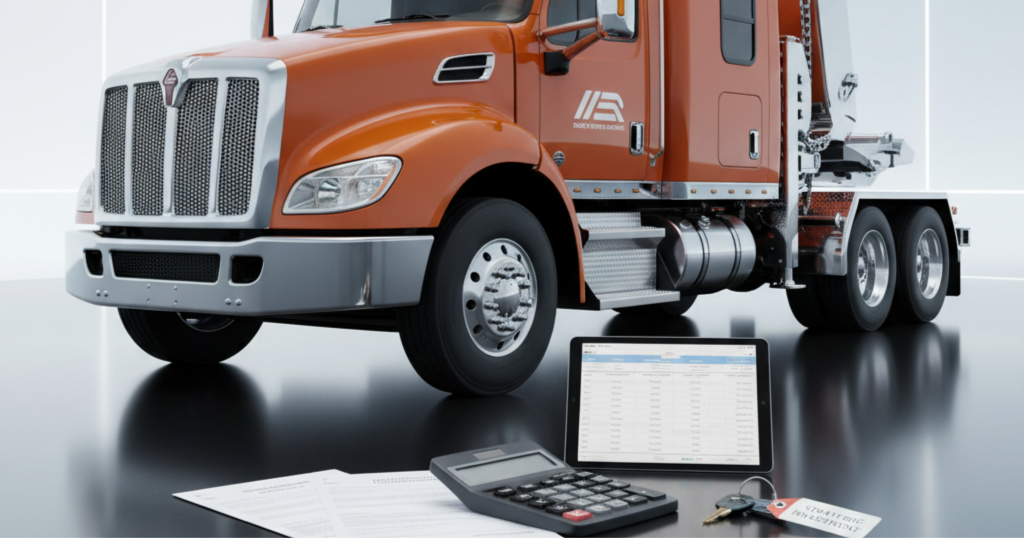
If you’re a small- to mid-size contractor trying to break into highway work or expand your traffic control operations, you’ve probably hit the same wall everyone else does: TMA trucks are expensive as hell, and you’re not sure whether to rent, buy new, or pick up a used one. Here’s the thing nobody tells you upfront—there’s no universal “right answer” to the rent vs. buy question. It depends entirely on how much work you’re actually getting, what kind of contracts you’re chasing, and whether you can handle the financial hit of ownership. I can break down the real numbers, show you what costs people often overlook, and help you determine which route makes the most sense for your situation. Let’s get into it. The Sticker Shock: What TMA Trucks Actually Cost Before we compare anything, you need to know what you’re looking at price-wise. A brand-new TMA truck—we’re talking an attenuator truck with current MASH certification—runs anywhere from $150,000 to $250,000, depending on the chassis, attenuator system, and any extras you’re adding. That’s not a typo—a quarter million dollars for a single truck. Used TMA trucks drop that number considerably, but you’re still looking at $60,000 to $120,000 for something that’s 5 to 10 years old and has been maintained decently. Anything cheaper than that and you’re gambling on whether it’ll pass DOT inspection or blow a transmission three months after you buy it. Rental rates vary by region and rental duration, but typical numbers look like this: Daily rental: $350 to $600 per day Weekly rental: $1,500 to $2,500 per week Monthly rental: $4,000 to $7,000 per month Those rates usually include basic insurance and sometimes maintenance, but you’re responsible for fuel, operator costs, and any damage beyond normal wear and tear. The Hidden Costs of Buying When contractors decide whether to buy a TMA truck, most look only at the purchase price and stop there. That’s a mistake that’ll cost you big time. Here’s what actually goes into owning a TMA truck: Purchase Price or Financing Let’s say you’re buying a used truck for $80,000. If you’re paying cash, that’s $80,000 out of your operating capital that you can’t use for payroll, other equipment, or covering slow months. If you’re financing, you’re looking at monthly payments that depend on your credit and down payment, but figure somewhere around $1,500 to $2,000 per month for a five-year loan on an $80,000 truck. Insurance Commercial truck insurance for a TMA truck isn’t cheap because these things are literally designed to get hit. You’re looking at $8,000 to $15,000 per year depending on your driving records, claims history, and coverage limits. That’s $650 to $1,250 per month just for insurance. Maintenance and Repairs When something does break? Budget $2,000 to $10,000 depending on what failed. Attenuator cartridge replacement alone can run $15,000 to $25,000 if you actually hit something and need to replace the whole system. Depreciation This one’s sneaky because you don’t write a check for it, but it’s real. A TMA truck loses value every year. A truck you buy for $80,000 today might be worth $50,000 in five years if you maintain it well, or $30,000 if you beat it up. That’s real money disappearing from your balance sheet. Total Annual Cost of Ownership Let’s add it up for an $80,000 used TMA truck: Financing: $18,000 to $24,000/year (assuming a 5-year loan) Insurance: $8,000 to $15,000/year Maintenance: $3,000 to $5,000/year Storage/Registration: $1,000 to $2,000/year Repairs (averaged): $2,000 to $5,000/year Total: $32,000 to $51,000 per year, and that’s assuming nothing major breaks. The Hidden Costs of Renting Renting looks simpler on the surface—you pay the daily or monthly rate, and you’re done, right? Not quite. Rental Rates Add Up Fast At $5,000 per month, you’re paying $60,000 per year just for the truck. After two years, you’ve paid $120,000—more than that used truck would have cost to buy outright. After three years, you’ve paid $180,000, and you own nothing. You’re Still Paying for Fuel and Operators Rental rates don’t include the diesel to run the truck or the certified operator to drive it. Depending on how much you’re using the truck, that’s another $500 to $2,000 per month in fuel costs. Availability Issues When you need a TMA truck for a project, you need it now. Rental companies don’t always have equipment available, especially during peak construction season. If you’re waiting on a rental to show up, you’re losing money on idle crews and potentially missing contract deadlines. When Renting Makes Sense You’re Just Starting Out If you’re a new contractor trying to break into highway work, renting lets you take on projects without the massive upfront capital investment. You can test the market, see if you can consistently win contracts, and build your reputation without betting the farm on equipment you might not need in the long term. Your Work is Seasonal or Inconsistent If you only need a TMA truck for three or four months a year, buying doesn’t make sense. You’d be making payments and paying insurance on equipment that sits idle most of the year. Renting for the months you need it keeps your costs aligned with your revenue. You’re Working in Multiple Locations Some contractors work projects across multiple states or regions. Renting locally where the project is located saves you from transporting your own equipment across the country. That transportation cost alone—permits, fuel, wear and tear—can justify renting instead. You Need Specialized Equipment Temporarily Maybe you landed one big federal highway project that requires specific MASH-certified equipment you don’t normally need. Renting for that one project makes way more sense than buying equipment you’ll rarely use again. You’re Testing a New Market If you’re expanding into traffic control work but you’re not sure it’ll be profitable in the long term, renting gives you flexibility. You can try it out for six months or a year without committing to a massive equipment purchase. When Buying Makes Sense On the flip side, there are situations
That $40,000 Attenuator Truck Is Going To Cost You $120,000 (Here’s The Math)

You found a deal. Some guy’s selling a cheap attenuator truck for $38,000, maybe $45,000 if you’re being generous with the definition of “good deal.” It’s got some miles on it, sure. The body’s got some wear, obviously. The attenuator system is an older model, but hey, it still deploys. The paint’s faded and there’s some rust showing through, but you’re not buying this thing to win beauty contests. You’re buying it to make money on highway projects. Your accountant tells you the monthly payment would be manageable. Your crew needs the equipment to bid on state contracts. The seller swears it’s been reliable for him. You’re thinking this could be the move that gets your company into bigger projects without breaking the bank on a $150,000 new unit. So you buy it. And for the first month or two, everything seems fine. Then the problems start. Little things at first—a hydraulic leak here, an electrical issue there. Then bigger problems. The attenuator won’t retract properly. The truck breaks down on a job site. An inspector flags compliance issues. Your insurance company raises questions. Suddenly, you’re dumping money into repairs and losing money due to project delays. Two years later, you’ve spent more on that “bargain” truck than you would have spent buying something decent in the first place. And you still don’t have reliable equipment. I’m going to break down the actual, real-world total cost of ownership for cheap items versus a quality Attenuator Crash Truck, and show you exactly where those hidden costs come from. This isn’t theory. This is math based on what contractors actually experience when they try to save money upfront and end up spending way more over the life of the equipment. By the end of this, you’ll understand why the cheapest option is rarely the best value, and how to actually calculate true cost rather than just looking at the purchase price. The Purchase Price Is Maybe 40% of What You’ll Actually Spend. Let’s start with the fundamental mistake most contractors make when evaluating equipment: they focus almost entirely on purchase price and ignore everything else that factors into total cost of ownership. You see a TMA truck listed at $40,000 and another one at $85,000, and your brain immediately does the math. “I can save $45,000 by buying the cheaper one.” That sounds rational. That sounds like smart business. But that calculation is completely wrong because it only looks at one variable in a multi-variable equation. Total cost of ownership for any piece of equipment includes: Initial purchase price or financing costs Insurance premiums (which vary dramatically based on equipment condition and value) Maintenance and repair costs over the ownership period Fuel consumption (older trucks are often less efficient) Downtime costs when equipment is being repaired Lost contract opportunities due to equipment failures or compliance issues Resale value at the end of the ownership period Financing costs if you’re not paying cash (and cheap equipment often comes with worse financing terms) When you actually calculate all of those variables, the cheap truck that seemed like such a deal ends up costing way more than the more expensive option over three to five years of ownership. Where The Money Actually Disappears: A Breakdown Let’s dig into each category of hidden costs so you understand exactly where cheap equipment destroys your profitability. Maintenance and Repair Costs This is the big one. Cheap attenuator trucks cost dramatically more to maintain for several reasons. If you’re buying cheap, you’re usually buying old. Old equipment breaks more frequently. Components wear out. Systems fail. You’re constantly fixing things. A contractor in Ohio told me he bought a 2008 TMA truck for $35,000 thinking he got a steal. In the first year alone, he spent: $3,200 replacing hydraulic lines and pump $1,800 on electrical system repairs $2,400 on brake system overhaul $1,600 on transmission work $900 on miscellaneous repairs and maintenance That’s $9,900 in year one. His “cheap” truck cost him almost $45,000 in the first year when you factor in the purchase price. And those weren’t unusual problems. That’s just normal wear and tear on old equipment catching up with him all at once. A quality used truck that’s been properly maintained might need $4,000 to $6,000 per year in regular maintenance and minor repairs. A cheap truck that’s been run hard and neglected can easily cost $10,000 to $15,000 per year, and that’s if you don’t have any major component failures. Insurance Premium Differences Here’s something most contractors don’t think about until after they’ve bought cheap equipment: insurance companies care about what you’re insuring, and they charge accordingly. A TMA truck is already expensive to insure because of the specialized nature of the work and the high-risk environment. But insurance companies charge different rates based on equipment age, condition, value, and safety features. An older truck with outdated safety systems, questionable maintenance history, and lower replacement value might cost you $3,500 to $4,500 per year to insure. A newer or better-maintained truck with modern safety features and higher value might cost $2,800 to $3,400 per year. If your cheap truck has repeated mechanical failures or is involved in incidents because of equipment problems, your premiums go up even more. Insurance companies track claims history by equipment unit. A truck that’s constantly having issues becomes more expensive to insure year after year. Downtime Costs (This Is Where Cheap Equipment Really Kills You) The single biggest hidden cost of cheap attenuator trucks is downtime. When your equipment breaks, you’re not just paying for repairs. You’re losing money on projects you can’t complete, contracts you can’t fulfill, and opportunities you have to pass up. Let’s say you’re working on a highway project paying $2,500 per day for your TMA truck and crew. Your cheap truck breaks down and needs three days in the shop for repairs. That’s $7,500 in lost revenue right there, plus repair costs and potential penalties or damage to the client relationship due to project delays.
Why Your TMA Truck Might Be the Reason You’re Losing Bids (And Your Competitors Know It)

You submitted a competitive bid, and your selected pricing was sharp. The safety record looked good, and the crew has experience. On paper, you checked every single box the DOT required. Then you got the rejection letter—or worse, you didn’t get any letter at all, just silence while you watched some other contractor start the job you thought was yours. What the hell happened? Here’s what nobody tells you when you’re sitting in those pre-bid meetings or filling out qualification forms: the condition and presentation of your equipment matters way more than you think. That TMA truck you’re listing on your equipment roster? Someone’s actually going to look at it. And if it looks like it barely passed inspection last year, if the paint’s faded and the body’s dented, if there’s rust showing through or the attenuator looks questionable, you just lost the bid before pricing even mattered. This isn’t about being unfair or superficial. There are legitimate reasons why equipment condition impacts bid decisions. Once you understand the game being played, you can either upgrade your fleet or at least present what you’ve got in a way that doesn’t automatically disqualify you from six-figure contracts. The Pre-Qualification Process Nobody Explains Properly Let’s talk about how DOT contracts actually work, because if you don’t get the evaluation process, you won’t understand why your equipment matters this much. Most state DOTs and federal highway jobs make you go through pre-qualification before you can even turn in a bid. This isn’t some form you fill out and forget about. They’re checking that you’ve actually got the money, experience, and equipment to do the work safely and finish on time. Pre-qualification usually means they’re digging into your finances, looking at your safety record, checking your past jobs, and—this is where guys get tripped up—physically inspecting your equipment. When you put equipment on that pre-qualification form, you’re not just making a list. You’re telling the agency that this stuff exists, meets current safety rules, has been maintained, and can actually be used on the project. All that goes into a report that project managers review when they’re choosing between contractors. When you’ve got multiple bids coming in at similar prices, equipment condition can be what decides it. Even if you’re the lowest bidder, sketchy equipment can get your bid thrown out as “non-responsive” or make them give the job to the second-lowest guy who they actually believe can get it done. What DOT Inspectors Actually Look For During Equipment Review I talked to a former state DOT inspector who spent 15 years evaluating contractor equipment for highway projects, and he laid out exactly what they check when they show up at your yard. This is the stuff that separates contractors who consistently win bids from contractors who keep getting mysteriously rejected despite competitive pricing. First, they’re looking at overall presentation and maintenance appearance Before they even get into technical inspections, they’re forming an impression based on how your equipment looks from twenty feet away. Is your yard organized or is equipment scattered randomly? Are your trucks clean or covered in months of mud and grime? Is there obvious body damage, rust, or missing components? Does your equipment look like it’s been maintained, or does it look like it’s being run into the ground? This isn’t about being shallow. A truck covered in rust and dents with a cracked windshield and bald tires tells them you probably don’t have a proper maintenance program. If you’re not maintaining the stuff they can see, what’s happening with the stuff they can’t see? Why should they trust you with a multi-million dollar project when your equipment looks like it’s one breakdown away from a safety incident? They’re evaluating mechanical condition They’re going to ask you to start the truck, listen for weird noises, watch for excessive smoke and check fluid levels. If your truck struggles to start, if there’s oil leaking, if the attenuator makes grinding noises or doesn’t fully deploy, you just failed the inspection. They’re assessing whether you have adequate backup equipment Smart DOT project managers know that equipment breaks down. What they want to know is whether you’ve got redundancy. If you’re bidding a project that requires two TMA trucks and you only own two TMA trucks total, that’s concerning. What happens when one needs repairs? Are you going to leave the work zone unprotected? Are you going to scramble to rent something at the last minute? The Hidden Scoring System That Ranks Your Equipment Here’s something most contractors never learn: many DOT agencies use numerical scoring systems for bid evaluation, and equipment condition is often worth 10% to 20% of your total score. You can have the lowest price and still lose if your equipment score tanks your overall evaluation. The scoring typically breaks down as follows: price might be 40% to 50% of your score, safety record might be 15% to 20%, past performance might be 15% to 20%, and equipment/resources might be 10% to 20%. Within that equipment category, they’re evaluating adequacy, condition, and availability. Your competitors who keep winning bids? They figured this out years ago and know equipment presentation matters. They understand inspectors are coming to their yard, so they make sure everything looks professional and well-maintained before any bid-related visit. They’ve got maintenance documentation organized and ready to produce. They’ve invested in keeping their fleet looking good even when it means spending money on cosmetic repairs that don’t technically affect function. Why Newer Isn’t Always Necessary (But Looking Maintained Is) Here’s some good news: you don’t necessarily need brand new equipment to win DOT contracts. What you need is equipment that looks and performs like it’s been properly maintained and can reliably complete the project. A fifteen-year-old TMA truck that’s been taken care of—actually maintained, serviced on schedule, fixed when something breaks—can look just as good on paper as a five-year-old truck if you know what you’re doing. It’s all about proving you’re serious with your equipment. That
Why Stolen Highway Safety Equipment Is Exploding and How to Protect Your $150K Investment

You know that sick feeling you get when you show up to the job site on Monday morning and realize something’s wrong? The gate’s been cut. Your trailer’s gone. And that $150,000 TMA truck you just bought six months ago? Vanished into thin air like it never existed. Welcome to the fastest-growing crime wave nobody’s talking about in the construction industry. While everyone’s focused on catalytic converter theft and copper wire heists, there’s a sophisticated underground market for highway safety equipment that’s absolutely exploding right now, and chances are you have no idea how vulnerable your fleet really is. I’m talking about organized crews who know exactly what they’re looking for, exactly how much your equipment is worth, and exactly where to move it before you even file the police report. Let me walk you through what’s really happening out there, why your insurance company won’t save you, and what you can actually do to protect the equipment you’ve worked your entire life to build up. Why Highway Safety Equipment Became Target Number One Here’s what changed in the last five years that turned your TMA trucks and attenuator systems into prime targets for organized theft rings. Construction equipment has always been stolen, sure, but highway safety trucks specifically have become absolute gold for thieves, and there are three big reasons why. High Demand, Limited Supply First, the infrastructure bill pumped billions into highway projects across the country, which means demand for TMA trucks, scissor lifts, and crash attenuators went through the roof. When demand is high and supply is limited, prices skyrocket, and suddenly your used equipment is worth nearly as much as new equipment. Thieves figured this out real quick. A five-year-old TMA truck that you bought for $120,000 is still worth $80,000 to $100,000 on the secondary market, and that’s if someone’s selling it legitimately. On the black market? Thieves can move it for $40,000 to $60,000 cash, and the buyer still thinks they’re getting a steal of a deal. Easy To Steal Stuff Second, highway safety equipment is incredibly easy to steal compared to other construction machinery. Your excavators and bulldozers are huge, slow, and hard to move without attracting attention. But a TMA truck? That’s literally designed to be driven on highways at normal speeds. A thief with the right tools can break into your yard, hot-wire your truck, and be three states away before you even realize it’s gone. No Tracking System Third, and this is the part that’s going to make you mad, there’s basically no national database for tracking stolen construction equipment the way there is for cars. Your TMA truck doesn’t have a VIN system that every cop in America can instantly check. Sure, there are serial numbers, but good luck getting those flagged across state lines when local police departments have bigger problems to deal with. Put all that together, and you’ve got a perfect storm. High value, easy to steal, hard to track, and massive demand. It’s honestly surprising more contractors haven’t been hit yet. The Anatomy of a Professional Equipment Theft Let me tell you how these operations actually work, because once you understand the playbook, you’ll realize how many vulnerabilities you’re leaving wide open right now. The Initial Research Professional theft crews scout jobs for weeks before they make a move. They’re not just driving around randomly looking for unlocked gates. They’re watching your patterns. They know what time your night security leaves, if you even have night security; which trucks have GPS and which ones don’t because they’ve been watching your guys move equipment around during the day; note which pieces are newer and worth more. They’re doing actual reconnaissance like this is a military operation. Then they wait for the perfect window. Usually that’s a long weekend or right before a holiday when they know your equipment is going to sit untouched for three or four days. That gives them time to move the equipment far away and start altering it before you even file a police report. The Actual Theft The theft itself takes under ten minutes for a professional crew. They’ve got portable angle grinders that cut through chains and padlocks like butter; keyless entry tools that work on most trucks manufactured before 2020; and equipment to disable or remove GPS units if your truck has one installed. And they work in teams, so while one guy’s getting into the truck, another’s watching for security patrols or cameras, and a third is already positioning a truck to block cameras or create a blind spot. The Post-Theft Behavior Once they’ve got your equipment, it’s on the move immediately. They’re not stopping at some chop shop three miles away. They’re driving that TMA truck eight to twelve hours away, usually to another state where it’s going to be harder for local police to coordinate. Some crews have connections with supposedly legitimate businesses in other states who’ll provide temporary “storage” for stolen equipment while the heat dies down. Here’s where it gets really sophisticated. After about two weeks, they’ll begin giving your truck a new identity. Serial numbers get ground off and replaced with numbers from salvage titles. Registration documents get forged. Some crews even have connections with corrupt employees at DMVs or equipment registration offices who’ll process paperwork for stolen equipment in exchange for a cut. Within 30 to 45 days, your $150,000 TMA truck is sitting on a lot in another state with completely different paperwork, and some contractor who thinks they’re getting a great deal on used equipment is about to buy it. That contractor has no idea they’re buying stolen property. The paperwork looks legitimate. The price is good but not suspiciously low. And unless they run the serial numbers through multiple databases and catch something the thieves missed, they’re never going to know until cops show up years later asking questions. Why Your Insurance Won’t Save You (And What Actually Will) Let’s talk about the insurance reality that nobody explains
Behind the Build: Custom Fabricating a Hi-Rail Scissor Lift Truck for New Jersey Transit (Project Case Study)

The email came in on a Tuesday morning last September. New Jersey Transit needed something that didn’t exist—a truck that could operate on both highway and rail, equipped with a scissor lift for overhead work, configured to meet both DOT highway specifications and Federal Railroad Administration requirements, and delivered in time for a critical infrastructure project starting in four months. Most custom fabrication experts would have politely declined. The complexity, the dual regulatory requirements, the timeline—any one of those factors makes a project challenging. All three together make it nearly impossible. We said yes. Not because we’re reckless or overconfident, but because this is exactly the type of problem our custom fabrication capabilities were developed to solve. Standard off-the-shelf equipment works for standard problems. When clients face unique challenges requiring tailored solutions, custom fabrication delivers real value. This is the story of that build—what made it complex, how we solved problems nobody had solved before, and what the finished product looks like in operation. The Initial Challenge Definition New Jersey Transit’s infrastructure team had identified a specific operational problem. They needed to perform routine inspection and maintenance on overhead catenary systems along commuter rail lines. The work involved checking wire tension, inspecting insulators, and performing minor repairs on electrical components suspended 18 to 22 feet above the tracks. Their current approach uses separate equipment for different aspects of the job. A hi-rail truck to access the rail line. A separate scissor lift positioned on a road crossing to reach overhead components. Coordination between crews. Equipment movements. Setup time. The inefficiency was obvious. So was the safety concern. Working around active rail lines requires extensive safety protocols. Every additional piece of equipment, every crew member, every movement increases risk and complexity. What they wanted was a single vehicle that could drive to the location on public roads, transition to rail operation, position itself on the tracks, and provide elevated work capability for technicians to access overhead systems—all with minimal crew size and setup time. That vehicle didn’t exist in any manufacturer’s catalog. Why This Build Was Technically Complex Creating a hi-rail scissor lift truck isn’t just a matter of bolting a scissor lift onto a hi-rail chassis. Every aspect of the design creates technical challenges that require careful engineering. Dual Operating Environment Requirements The truck needs to meet Federal Motor Vehicle Safety Standards (FMVSS) for highway operation. It must be licensed, insured, and operated legally on public roads. That means proper lighting, braking systems, weight distribution, and crash safety features. It also needs to meet Federal Railroad Administration requirements for on-track equipment. That means hi-rail wheels that properly engage rail, braking systems that work in rail mode, railroad lighting and warning signals, and dead-man switches to prevent runaway equipment. These two regulatory frameworks weren’t designed to work together. They evolved separately in different environments. Making a vehicle that satisfies both sets of requirements simultaneously requires deep knowledge of beach and creative problem-solving when they conflict. Weight and Balance Considerations A scissor lift extending 20 feet into the air, with a worker and tools on the platform, creates an enormous overturning moment. The truck’s center of gravity shifts dramatically when the lift is deployed and extended. This requires careful calculation of weight distribution, strategic placement of ballast, and the engineering of stabilization systems that are specifically designed for the rail environment. Power System Requirements A scissor lift requires substantial hydraulic power. Raising and lowering the platform, extending outriggers, and maintaining position all demand consistent hydraulic pressure. The truck’s engine provides power, but it can’t run continuously during hours-long maintenance operations. That would waste fuel, create excessive noise, and produce emissions in enclosed or semi-enclosed rail environments. The Design Phase We started with extensive consultation with New Jersey Transit’s engineering team. Our goal was to understand not just what they wanted, but why they wanted it and how it would be used in actual operations. Operational Requirements The truck needed to operate on roads for up to 50 miles between rail access points. That meant a comfortable cab configuration, highway-appropriate speed capability, and fuel efficiency for extended driving. Once at a rail access point, it needed to transition from highway to rail mode in under five minutes with a single operator. The previous hi-rail equipment that New Jersey Transit operated required 15 to 20 minutes to transition, with multiple crew members. On the rail line, the truck would travel at slower speeds (typically 5 to 15 MPH) over distances of up to 3 miles between work locations. At each work location, the scissor lift needed to deploy, extend to working height, and provide a stable platform for technicians in under ten minutes. Previous procedures using separate equipment required 30 to 40 minutes of setup. The lift platform needed a 500-pound capacity to accommodate two technicians plus tools and materials. The platform needed sufficient size for workers to move and position themselves for various tasks. Environmental Considerations The truck would operate year-round in New Jersey weather conditions. That means summer heat exceeding 95°F, winter cold below 20°F, rain, snow, and high winds. All hydraulic systems, electrical systems, and mechanical components needed to function reliably across this temperature range. Operators couldn’t be expected to perform complex maintenance in the field when systems failed due to weather. The cab needed heating and air conditioning for operator comfort during potentially hours-long positioning and monitoring activities. Maintenance and Service Requirements New Jersey Transit operates a fleet of specialized vehicles. They have maintenance facilities and trained technicians, but they’re not equipped to support highly customized one-off equipment that requires unique parts or specialized knowledge. The design needed to use standard components wherever possible. Hydraulic cylinders, pumps, valves, and fittings should be readily available from standard suppliers. Custom components should be limited to areas where standard parts genuinely wouldn’t work. Budget Parameters New Jersey Transit provided a budget range for the project. They weren’t looking for the cheapest possible solution, but they also couldn’t justify spending unlimited funds on
Cone Truck vs. Manual Placement: The Real Cost Analysis DOT Supervisors Need to See

A Pennsylvania DOT crew spent 47 minutes setting up a lane closure on I-80 last summer. Two workers carried cones from a flatbed truck, placed them in position, and returned to their vehicle. Standard procedure. They’ve done it a thousand times. Here’s the cost analysis of those 47 minutes: two workers at full pay plus benefits for nearly an hour, a work truck positioned in a potentially hazardous location for the entire setup period. Traffic is exposed to workers carrying cones across travel lanes. Forty-seven minutes of roadway capacity were reduced because the lane was closed during setup, even though no actual construction work was happening yet. The crew didn’t count any of this as cost because it’s just how cone placement gets done. It’s the way it’s always been done. The real cost was invisible. A cone truck does the same lane closure in eight minutes with one operator who never leaves the vehicle. The difference is 39 minutes per deployment, which may seem minor until you multiply it by hundreds of deployments per season. This is the analysis most DOT supervisors have never seen because manual cone placement isn’t measured as a cost center. It’s just background operational overhead. But when you actually calculate the costs of manual versus automated placement, the numbers are striking. The True Cost of Manual Cone Placement Let’s start with the baseline: what does manual cone placement actually cost per deployment? Direct Labor Manual cone placement requires at least two workers. One worker placing cones while another remains with the truck creates an unacceptable safety risk. OSHA and most state DOT safety protocols require two workers performing the task together. Average loaded labor cost (wages plus benefits, workers’ compensation, unemployment insurance, payroll taxes) for DOT highway workers ranges from $38 to $52 per hour,r depending on the state and worker classification. We’ll use $45 as a reasonable middle estimate. Vehicle Costs Manual deployment requires a truck to be positioned in or adjacent to the work zone for the entire placement process. This is typically a flatbed or dump truck carrying the cones. The truck is actively involved in cone deployment for 42 minutes, plus the 42-minute retrieval, totaling 84 minutes (1.4 hours). That’s $42 in vehicle costs per work zone setup. Equipment Costs The cones themselves wear out and need to be replaced. A quality channelizing cone costs $18 to $25. The lifespan varies dramatically based on usage, but it figures to be 18 to 24 months of active use before they need replacement. A cone used 150 times per year over two years sees 300 deployments. At $20 per cone and 300 uses, that’s about seven cents per deployment per cone. For a 40-cone deployment, that’s $2.80 in cone depreciation per work zone setup. This seems minor until you multiply it across all your annual deployments. Safety Equipment and PPE Workers deploying cones need high-visibility clothing, safety boots, hard hats, gloves, and other PPE. The cost per worker is about $400 annually for a complete PPE kit with regular replacement of worn items. A worker who spends 20% of their time on cone deployment activities is using $80 worth of PPE annually for cone-related work. Spread across roughly 400 work zone setups per year, that’s 20 cents per setup per worker, or 40 cents for two workers. Traffic Control and Safety TMA truck operating cost, including operator, runs about $85 per hour all-in. If the TMA truck is positioned for the entire 84-minute cone deployment and retrieval cycle, that’s $119 in TMA truck cost per work zone setup. Some manual operations don’t use a TMA truck for every cone deployment, instead relying on less expensive upstream warning configurations. But best safety practice increasingly requires TMA protection during manual cone placement, and that’s the standard we should strive for. The Hidden Costs Nobody Calculates Injury Risk and Workers Compensation The incident rate for highway workers involved in traffic control activities is roughly 4.2 incidents per 100 full-time equivalent employees per year, according to Bureau of Labor Statistics data. That’s significantly higher than the 2.8 incident rate for all construction workers. A single serious injury can cost $50,000 to $200,000 in direct workers’ compensation costs, plus indirect costs of investigation, replacement worker training, lost productivity, and increased insurance premiums. Even minor injuries—a worker struck by a slow-moving vehicle, a slip and fall while deploying cones—cost thousands in medical expenses and lost time. Spread across five years and 2,000 total deployments, that’s $37.50 per deployment in expected injury cost. That might seem like statistical abstraction until you’re the one dealing with an injured worker and filling out incident reports. Supervisor Time and Coordination Manual cone deployment requires coordination. Someone needs to verify that cones are positioned correctly, that spacing meets specifications and that the work zone configuration matches the approved traffic control plan. This typically involves supervisor oversight. A crew supervisor making $58 per hour, with loading taking 10 minutes per work zone to check cone placement, represents $9.67 in supervisor time per deployment. Multiply that across hundreds of deployments, and you’ve got significant supervisor time devoted to verifying manual work. Deployment Speed and Traffic Impact Manual cone placement takes longer, leaving the roadway partially configured for a longer period. Either you’re closing a lane before all cones are in place (creating confusion for motorists), or you’re placing cones with workers exposed to traffic before the lane is officially closed. Fatigue and Repetitive Stress Workers placing 40 cones per deployment, multiple deployments per day, day after day, accumulate significant physical stress. Each cone weighs 7 to 10 pounds. Carrying it from the truck, placing it, returning for the next one, repeat forty times, then do it again in reverse at the end of the shift. That’s 600 to 800 pounds of cones moved per work zone setup. Do that four times a day, and workers are handling over 3,000 pounds of cones. It’s physically demanding work that contributes to fatigue and long-term repetitive stress
New MUTCD Updates 2026: How Recent Highway Safety Regulations Affect Your Attenuator Truck Fleet

The Manual on Uniform Traffic Control Devices isn’t exactly bedtime reading. Most contractors know the MUTCD exists, know it matters, and know they’re supposed to comply with it. Beyond that, the details get fuzzy. That approach worked fine when updates came out every few years with minor tweaks. But the MUTCD 2026 updates aren’t minor tweaks. Substantial changes are affecting how TMA trucks must be equipped, configured and deployed in work zones. If you’re operating crash trucks under the old assumptions, you’re potentially running non-compliant equipment. That’s not just a paperwork problem. That’s a liability exposure that could cost you contracts, expose you to citations, and—in the worst case—undermine your legal position if there’s an incident in your work zone. What Actually Changed in the 2026 MUTCD Update The Federal Highway Administration released the 2026 MUTCD revisions in December 2025, with most provisions taking effect in early 2026. State DOTs have some flexibility in adoption timing, but the trend is toward faster implementation than previous updates. The changes affecting TMA trucks fall into several categories. Some are about equipment specifications, others are related to operational procedures and documentation. All of them matter if you’re operating attenuator trucks on federally funded projects or state highways. Enhanced Visibility Requirements for Shadow Vehicles Previous MUTCD standards specified minimum requirements for warning lights and reflective markings on TMA trucks. The language was prescriptive but left room for interpretation. The 2026 update tightens these requirements significantly. The specific requirement is for warning lights with minimum candela ratings at specified angles. Most older light bars don’t meet the new photometric standards. The lights physically illuminate, but they don’t produce enough light intensity at the required angles to meet the standard. You can’t just look at lights and tell whether they’re compliant. You need photometric test data from the manufacturer showing the lights meet the current MUTCD specifications. Reflective sheeting requirements have also increased. The previous standard required certain amounts of reflective material but didn’t specify reflectivity values with precision. The 2026 standard specifies ASTM D4956 Type XI reflective sheeting for specific applications on TMA trucks. Type XI is a higher-performance material than what most trucks currently have installed. It provides better reflectivity at the wider entrance angles common in work zone approaches. Attenuator Performance Standards and Testing Requirements The MUTCD has always referenced crash testing standards for attenuators, but the 2026 update changes how those standards are applied and verified. First, there’s now a service life maximum for attenuator cartridges. Even if a cartridge has never been impacted, it must be retired after ten years from the date of manufacture. This recognizes that materials degrade over time regardless of use. A 12-year-old attenuator that’s been sitting unused hasn’t been crash-tested at that age. The certification testing was done on new equipment. For contractors running older trucks, this is a significant issue. A truck with a 2014-manufactured attenuator must have that attenuator replaced by 2024, which means it should already have been replaced. If you’re rolling into the 2026 construction season with attenuators manufactured before 2016, you’re running out-of-compliance equipment. The verification requirements have also changed. Previously, contractors could maintain records showing when attenuators were installed and provide manufacturer certification. The new standard requires serial-number tracking and verification that specific attenuators on specific trucks meet current crash-test standards. This prevents situations where someone swaps an old attenuator from a retired truck onto a newer truck without proper documentation. Work Zone Intrusion Alert System Requirements This is entirely new territory. The 2026 MUTCD doesn’t just recommend work zone intrusion alert systems—it requires them for specific types of operations. Any work zone on a limited-access highway with posted speeds of 55 mph or higher must have an active intrusion alert system. This typically refers to systems that detect vehicles entering the work zone and alert workers with visual or audible signals. For TMA trucks, this requirement applies when the truck is positioned as the primary protective measure. The truck itself must have intrusion detection capability that alerts the operator when a vehicle approaches at an unsafe speed or trajectory. The technology has existed for years, but it was optional. Now it’s mandatory for certain applications. The systems range from relatively simple radar-based detection to sophisticated camera-based systems with AI processing. Costs start at around $3,500 for basic systems and can reach $12,000 or more for advanced installations. Documentation and Inspection Requirements The 2026 MUTCD significantly expands documentation requirements for TMA trucks operating in compliant work zones. This isn’t about the equipment itself—it’s about proving your equipment meets the standards. Every TMA truck must now have an equipment compliance folder maintained either physically in the truck or electronically accessible by the operator. This folder must include: Current certification documents for the attenuator system, including manufacturer specs and crash test reports. The serial number on the certification must match the serial number of the actual attenuator installed on the truck. Operator training records showing that anyone operating the truck has completed MUTCD-compliant work zone safety training within the past two years. This training must be documented with specific curriculum topics covered and trainer certification information. Photometric test results for all lighting systems, demonstrating compliance with the candela requirements at specified angles. This is new and catches many contractors off guard. Most people don’t have photometric test data for their lights because it was never required before. For many contractors, assembling this documentation means going back to manufacturers and suppliers to obtain specification sheets and test reports that should have been provided initially but weren’t. It means implementing maintenance documentation systems if you haven’t been keeping detailed records. It means scheduling and documenting training even if your operators have years of experience. The Compliance Cost Analysis Let’s break down what it actually costs to bring a typical 2020-standard TMA truck into full compliance with the 2026 MUTCD. Attenuator replacement: If your attenuator is approaching or past its 10-year service life, replacement costs $18,000 to $ 28,000, depending on the specific model