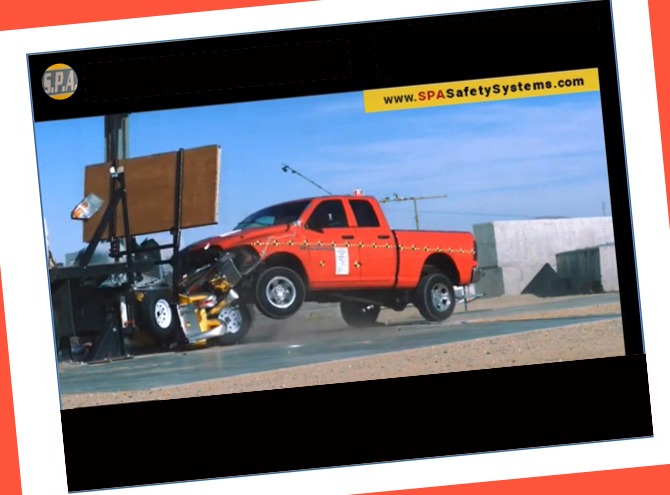
The Manual on Uniform Traffic Control Devices isn’t exactly bedtime reading. Most contractors know the MUTCD exists, know it matters, and know they’re supposed to comply with it. Beyond that, the details get fuzzy. That approach worked fine when updates came out every few years with minor tweaks. But the MUTCD 2026 updates aren’t minor tweaks. Substantial changes are affecting how TMA trucks must be equipped, configured and deployed in work zones.
If you’re operating crash trucks under the old assumptions, you’re potentially running non-compliant equipment. That’s not just a paperwork problem. That’s a liability exposure that could cost you contracts, expose you to citations, and—in the worst case—undermine your legal position if there’s an incident in your work zone.
What Actually Changed in the 2026 MUTCD Update
The Federal Highway Administration released the 2026 MUTCD revisions in December 2025, with most provisions taking effect in early 2026. State DOTs have some flexibility in adoption timing, but the trend is toward faster implementation than previous updates.
The changes affecting TMA trucks fall into several categories. Some are about equipment specifications, others are related to operational procedures and documentation. All of them matter if you’re operating attenuator trucks on federally funded projects or state highways.
Enhanced Visibility Requirements for Shadow Vehicles
Previous MUTCD standards specified minimum requirements for warning lights and reflective markings on TMA trucks. The language was prescriptive but left room for interpretation. The 2026 update tightens these requirements significantly.
The specific requirement is for warning lights with minimum candela ratings at specified angles. Most older light bars don’t meet the new photometric standards. The lights physically illuminate, but they don’t produce enough light intensity at the required angles to meet the standard. You can’t just look at lights and tell whether they’re compliant. You need photometric test data from the manufacturer showing the lights meet the current MUTCD specifications.
Reflective sheeting requirements have also increased. The previous standard required certain amounts of reflective material but didn’t specify reflectivity values with precision. The 2026 standard specifies ASTM D4956 Type XI reflective sheeting for specific applications on TMA trucks. Type XI is a higher-performance material than what most trucks currently have installed. It provides better reflectivity at the wider entrance angles common in work zone approaches.
Attenuator Performance Standards and Testing Requirements
The MUTCD has always referenced crash testing standards for attenuators, but the 2026 update changes how those standards are applied and verified.
First, there’s now a service life maximum for attenuator cartridges. Even if a cartridge has never been impacted, it must be retired after ten years from the date of manufacture. This recognizes that materials degrade over time regardless of use. A 12-year-old attenuator that’s been sitting unused hasn’t been crash-tested at that age. The certification testing was done on new equipment.
For contractors running older trucks, this is a significant issue. A truck with a 2014-manufactured attenuator must have that attenuator replaced by 2024, which means it should already have been replaced. If you’re rolling into the 2026 construction season with attenuators manufactured before 2016, you’re running out-of-compliance equipment.
The verification requirements have also changed. Previously, contractors could maintain records showing when attenuators were installed and provide manufacturer certification. The new standard requires serial-number tracking and verification that specific attenuators on specific trucks meet current crash-test standards. This prevents situations where someone swaps an old attenuator from a retired truck onto a newer truck without proper documentation.
Work Zone Intrusion Alert System Requirements
This is entirely new territory. The 2026 MUTCD doesn’t just recommend work zone intrusion alert systems—it requires them for specific types of operations.
Any work zone on a limited-access highway with posted speeds of 55 mph or higher must have an active intrusion alert system. This typically refers to systems that detect vehicles entering the work zone and alert workers with visual or audible signals.
For TMA trucks, this requirement applies when the truck is positioned as the primary protective measure. The truck itself must have intrusion detection capability that alerts the operator when a vehicle approaches at an unsafe speed or trajectory.
The technology has existed for years, but it was optional. Now it’s mandatory for certain applications. The systems range from relatively simple radar-based detection to sophisticated camera-based systems with AI processing. Costs start at around $3,500 for basic systems and can reach $12,000 or more for advanced installations.
Documentation and Inspection Requirements
The 2026 MUTCD significantly expands documentation requirements for TMA trucks operating in compliant work zones. This isn’t about the equipment itself—it’s about proving your equipment meets the standards.
Every TMA truck must now have an equipment compliance folder maintained either physically in the truck or electronically accessible by the operator. This folder must include:
Current certification documents for the attenuator system, including manufacturer specs and crash test reports. The serial number on the certification must match the serial number of the actual attenuator installed on the truck.
Operator training records showing that anyone operating the truck has completed MUTCD-compliant work zone safety training within the past two years. This training must be documented with specific curriculum topics covered and trainer certification information.
Photometric test results for all lighting systems, demonstrating compliance with the candela requirements at specified angles. This is new and catches many contractors off guard. Most people don’t have photometric test data for their lights because it was never required before.
For many contractors, assembling this documentation means going back to manufacturers and suppliers to obtain specification sheets and test reports that should have been provided initially but weren’t. It means implementing maintenance documentation systems if you haven’t been keeping detailed records. It means scheduling and documenting training even if your operators have years of experience.
The Compliance Cost Analysis
Let’s break down what it actually costs to bring a typical 2020-standard TMA truck into full compliance with the 2026 MUTCD.
Attenuator replacement: If your attenuator is approaching or past its 10-year service life, replacement costs $18,000 to $ 28,000, depending on the specific model and truck configuration. This is a major expense, but there’s no way around it. An expired attenuator makes your entire truck non-compliant.
Intrusion alert system: A basic compliant system costs $4,000 to $6,000 installed. More sophisticated systems with additional features run $8,000 to $15,000. Most contractors are finding that spending a bit more on a better system pays off with fewer false alerts and greater operator acceptance.
Documentation and training: Assembling compliance documentation and completing required training varies widely depending on your starting point. If you’ve been maintaining good records and your operators have recent training, the cost might be minimal—just time to organize documents. If you’re starting from scratch, figure $1,000 to $2,000 per truck for documentation and $500 to $800 per operator for compliant training.
For a typical TMA truck built to 2018-2020 standards and needing a full compliance upgrade, you’re looking at $25,000 to $45,000 per truck. For a contractor running three or four TMA trucks, that’s a six-figure capital expense that probably wasn’t budgeted for.
What Non-Compliance Actually Costs You
The direct compliance costs are significant, but the costs of non-compliance are usually higher.
Lost contracts: Most state DOT specifications now explicitly reference MUTCD compliance. If your equipment doesn’t meet current MUTCD standards, you’re not eligible to bid on those projects. Even private contracts increasingly require MUTCD compliance because general contractors don’t want the liability exposure of using non-compliant subcontractors.
We’ve talked to contractors who lost out on their typical seasonal work because their equipment wasn’t upgraded. One contractor in Pennsylvania missed out on $400,000 worth of work across three projects because their TMA trucks didn’t meet the new lighting standards. The cost to upgrade those trucks would have been about $15,000 total. They saved $15,000 and lost $400,000 in revenue. That’s not good math.
Citations and penalties: State DOTs and OSHA can issue citations for non-compliant equipment operating in work zones. Citation amounts vary, but $5,000 to $15,000 per violation is common. If you’re cited for multiple non-compliant items on the same truck, those citations stack up quickly.
Liability exposure: Here’s the scenario every contractor should fear: there’s an incident in your work zone. A vehicle strikes your TMA truck. Someone is injured or killed. The investigation reveals that your truck wasn’t MUTCD-compliant.
Suddenly, you’re not just dealing with a tragic accident. You’re dealing with negligence allegations. The plaintiff’s attorney will argue that your non-compliant equipment contributed to the incident. Your insurance company will look for ways to deny coverage or reduce its exposure. You might be personally liable for damages.
Even if the non-compliant aspect of your equipment didn’t actually contribute to the accident—maybe the lighting wasn’t compliant, but it was broad daylight, and visibility wasn’t a factor—you’ve handed the plaintiff’s attorney a weapon to use against you. Juries hear “didn’t meet federal safety standards” and assume the worst.
Strategies for Managing Compliance Costs
The compliance costs are real, but they don’t have to be catastrophic if you approach them strategically.
Prioritize based on project requirements: Not every truck needs every upgrade immediately. If you have trucks that operate primarily on local roads with lower speed limits, intrusion alert systems might not be required immediately. Focus your immediate spending on trucks operating on high-speed, limited-access highways where all requirements apply.
Phase the upgrades: If you’re running multiple trucks, you don’t have to upgrade them all simultaneously. Bring one or two trucks to full compliance first. Use those trucks for projects with the strictest requirements. Upgrade remaining trucks as budget allows or as they’re needed for specific projects.
Consider disposition of older equipment: Sometimes the cost to bring an old truck into compliance exceeds the truck’s remaining value. A 2012 truck that needs a new attenuator, complete lighting upgrade, reflective sheeting replacement, and intrusion alert system is looking at $50,000 in compliance costs. If the truck itself is only worth $40,000, the math doesn’t work.
Bundle work to reduce costs: If you’re upgrading multiple trucks, combining the work can reduce per-truck costs. A shop that’s already doing lighting upgrades on three trucks can do them more efficiently than if you bring trucks in one at a time over several months.
Similarly, if a truck needs an attenuator replacement and lighting upgrades, doing both simultaneously saves time on mobilization and demobilization. The truck comes out of service only once, not twice.
The Technology Silver Lining
While the compliance requirements create cost pressure, the technology improvements they drive often deliver operational benefits beyond mere compliance.
Modern LED lighting systems are brighter and more visible than older lights, but they’re also more energy-efficient and reliable. Contractors report fewer roadside lighting failures after upgrading to compliant LED systems. That means fewer situations in which a truck has to be taken out of service mid-project for minor repairs.
The intrusion alert systems that are now required for certain operations provide real safety benefits. Operators report feeling more secure knowing they’ll receive a warning if a vehicle approaches erratically. Several contractors have told us about close calls in which intrusion alerts gave their operators time to react and avoid what could have been a serious incident.
Getting Ahead of the Curve
The contractors who handle MUTCD compliance most successfully are the ones who treat it as a competitive advantage rather than a regulatory burden.
When you can document complete compliance with current standards, you become the preferred contractor for risk-averse general contractors and DOTs. They know that hiring you won’t create compliance headaches or expose them to liability.
When your equipment incorporates the latest safety technology, you can market that to customers and workers alike. Safety-conscious workers prefer to work for contractors with modern, well-maintained equipment. Customers increasingly view contractor safety records and equipment quality as important selection criteria.
When you implement systematic documentation and maintenance procedures to meet MUTCD requirements, you build operational systems that make your entire company more efficient and professional.
The contractors who fight compliance and do the minimum required are constantly reacting to new requirements and falling behind. The contractors who embrace compliance and even exceed minimum standards find themselves better positioned as requirements evolve.
FAQs: MUTCD 2026 Updates
Do the new MUTCD requirements apply to TMA trucks I already own, or only to new trucks I purchase?
The MUTCD requirements apply to all trucks operating in work zones covered by MUTCD standards, regardless of when those trucks were manufactured or purchased. No grandfather clause exempts older equipment. Some requirements took effect immediately upon the standard’s publication, while others have phase-in periods.
For example, the work zone intrusion alert system requirement includes an 18-month phase-in period, which gives contractors time to retrofit existing equipment. But lighting standards and reflectivity requirements generally took effect immediately, with enforcement beginning after a brief transition period. The practical reality is that most state DOTs didn’t immediately begin citing contractors for minor non-compliance with brand-new standards, but that informal grace period is ending.
How do I verify that the equipment I’m considering purchasing actually meets 2026 MUTCD standards? I don’t want to buy something that claims to be compliant but isn’t.
This is a legitimate concern because the market has sellers making exaggerated or inaccurate compliance claims. Here’s how to properly verify compliance. First, ask for specific documentation.
For attenuators, require crash-test documentation demonstrating that the specific model meets MASH (Manual for Assessing Safety Hardware) TL-3 standards, as referenced by the MUTCD. The documentation should include the test report number and date. For reflective sheeting, verify that the material is certified to ASTM D4956 Type XI or to the type specified by the MUTCD for that application.
The manufacturer should provide a certification letter. Second, verify serial number traceability. Legitimate compliant equipment has serial numbers that can be traced to specific test reports and manufacturing dates. If someone can’t or won’t provide serial numbers and traceability documentation, that’s a red flag.
My state DOT hasn’t adopted the 2026 MUTCD changes yet. Do I still need to upgrade my equipment now, or can I wait until my state officially adopts the new standards?
This is a nuanced question with both legal and practical dimensions.
Legally, you might be able to continue operating non-compliant equipment until your state formally adopts the updated MUTCD. State adoption processes vary, and some states take 12 to 24 months to incorporate new MUTCD revisions into their state regulations officially.
However, here’s why waiting is usually a bad strategy. First, federal highway funding often requires compliance with current MUTCD standards, even if state regulations haven’t yet caught up. If there’s an incident in your work zone and your equipment doesn’t meet published federal safety standards, that becomes evidence in any litigation, regardless of whether your state has formally adopted those standards.
Moving Forward
If you haven’t already addressed 2026 MUTCD compliance for your TMA truck fleet, now is the time to do so. The longer you wait, the harder it becomes to schedule upgrades and the greater the risk of losing project opportunities.
Start with an honest assessment of where your equipment stands. Go through each truck and document what meets current standards and what needs attention. Don’t guess—verify. Get manufacturer documentation showing your equipment meets specific MUTCD requirements.
Develop an upgrade plan and budget. Prioritize trucks and upgrades based on your project schedule and requirements. Figure out what needs to be done immediately and what can wait.
We provide compliance assessments and upgrade services at our Flanders facility. Knowing the MUTCD standards in detail, we ensure our builds and retrofits meet compliance is core to what we do.
Call us at 973-347-1101 or email austin@westchestermachinery.com. Let’s review your fleet and develop a practical compliance plan that keeps you operating legally and competitively.