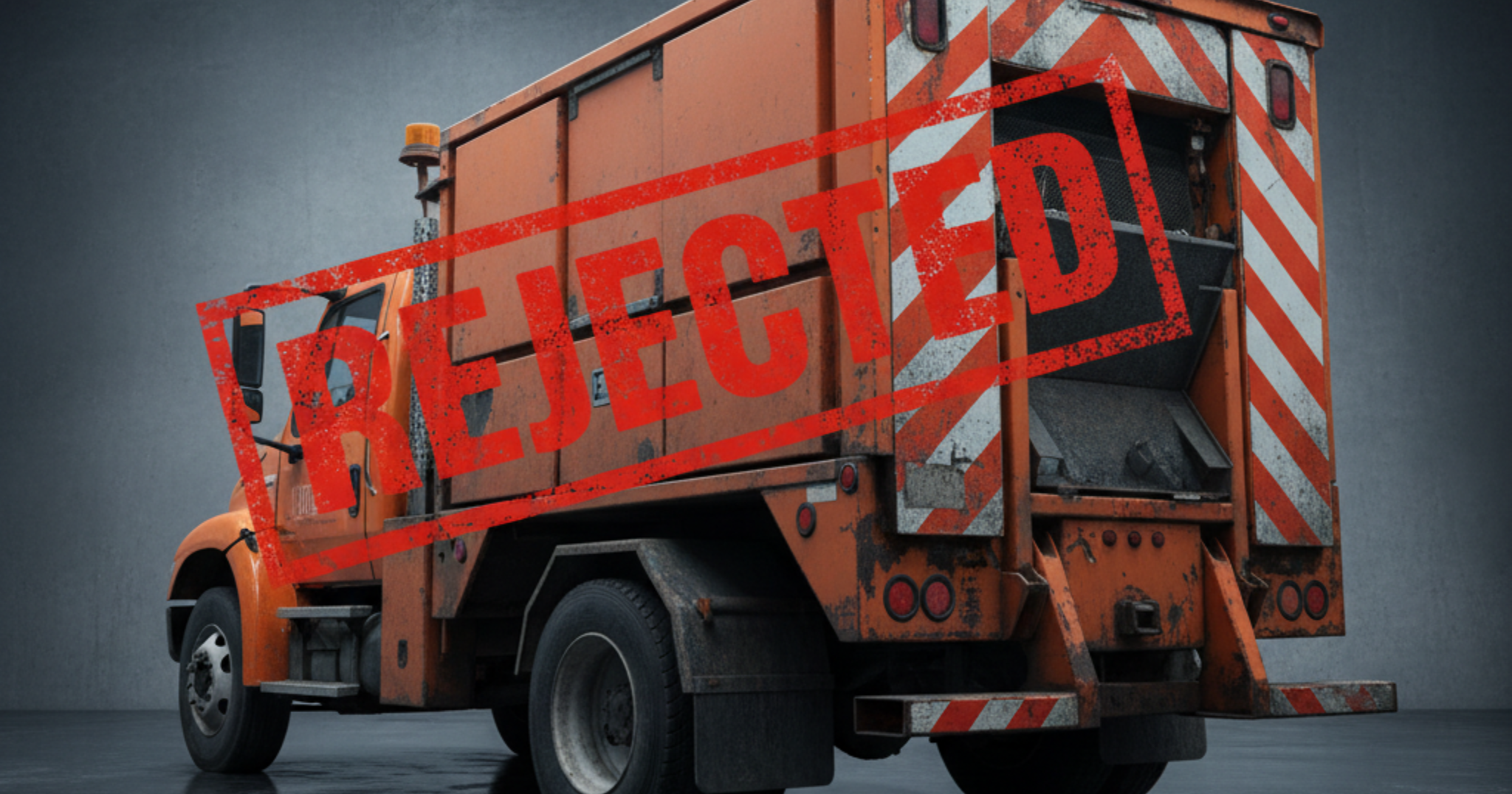
You submitted a competitive bid, and your selected pricing was sharp. The safety record looked good, and the crew has experience. On paper, you checked every single box the DOT required. Then you got the rejection letter—or worse, you didn’t get any letter at all, just silence while you watched some other contractor start the job you thought was yours.
What the hell happened?
Here’s what nobody tells you when you’re sitting in those pre-bid meetings or filling out qualification forms: the condition and presentation of your equipment matters way more than you think. That TMA truck you’re listing on your equipment roster? Someone’s actually going to look at it. And if it looks like it barely passed inspection last year, if the paint’s faded and the body’s dented, if there’s rust showing through or the attenuator looks questionable, you just lost the bid before pricing even mattered.
This isn’t about being unfair or superficial. There are legitimate reasons why equipment condition impacts bid decisions. Once you understand the game being played, you can either upgrade your fleet or at least present what you’ve got in a way that doesn’t automatically disqualify you from six-figure contracts.
The Pre-Qualification Process Nobody Explains Properly
Let’s talk about how DOT contracts actually work, because if you don’t get the evaluation process, you won’t understand why your equipment matters this much.
Most state DOTs and federal highway jobs make you go through pre-qualification before you can even turn in a bid. This isn’t some form you fill out and forget about. They’re checking that you’ve actually got the money, experience, and equipment to do the work safely and finish on time. Pre-qualification usually means they’re digging into your finances, looking at your safety record, checking your past jobs, and—this is where guys get tripped up—physically inspecting your equipment.
When you put equipment on that pre-qualification form, you’re not just making a list. You’re telling the agency that this stuff exists, meets current safety rules, has been maintained, and can actually be used on the project.
All that goes into a report that project managers review when they’re choosing between contractors. When you’ve got multiple bids coming in at similar prices, equipment condition can be what decides it. Even if you’re the lowest bidder, sketchy equipment can get your bid thrown out as “non-responsive” or make them give the job to the second-lowest guy who they actually believe can get it done.
What DOT Inspectors Actually Look For During Equipment Review
I talked to a former state DOT inspector who spent 15 years evaluating contractor equipment for highway projects, and he laid out exactly what they check when they show up at your yard. This is the stuff that separates contractors who consistently win bids from contractors who keep getting mysteriously rejected despite competitive pricing.
First, they’re looking at overall presentation and maintenance appearance
Before they even get into technical inspections, they’re forming an impression based on how your equipment looks from twenty feet away. Is your yard organized or is equipment scattered randomly? Are your trucks clean or covered in months of mud and grime? Is there obvious body damage, rust, or missing components? Does your equipment look like it’s been maintained, or does it look like it’s being run into the ground?
This isn’t about being shallow. A truck covered in rust and dents with a cracked windshield and bald tires tells them you probably don’t have a proper maintenance program. If you’re not maintaining the stuff they can see, what’s happening with the stuff they can’t see? Why should they trust you with a multi-million dollar project when your equipment looks like it’s one breakdown away from a safety incident?
They’re evaluating mechanical condition
They’re going to ask you to start the truck, listen for weird noises, watch for excessive smoke and check fluid levels.
If your truck struggles to start, if there’s oil leaking, if the attenuator makes grinding noises or doesn’t fully deploy, you just failed the inspection.
They’re assessing whether you have adequate backup equipment
Smart DOT project managers know that equipment breaks down. What they want to know is whether you’ve got redundancy. If you’re bidding a project that requires two TMA trucks and you only own two TMA trucks total, that’s concerning. What happens when one needs repairs? Are you going to leave the work zone unprotected? Are you going to scramble to rent something at the last minute?
The Hidden Scoring System That Ranks Your Equipment
Here’s something most contractors never learn: many DOT agencies use numerical scoring systems for bid evaluation, and equipment condition is often worth 10% to 20% of your total score. You can have the lowest price and still lose if your equipment score tanks your overall evaluation.
The scoring typically breaks down as follows: price might be 40% to 50% of your score, safety record might be 15% to 20%, past performance might be 15% to 20%, and equipment/resources might be 10% to 20%. Within that equipment category, they’re evaluating adequacy, condition, and availability.
Your competitors who keep winning bids? They figured this out years ago and know equipment presentation matters. They understand inspectors are coming to their yard, so they make sure everything looks professional and well-maintained before any bid-related visit. They’ve got maintenance documentation organized and ready to produce. They’ve invested in keeping their fleet looking good even when it means spending money on cosmetic repairs that don’t technically affect function.
Why Newer Isn’t Always Necessary (But Looking Maintained Is)
Here’s some good news: you don’t necessarily need brand new equipment to win DOT contracts. What you need is equipment that looks and performs like it’s been properly maintained and can reliably complete the project.
A fifteen-year-old TMA truck that’s been taken care of—actually maintained, serviced on schedule, fixed when something breaks—can look just as good on paper as a five-year-old truck if you know what you’re doing. It’s all about proving you’re serious with your equipment.
That means keeping real maintenance records that show you’re not skipping oil changes or putting off service. It means repairing body damage and addressing rust before they get out of hand. Or washing your trucks, especially before anyone’s coming to look at them for a bid. This may also refer to swapping out parts before they fail on you, rather than waiting for something to blow up on a job site. It means having a backup plan when equipment goes down.
Some guys think they can just beat their equipment to death and replace it when it finally dies. That might fly on small private gigs where nobody’s checking what you’re running, but it’ll screw you hard when you’re going after public work where they’re looking at everything you’ve got.
The Preventative Maintenance Documentation That Actually Matters
Let’s talk about documentation because this is where a lot of contractors fall short without realizing it. You might actually be maintaining your equipment properly, but if you can’t prove it with documentation, it doesn’t count.
What DOT inspectors want to see is a formal preventative maintenance program with records showing you’re following it. This should include:
Service schedules based on manufacturer recommendations or industry standards. Your documentation should show you’re performing oil changes, filter replacements, brake inspections, hydraulic system checks, and major services at appropriate intervals. If the manufacturer says service the truck every 5,000 miles or six months and your records show you’re doing it every 15,000 miles or eighteen months, that’s not a good look.
Work orders or invoices for all maintenance and repairs. Every time work gets done on a truck, there should be paperwork. Date, description of work performed, parts replaced, who did the work, cost. This doesn’t have to be fancy. A simple logbook or spreadsheet works fine as long as it’s complete and organized.
How To Present Your Equipment To Win More Bids
Assuming you’ve got decent equipment and you’re maintaining it properly, here’s how to present everything to maximize your evaluation scores and win more contracts.
Schedule a pre-inspection cleanup before any bid-related site visit.
If you know DOT inspectors are coming to review your equipment, take a day or two beforehand to clean everything. Wash the trucks. Clean the interiors. Organize your yard. Make sure equipment is accessible and easy to inspect. Fix any obvious cosmetic issues, such as broken lights or missing trim pieces. You want inspectors to walk into a yard that looks professional and organized.
Highlight redundancy and backup resources.
Make sure inspectors understand you have more equipment than the minimum required for the project. “This project requires two TMA trucks, and we have four in our fleet plus relationships with rental companies for backup if needed.” This addresses their concerns about project risk.
Offer references from previous projects where your equipment performed reliably.y
Having project managers from past DOT contracts vouch for your equipment’s reliability can help overcome concerns about the fleet’s age. “Here’s the contact for the project manager on the Route 17 widening we completed last year. Feel free to ask about our equipment performance.”
When It Actually Makes Sense To Upgrade Your Fleet
Sometimes no amount of maintenance and documentation can overcome equipment that’s legitimately too old or outdated for current standards. How do you know when it’s time to upgrade rather than trying to squeeze more years out of what you’ve got?
If your equipment no longer meets current safety standards and can’t be upgraded
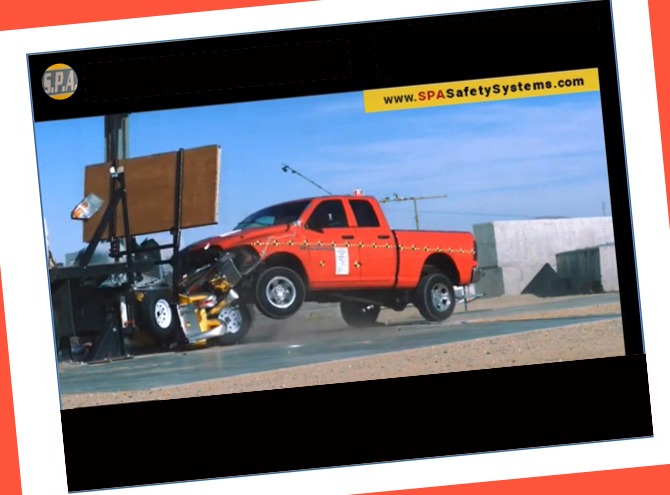
Older TMA trucks that don’t meet MASH standards and can’t be retrofitted need to be replaced if you want to compete for federal highway projects. The certification requirements have gotten stricter, and agencies won’t accept equipment that doesn’t comply.
If maintenance costs are exceeding 20% to 30% of equipment value annually
When you’re spending $30,000 to $40,000 per year maintaining a truck worth $100,000, you’re throwing good money after bad. Those maintenance dollars could be going toward payments for newer equipment that won’t break down as often.
If you can’t get parts for aging equipment
Some older TMA models have parts that are discontinued or hard to find. If you’re constantly hunting for components or fabricating custom solutions, that’s both expensive and unreliable. Equipment downtime kills profitability.
Suppose your fleet limits you from bidding on larger or more profitable projects
Some contractors get stuck in a cycle where their older equipment only qualifies them for smaller projects, which don’t generate enough revenue to upgrade their fleet, which keeps them stuck bidding on small projects. Sometimes you need to make a strategic investment in newer equipment to break into a higher tier of contracts.
The Financial Reality of Equipment Investment vs. Contract Revenue
A contractor running two older TMA trucks might be winning $1.5 million to $2 million in annual DOT contract revenue. If upgrading to newer equipment costs $300,000 but allows them to compete for larger projects and win more bids, potentially increasing revenue to $3 million to $4 million annually, that’s an ROI that pays for itself in a year or two.
The calculation needs to factor in:
- Current win rate on bids and average project size
- Potential win rate and project size with upgraded equipment
- Cost of equipment upgrade (purchase, lease, or rental)
- Financing costs and tax implications
- Reduced maintenance costs with newer equipment
- Opportunity cost of contracts you’re not winning now
Many contractors make the mistake of focusing only on the upfront equipment cost without considering the revenue impact. Yeah, spending $150,000 on a newer used TMA truck feels expensive. But if that truck helps you win three additional contracts worth $1 million each over the next few years, it’s one of the best investments you’ll ever make.
On the flip side, some contractors overinvest in equipment relative to their market opportunity. If you’re in a small regional market with too few large DOT projects to justify a large fleet, buying a bunch of new equipment might leave you overextended and struggling with payments.
FAQs: DOT Bid Requirements
Q: Can I rent equipment to meet DOT pre-qualification requirements, or do I need to own everything?
Most DOT agencies want you to either own your equipment or have rental agreements in place before they give you the contract. You can’t just tell them “we’ll figure out the equipment if we get the job”—they need proof you’ve got it locked down. Some agencies care more than others about this, but usually they’re looking for equipment you own outright, long-term leases you’ve already signed, or rental agreements that spell out exactly what you’re getting.
The smart way to handle it is to list what you actually own, then document real backup rental options for when your primary stuff is in the shop—throwing equipment on your bid that you’re planning to buy later? That’s lying, and it’ll get you kicked out of the bid or blocked from future work. They take that stuff seriously.
Q: How old is too old for TMA trucks when bidding DOT contracts?
There’s no hard rule on how old is too old, but you’re usually pushing it once you get past 15 to 20 years, depending on how the truck looks and what standards it meets. The real problem isn’t the age—it’s whether your equipment still meets current MASH or NCHRP 350 safety requirements. Older trucks certified under older standards might not cut it for federal highway work anymore, even if they run fine.
A 12-year-old TMA truck that’s been maintained properly, meets today’s standards, and has all the maintenance records? That can win bids. An 8-year-old truck that’s been beaten up and barely squeaks through inspection? That’s going to hurt you when they’re scoring your bid.
Stop worrying so much about the year on the title and focus on whether it’s in good shape, meets the certifications, and you can prove you’ve been taking care of it. But look, if you’re still running stuff from the ’90s or early 2000s, you’re probably getting crushed by competitors with better equipment. At that point, you need to start thinking about upgrading.
Q: What’s the single most important thing I can do right now to improve my equipment evaluation scores?
Start maintaining detailed, organized documentation of all maintenance and service work performed on every piece of equipment. This is something you can implement immediately at zero or minimal cost, and it makes a huge difference in how professional you appear during equipment evaluations. Create a simple logbook or spreadsheet for each truck that tracks service dates, work performed, parts replaced, and costs. Keep invoices and receipts organized by equipment unit. Document your preventative maintenance schedule and show you’re following it consistently.
Taking Control of Your Bid Success
The first step is honestly evaluating where you stand right now. Walk your own yard like a DOT inspector would. Look at your equipment with critical eyes. Is this a fleet you’d trust if you were awarding a multi-million dollar contract? Does your documentation demonstrate a professional maintenance program? If you’re being honest with yourself and the answer is no, then you know what needs to change.
The second step is creating a plan. Maybe that means scheduling professional equipment inspections to identify issues before they become problems. It means investing in body work and cosmetic repairs. This means organizing a formal maintenance documentation system. It may mean trading in your oldest truck for a newer used model from a reputable dealer like SPA Safety Systems.
The third step is to actually implement the plan, even when it feels expensive or time-consuming. This is where most contractors fail. They recognize the problem, they create a plan, and then they don’t follow through because other priorities come up or they convince themselves it’s not that important. Don’t be that contractor.
You’ve worked too hard building your business to keep losing bids because of something as fixable as equipment presentation. Your competitors already know this matters. Now you do too. What you do with that information determines whether you keep watching other contractors win the projects you bid on or whether you start winning them yourself.