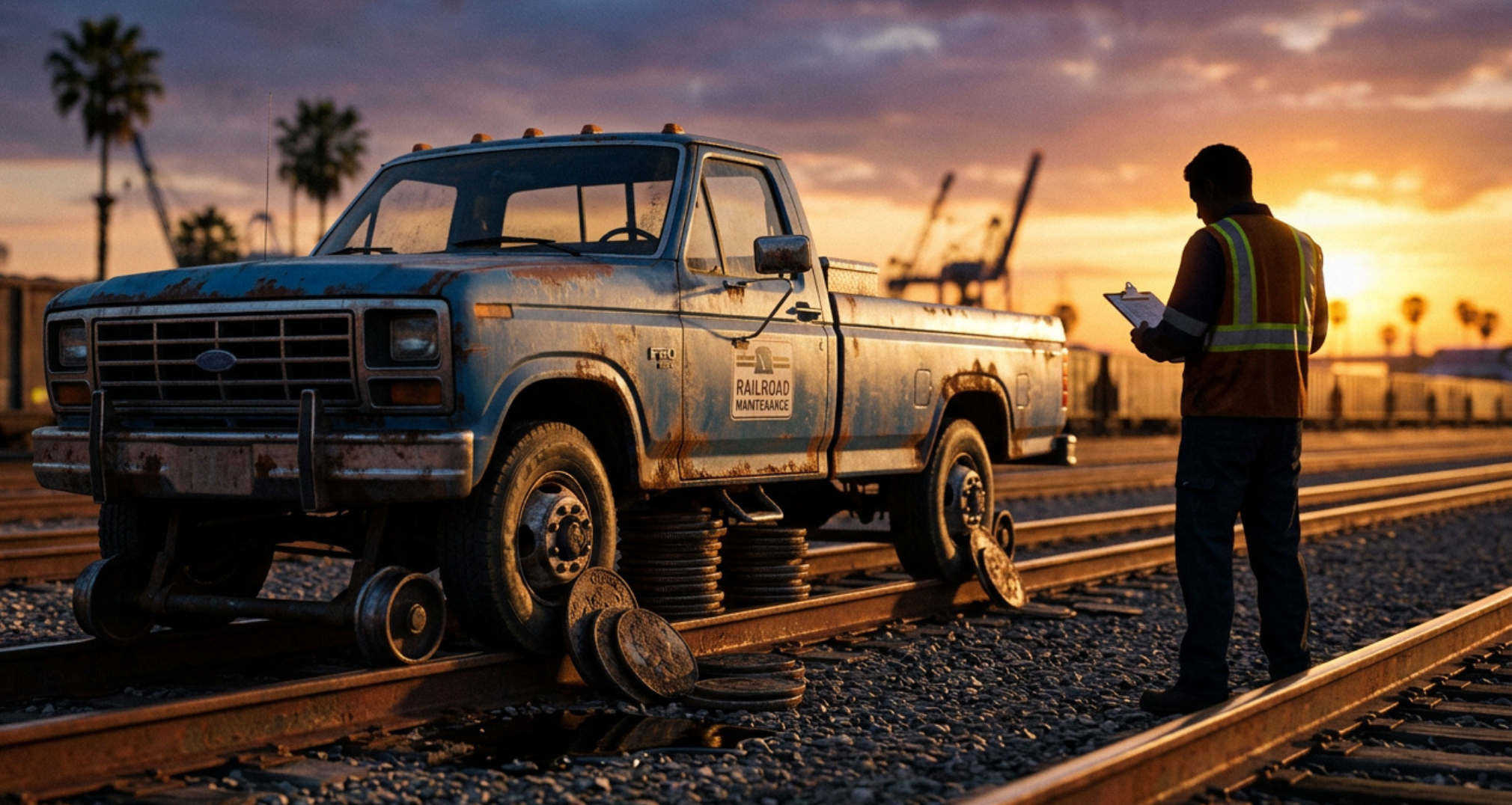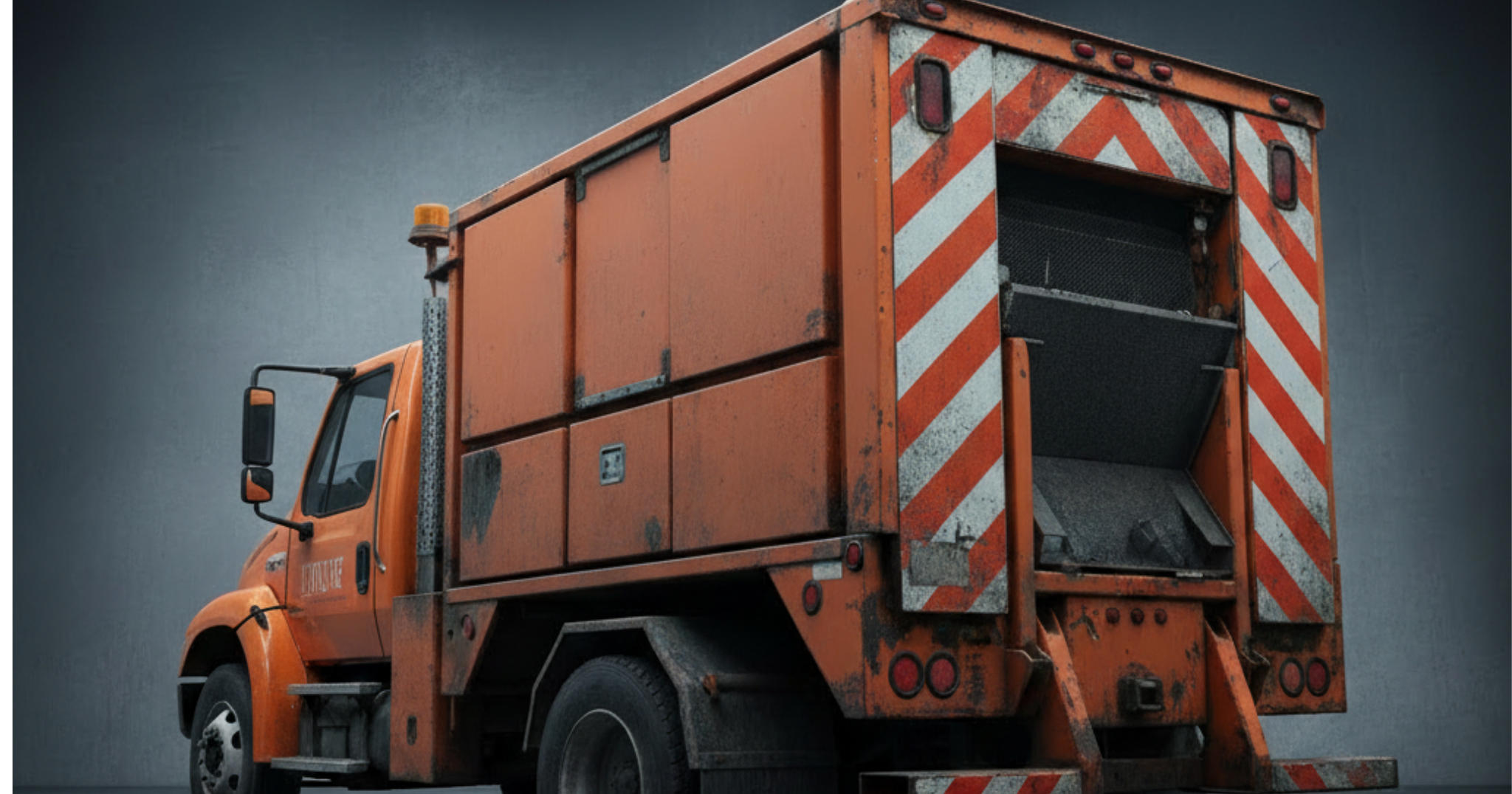
You found a deal. Some guy’s selling a cheap attenuator truck for $38,000, maybe $45,000 if you’re being generous with the definition of “good deal.” It’s got some miles on it, sure. The body’s got some wear, obviously. The attenuator system is an older model, but hey, it still deploys. The paint’s faded and there’s some rust showing through, but you’re not buying this thing to win beauty contests. You’re buying it to make money on highway projects.
Your accountant tells you the monthly payment would be manageable. Your crew needs the equipment to bid on state contracts. The seller swears it’s been reliable for him. You’re thinking this could be the move that gets your company into bigger projects without breaking the bank on a $150,000 new unit.
So you buy it.
And for the first month or two, everything seems fine. Then the problems start. Little things at first—a hydraulic leak here, an electrical issue there. Then bigger problems. The attenuator won’t retract properly. The truck breaks down on a job site. An inspector flags compliance issues. Your insurance company raises questions. Suddenly, you’re dumping money into repairs and losing money due to project delays.
Two years later, you’ve spent more on that “bargain” truck than you would have spent buying something decent in the first place. And you still don’t have reliable equipment.
I’m going to break down the actual, real-world total cost of ownership for cheap items versus a quality Attenuator Crash Truck, and show you exactly where those hidden costs come from. This isn’t theory. This is math based on what contractors actually experience when they try to save money upfront and end up spending way more over the life of the equipment.
By the end of this, you’ll understand why the cheapest option is rarely the best value, and how to actually calculate true cost rather than just looking at the purchase price.
The Purchase Price Is Maybe 40% of What You’ll Actually Spend.
Let’s start with the fundamental mistake most contractors make when evaluating equipment: they focus almost entirely on purchase price and ignore everything else that factors into total cost of ownership.
You see a TMA truck listed at $40,000 and another one at $85,000, and your brain immediately does the math. “I can save $45,000 by buying the cheaper one.” That sounds rational. That sounds like smart business. But that calculation is completely wrong because it only looks at one variable in a multi-variable equation.
Total cost of ownership for any piece of equipment includes:
- Initial purchase price or financing costs
- Insurance premiums (which vary dramatically based on equipment condition and value)
- Maintenance and repair costs over the ownership period
- Fuel consumption (older trucks are often less efficient)
- Downtime costs when equipment is being repaired
- Lost contract opportunities due to equipment failures or compliance issues
- Resale value at the end of the ownership period
- Financing costs if you’re not paying cash (and cheap equipment often comes with worse financing terms)
When you actually calculate all of those variables, the cheap truck that seemed like such a deal ends up costing way more than the more expensive option over three to five years of ownership.
Where The Money Actually Disappears: A Breakdown
Let’s dig into each category of hidden costs so you understand exactly where cheap equipment destroys your profitability.
Maintenance and Repair Costs
This is the big one. Cheap attenuator trucks cost dramatically more to maintain for several reasons.
If you’re buying cheap, you’re usually buying old. Old equipment breaks more frequently. Components wear out. Systems fail. You’re constantly fixing things. A contractor in Ohio told me he bought a 2008 TMA truck for $35,000 thinking he got a steal. In the first year alone, he spent:
- $3,200 replacing hydraulic lines and pump
- $1,800 on electrical system repairs
- $2,400 on brake system overhaul
- $1,600 on transmission work
- $900 on miscellaneous repairs and maintenance
That’s $9,900 in year one. His “cheap” truck cost him almost $45,000 in the first year when you factor in the purchase price. And those weren’t unusual problems. That’s just normal wear and tear on old equipment catching up with him all at once.
A quality used truck that’s been properly maintained might need $4,000 to $6,000 per year in regular maintenance and minor repairs. A cheap truck that’s been run hard and neglected can easily cost $10,000 to $15,000 per year, and that’s if you don’t have any major component failures.
Insurance Premium Differences
Here’s something most contractors don’t think about until after they’ve bought cheap equipment: insurance companies care about what you’re insuring, and they charge accordingly.
A TMA truck is already expensive to insure because of the specialized nature of the work and the high-risk environment. But insurance companies charge different rates based on equipment age, condition, value, and safety features.
An older truck with outdated safety systems, questionable maintenance history, and lower replacement value might cost you $3,500 to $4,500 per year to insure. A newer or better-maintained truck with modern safety features and higher value might cost $2,800 to $3,400 per year.
If your cheap truck has repeated mechanical failures or is involved in incidents because of equipment problems, your premiums go up even more. Insurance companies track claims history by equipment unit. A truck that’s constantly having issues becomes more expensive to insure year after year.
Downtime Costs (This Is Where Cheap Equipment Really Kills You)
The single biggest hidden cost of cheap attenuator trucks is downtime. When your equipment breaks, you’re not just paying for repairs. You’re losing money on projects you can’t complete, contracts you can’t fulfill, and opportunities you have to pass up.
Let’s say you’re working on a highway project paying $2,500 per day for your TMA truck and crew. Your cheap truck breaks down and needs three days in the shop for repairs. That’s $7,500 in lost revenue right there, plus repair costs and potential penalties or damage to the client relationship due to project delays.
The difference—$112,500 to $125,000 over five years—is more than enough to have just bought better equipment in the first place.
And this doesn’t even account for emergency breakdowns during critical project phases. If your truck dies in the middle of a contract and you can’t get it fixed immediately, you might have to rent replacement equipment at premium rates, delay the project and incur penalties, or lose the contract entirely.
Compliance and Certification Issues
Upgrading a non-compliant truck to meet current standards can cost $10,000 to $25,000, depending on the work required. Sometimes it’s not even possible to bring older equipment into compliance without essentially rebuilding it at a cost that exceeds the truck’s value.
A contractor in Tennessee bought a cheap TMA truck for $38,000, only to discover it didn’t meet MASH certification requirements for the DOT contracts he wanted to bid on. The cost to retrofit it with a compliant attenuator system? $22,000. He ended up with $60,000 invested in a truck that still had all the other problems associated with old, cheap equipment.
If he’d just bought a truck with proper certification from the start, he would have avoided that entire expense. He could have started bidding on contracts immediately, rather than waiting months for retrofitting work.
Financing Costs
Banks and equipment lenders aren’t stupid. They know old, cheap equipment is riskier to finance because it’s more likely to break down, have compliance issues, or lose value quickly. As a result, they charge higher interest rates and require larger down payments for older equipment.
You might get 5% to 6.5% financing on newer equipment in good condition. That same lender might charge you 7.5% to 9% on old equipment, or refuse to finance it at all beyond a certain age.
On a $40,000 loan, the difference between 6% and 8% interest over five years is about $2,100. Not devastating, but it adds up. And if you’re financing multiple pieces of equipment, those financing cost differences compound.
Even worse, cheap equipment usually requires larger down payments (20% to 30% vs. 10% to 15% for newer equipment), tying up your working capital that could be used for other business needs.
Resale Value Collapse
When you buy cheap, you’re usually buying equipment that’s already depreciated significantly. That means there’s not much value left to recover when you eventually sell or trade it in.
A $40,000 truck that’s already 12 to 15 years old might be worth only $5,000 to $10,000 after you’ve used it for 5 more years. You’re recovering maybe 12% to 25% of your purchase price.
A $85,000 truck that’s 5 to 8 years old when you buy it might still be worth $30,000 to $40,000 after five more years of use. You’re recovering 35% to 47% of your purchase price.
That difference in residual value—$20,000 to $35,000—is another huge hidden cost of buying cheap. You’re essentially throwing away money at the end of the ownership period because there’s no equity left in the equipment.
Some contractors argue they’ll just run cheap equipment into the ground and not worry about resale value. That might work if the equipment actually lasts long enough to justify the strategy, but most cheap trucks become money pits long before they’re completely worthless.
When Cheap Actually Makes Sense (It’s Rare, But It Happens)
Look, I’m not saying cheap equipment is always wrong 100% of the time. There are specific situations where buying cheaper, older equipment can make sense. You need to be honest about whether you’re actually in one of those situations.
Situation 1: You’re buying a backup truck that won’t see heavy use
If you need a spare TMA truck for your fleet that will only be used occasionally when your primary trucks are down for maintenance, buying cheaper, older equipment might be justified. Since it won’t be used heavily, maintenance costs should be lower, and downtime doesn’t hurt you as much.
But even then, you need to make sure it’s still compliant with safety standards and can actually function when you need it. A backup truck that doesn’t work when you need it isn’t a backup; it’s just money wasted.
Situation 2: You have in-house maintenance capabilities
If you’ve got a full shop with mechanics who can handle repairs and maintenance in-house, you can absorb some of the maintenance cost burden that makes cheap equipment expensive for most contractors. You’re not paying $120 to $150 per hour for labor at outside shops. You’re handling issues as they come up with your own team.
Even with this advantage, you still need to account for parts costs and downtime, but the economics shift a bit in favor of older equipment if you can manage maintenance internally.
Situation 3: You’re in a very specific niche where modern compliance isn’t required
If you’re doing private work that doesn’t require MASH certification or DOT compliance, some of the costs associated with bringing old equipment up to current standards don’t apply to you. You might be able to run older equipment successfully if your market doesn’t demand latest-generation safety features.
This is becoming increasingly rare as even private clients often require the same safety standards as public projects. Still, if you’re genuinely in a market where compliance requirements are more relaxed, the economics of cheap equipment improve somewhat.
Situation 4: You found legitimately well-maintained older equipment at a discount
Sometimes you can find older equipment that was owned by a contractor who took exceptional care of it and is selling for reasons unrelated to equipment problems (retiring, leaving the market, etc.). If you thoroughly inspect the equipment and verify it’s truly in excellent condition despite its age, you might be able to get good value.
For most contractors in most situations, the math doesn’t support buying the cheapest equipment available. The hidden costs are too high, and the risks are too significant. But if you’re truly in one of these specific situations and you’ve done your homework, cheaper equipment can occasionally make sense.
FAQs: Cheap Attenuator Truck
Q: How much should I realistically budget for annual maintenance on a TMA truck?
For quality equipment in good condition, budget $4,000 to $6,500 per year for routine maintenance and minor repairs. This includes regular oil changes, filter replacements, hydraulic system service, brake maintenance, tire replacements, and addressing minor issues before they become major problems. For older equipment (10+ years) or equipment that wasn’t well maintained by previous owners, you should budget $8,000 to $15,000 per year.
Q: Is it worth buying a non-MASH certified truck if I’m only doing private work right now?
This depends entirely on your business plans. If you’re certain you’ll never pursue DOT contracts or federal highway projects and your private clients don’t require MASH certification, you might save money by using older equipment. However, most contractors eventually want to expand into public sector work because that’s where larger, more profitable contracts tend to be. If there’s any chance you’ll want to bid DOT projects in the next 3 to 5 years, buy MASH-compliant equipment now. Retrofitting non-compliant trucks costs $15,000 to $25,000 or more, and sometimes isn’t even possible depending on the truck’s age and design.
Q: Should I buy the cheapest truck I can find to get started, then upgrade later when I’m more established?
This is a common strategy that almost always costs contractors more money than just starting with better equipment. The logic seems sound—get something cheap to start generating revenue, then upgrade when you can afford it. The problem is cheap equipment often prevents you from generating the revenue you need to upgrade. You end up stuck dealing with breakdowns, compliance issues, and project problems that limit your growth. A better strategy is starting with one quality used truck that meets compliance standards and can reliably generate revenue, rather than buying two or three cheap trucks that create more problems than they solve. It’s better to start smaller with reliable equipment than to start larger with junk that holds you back.
Making The Decision That Actually Makes Business Sense
At the end of the day, attenuator purchases need to be business decisions based on total financial impact, not emotional decisions driven by fear of upfront spending.
Yes, it’s scary to write an $80,000 check or commit to a financing agreement for that amount. It feels like a lot of money leaving your account. But if that $80,000 saves you $50,000 in maintenance costs, $30,000 in insurance premiums, $100,000 in downtime opportunity costs, and gives you an extra $25,000 in resale value over five years, you’re $125,000 ahead compared to buying a $40,000 truck that seemed cheaper.
The contractors who build successful, profitable businesses are the ones who learn to calculate true cost and make decisions based on what actually makes financial sense over the long term, not what feels safest in the moment.
You can make the same smart decision. Just don’t let the initial price tag fool you into thinking cheap is actually saving you money when the math proves it’s costing you a fortune.