The landscape of highway work zone safety is experiencing a dramatic transformation in 2026, driven by artificial intelligence, advanced telematics systems, and innovative safety technologies integrated into modern TMA trucks. In 2026, the smart TMA truck technology is making sure things go smoothly on the highway.
For utility companies, emergency responders, and highway maintenance crews, these technological advances aren’t just improving safety—they’re fundamentally changing how organizations approach roadside work protection and operational efficiency.
The Evolution of TMA Truck Technology
Truck-mounted attenuators have come a long way from their origins as simple impact-absorbing barriers. Today’s smart TMA trucks represent the convergence of crash-protection engineering, real-time data analytics, artificial intelligence, and connected-vehicle technology.
These systems work together to create work zones that are safer, more efficient, and significantly more cost-effective than ever before.
The traditional approach to work zone protection relied heavily on manual setup, human judgment, and reactive safety measures.
Workers would arrive at a site, deploy traffic control devices, position the attenuator truck, and hope that approaching drivers would notice the warnings and slow down appropriately. This system worked reasonably well but had significant limitations—human error, inconsistent positioning, delayed response to changing conditions, and limited visibility into actual traffic patterns and risks.
Artificial Intelligence Transforming Work Zone Safety
Artificial intelligence has emerged as perhaps the most significant advancement in TMA trucks’ utility work applications. Modern AI systems integrated into attenuator trucks perform functions that were impossible just a few years ago, fundamentally changing how work zones operate and how safe they can be.
Intelligent Traffic Pattern Recognition
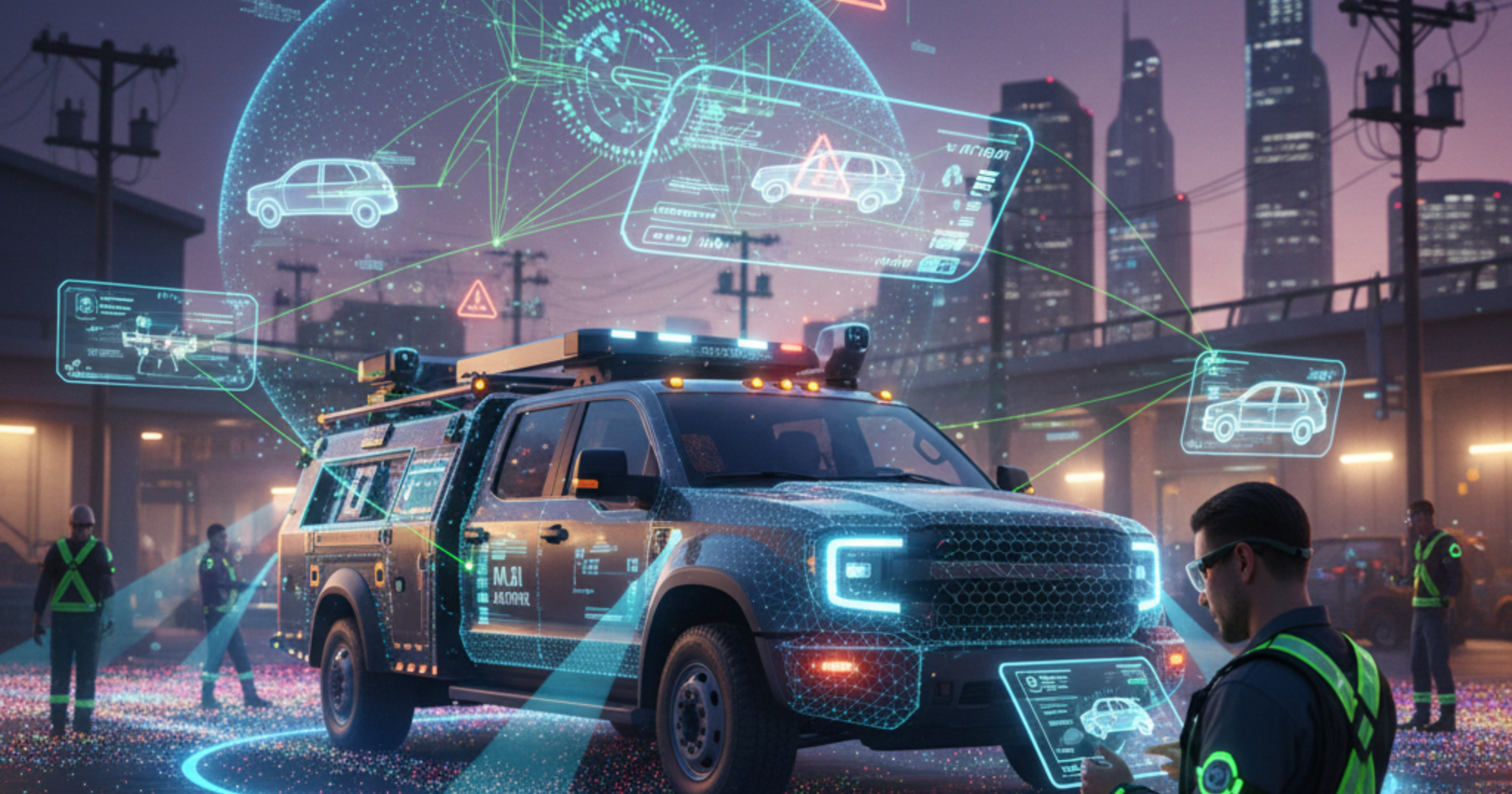
AI-powered camera systems mounted on TMA trucks continuously analyze approaching traffic, identifying patterns that indicate potential danger.
These systems can detect vehicles traveling at unsafe speeds, erratic driving behavior suggesting distracted or impaired drivers, vehicles drifting toward the work zone, and changes in traffic density that might require adjusted positioning. When the AI identifies a high-risk situation, it immediately alerts the operator through visual and audible warnings, providing critical seconds of advance notice that can prevent incidents.
The sophistication of these systems is remarkable. They don’t just detect vehicles—they analyze driving behavior with nuance that rivals human perception. The AI can distinguish between a vehicle that’s simply changing lanes and one that’s veering dangerously toward the work zone due to driver inattention.
It recognizes the difference between normal traffic flow slowdown and the sudden deceleration pattern that suggests an impending rear-end collision upstream from the work zone.
Predictive Risk Assessment
Beyond real-time monitoring, AI systems analyze historical data to predict when and where high-risk situations are most likely to occur.
By examining factors like time of day, weather conditions, traffic volume, road geometry, and past incident patterns, these systems help fleet managers and safety coordinators make informed decisions about resource deployment and work scheduling.
Automated Impact Response
When impacts do occur, AI systems instantly analyze the collision severity, automatically notify emergency services if needed, document the incident with video and sensor data, and provide immediate guidance to operators on appropriate response actions.
This automated response reduces confusion during high-stress situations and ensures that critical steps aren’t overlooked in the aftermath of an incident.
The documentation capabilities alone represent enormous value for fleet managers. Instead of relying on operator recollection and limited information to understand what happened during an incident, organizations now have comprehensive data that show exactly what occurred, how the TMA performed, and whether any procedural improvements could prevent similar situations in the future.
Telematics Revolutionizing Fleet Management
Advanced telematics systems have become standard equipment on modern TMA trucks, providing fleet managers with unprecedented visibility into vehicle operations, equipment performance, and safety compliance.
For organizations operating multiple attenuator trucks across large service territories, these systems transform fleet management from educated guesswork into data-driven decision making.
Real-Time Location and Status Monitoring
Fleet managers can now view the exact location and operational status of every TMA truck in their fleet through intuitive dashboard interfaces accessible from any device.
These systems show which trucks are currently deployed at work zones, in transit, available for assignment, or requiring maintenance or repairs. This real-time visibility enables dynamic resource allocation, ensuring that the right equipment is always available where it’s needed most.
The operational efficiency gains are substantial. When an emergency call comes in requiring TMA protection, dispatchers can immediately identify the nearest available truck and route it to the site, significantly reducing response times. When work at one site completes earlier than expected, managers can quickly reassign that truck to another location rather than having it sit idle.
Comprehensive Performance Analytics
Modern telematics systems capture detailed data about every aspect of TMA truck operations, including deployment frequency and duration, fuel consumption and efficiency, impact events and severity, maintenance needs and schedules, operator behavior and compliance, and equipment utilization rates.
This data provides actionable insights to optimize operations, reduce costs, and improve safety across the entire fleet.
Predictive Maintenance Capabilities
Rather than following fixed maintenance schedules regardless of equipment condition, smart TMA trucks now continuously monitor component health and predict when maintenance will be needed based on actual usage patterns and wear indicators.
Sensors track hydraulic pressure in attenuator systems, monitor structural integrity of impact-absorbing components, measure electrical system performance, and assess mechanical wear on moving parts.
Connected Vehicle Technology and V2X Communication
Vehicle-to-everything (V2X) communication represents the next frontier in work zone safety, and 2026 is seeing rapid adoption of these technologies in TMA trucks. V2X enables attenuator trucks to communicate directly with approaching vehicles, other work-zone equipment, traffic management systems, and infrastructure such as smart traffic signals.
When equipped with V2V capability, TMA trucks broadcast their position and status to nearby vehicles also equipped with compatible systems. Approaching drivers receive automatic alerts about the work zone ahead, well before they can see it visually, giving them more time to slow down and merge safely.
This technology is particularly valuable in conditions of reduced visibility—at night, in fog or rain, or on curves where work zones aren’t visible until drivers are dangerously close.
As more passenger vehicles come equipped with V2V receivers as standard equipment, this safety benefit will expand dramatically. Right now, the technology primarily benefits commercial fleets and newer vehicles whose owners have opted for advanced safety packages. Within the next few years, however, most vehicles on the road will be able to receive these warnings, making work zones significantly safer for everyone involved.
Automated Safety Features Enhancing Protection
Modern TMA trucks incorporate increasingly sophisticated automated safety features that enhance protection for workers and operators while reducing the burden on human decision-making during stressful situations.
Intelligent Positioning Systems
GPS-guided positioning systems help operators place TMA trucks in optimal locations for maximum protection. The system analyzes factors like road geometry, traffic speed and volume, sight distance, and regulatory requirements, then provides visual guidance showing the operator exactly where to position the truck.
This technology is particularly valuable for less-experienced operators or in unfamiliar locations where judgment about positioning might be difficult.
Some advanced systems even include augmented reality displays that overlay ideal positioning information onto the view through the truck’s cameras, making it easy for operators to achieve perfect placement every time. This consistency improves safety and ensures regulatory compliance across all deployments, regardless of operator experience level.
Automatic Impact Cushion Deployment
Next-generation TMA systems are incorporating automatic deployment features that extend and position impact cushions without requiring manual operator intervention.
When the vehicle is placed in work mode, the system automatically deploys the attenuator to the correct position, verifies proper deployment through multiple sensors, and alerts the operator if any issues are detected. This automation eliminates a potential source of human error and ensures consistent, correct deployment every time.
The reverse is equally important—when work is completed, and the truck is ready to move, the system guides operators through proper stowage procedures, ensuring that the attenuator is fully retracted and secured before the vehicle enters travel mode. This prevents the dangerous situation of operators attempting to drive with partially deployed attenuators, which can damage equipment and create hazards for other traffic.
Data Analytics Driving Continuous Improvement
The wealth of data generated by smart TMA truck systems creates opportunities for continuous improvement in safety practices, operational efficiency, and equipment performance that were impossible with previous generations of equipment.
Incident Analysis and Prevention
When incidents occur, the comprehensive data captured by smart TMA systems enables detailed analysis that goes far beyond traditional incident reports.
Organizations can review video footage from multiple angles, examine sensor data showing exactly what happened during impact, analyze the seconds leading up to the incident to understand contributing factors, and compare the incident to similar events across their fleet to identify patterns.
This analytical capability helps organizations move from simply responding to incidents toward actively preventing them. If analysis reveals that certain types of work zones or traffic conditions consistently result in near-misses or impacts, organizations can develop targeted interventions—such as additional warning signs, different positioning strategies, or modified work procedures—to address those specific risks.
Operator Performance and Training
Telematics data provides objective insights into operator performance, identifying both areas where additional training might be beneficial and operators whose techniques and practices could be shared as best practices across the organization.
Fleet managers can track metrics like deployment efficiency, positioning accuracy, fuel economy, equipment wear rates, and adherence to safety protocols.
This data-driven approach to training and development is far more effective than traditional methods based on periodic observations and subjective evaluations. Organizations can quickly identify skill gaps, provide targeted training to address specific issues, and verify that training is improving performance through measurable outcomes.
Cost Optimization and ROI Documentation
Smart TMA truck technology generates detailed data on operational costs, equipment utilization, and safety outcomes, helping organizations optimize their investments and demonstrate return on investment to stakeholders.
Fleet managers can track the total cost of ownership for each vehicle, identify opportunities to reduce fuel consumption or maintenance expenses, optimize deployment strategies to maximize equipment utilization, and quantify safety improvements through reduced incident rates.
Practical Implementation for Utility Work Applications
For utility companies, municipalities, and contractors considering smart TMA truck technology, successful implementation requires careful planning and realistic expectations about integration with existing operations.
Assessing Technology Needs and Priorities
Not every organization needs every advanced feature available in today’s smart TMA trucks. Start by assessing which technologies address your specific operational challenges and safety concerns.
Organizations with large fleets spanning wide service territories might prioritize telematics and fleet management capabilities. At the same time, those frequently operating in high-traffic areas might focus on advanced warning systems and traffic-monitoring features. Companies with aging fleets experiencing high maintenance costs would benefit most from predictive maintenance capabilities.
SPA Safety Systems works closely with customers to understand their unique requirements and recommend technology packages that deliver maximum value for their specific applications. Our team at 973-347-1101 or austin@westchestermachinery.com can help you evaluate which smart features will provide the greatest benefit for your operations.
Training and Change Management
Introducing sophisticated new technology requires thoughtful attention to training and change management.
Operators need comprehensive training not just on how to use new systems but on why they matter and how they contribute to safety. Fleet managers and dispatchers require training on interpreting data, responding to alerts, and using analytics tools effectively. Maintenance personnel need to understand new diagnostic capabilities and how to address issues identified by predictive monitoring systems.
Successful organizations approach smart TMA implementation as an organizational change initiative rather than simply an equipment upgrade.
They communicate the benefits clearly, involve operators and managers in the implementation process, provide comprehensive training before systems go live, and create support structures to help teams adapt to new ways of working.
Why Choose SPA Safety Systems for Smart TMA Technology
When you partner with SPA Safety Systems, you benefit from our extensive inventory of trucks with the latest technology features, expert guidance on selecting the right technology package for your needs, comprehensive training on all systems and features, ongoing technical support and service, and a proven track record with utility companies and emergency services nationwide.
Our facility at 278 Old Ledgewood Rd in Flanders, New Jersey, houses a 19,200-square-foot operation dedicated to the sales, service, and custom fabrication of TMA trucks and related equipment.
Making the Smart Choice for Work Zone Safety
The integration of AI, telematics, and advanced safety features into TMA trucks represents more than incremental improvement—it’s a fundamental transformation in how organizations protect workers and manage roadside operations.
For utility companies, municipalities, and contractors, these technologies deliver measurable benefits in safety outcomes, operational efficiency, cost management, and regulatory compliance.
The question facing organizations today isn’t whether smart TMA technology delivers value—the data clearly demonstrates that it does—but rather how quickly to adopt these capabilities and which features to prioritize.
Organizations that move decisively to implement smart TMA technology position themselves as leaders in worker safety while realizing significant operational advantages over competitors still relying on traditional equipment.
The investment in smart TMA trucks pays dividends across multiple dimensions. Worker injuries decrease as AI systems provide warning of dangerous situations and automated features reduce exposure to high-risk tasks.
Operational costs decline as predictive maintenance prevents expensive breakdowns and telematics data identifies efficiency opportunities. Regulatory compliance improves as systems automatically document safety practices and equipment performance. Insurance costs often decrease as carriers recognize the reduced risk profile of organizations deploying advanced safety technology.
Perhaps most importantly, smart TMA technology fosters a safety culture in which data and technology support human judgment rather than replace it. Operators gain tools that enhance their situational awareness and decision-making. Fleet managers receive objective information that helps them allocate resources effectively and identify opportunities for improvement.
Safety managers can demonstrate to workers that the organization is committed to leveraging the best available technology to protect them.
FAQs: Smart TMA Truck Technology 2026
Q: How difficult is it for operators to learn and use smart TMA truck technology?
Most operators quickly adapt to smart TMA technology, typically within a few days of hands-on training. Modern systems are designed with intuitive interfaces that feel familiar to anyone comfortable with smartphones or vehicle infotainment systems.
The key is comprehensive initial training that covers not just button-pushing but understanding what the systems are monitoring and why. SPA Safety Systems provides thorough training for all smart TMA features, ensuring operators feel confident and competent before they deploy equipment in real work zones.
Q: What happens if the smart technology systems fail or malfunction during a work zone deployment?
Smart TMA trucks are designed with redundancy and fail-safe features to ensure that core safety functions remain operational even if advanced technology systems experience problems. The fundamental crash protection capability of the TMA operates independently of smart features—if every electronic system failed, the attenuator would still absorb impact and protect workers.
That said, modern systems include extensive self-diagnostic capabilities that continuously monitor component health and alert operators immediately if any issues arise. Most “failures” are actually sensor malfunctions or communication glitches that don’t affect core functionality. Operators receive clear guidance about system status and whether equipment remains safe to use.
Q: Can smart TMA technology be retrofitted onto existing attenuator trucks, or do organizations need to purchase entirely new vehicles?
Many smart technology features can be retrofitted onto existing TMA trucks, though the feasibility and cost-effectiveness depend on the age and condition of the base vehicle. Newer trucks with modern electrical systems and controller area networks typically accommodate advanced technology additions relatively easily. Telematics systems, camera packages, and many monitoring sensors can be installed without major modifications.
However, some features—particularly those requiring deep integration with vehicle systems or extensive structural modifications—work best when incorporated during initial manufacturing. SPA Safety Systems offers custom fabrication services to evaluate your existing fleet and recommend which retrofits make sense and which capabilities require new equipment.
Getting Started with Smart TMA Truck Technology
If your organization is ready to explore how smart TMA truck technology can enhance your utility work applications, SPA Safety Systems is ready to help.
We offer both sales and rental options, allowing organizations to experience the technology before making purchase commitments or to access advanced equipment for specific projects without long-term investment.
Our team takes time to understand your specific operational requirements, work zone environments, fleet composition, and safety objectives.
We can demonstrate how different technology features address your particular challenges and provide realistic projections of the benefits you can expect. For organizations with existing TMA trucks, we also offer custom fabrication services to retrofit advanced technology features onto older equipment, extending its useful life while gaining many of the benefits of newer systems.