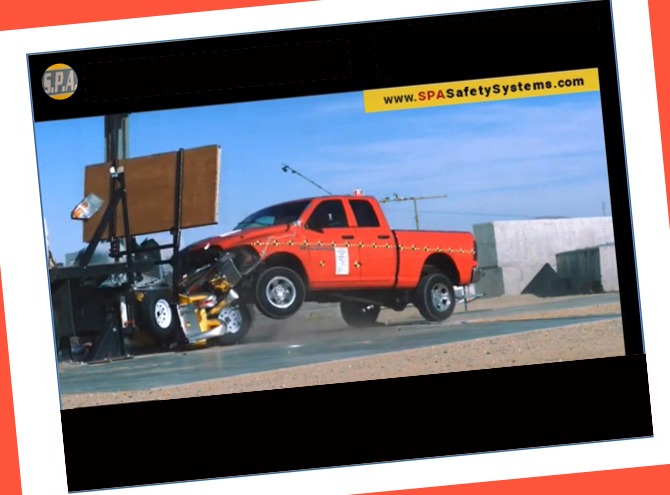
Rolling Roadblocks for Short-Term Highway Construction, Maintenance, and Utility Work Zones.
When safely implemented, rolling roadblocks are a highly effective traffic management technique for temporarily slowing or completely stopping traffic upstream of short-term road work activities.
What is a Rolling Roadblock?
TMA Attenuator-Mounted Trucks are used as rolling roadblocks. They perform temporary road closure, pacing operation, or traffic pacing. It is a common highway safety traffic control technique used to protect road-workers and commuters by temporarily slowing traffic upstream of construction, maintenance, and utility work activities requiring a short-term or full-closure of the roadway.
TMA Attenuator-Mounted Trucks
We recognize that all TMA trucks are not built equally. It is no longer safe or sufficient to use a simple flatbed truck with a mounted attenuator on federal highways. SPA is dedicated to providing premium quality TMA attenuator-mounted trucks that perform at the highest standards required in work zone safety. Call SPA at (973) 347-1101 for more information, and prices.

Free download: Work Zone Management Program, by U.S. Department of Transportation – Federal Highway Administration – CLICK HERE