The Manual on Uniform Traffic Control Devices has been updated to its 11th Edition, and with it come important changes affecting how highway contractors approach work zone safety. For those operating TMA trucks and managing highway work zones, understanding MUTCD 2026 compliance isn’t just about avoiding citations—it’s about protecting workers, meeting contract requirements, and positioning your business for the next decade of highway work.
This guide breaks down everything contractors need to know about the new MUTCD requirements, focusing specifically on what affects your daily operations and bottom line.
Understanding the MUTCD and Why It Matters to Your Business
Before diving into what’s new, let’s establish what the MUTCD actually is and why it controls so much of what happens on highway work sites.
What Is the MUTCD?
The Manual on Uniform Traffic Control Devices is the federal standard governing all traffic control devices used on public roads in the United States. Published by the Federal Highway Administration, it establishes requirements for signs, signals, pavement markings, and temporary traffic control—including work zone safety equipment.
Think of the MUTCD as the rulebook that determines which equipment you can use, how you must deploy it, and what configurations are acceptable on any road receiving federal funding. Since most highway projects involve some federal money, the MUTCD effectively governs most of your work.
The manual doesn’t just suggest best practices. States must substantially conform to MUTCD standards, meaning state departments of transportation incorporate MUTCD requirements into their own regulations and specifications. When you bid on a state highway project, MUTCD compliance is built into the contract, whether explicitly mentioned or not.
The 11th Edition Timeline
The FHWA officially published the 11th Edition of the MUTCD in late 2023, but implementation follows a phased timeline:
- December 2023: Official publication and federal adoption
- Throughout 2024-2025: States develop implementation plans and update state supplements
- End of 2026: Deadline for state substantial conformance
- 2027-2029: Full transition period for equipment and practices
We’re currently in the middle phase, where states are updating their regulations to conform with the new MUTCD. This creates some temporary confusion as different states move at different speeds, but by the end of 2026, everyone needs to be on the same page.
What “Substantial Conformance” Actually Means
States don’t have to adopt the MUTCD word-for-word. They can add requirements, provide additional guidance, or adapt standards to state-specific conditions. However, they cannot reduce safety standards below MUTCD minimums.
This means MUTCD 2026 compliance establishes your baseline requirements everywhere, while individual states may impose additional requirements on top of that foundation.
Key Changes in the 11th Edition Affecting TMA Operations
The 11th Edition includes hundreds of updates throughout its chapters. For contractors operating work zones with TMAs, these are the changes that matter most:
Enhanced Positive Protection Requirements
Section 6F, which covers temporary traffic control in work zones, has been strengthened to address positive protection devices such as truck-mounted attenuators.
Previous MUTCD editions recommended positive protection in certain circumstances. The 11th Edition moves toward stronger language requiring positive protection devices in more situations, particularly:
- High-speed work zones (typically above 45 mph posted speed)
- Work zones on multi-lane facilities with high traffic volumes
- Stationary operations lasting more than short-duration periods
For contractors, this means TMA attenuator trucks are becoming required equipment for an expanded range of projects, not just interstate work.
Clearer Duration Definitions
The 11th Edition provides more specific definitions around work duration categories:
- Short-duration: Operations lasting 60 minutes or less
- Intermediate: Operations lasting more than 60 minutes but less than 12 hours
- Long-term stationary: Operations lasting 12 hours or more
These definitions matter because TMA requirements vary by duration. Short-duration operations have some flexibility in certain states, while intermediate and long-term operations face stricter positive protection mandates.
Work Zone Speed Management
New provisions address work zone speed limits and speed management strategies. While this doesn’t directly change TMA requirements, it affects the overall safety context in which TMAs operate.
The 11th Edition emphasizes that posted work zone speeds should reflect actual conditions and be enforceable. Artificially low speed limits that drivers ignore don’t improve safety. This recognition leads to more realistic work zone speed limits, which in turn affects when TMAs are triggered by speed thresholds.
Improved Technology Integration
The 11th Edition acknowledges connected vehicle technology, intelligent work zone systems, and enhanced warning devices that didn’t exist when previous editions were written.
For TMA operations, this opens the door to enhanced warning systems, telematics integration, and communication technologies that improve safety beyond the basic attenuator function. While not required immediately, contractors investing in technology-enhanced equipment position themselves well for future requirements.
Updated Sign and Marking Standards
Changes to work zone signing, arrow boards, and pavement marking requirements affect how you set up the entire work zone around your TMA truck.
MUTCD 2026 Compliance Checklist for TMA Contractors
Here’s what you need to verify for MUTCD 2026 compliance in your TMA operations:
Equipment Specifications
Your attenuator trucks must meet these baseline standards:
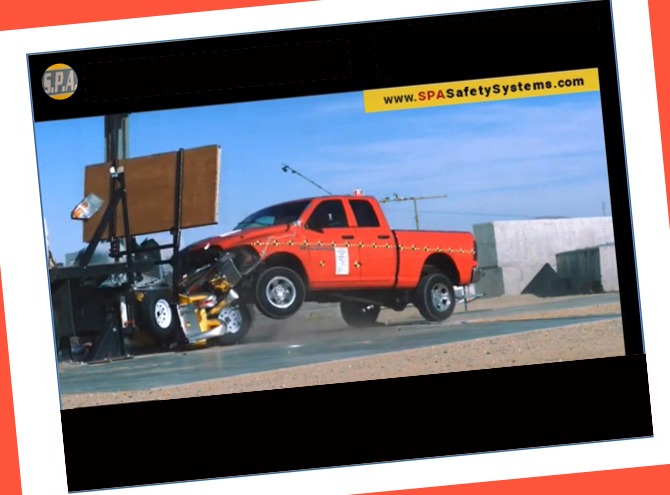
✓ Current MASH TL-3 certification: The MUTCD references the Manual for Assessing Safety Hardware (MASH) for crash testing standards. Your attenuator system must have a valid MASH TL-3 certification. Older NCHRP 350 certifications are no longer acceptable under the new edition.
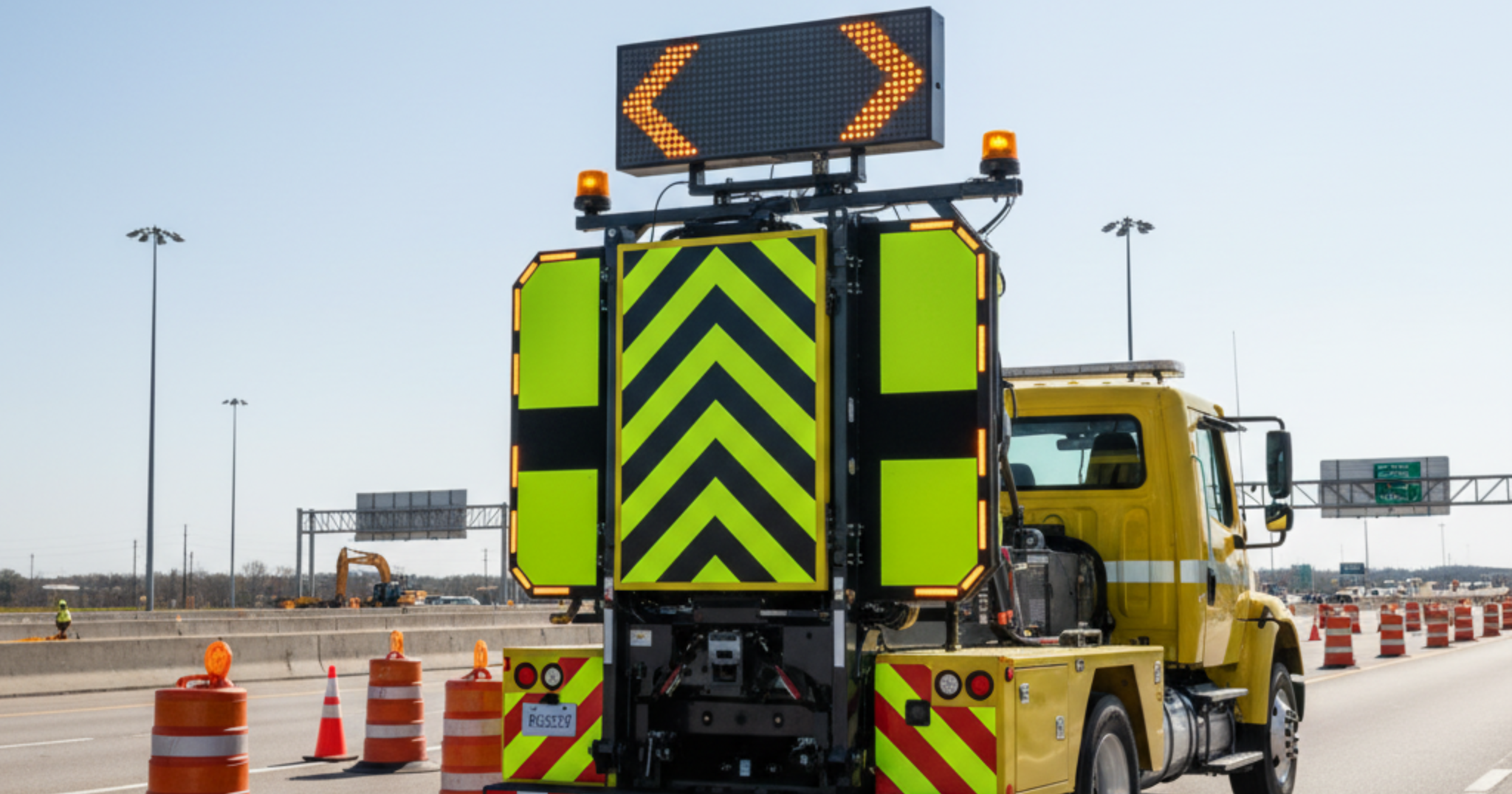
✓ Arrow board compliance: Your arrow board must meet MUTCD standards for size, brightness, and message types. Type C arrow boards (largest size) are increasingly standard for highway work.
✓ Visibility enhancements: Retroreflective sheeting, warning lights, and other visibility features must meet MUTCD photometric standards, which have been updated in the 11th Edition for improved nighttime performance.
✓ Documentation availability: MASH certification letters and equipment specifications must be readily available for inspection on the job site.
Deployment Practices
How you position and operate TMAs must align with MUTCD Chapter 6 requirements:
✓ Appropriate application: TMAs must be used in situations meeting the criteria for positive protection devices—typically high-speed, stationary operations on multi-lane roads.
✓ Proper positioning: The TMA must be positioned to provide adequate shadow for the work area, typically with the attenuator system directly in line with the traveled way being protected.
State Implementation Timelines and Regional Variations
MUTCD 2026 compliance isn’t uniform across all states. Understanding regional implementation patterns helps contractors plan equipment investments and training.
Northeast States: Early Adopters
States including New York, New Jersey, Pennsylvania, Connecticut, and Massachusetts typically move quickly on MUTCD implementation. These states often had stricter requirements than the previous MUTCD anyway, so the 11th Edition brings federal standards closer to what they already required.
New Jersey, where SPA Safety Systems operates, has been reviewing the 11th Edition since publication and is expected to complete substantial conformance by mid-2026. NJDOT traditionally maintains requirements that meet or exceed MUTCD minimums.
Southeast and Mid-Atlantic: Steady Implementation
Virginia, North Carolina, South Carolina, Georgia, and Florida are methodically updating their manuals to conform to the 11th Edition. These states typically complete substantial conformance reviews within 18-24 months of MUTCD publication.
Florida DOT, known for its comprehensive work zone standards, is using the 11th Edition to refine its already detailed requirements further. Contractors operating in Florida should watch for FDOT updates throughout 2026.
Western States: Technology Integration
California, Washington, Oregon, and Colorado are using the 11th Edition’s technology provisions to integrate advanced warning systems and connected vehicle capabilities into their standards.
CalTrans is particularly focused on how new MUTCD provisions support technology-enhanced work zone safety. Contractors in California should anticipate requirements that exceed basic MUTCD minimums by incorporating technology features.
Common Compliance Pitfalls and How to Avoid Them
Contractors transitioning to MUTCD 2026 compliance make predictable mistakes. Here’s how to avoid the most common problems:
Assuming Your Current Practices Are Compliant
Many contractors have been doing highway work the same way for years. “We’ve never had problems before” doesn’t guarantee compliance with MUTCD 2026.
The 11th Edition tightened requirements in several areas. What was acceptable under previous editions or through informal tolerance may not meet current standards. Review your actual practices against the updated manual, not against what you’ve been doing.
Overlooking State Supplement Updates
States update their supplements to incorporate 11th Edition changes. Your state may add requirements beyond the federal baseline or provide specific guidance on implementing new provisions.
Check your state DOT website regularly for updates on supplements. Many states publish drafts for industry comment before finalizing—participating in these comment periods helps you understand coming changes.
Using Outdated Equipment Certifications
The 11th Edition’s reference to MASH standards means NCHRP 350-certified equipment is no longer compliant. If you’re operating older attenuators certified only under NCHRP 350, replacement or recertification is necessary.
Verify that your equipment appears on current FHWA-accepted crash cushion lists. These lists are updated regularly as new products are certified and older certifications expire.
Inadequate Operator Training on New Standards
Sending operators to job sites without training on 11th Edition requirements creates compliance risk. Training programs developed under previous MUTCD editions may not address new provisions.
Verify that your operator training reflects current MUTCD standards. Organizations like ATSSA update their training programs to incorporate MUTCD changes—make sure your training is current, not outdated material.
Ignoring Documentation Requirements
Compliance isn’t just about having the right equipment and deploying it properly. You need documentation proving compliance if questioned.
Maintain organized records showing equipment certifications, operator training, inspection logs, and conformance with applicable standards. When a DOT inspector or project engineer asks for verification, producing immediate documentation prevents delays and demonstrates professionalism.
Technology Enhancements Beyond Minimum Compliance
The MUTCD 2026 compliance discussion often focuses on minimum requirements, but forward-thinking contractors are looking beyond baseline compliance to technology enhancements that improve safety and efficiency.
Connected Vehicle Warning Systems
Emerging technologies enable TMAs to communicate with approaching vehicles via dedicated short-range communications or cellular networks. These systems can alert drivers to work zones ahead of physical warning signs.
While not required by the 11th Edition, these systems align with the manual’s acknowledgment of technology integration. States like Michigan and Virginia are piloting connected work zone programs that may become standard in future years.
Telematics and Position Monitoring
GPS-enabled telematics systems enable supervisors to monitor TMA deployment in real time. This technology verifies proper positioning, tracks usage patterns, and provides documentation for compliance verification.
Some state DOTs are beginning to request telematics data as proof of proper deployment on high-profile projects. Having these systems integrated into your equipment provides competitive advantages when bidding on sophisticated projects.
Enhanced Visibility Systems
Beyond the minimum MUTCD requirements, advanced LED lighting systems, programmable warning patterns, and high-intensity retroreflective materials improve TMA visibility, especially in challenging conditions such as fog, rain, or bright sunlight.
Working with State DOTs on MUTCD Implementation
State departments of transportation are your partners in navigating MUTCD 2026 compliance. Understanding how to work effectively with them smooths the transition.
Participating in Implementation Review
Most state DOTs publish draft supplements and implementation plans for industry comment before finalizing. These comment periods are your opportunity to:
- Understand how your state interprets new MUTCD provisions
- Raise concerns about implementation timelines or cost impacts
- Suggest practical approaches to meeting requirements
- Build relationships with DOT traffic engineers who develop standards
Participating in these processes demonstrates professionalism and provides you with advanced insight into upcoming requirements.
Requesting Clarification on Requirements
When MUTCD provisions or state supplements are unclear, contacting your state DOT’s traffic engineering division for clarification is appropriate and encouraged. DOT engineers want contractors to understand requirements correctly rather than guessing.
Most states have designated contacts for work zone safety questions. Build relationships with these technical contacts—they’re valuable resources throughout your projects.
Coordinating Multi-State Operations
For contractors working across state lines, coordinating with multiple DOTs helps manage compliance efficiently. Some regional DOT groups meet regularly to discuss MUTCD implementation—understanding these coordination efforts helps you anticipate regional consistency or differences.
Taking Action: Your MUTCD 2026 Compliance Plan
Reading this guide provides knowledge, but compliance requires action. Here’s a practical plan for ensuring your operations meet MUTCD 2026 standards:
Immediate Actions (This Week)
- Assess your current equipment against MASH certification requirements
- Review your state DOT website for MUTCD implementation updates
- Check operator training currency and identify any gaps
- Verify your documentation systems capture compliance information
Short-Term Actions (This Month)
- Schedule equipment inspections to verify condition and compliance
- Review upcoming project bids for MUTCD-specific requirements
- Contact equipment suppliers about any needed upgrades
- Register for operator training if certifications need updating
- Establish documentation protocols for maintaining compliance records
Medium-Term Actions (This Quarter)
- Complete any necessary equipment upgrades or replacements
- Ensure all operators complete required training
- Update company procedures to reflect MUTCD 2026 standards
- Build relationships with state DOT contacts for ongoing guidance
- Review and update safety management systems for MUTCD compliance
Ongoing Actions (Continuous)
- Monitor state DOT updates for implementation changes
- Maintain equipment inspections and documentation
- Provide refresher training as standards evolve
- Verify compliance before bidding on each new project
- Participate in industry forums on MUTCD implementation
Conclusion: Compliance as Competitive Advantage
That contractor from upstate New York who called asking about MUTCD requirements? After we walked through the compliance landscape, he realized his concerns weren’t about whether he could meet the new standards—they were about whether his competitors would.
MUTCD 2026 compliance levels the playing field for contractors committed to safety and proper practices. Those cutting corners or operating with outdated equipment face increasing difficulty bidding and completing projects. Those investing in compliance find that it becomes a competitive differentiator.
The 11th Edition represents decades of research, crash data analysis, and engineering judgment about what works in protecting highway workers. These aren’t arbitrary rules—they’re evidence-based standards that save lives when properly implemented.
If you have questions about MUTCD 2026 compliance, need to assess your equipment against current standards, or want to discuss how SPA Safety Systems can support your compliance efforts, contact us at 973-347-1101 or austin@westchestermachinery.com.
Visit our gallery to see properly configured equipment meeting current MUTCD standards. Review our inventory of trucks for sale to find compliant equipment ready for immediate deployment.