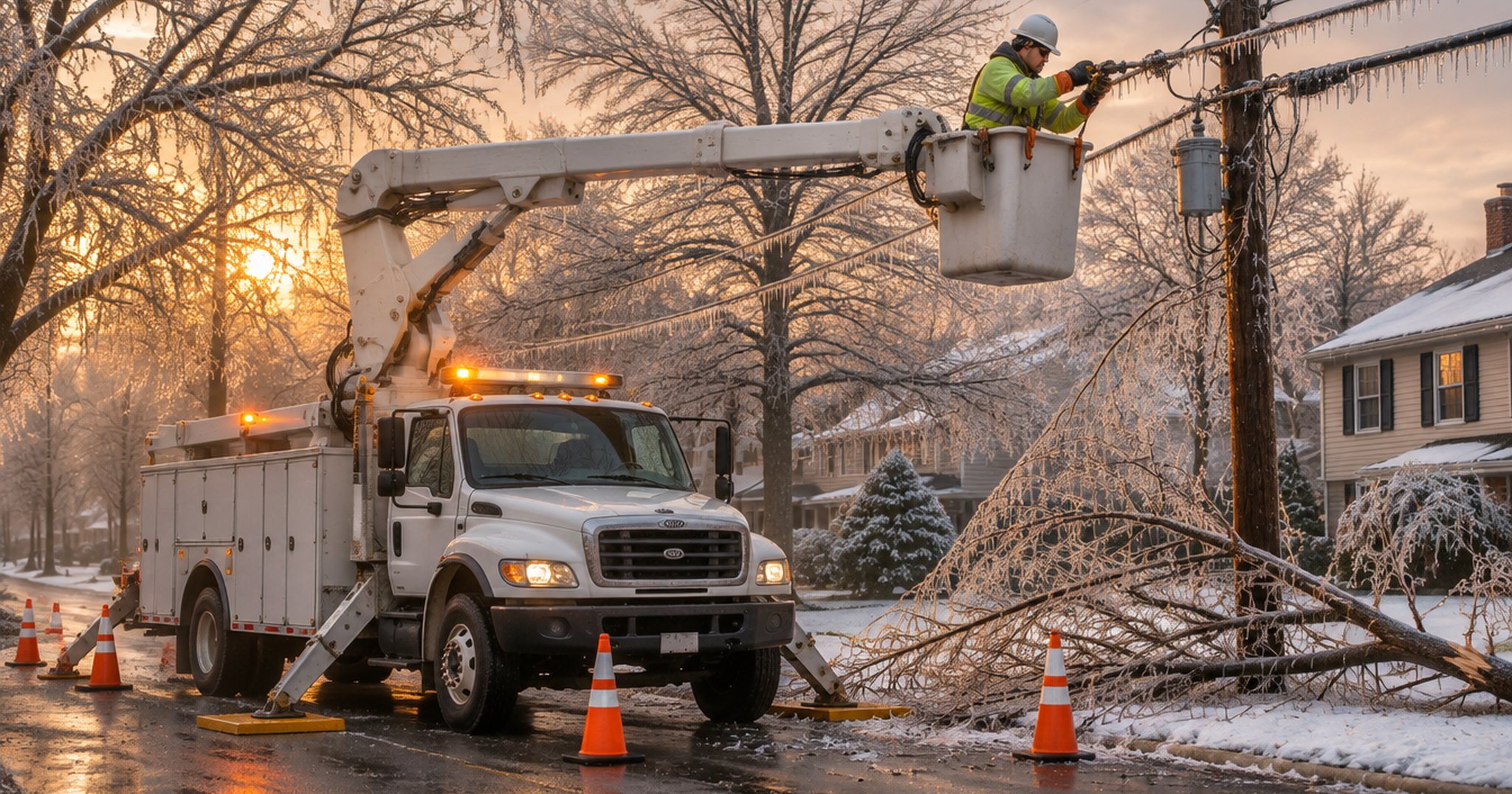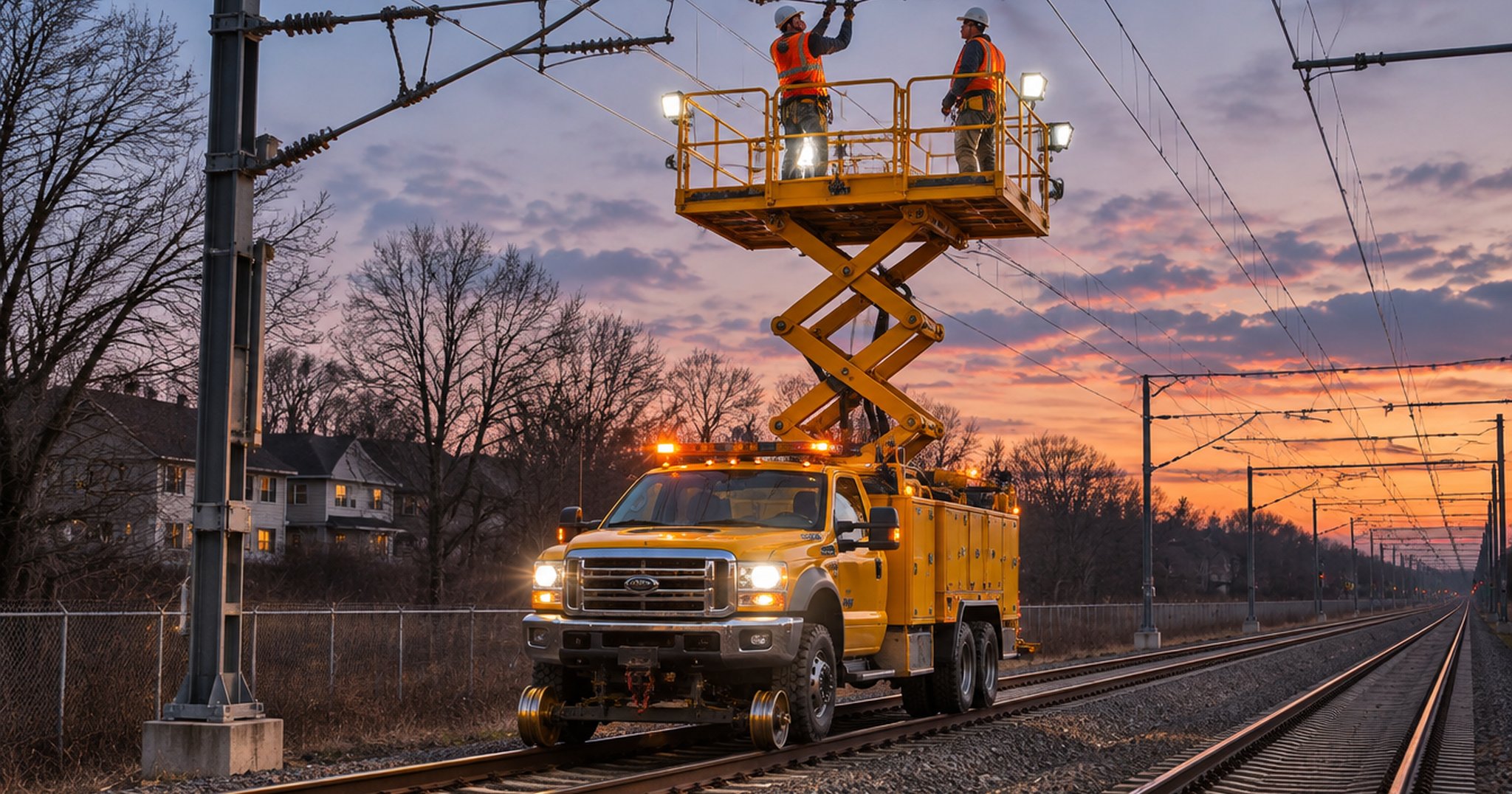
Rail work runs on tight windows. You get a track outage, a few hours of work time, and a crew that needs to be on the rail, up in the air and back off before the next train. If the truck you rented shows up with a rail gear problem or a lift that won’t level, you don’t just lose the day. You may lose the outage.
That’s why a hi-rail truck rental needs more checking than a normal truck rental. The truck has to be roadworthy, rail-ready and set up for the elevated work your crew is doing, and it has to meet Federal Railroad Administration (FRA) rules the moment its wheels hit the rail.
Here’s what to check before you sign.
What Makes a Hi-Rail Truck Different
The FRA defines a hi-rail vehicle as a roadway maintenance machine “manufactured to meet Federal Motor Vehicle Safety Standards and is equipped with retractable flanged wheels so that the vehicle may travel over the highway or on railroad tracks” (49 CFR 214.7).
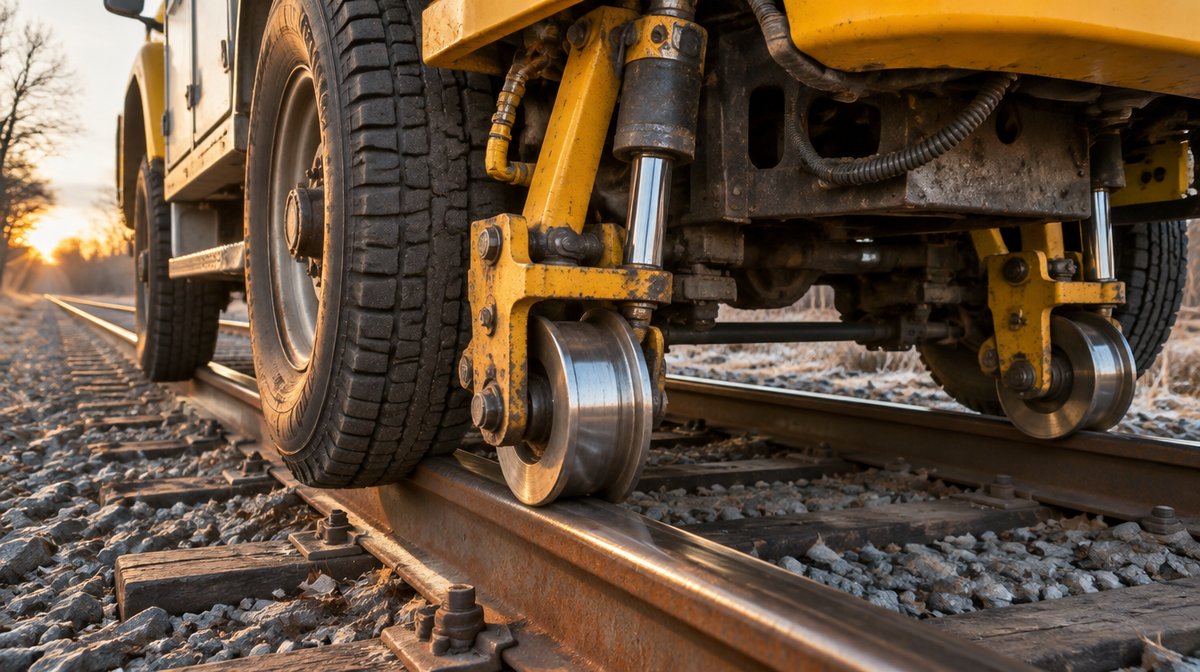
That dual role is the whole point. A hi-rail truck drives to the nearest grade crossing on public roads, lowers its rail gear, and runs on the track to the work location. No flatbed, no crane to set equipment on the rail, no long walk with tools.
It also means the truck answers to two sets of rules: highway rules when it’s on the road and FRA rules when it’s on the rail.
Step 1: Match the Truck to the Work
Hi-rail trucks come in several configurations. Start with what your crew is doing once they get there.
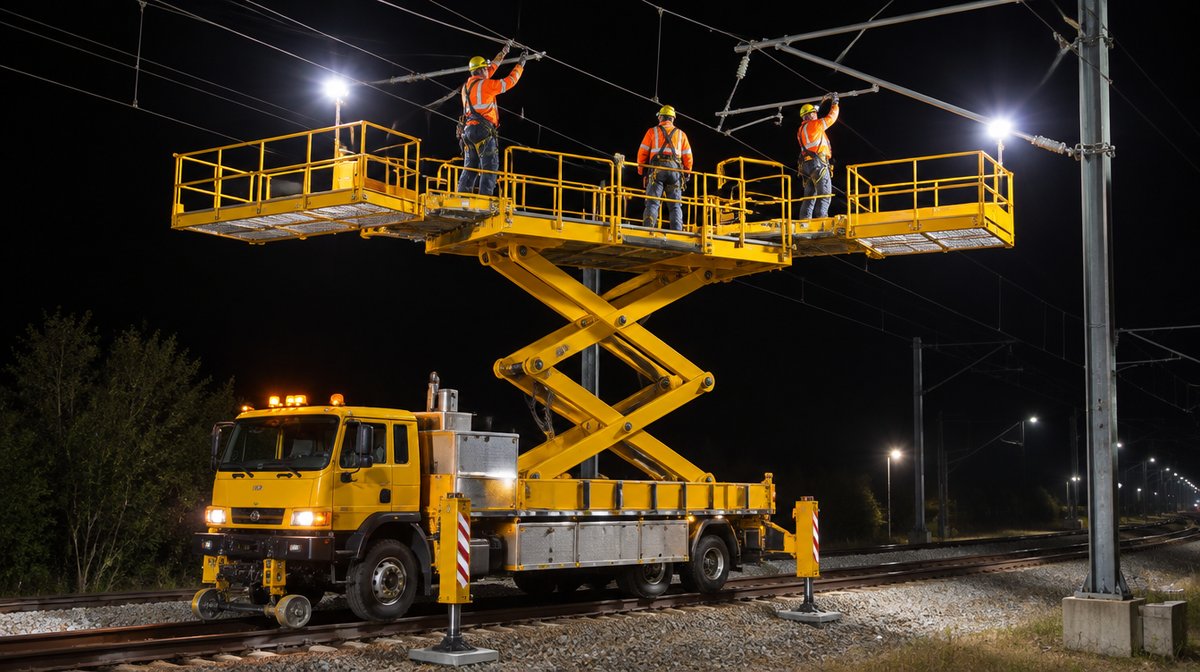
Hi-rail scissor lift trucks
Best for overhead work that needs a big, stable platform: catenary and overhead wire work, signal bridges, tunnel ceilings, and the underside of overpasses. A scissor platform gives several workers room to move with tools and materials.
Hi-rail bucket trucks
Best when you need reach more than platform space: signal work, pole work along the right-of-way, or reaching over to structures beside the track.
Questions to ask
- How high does the work go, and how far from the track centerline?
- How many workers and how much material need to be on the platform at once?
- Will the truck work in a tunnel, under a bridge or next to an active track?
- Is the work at night? (Most track outages are.)
Step 2: Check the Rail Gear Inspection Records
This is the most important document to ask for.
Under FRA rules, “the hi-rail gear of all hi-rail vehicles shall be inspected for safety at least annually and with no more than 14 months between inspections” (49 CFR 214.523). That inspection covers:
- Tram (alignment of the rail wheels)
- Wheel wear
- Gage (the spacing of the rail wheels to match track gauge)
The employer must keep records of the inspection, and the records must be available to FRA inspectors. They can be kept on the truck or at a location the employer designates.
What to ask the rental company: When was the last rail gear inspection, and can I get a copy of the record to keep with the truck?
Step 3: Confirm the Required Warning Equipment
FRA rules require a new hi-rail vehicle to have:
- An automatic change-of-direction alarm or backup alarm that gives an audible signal at least three seconds long and distinguishable from surrounding noise
- An operable 360-degree intermittent warning light or beacon mounted on the outside of the vehicle
If either one stops working, it must be repaired or replaced as soon as practicable, within seven calendar days. Even on older trucks, these are basic safety items you should expect to be working at delivery.
Step 4: Build the Daily Operator Check Into Your Shift
The rental company delivers a compliant truck. After that, the daily check is on your operator.
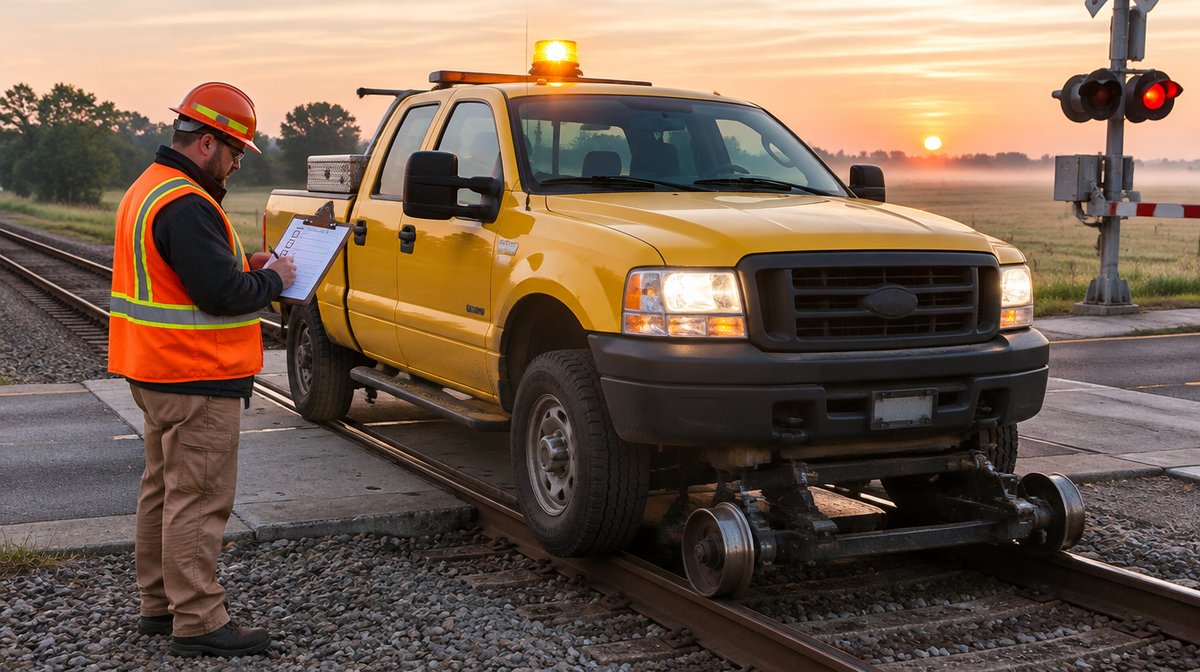
FRA rules say “the operator of a hi-rail vehicle shall check the vehicle for compliance with this subpart, prior to using the vehicle at the start of the operator’s work shift.” Any problem that can’t be fixed right away must be tagged and dated the way the employer prescribes and reported to the designated official.
A practical pre-shift check covers:
- Rail gear deploys and locks fully on both axles
- Rail wheels show no visible damage, flat spots or excessive wear
- Backup or change-of-direction alarm sounds
- 360-degree beacon and strobe lights work
- Brakes hold on the rail
- Lift or boom controls, emergency stop and emergency lowering work
- Outriggers or stabilizers deploy and set properly
- Fall protection anchor points are intact
Write it down. If an FRA inspector or the host railroad asks, a signed checklist shows the check happened.
Step 5: Look Closely at the Lift Specs
If you’re renting a hi-rail scissor or bucket truck, the lift matters as much as the rail gear.
For a hi-rail scissor truck, check:
- Lift height and platform capacity. Make sure the rated capacity covers your workers plus tools and material.
- Platform size and extensions. Extensions add working area without taking a second track.
- Load limits on extensions. Extensions usually carry less than the main deck.
- Stabilizers and interlocks. The platform should not raise unless stabilizers are properly set.
- Platform controls. Workers on the deck should be able to raise, lower and stop the lift without relying on the ground crew.
- Ground controls for stabilizers and emergency operation.
- Emergency bypass. If the system fails, you need a way to lower the platform and raise the outriggers so the truck can clear the track.
- Tie-off points for fall protection.
- Work lights for night outages.
Step 6: Line Up Your On-Track Safety Program
Renting the truck doesn’t cover the rules for your people.
FRA’s Roadway Worker Protection rules (49 CFR Part 214, Subpart C) require railroads to have on-track safety programs that protect employees and contractors from trains and equipment while working on track. In practice that means:
- Your crew must be trained under the on-track safety program that applies to the work, usually the host railroad’s.
- You need track authority or another approved form of on-track protection before the truck goes on the rail.
- The host railroad may have its own rules for hi-rail vehicles, operator qualifications, set-on and set-off locations and communication. Many add requirements beyond the FRA minimum.
Talk to the railroad’s project contact early. A truck that meets FRA rules can still be turned away if it doesn’t meet the host railroad’s specific requirements.
Step 7: Plan the Highway Side Too
The truck still has to get to the rail. Before rental day:
- Check GVWR and CDL requirements. Heavier hi-rail scissor trucks may need a CDL driver.
- Plan the set-on location. You need a grade crossing or set-on pad with enough room to align the truck and lower the rail gear.
- Think about traffic control at the crossing. If the truck sets on at a public road crossing, you may need a short-term work zone with signs, cones or an arrow board.
Rent or Buy?
Hi-rail trucks are specialized and expensive to own. Renting makes sense when:
- You have a defined project with a set number of outages
- You need a configuration your fleet doesn’t have, like a scissor platform instead of a bucket
- Your own unit is out for its annual rail gear inspection or repairs
- You’re testing whether rail work fits your business before committing to a purchase
If you’re running hi-rail equipment year-round, buying or a long-term rental can make more sense. If you do own, our earlier post on hi-rail truck maintenance covers what it takes to keep one on the rail.
How SPA Safety Systems Helps
SPA Safety Systems, based in Flanders, New Jersey, designs, builds, rents and sells hi-rail trucks, including hi-rail scissor lift trucks built for overhead rail work.
Our hi-rail scissor trucks feature:
- 20-foot lift height with a 10,000 lb lift capacity
- 20 x 8 ft platform that uses one lane with extensions closed
- Platform extensions of 3 ft on each side, expanding the work area to 20 x 14 ft, with a 1,000 lb load limit per extension
- Stabilizers at all four corners. The platform will not raise unless the stabilizers are properly set.
- Platform controls so workers on the deck can raise, lower, extend and stop independently of the ground crew, and even turn the engine on and off to cut idle time
- Ground controls for stabilizers plus raise, lower and emergency stop
- Electric and manual bypass to lower the platform and raise outriggers if a system fails
- Three floor tether points for safety harness connections
- Four adjustable LED work lights at the platform corners and LED strobes front and rear
- Stowed-position warning lights that shut the truck off if any part of the lift isn’t stowed when the brake pedal is pressed
Need something our standard fleet doesn’t cover? Our in-house custom fabrication team can build or modify a truck to your spec, and our parts and repairs shop keeps rental units ready to work.
Call (973) 347-1101 or request a quote to check hi-rail truck availability for your next outage.
FAQs: Hi-Rail Truck Rental
1. How often does hi-rail gear need to be inspected?
FRA rules require the hi-rail gear on every hi-rail vehicle to be inspected for safety at least once a year, with no more than 14 months between inspections. The inspection covers tram, wheel wear and gage, and the employer must keep records of it.
2. What safety equipment is required on a hi-rail truck?
Under 49 CFR 214.523, a new hi-rail vehicle must have an automatic change-of-direction alarm or backup alarm with an audible signal at least three seconds long, plus an operable 360-degree intermittent warning light or beacon on the outside of the vehicle.
3. Who is responsible for the daily inspection on a rented hi-rail truck?
The operator. FRA rules require the operator to check the hi-rail vehicle for compliance before using it at the start of each work shift. Problems that can’t be fixed immediately must be tagged, dated and reported.
4. Do contractors need roadway worker protection training to use a hi-rail truck?
Yes. FRA’s Roadway Worker Protection rules apply to railroads and to contractors working on railroad track. Your crew needs training under the applicable on-track safety program and proper on-track protection before the truck goes on the rail. The host railroad may have additional requirements.
5. Can I rent a hi-rail scissor lift truck for overhead wire work?
Yes. Hi-rail scissor lift trucks are well suited to catenary, signal bridge, tunnel and overpass work because they provide a large, stable platform on the track. SPA Safety Systems offers hi-rail scissor trucks with a 20-foot lift height and a platform that extends to 20 x 14 ft.