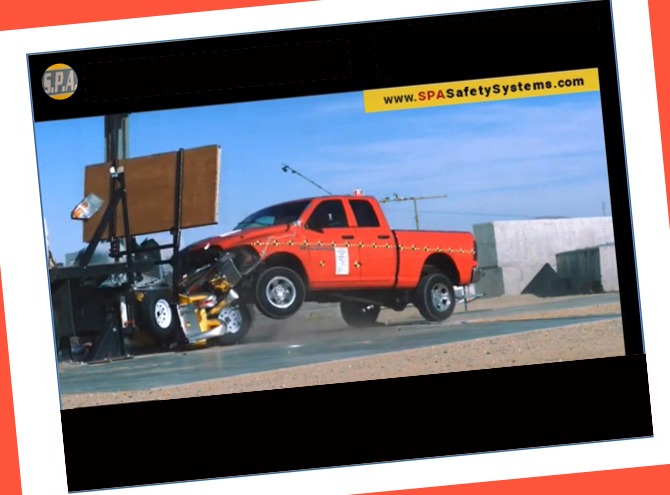
Standard attenuator trucks are enough for most highway crews, honestly. Visit pretty much any equipment yard—from New Jersey to California—and you’ll see the same kind of TMA trucks lined up for sale or rent. They’re MASH Test Level 3-certified, fit-approved host vehicles with one main job: protecting workers by stopping errant vehicles before they reach the work zone.
For around 80% of contractors, a standard unit is the smarter move. It costs less, arrives quicker, is easy to service, and has already been proven on thousands of real-world job sites—simple, reliable, no unnecessary headache.
The problem starts when the work is not standard. You may be dealing with railroad crossings and need hi-rail capability. Maybe your crew works in tight city streets where a full-width, 8-foot attenuator keeps clipping barriers or blocking lanes. You may need one truck to handle elevated work while still providing crash protection. In those cases, a regular off-the-shelf TMA may just not cut it.
That is where custom TMA builds come in. Yes, they cost more—there is no way around that. But the real question is whether the extra spend actually saves you money in the long run. Can one custom truck replace two separate vehicles? Does it let you take on jobs that standard equipment cannot handle? Are there DOT requirements that stock units do not meet?
This guide breaks it all down: when a standard TMA is more than enough, when custom fabrication makes sense, and what you are really getting for the extra money in 2026.
Understanding Off-the-Shelf TMA Specifications
What You Actually Get With a Standard TMA Truck
Off-the-shelf TMA trucks are built for the usual highway and roadwork jobs, so there isn’t much customization involved. Most come with a MASH TL-3 crash cushion, designed to handle impacts at speeds of up to 62 mph. They are mounted on approved host trucks weighing at least 15,000 pounds.
When deployed, the attenuator usually extends around 12 to 13 feet behind the truck. It is typically 8 feet wide and sits about 12 inches above the ground in its working position. Pretty standard setup, pretty straightforward job: create a buffer between traffic and the crew.
Standard TMAs generally use one of two systems to absorb impact energy:
- Cartridge systems: These use crushable cartridges that absorb crash forces. They work well, but if the truck is hit, those cartridges usually need to be replaced before the unit can return to service.
- Hydraulic systems: These use hydraulic struts instead. After a lighter impact, they can often be reset and used again without replacing major parts. Obviously, if the hit is serious, repairs may still be needed.
Both systems meet the required federal crash standards, so safety is not really the issue. The real difference comes down to downtime and repair costs. Cartridge systems can mean more replacement parts after an impact, while hydraulic models may get you back on the road faster after smaller hits.
Standard packages come with basic LED lights for brakes, turns, and running lights. You raise and lower the attenuator by hand or with hydraulics, depending on the model you picked. Arrow boards are extra and available either as separate units or as part of the TMA frame. A few manufacturers sell small variable message signs as add-ons, but those aren’t part of the base package.
Host Vehicle Requirements You Seriously Can’t Ignore
Not every truck can carry a TMA. MASH testing is tied to specific host-vehicle weights, and the FHWA eligibility letter specifies exactly which weight range the attenuator was tested for. So, if a TMA was crash-tested on trucks weighing between 15,000 and 22,000 pounds, you cannot just throw it onto a 10,000-pound flatbed and call it a day.
That setup is outside the tested range, which means it may not be approved for use. And DOT inspectors do check this stuff. If your truck does not meet the required specs, you could face citations, job-site shutdowns, and significant liability in the event of a crash.
That is why standard TMAs are usually installed on heavy-duty platforms like the Ford F-550, Chevy 5500, or International medium-duty trucks. Putting one on a regular pickup might sound cheaper at first, but it is a risky move and can turn into a serious safety issue fast.
Even something as simple as changing the suspension can mess with compliance. So before modifying anything, make sure the truck still matches the tested setup—not just the weight, but the frame, ride height, and mounting position too.
When Standard TMA Models Work Fine
Interstate resurfacing, bridge deck repairs, guardrail replacement- anything on wide, straight highway stretches with good visibility and steady traffic patterns works great with standard TMAs. You’re protecting a crew in one spot, traffic comes from behind at regular speeds, and the lanes are wide enough to fit an 8-foot attenuator without squeezing into neighboring lanes.
These jobs don’t call for anything fancy. The work zone sits in place for hours or days, so you park the TMA and let it do its job. Arrow boards warn drivers which way to go, cones guide traffic around the area, and the attenuator acts as the final barrier. If someone misses all the other warnings and plows through, the TMA absorbs the impact and keeps your people alive. Standard gear handles this without any tweaks.
Scenarios That Demand Custom TMA Fabrication
Hi-Rail Conversions for Railroad Work Zones
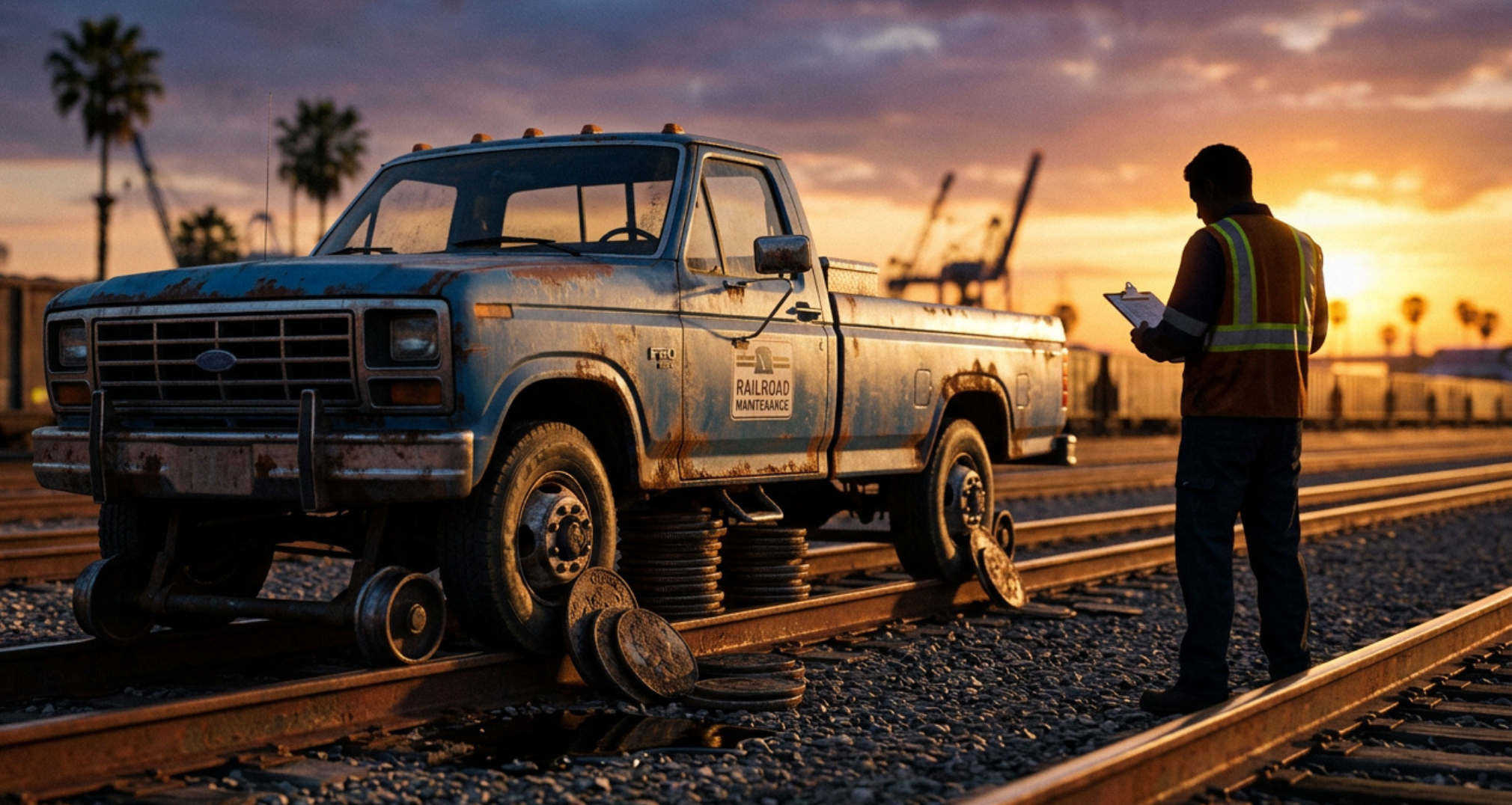
Railroad maintenance and construction projects occur on active rail lines, which means your attenuator truck must operate on both highways and tracks. Standard TMAs don’t do that. You need a hi-rail conversion with retractable steel wheels that drop down to engage the rails, lifting the rubber tires off the ground.
SPA Safety Systems regularly builds these conversions because railroad work is common along the Northeast corridor. Amtrak, freight lines and commuter rail operators all need mobile protection when crews are working on tracks adjacent to live traffic. A purpose-built hi-rail TMA truck handles both environments without needing separate equipment for road and rail operations. That reduces mobilization time and eliminates the hassle of coordinating multiple vehicles on-site.
Narrow Lane and Urban Work Zone Constraints
Downtown streets, bridge approaches, tunnel work and anywhere lane widths drop below standard dimensions create problems for 8-foot-wide attenuators. Add Jersey barriers or construction fencing, and you’re scraping both sides as you try to position the truck. Standard TMAs can’t shrink.
Custom builds can. Narrower impact heads, redesigned frame geometry and offset mounting that shifts the attenuator to one side instead of centering it- these modifications let you work in tight spaces without violating MASH compliance. The attenuator still meets crash standards because the energy-absorbing components don’t change. What changes is how it fits the truck and how much road width it occupies.
Dual-Purpose Vehicles: Scissor Lift and TMA Combos
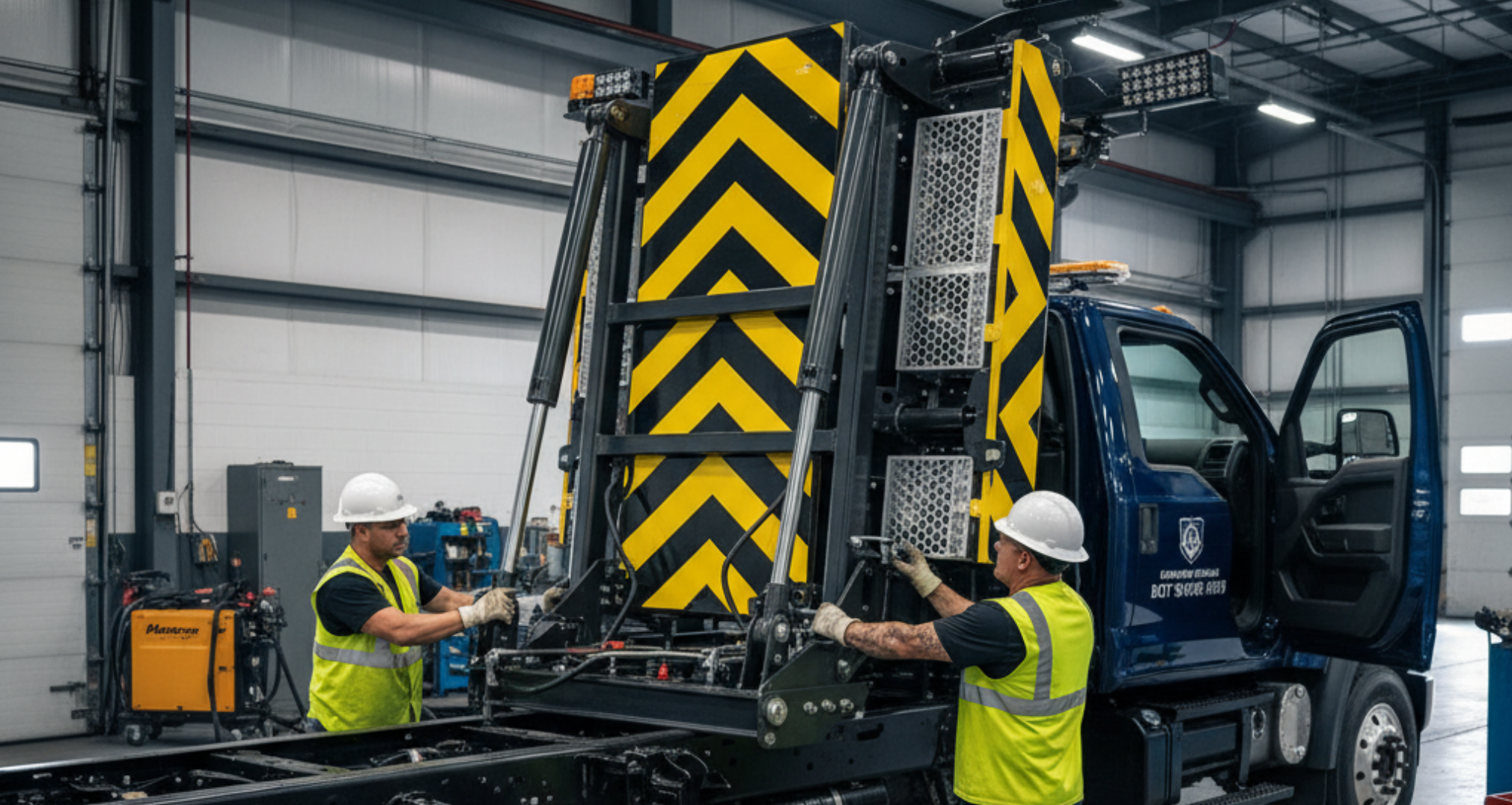
Sign crews, bridge inspectors, overhead lighting teams, anyone who needs both elevation and crash protection at the same site can benefit from combination units. Put a scissor lift and a TMA on one chassis, and you’ve just cut your equipment costs in half.
These rigs work best for smaller contractors or city fleets that can’t afford separate trucks for every task. One vehicle handles sign work, bridge inspections, and work zone protection. You pay for custom fabrication once rather than buying two or three specialized trucks. You’ll break even in 18 to 24 months, depending on how much you use it, and after that, you’ll save money every time you roll out.
MASH Compliance: How Far Can You Customize Without Messing It Up?
What You Can Change Without Killing Certification
FHWA eligibility letters are pretty specific about what setup was crash-tested and approved. If you change too much, that approval can go out the window. But there is still some room to work with.
For example, the mounting bracket can often be moved a few inches forward or backward. That helps fit the attenuator onto trucks with different wheelbases without needing to start the whole testing process from scratch.
Cosmetic stuff is usually way more flexible. Paint color is not a big deal. Striping and reflective tape can be changed as long as they still meet visibility requirements. Arrow boards can also be swapped for different sizes or styles.
The main rule is simple: the actual attenuator, its energy-absorbing parts, and its core-mounting setup must remain the same as in the version that was tested. The add-ons around it? Usually fair game.
Even the deployment system can often be changed. If the attenuator was tested in the deployed position, it does not really matter whether it gets there with a hand crank, electric motor, or hydraulic pump. As long as it sits in the same approved position when it is down, you are generally still good.
When a Custom Build Needs New Crash Testing
Once you start changing the attenuator’s size, weight, materials, energy-absorbing system, or the way the mounting structure handles impact forces, you are no longer dealing with the same tested product. At that point, the original FHWA eligibility letter may no longer apply.
That means new crash testing.
And yeah, it is expensive. Full MASH testing can cost anywhere from $150,000 to $300,000, depending on the number of tests required. Test Level 3 usually involves multiple impact tests, including small cars and pickup trucks hitting the unit head-on and at angles.
Each test can destroy the attenuator, and sometimes the host truck too. So you are paying for prototypes, vehicles, engineering work, test facilities, and all the data collection that comes with it. It adds up fast.
For a one-off custom truck, spending a couple hundred grand just on testing makes zero financial sense. But for manufacturers building a new product line, it can be worth it. If they plan to sell dozens or hundreds of units, that testing cost gets spread out across every sale.
The Smarter Way: Use Certified Parts in a Custom Setup
The more practical move is usually to start with an attenuator that is already MASH-certified. Keep the main structure and energy-absorbing parts unchanged, then customize the truck, mounting brackets, layout, and accessories around them.
For example, you might use a certified attenuator but create a revised mounting bracket to fit a different truck or move its position slightly. If the attenuator will still behave the same way in a crash, many DOTs may accept the setup under the original eligibility letter.
That said, you still need solid engineering documentation. Things like load-path checks, finite element analysis, and sometimes smaller-scale testing can help prove the new mounting does not affect performance.
It is not quite the same as doing full MASH crash testing, but it is a lot faster and way less expensive.
One thing to keep in mind: DOT approval can vary by state. Some agencies are fine with the right documentation. Others may want additional testing no matter what. So do not assume every state will look at it the same way.
The safest route is working with a company that already understands the compliance side. Shops like SPA Safety Systems can work with attenuator manufacturers that have active FHWA eligibility letters, then focus the custom work on the truck, mounting, and accessories—not the crash cushion itself.
That way, you can get a rig built around your actual job needs without accidentally turning a certified setup into a compliance headache.
Custom vs. Standard TMA Trucks: What Are You Really Paying For?
Upfront Cost: The Sticker Price
A standard, ready-to-go TMA truck usually costs between $80,000 and $120,000, fully equipped. That typically includes the truck, attenuator, mounting setup, hydraulics, arrow board, and basic striping. If the manufacturer has one in stock, you can usually get it delivered within a few weeks. Financing is also easier because lenders already know what standard units are worth.
Custom builds start at roughly $100,000 and climb fast depending on what you need. Adding hi-rail capability can add another $15,000 to $25,000. A combo setup with a scissor lift and TMA can land anywhere from $130,000 to $180,000. Need a narrow attenuator, offset mounting, or something built for tight urban jobs? You could easily be looking at $150,000 or more once engineering, fabrication, and longer lead times are factored in.
Lenders are more cautious with custom equipment. A standard TMA has a clear resale market. A one-off custom rig? Not so much.
But don’t get too stuck on the upfront number. If one custom truck replaces the need for a second vehicle, you may have just avoided spending another $80,000 to $120,000. The same goes for time savings. If a custom setup cuts 2 hours of mobilization time from each job and you handle 100 jobs a year, that is 200 hours saved. At a loaded labor rate of $75 per hour, that is around $15,000 back in your pocket every year. Over five years, the extra cost can start making a lot more sense.
Maintenance, Repairs, and Downtime
Standard TMA trucks are easier to live with when something goes wrong. Parts are easier to find, more mechanics know how to work on them, and repairs after a crash can often be completed in days rather than weeks.
Custom rigs can be a different story. If a custom bracket, mount, or fabricated part is damaged, you may have to wait a while for a replacement. And every day that truck is sitting in a shop is money lost—either you are renting another unit or your crew is working without the protection they need.
Insurance can cost more too. Insurers have plenty of data on standard TMAs, so they know how to price them. Custom builds come with more unknowns, especially if they are one-of-one setups. Expect premiums to run around 10–20% higher until the insurer gets comfortable with the equipment. On a truck insured for $5,000 a year, that could mean another $500 to $1,000 annually.
Fuel costs usually stay pretty similar unless the custom build adds a lot of weight. Maintenance is where things can get more expensive. A dual-purpose truck with lifts, hydraulics, extra wiring, and an attenuator has more stuff that can need attention. For heavily modified rigs, budgeting an extra $1,500 to $2,500 per year for maintenance is a smart move.
Resale Value: Standard Usually Wins
Standard TMA trucks are easier to sell because there is always a market for them. Contractors, rental companies, municipalities—someone is usually looking. They tend to lose around 15–20% of their value per year for the first few years, then depreciation slows down. A standard TMA bought new for $100,000 could still be worth roughly $50,000 to $60,000 after three years, assuming it has been maintained properly.
Custom trucks are harder to resell. Your buyer needs the same setup and the same type of work. A hi-rail TMA only makes sense for companies that perform rail-related work. A narrow urban setup is primarily useful for crews working in tight downtown streets. That smaller buyer pool means resale can take months, not weeks.
Custom units can also depreciate faster in the beginning—sometimes 25–30% per year. So a $130,000 custom build may only bring in around $45,000 to $55,000 after three years.
That said, resale matters way less if you plan to keep the truck for 10 to 15 years. At that point, the bigger question is whether it helped you win more work. If the custom features allow you to take on jobs your competitors cannot handle, the lower resale value may be part of the cost of operating in a specialized market.
Do You Actually Need a Custom Build?
Before going custom, ask yourself a few real questions.
Can a standard TMA physically fit and work in most of your job sites?
If yes, stick with standard. It is cheaper, faster to get, easier to repair, and way simpler to resell later.
Are you constantly dealing with places where standard equipment does not work?
Things like rail crossings, narrow city streets, or jobs that need multiple functions from one vehicle are a different story. If that is most of your work, custom is not just a flex—it solves an actual problem.
What Will It Actually Cost You Over 3–5 Years?
Don’t just look at the upfront price and call it a day. Look at the full picture: how much time you’ll save getting crews in and out, rental equipment you can stop paying for, extra jobs you can take on, and downtime you avoid because you have the right setup from the start.
If a custom build saves time, cuts rental costs, and helps you win more work, the higher price can pay for itself pretty quickly. But if those savings don’t add up on paper, a standard unit is probably the smarter, less stressful move.
Options to Try Before Going Fully Custom
A trailer-mounted attenuator, or TTMA, can solve some problems without needing a fully custom truck. It can be pulled by a lighter vehicle, offers MASH TL-3 protection, and usually costs less than a truck-mounted setup. The downside is obvious: trailers are annoying in tight work zones, and backing them up is not exactly fun.
Renting specialty equipment can also make more sense if you only need it occasionally. Need a hi-rail TMA twice a year? Rent it. Need a scissor-lift combo every few months? Rent that too. Buying custom only makes sense when you will use it enough that rental costs start getting out of hand.
Sometimes the easiest fix is changing the job setup instead of changing the truck. Adjusting traffic control, work zone layouts or project phases may create enough room for a standard-width TMA. That can save a serious amount of money compared with building a custom rig from scratch.
FAQs: Custom TMA Fabrication
Can I Put a TMA on Any Heavy Truck I Already Own?
Short answer: not really. Just because a truck looks heavy-duty does not mean it is built to carry a TMA safely.
The frame has to be strong enough, the truck needs to fall within the right weight range, and the mounting points need to match the attenuator’s tested setup. MASH compliance is not something you can wing—your host vehicle has to meet the actual specs the system was approved with.
Before you bolt anything on, bring your truck details to SPA Safety Systems and have their team check it out. They can tell you straight up whether your truck is a good fit or if you need a different chassis.
Trying to force a TMA onto the wrong truck is not just a bad setup—it can create major liability and put your crew at real risk.
How long do custom TMA trucks last compared to standard models?
Lifespan comes down to how you use it, not whether it’s custom or standard. Both types last 10 to 15 years if you take care of them. Custom builds sometimes get beat up more because they’re handling specialty jobs, which can wear them down faster. But the build quality itself isn’t any worse. Stay on top of inspections, swap out worn parts, and custom rigs will last just as long as standard ones.
Does Custom Fabrication Void the Truck Warranty?
It can—if the work is done badly or ignores the truck manufacturer’s rules. Random modifications to the frame, wiring, hydraulics, or mounting points can definitely put your chassis warranty at risk.
That’s why working with a reputable fabricator matters. A qualified shop should follow the manufacturer’s upfitting guidelines and use approved installation methods designed to protect your warranty coverage.
Before any custom work starts, get the details in writing. Ask whether the modifications affect the chassis warranty, which parts remain covered and who is responsible if something goes wrong. If a shop cannot give you a clear answer—or avoids putting it on paper—that’s your sign to keep looking.
Working With SPA Safety Systems
If you are considering a custom project, come prepared. Bring photos of your work sites, DOT requirements, job specs, and a clear explanation of what is not working with your current equipment. SPA’s team can assess the situation and determine whether a standard unit with a few adjustments will do the job—or whether full custom fabrication is actually needed.
Sometimes what seems like a custom-only problem can be solved with existing equipment. But when a custom build really is the right move, expect a detailed proposal covering engineering, fabrication, cost, and timeline.
Payment is usually split into a deposit, progress payments during the build, and a final payment at delivery—also, plan. Accordingly, custom TMA fabrication units take longer than standard equipment, so do not expect to place an order in March and have it ready to roll by April.