
TMA Cone Trucks equipped with custom-made man basket increases work production and TMA worker safety
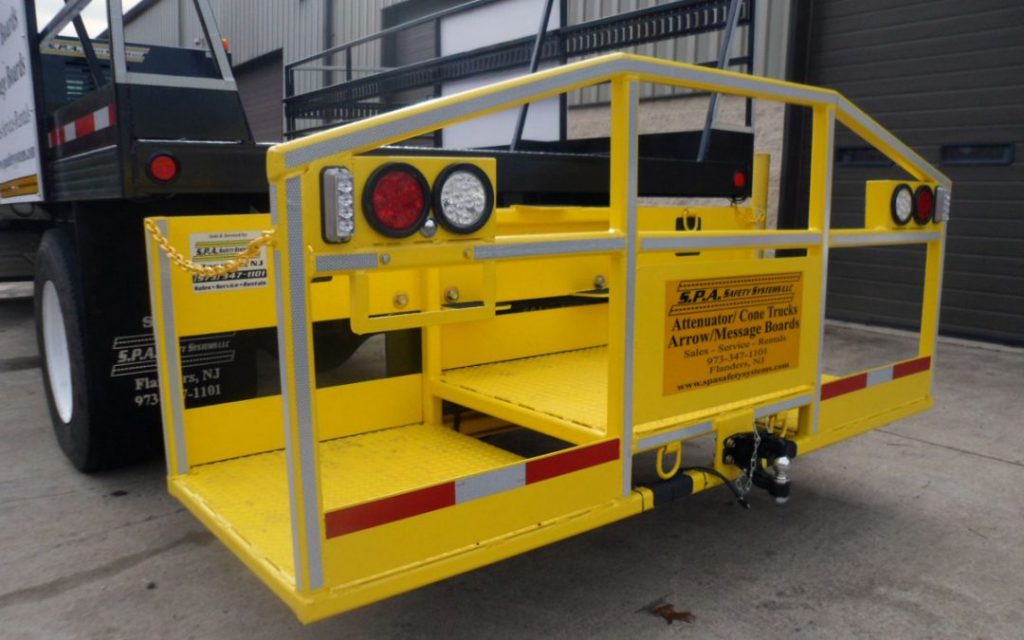
Cone Trucks equipped with custom-made man basket increases work production and highway worker safety. The custom-made man basket on SPA Cone Trucks is the most unique and versatile feature of the Cone Truck. It is attached at the rear end of the truck close to the ground to allow the workers a more comfortable and safer position for a cone or device deployment to the road. Workers can utilize the left or right side of the man basket for implementation. D rings are also available to tether a safety harness. Cone Trucks built by SPA Safety Systems include all the features and support services you need for portable work zone safety. Their fleet of TMA, Cone, and Scissor trucks are available for sale, and on standby for both long-term and short-term rental For more information visit – Cone Trucks
Portable Positive Protection Typical Application for TMA Trucks

Typical Application for TMA Truck Portable Positive Protection It is important to have advance warning of the mobile lane closure using TMA trucks for advance warnings with appropriate signing to warn drivers of the lane closure. The typical application diagram below includes a potential approach to executing this mobile lane closure when using portable positive protection. While this approach reflects the MUTCD typical application for mobile operations, other deployments may or may not include the shadow vehicles. In either case, advance warning for drivers is of utmost importance to the safety of the operation. A typical application drawing to relay main points about how to use portable positive protection. An example of a traffic control configuration for a mobile lane closure: SPA Safety Systems At SPA Safety Systems of Flanders NJ, contractors and engineers can find the best in class and high-performance TMA trucks for work zone safety in New Jersey, PA, NY, CT, RI, or MD. We carry an extensive inventory of Truck Mounted Attenuator trucks, Cone Trucks and Scissor Lift Trucks for sale or rent, and equipment and parts inventory. For more information call (973) 347-1101 or visit our dust control water trucks web page at https://spasafetysystems.com/. Over 36 Years of Serving the Construction Industry SPA is a family owned and operated business celebrating over 36 years of serving the construction industry. We developed our reputation for excellence by providing quality products and superior service. For more information call (973) 347-1101 or visit our dust control water trucks web page at https://spasafetysystems.com/ . SPA Safety Systems278 Old Ledgewood Rd Flanders, NJ 07836 (973) 347-1101 Citation and credits: Mobile Barriers LLC.. (2016). Portable Positive Protection: A Guide for Short Duration and Short-Term Work Zones. (Based on Material Developed by ATSSA for the FHWA Work Zone Safety Grant Program ed.). USA: Retrieved from https://www.mobilebarriers.com/ Information Sources Federal Highway Administration Resource Charts TX Deployment—“Texas Department of Transportation Rolls out Mobile Barriers MBT-1” Mobile Barriers MBT-1 Cost benefit Analysis—with Analysis from CO, CA and Others Field Guide for the Placement of Shadow Vehicles in Work Zones Guidelines on the Use of Positive Protection in Temporary Traffic Control Zones Manual on Uniform Traffic Control Devices – Part 6 sections 6F and 6G North Texas Tollway—“Mobile Barriers Protect Workers” Washington State Department of Transportation Work Zone Traffic Control Guidelines Book M54-44 National Work Zone Safety Clearinghouse Developmental History of Highly Mobile Barriers Mobile Barriers Web Site
Using Scissor Lift Trucks for Underside Bridge Service

Scissor Lift Trucks for Underside Bridge Service SPA Scissor Lift Trucks are highly effective for servicing, maintenance and inspection of the underside of bridges. Their platform can handle up to 7,000 lbs. of vertical lift for heavy loads with the hydraulic system which a far greater lifting strength compared to other commonly used boom lifts. Our truck-mounted scissor lifts rise vertically up to 20’ high which is ideal for most projects and their 20’ long by 8’ wide platform can accommodate several workers and equipment at the same time. In addition, the platform extends up to 3 feet on either side to total a platform that is 14 feet wide. All this allows for more efficiency on the job site, as well as more safety. Scissor Lift Truck Safety Factors: Safety – Bridge workers and construction crews can focus on the job at task rather than worrying about unstable supports. Mobility – Scissor lift trucks can be driven anywhere. They don’t have to be dismantled or put on another truck to move from one bridge site to another. Reduce Worker Fatigue – Due to ease of movement, working on a scissor lift truck platform makes workers more productive and eliminates repetitive strain to their back, neck and arms. Cost Efficient – The platform allows a larger work space while in the air, similar to being on the ground. This allows a more natural work environment, reducing the time needed to complete a project. Other Unique Uses of Scissor Lift Trucks In addition to servicing underside bridge repair, scissor lift trucks can be used both indoors and outdoors for structure maintenance of heavy equipment, installation of windows and overhead signage, sports and entertainment venue setups, and dealing with heavy loads in distribution centers. SPA Scissor Lift Trucks SPA Scissor Trucks are available for sale and rent. Call to (973) 347-1101 for more details. Bridge construction companies and engineering firms trust SPA to provide them with Scissor Lift Trucks that can handle all of their needs. Bridge Maintenance Trucks by SPA SPA bridge maintenance trucks feature scissor lifts designed for under bridge maintenance and repair work and access for bridge inspections. Operators also can control Read more Rule #10 – Scissor Lift Truck Platform Controls Must Be Independent of Ground Crew All scissor lift trucks include a control panel for platform operators be able to raise, lower, and emergency stops the platform and platform extensions Read more 7000 Pounds Max Platform Capacity up to heights of 20 Foot Lift SPA Scissor Lift Trucks built for tough jobs. Its work platform can handle up to 7000 lbs max capacity up to heights of 20 Foot Lift. Read more Scissor Lift Trucks vs Boom Lifts Here are some of the factors you should keep in mind when choosing between renting a scissor lift and boom lift – Read more Using Scissor Lift Trucks for Underside Bridge Service SPA Scissor Lift Trucks are highly effective for servicing, maintenance and inspection of the underside of bridges. Read more Scissor Lift Trucks: Everything You Wanted To Know But Afraid To Ask Video, photo gallery and blog article, “Scissor Lift Trucks vs Boom Lifts factors you should keep in mind when choosing between renting a scissor lift and boom lift”. Read more Scissor Lift Truck Demonstration Video by SPA Systems Scissor Lift Trucks available for sale and rent – 7000 LB Capacity, 20’ Long Work Area and 8’ Wide that Expands 3’ on each side to 14’ full width, Fall Protection is Not Needed. Read more
10 Suggested Steps to Take When Planning TMA Portable Positive Protection

10 Suggested Steps to Take When Planning to Use Portable Positive Protection Developed by ATSSA for the FHWA Work Zone Safety Grant Program The following list shows a collection of steps to follow in implementing portable positive protection. This list can be applied to either towable devices or steel barrier sections already staged on the roadside for future use. Many strategies are possible and those that are intended should be defined in the contract plans and provisions or as well detailed temporary traffic control plans (TTCP). (1) Identify crew members who will perform the work and those who will assist with traffic control. A responsible person, such as the Traffic Control Supervisor or Agency Inspector may be charged with this duty. (2) Organize crew members and meet ahead of the scheduled operation to discuss the deployment. Be sure that manufacturer guidance is reviewed and understood in light of State and local requirements. Some agencies follow a Pre-Activity Safety Plan process, which is a best practice approach and may include an assessment for portable positive protection. TTCPs should be available for all involved and written instructions may be needed for some activities. (3) Ensure that the necessary equipment is available to perform the work activities. The Traffic Control Supervisor and Agency Inspector should refer to an equipment list developed from equipment shown on the TTCP. (4) Develop and/or review site-specific TTCPs for location of work, type of work activity, time of day and potential lighting needs, safe stopping locations, positioning of semi-trailers for unloading devices, and other temporary traffic control devices such as signs and arrow boards that will accompany the installation. (5) Review the existing traffic data for the work location and analyze the project’s effect on traffic flow, including the potential for queuing, speed variability, and the potential hazards associated with slowing traffic as the device is put into place. The higher the traffic levels, the more benefit in reduced exposure to offset cost of the portable positive protection. Work hours may need to be established to minimize traffic impacts. (6) For a right-lane closure it may be necessary to stop on the shoulder in advance of the work space to find the appropriate gap in traffic where the lane can be closed safely, in keeping with accepted safety practices. (7) For a left lane closure, consider the limited inside shoulder area and how the operation will be initiated, including ground placement of advance warning signs, if applicable. This setup may require a mobile lane closure if the inside shoulder is narrow (especially if a median wall exists) and advance warning signs are placed on the ground instead of or in addition to using vehicle-mounted signing. (8) Consider potential lateral and longitudinal displacement and leave room in the event that lateral deflection occurs when a vehicle strikes the protection device. A lateral buffer space may need to be established, usually one lane width. (9) When using trailers, consider slightly angling the cab/tractor away from the side where traffic will pass. This may help avoid cab/tractor impact from an errant vehicle as it travels down the outside of the trailer in the event of impact. When in operation, ensure that a truck mounted attenuator is lowered into place, if applicable. (10) Once the operation is complete, all materials and tools are removed from the site, and all personnel are accounted for in the vehicles, use radio communication from the upstream vehicle (advance warning or shadow vehicle) to determine the appropriate timing for moving the operation back into the flow of traffic and opening the lane. For steel barriers, it may be possible to move the sections back to the shoulder prior to loading back onto a removal vehicle. “Portable Positive Protection: A Guide for Short Duration and Short Term Work Zones.” The National Work Zone Safety Information Clearinghouse, Developed by ATSSA for the FHWA Work Zone Safety Grant Program, Sept. 2015, www.workzonesafety.org/training-resources/fhwa_wz_grant/atssa_portable_positive_protection/.
Best Practices for Maximizing Driver Attention to Work Zone Warning Signs
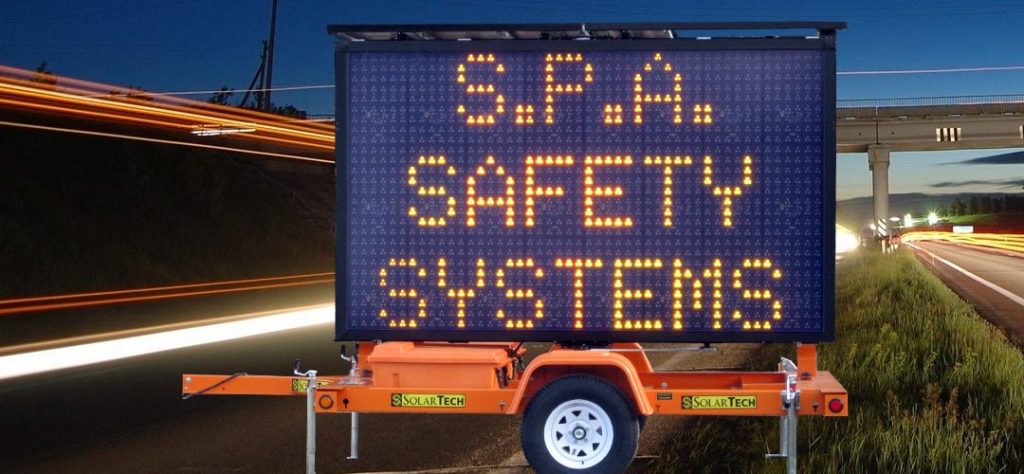
Maximizing Driver Attention to Work Zone Warning Signs “Truck Mounted Attenuators (TMA), Outperforms Any Other Practice” Studies have shown that rear-end crashes in the advance warning area for a work zone are the most common type of work zone crashes. Driver inattention (or distraction) is reported as the most common issue and a major contributing factor to those types of crashes. As such, there is a need to identify the technologies that are successful in alerting drivers when approaching work zones. Message & Arrow Boards Changeable Message Signs Changeable message signs (CMS) are ideal for short-term and mobile work zones due to their portability. For CMS displaying text messages, innovative use of fonts and content may achieve greater speed reduction. Graphic-aided CMS are found to be more legible and recognizable compared with text-message CMS. The location of CMS has significant impact on the effectiveness of this technology; placing in advance of a work zone is recommended. Rumble Strips Usually two to three sets of rumble strips are used together, with two or three strips in each set. Studies suggest that 6-inch-wide strips may generate sound 4 dBA higher than 4-inch-wide strips. Eight strips per set may increase the sound up to 5 dBA higher compared with 4 strips per set. The ease of installation and removal are major concerns for using rumble strips, and portable rumble strips are recommended for short-term work zones. The majority of the studies found reductions in vehicle speeds up to 10 mph. Presence of Police Cars The presence of police cars may reduce car speeds by 4.4 mph and truck speeds by 5 mph (in a 45mph speed zone). Highspeed drivers are found to be more affected by police enforcement. Despite the effectiveness of police cars, ‘‘halo’’ effects and high costs are known to be the two main drawbacks of the technology. Variable speed limit Implementations of variable speed limit (VSL) resulted in reduced speed variance, increased speed compliance, and improved traffic throughput and safety. The heart of VSL is the control algorithm, which determines appropriate speed limit; the speed-flow-density algorithm is shown to have good performance based on simulation experiments. Field studies suggested that VSL could be used to increase speed limit at the bottleneck of work zones. Drone Radars The effectiveness of drone radars to alert drivers depends on the number of radar detectors. It has been reported that radar drones are not effective in reducing vehicle speed. Intelligent Transportation Systems Public response in supporting intelligent transportation systems (ITS) deployment was found to be very positive (95%). However, its technologies are inefficient in decreasing speeds or increasing diversion in cases of low traffic volume. The type of ITS setting plays an important role in deter- mining the driver’s preferred speed through work zones. Graphics-based signs are easier for drivers to interpret quickly and result in a greater reduction of mean speeds (13% to 17%). Driver diversion rate varies from 5.3% to 10% (on average) based on ITS implementation. Finally, crashes could potentially decrease by 2.5% to 10% using ITS. Auditory Technology Auditory technology with loudspeakers is an innovative method which draws drivers’ attention to work zones. The effectiveness of loudspeakers varies, and an array of multiple ordinary loudspeakers in an appropriate pattern is found to be the most suitable for long-distance auditory warnings. When this technology was implemented in a mobile work zone, a speed reduction of 2 mph and increased merging distance of 122 ft. were reported. TMA Truck – Features Truck Mounted Attenuators (TMA) Outperforms Any Other Practice Studies have suggested that an advance warning system, 400 meters (1,312 ft.) upstream from truck mounted attenuators (TMA), outperforms any other practice. Drivers’ TMA recognition distance can also increase at night due to lower traffic volumes. Workers are found to be safer and more efficient behind the mobile barrier trailer MBT-1 in most cases. Drivers are also positively affected by the MBT-1, and the mean vehicle speeds (,49.21 mph) past the work zone are faster during daytime hours with the MBT-1 present than without the MBT-1 (,45.24 mph). This difference is more prominent during nighttime hours. CONTINUE READING FULL ARTICLE – 50 PAGE PDF [Read or Download] Best Practices for Maximizing Driver Attention to Work Zone Warning Signs CITATION: Ukkusuri, S. V., Gkritza, K., Qian, X., & Sadri, A. M. (2016). Best practices for maximizing driver attention to work zone warning signs (Joint Transportation Research Program Publication KEYWORDS: work zone safety, tma trucks, synthesis, implementation, technology, alerting drivers,
MASH Guidelines for TMA Truck Attenuators
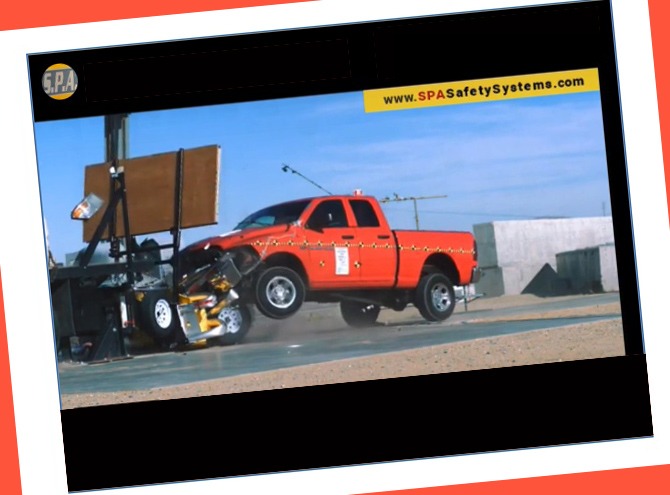
SO, WHAT IS “MASH”? MASH is the acronym for “MANUAL for ASSESSING SAFETY HARDWARE” created by AASHTO (Association of State Highway and Transportation Officials). Attenuators used to be tested using criteria listed in the U.S. DOT “National Cooperative Highway Research Program Report 350” (NCHRP 350), which were “Recommended Procedures for the Safety Performance Evaluation of Highway Features”. MASH is the updated replacement of the NCHRP Report 350. MASH guidelines for crash testing permanent and temporary highway safety features and recommends evaluation criteria to assess test results. Not only does it further expand on the testing requirements listed in the NCHRP Report 350, but it also offers guidelines for when MASH tested and approved attenuators that must be used on your TMA trucks. Dot.gov website > PDF download > Dot.gov website > AASHTO Guidance American Association of Highway and Transportation Officials (AASHTO) is a nonprofit association that represents highway and transportation departments across the nation and serves as a liaison between State departments of transportation and the Federal government. AASHTO works to educate the public and key decision-makers about the critical role that transportation plays in securing a good quality of life and sound economy for our nation, by setting design and installation standards, providing guidance and resources, and developing outreach materials. – Continue Reading > The Scorpion II TMA from TrafFix Devices is the world’s first MASH Tested, Passed, and Eligible Truck Mounted Attenuator. MASH Traffix Scorpion 2 TMA bulletin [pdf download] Read More >
Scissor Lift Trucks: Everything You Wanted To Know But Afraid To Ask

Everything You Wanted To Know About Scissor Lift Trucks. Video, photo gallery and blog article, “Scissor Lift Trucks vs Boom Lifts factors you should keep in mind when choosing between renting a scissor lift and boom lift”. Scissor Lift Trucks https://youtube.com/watch?v=yUPtNtKrSoo%3Fsi%3Dk-iVS17Eq7rosxeG Bridge Maintenance Trucks by SPA SPA bridge maintenance trucks feature scissor lifts designed for under bridge maintenance and repair work and access for bridge inspections. Operators also can control Read more Rule #10 – Scissor Lift Truck Platform Controls Must Be Independent of Ground Crew All scissor lift trucks include a control panel for platform operators be able to raise, lower, and emergency stops the platform and platform extensions Read more 7000 Pounds Max Platform Capacity up to heights of 20 Foot Lift SPA Scissor Lift Trucks built for tough jobs. Its work platform can handle up to 7000 lbs max capacity up to heights of 20 Foot Lift. Read more Scissor Lift Trucks vs Boom Lifts Here are some of the factors you should keep in mind when choosing between renting a scissor lift and boom lift – Read more Using Scissor Lift Trucks for Underside Bridge Service SPA Scissor Lift Trucks are highly effective for servicing, maintenance and inspection of the underside of bridges. Read more Scissor Lift Trucks: Everything You Wanted To Know But Afraid To Ask Video, photo gallery and blog article, “Scissor Lift Trucks vs Boom Lifts factors you should keep in mind when choosing between renting a scissor lift and boom lift”. Read more Scissor Lift Truck Demonstration Video by SPA Systems Scissor Lift Trucks available for sale and rent – 7000 LB Capacity, 20’ Long Work Area and 8’ Wide that Expands 3’ on each side to 14’ full width, Fall Protection is Not Needed. Read more
11 Cone Truck Features For Best Safety Practices By SPA Safety Systems
11 Cone Truck Features For Best Safety Practices by SPA Safety System Safety in the work zone is very important. A Cone Truck is a great example of a combination of safety and functionality. This truck offers a safe as well as efficient way to transport and deploy the cones, barrels and much more used on a highway work zone. A cone truck requires three people – A driver and two more individuals at the rear of the truck. One person hands cones, barrels or other lane closure devices to the person standing in the basket. The person in the basket then places each device in its proper place on the road while in motion and safe in the truck. Cone trucks are followed by TMA trucks to protect them during deployment and collection of devices. Here are the 11 safety features of a cone truck built by SPA Safety Systems: 1. A steel body of 20 foot x 8ft wide: Provides ample room for storage of a large amount of traffic closure devices. This reduces time of deployment and collection due to less trips back to the storage yard to collect more. Reducing production costs and worker exposure on the highway. 2. Side racks which are custom welded: It is important to store the equipment inside the cone truck properly in order to ensure the cone truck safety. The strongly welded side racks are perfect to carry larger payloads and ensure that cargo stays secure in the confines of the truck bed. 3. E-tracks: The focus while transporting any equipment is always on it’s safety and preventing damage during transit. E- track is a long rail having the versatility of multiple points to anchor to with a high strength to support the payload being secured. 4. LED spotlights to illuminate the work area: LED lights are the best source of light versus traditional lights. The LED lights use very little electrical draw compared to standard lights which allows more to added to the truck without being detrimental to the truck’s electrical system. They also greatly increase visibility for the workers on the jobsite. The LED lights have a longer life expectancy, and do not require bulb changes. They can last as long as 25 years. 5. LED Amber lights: The LED Amber lights are the most popular lights for the cone truck safety. They are visible 360 degree around the truck. Amber is a warning light color and are generally used by the non-emergency vehicles. It is incredibly easy to see in Amber lighting which makes it a plus point for the drivers and the workers. These LED Amber lights are used by professionals due to the reliability and versatility. 6. A custom made man basket: It is the most unique and versatile feature of the Cone Truck. It is attached at the rear end of the truck close to the ground to allow the workers easier cone or device deployment to the road. Either left or right side can used for deployment, and they also have D rings in order to tether a safety harness. 7. A closed-circuit TV system: This feature provides a link between the driver and the workers to get the work done efficiently and safely. The TV system allows the driver to access a view of the rear platform to ensure that they are safe as the truck is driven during cone deployment. 8. Intercom Mounted to Dash: This Intercom system maintains a constant communication between the workers in the basket and the driver, with a constantly open channel allowing the workers to still use their hands to complete their task. With its help, the driver is able to hear everything happening at the rear end of the truck in addition to seeing on the closed circuit tv. 9. Traffic safety sign Holders: The two sturdy and dedicated holders sized 4’ x 4’ to fit a standard traffic safety sign. Located near the rear of the truck close to the basket they securely hold the signs near the rear basket to allow for more convenient deployment and collection of each sign. 10. DOT Reflective Tape: DOT tape increases the trucks visibility to other vehicles on the highway while they are traveling. 11. A gate near the bulkhead with swing open access: Due to the 20 foot length of the cone truck and the rear basket a gate near the bulkhead allows for loading pallets of cones more conveniently via forklift.
Tma Crashes Caught On Camera By Traffic Devices Scorpion Attenuators
Video compilations of TMA Truck Crashes caught on camera by TrafFix Devices Scorpion Attenuators. Real live action crashes and crash tests. TMA trucks are also known as attenuator trucks, crash trucks, or safety trucks and they have one basic purpose – to save lives of drivers and highway workers. SPA Safety Systems. Scorpion’s video at https://www.youtube.com/watch?v=ce0B8jyvE9o SPA Safety Systems At SPA Safety Systems of Flanders NJ, contractors and engineers can find the best in class and high-performance TMA trucks for work zone safety in New Jersey, PA, NY, CT, RI, or MD. We carry an extensive inventory of Truck Mounted Attenuator trucks, Cone Trucks and Scissor Lift Trucks for sale or rent, and equipment and parts inventory. For more information call (973) 347-1101 or visit our dust control water trucks web page at https://spasafetysystems.com/. SPA Safety Systems 278 Old Ledgewood Rd Flanders, NJ 07836 (973) 347-1101
TMA Work Zone Safety Portable Positive Protection

TMA trucks are also known as attenuator trucks, crash trucks, or safety trucks has one basic purpose – to save lives. Truck Mounted Attenuator trucks have an attenuator crash-absorbent system attached to them so that they can easily be deployed anywhere at any given time. In essence, these are trucks that come with their own enormous crumple zone. TMA trucks are deployed behind moving operations such as trucks dropping traffic cones or painting lines on roads, protecting workers as they perform their duties along the working area. They are also useful as an alternative to Fitch barriers, sand filled drums, in work zones that are stationary. If used properly, these safety trucks can easily slow down oncoming cars quickly enough such that cars won’t crash into the work zone. However, they don’t stop so quickly that the people inside the cars are injured. TMA Work Zone Safety has become a common sight these days and there are even autonomous TMA trucks entering the marketplace which may eliminate the need for human drivers. This will lead to one less employee having to be in the truck should it be hit harshly. Constant research and advancement in this technology have made it safer for the employees without having to compromise the safety of the travelers. TMA Trucks promoting portable positive protection Portable positive protection applies to those approved devices that provide crashworthy levels of protection that are acceptable. They are portable and quick to install and remove as compared to traditional devices. These devices are known as TMA trucks in the industry. While temporary portable concrete barriers are generally considered apt for use on long term projects (projects lasting more than 3 days), the proper definition of portable would be a device that is quickly deployable when it comes to shorter work operations. TMA trucks are amazingly portable and they are equipped with positive protection attenuators that can easily absorb crash impacts. TMA Trucks promote Work Zone Safety as they can easily be placed and moved from the path of travel at work sites to provide better protection in the work zones for both long and short-term operations. There has been an increased focus on the usage of TMA Trucks or positive protection for ensuring protection of workers by separating workers and traffic in work zones physically. Portable Positive Protection protects both the workers as well as road users. TMA Trucks are especially useful in work zones where there is traffic congestion since they can easily be moved in order to reopen traffic lanes quickly as per the need. Additionally, portable positive protection might also be less intrusive than other traditional methods and thus might reduce congestion and delay. Motorists should also be protected from any hazard they may encounter by intruding into the workspace inadvertently. Improved work productivity is also a benefit of portable positive protection because the workers recognize that they are exposed less to traffic hazards and that they can focus more on the given project due to having more confidence of their safety. This will help reduce the overall work time while also improving their efficiency and help offset the portable positive protection installation time. Best ways of using TMA Trucks to promote TMA Work Zone Safety The Federal Highway Administration recommends TMA trucks for any moving freeway application as well as for stationary ones. Even for non-freeway roads, it is recommended that TMA use should be considered depending on the road’s speed and other conditions. The Federal Highway Administration offers guidelines on how you can place the TMA truck. In general, the buffer between the TMA truck and the first vehicle or worker to be protected should be a little bigger if it is being used in moving operations. A stationary operation in traffic that isn’t moving any faster than 45 mph needs a buffer of just 74 feet, but a moving operation on a highway with high speeds would require the front of the TMA trucks to be at least 172 feet behind the working area. Ensuring that all TMA drivers are trained and highly qualified. It is the responsibility of the TMA drivers to ensure that the TMA or protective vehicles are in a proper position for protecting crew members from errant vehicles. The TMA Truck drivers should be alert, attentive, and keep a keen eye on the surrounding traffic and roadway conditions. The TMA Truck drivers should be aware of their roles in keeping their colleagues and other vehicles on the road safe. Always have an emergency plan in place if things take a turn for the worse. Think about whom to call if someone hits the TMA. Hire someone who is trained in CPR and first aid. While it is highly unlikely that you’ll experience such an incident but you should still plan for the worst. You can track incidents via mobile forms as it’ll allow you to easily capture snapshots of the scene, insert GPS maps, document police details, and store this information securely for instant access.