
The Shop Foreman’s Guide to Safety Truck Service Intervals

It was 2 a.m. on I-80, and the call came in. Our brand-new cone truck, the centerpiece of an overnight paving operation, was dead on the shoulder. A fifty-cent hydraulic fitting had failed, shutting down the conveyor and stranding a ten-man crew. The state police weren’t happy. The project manager was furious. We lost six hours of a critical closure window, all for a part I could hold in my palm. After 30 years with grease under my nails, I can tell you this: safety trucks don’t fail on a schedule. They fail when you need them most. That’s why basing your maintenance on the owner’s manual alone is a recipe for disaster. You need a plan built for the real world, and that starts with understanding proper safety truck service intervals. Why Service Intervals Aren’t One-Size-Fits-All The manual in your glove box is a starting point, written for “normal” operating conditions. But there is nothing normal about a work zone. The Federal Highway Administration (FHWA) has noted that work zone congestion, often caused by incidents such as equipment failures, is a major source of project delays and public frustration. Your trucks live in a world of “severe duty.” Think about it: Extreme Heat: Idling for hours next to 300-degree asphalt. Constant Dust: Concrete, dirt, and milling debris clog filters and contaminate fluids. Stop-and-Go Abuse: Creeping through traffic puts immense strain on transmissions and brakes. High Engine Hours, Low Miles: The odometer lies. A truck that idles for 8 hours before driving 20 miles has put a full day’s wear on its engine, oil, and cooling system. Your maintenance plan has to account for this abuse. Sticking to mileage-based intervals meant for over-the-road hauling will leave your fleet vulnerable. Manufacturer vs. Real-World Intervals The key is to shift your mindset from mileage to engine hours and calendar time. An engine hour meter is the single most honest piece of equipment on your truck. It tells you exactly how long that engine has been working, idling, and generating heat. For equipment without an hour meter, you have to track it by shifts or days. This is the foundation of a real-world safety truck maintenance schedule. Recommended Safety Truck Service Intervals Every truck in your fleet has different needs. A TMA truck and a bucket truck might share a chassis, but their mission-critical systems are worlds apart. Here’s a breakdown based on what I’ve seen work for two decades. TMA Crash Trucks Your TMA is your crew’s bodyguard. Its maintenance is non-negotiable. Engine & Chassis: Follow a severe-duty schedule. Oil and filter changes every 250 engine hours or quarterly, whichever comes first. Don’t stretch it. That oil is breaking down from heat and contaminants. Attenuator Cartridge: This is a daily visual inspection. Look for cracks, damage, or fluid leaks. After any impact, no matter how minor, it needs a full inspection and likely replacement. Follow the manufacturer’s guidelines for cartridge lifespan, even without an impact. Arrow Board/Lights: Check the function daily during your pre-trip. A single burnt-out bulb can confuse and lead to a crash. Cone/Barrel Deployment Trucks These are the workhorses. Their biggest failure points are hydraulic and mechanical. Hydraulics: Check fluid levels daily. Change hydraulic fluid and filters every 500 hours or annually. Contaminated fluid is the #1 killer of hydraulic pumps and motors. Conveyor Belts/Lifts: Inspect daily for tears, tracking issues, and tension. A failed belt during a cone-setting operation can bring the entire job to a halt. Arrow Board & Message Board Trucks These trucks are your primary means of communication. Their reliability hinges on the electrical system. Batteries & Charging System: Test batteries quarterly. Clean terminals and check connections. On solar-powered units, wipe down the solar panels weekly to ensure they’re charging efficiently. Controller & Display: Perform a full function test daily. Cycle through all patterns and messages to ensure the controller and pixels are working perfectly. Scissor & Bucket Trucks For these aerial lift trucks, maintenance is an OSHA-level concern. Hydraulic Rams & Hoses: Daily visual inspection for leaks is a must. Any hose that weeps or bulges needs immediate replacement. Pins, Bushings & Welds: These are part of your frequent and annual inspections per ANSI A92.2 standards. Look for signs of wear, stress, or cracking. Non-Destructive Testing (NDT): Depending on the manufacturer and hours, critical welds and load-bearing components require periodic NDT (like magnetic particle or ultrasonic testing) to find invisible stress fractures. This is a job for certified specialists. Fleet Service Interval Cheat Sheet Truck Type Daily Pre-Trip Inspection 250-Hours / Quarterly Annually Biennially TMA Truck Check the attenuator, lights, and fluids Engine oil & filters Full chassis service, transmission fluid Coolant flush, differential fluids Cone Truck Inspect conveyor, hydraulics Hydraulic filter, grease chassis Hydraulic fluid change Inspect hydraulic pumps/motors Arrow Board Truck Test all light patterns and batteries Test batteries, clean solar panels Deep cycle battery test Inspect wiring harnesses Bucket/Scissor Truck Inspect hydraulics, controls, and pins Grease all points, hydraulic filter Full ANSI inspection, fluid change Non-Destructive Testing (NDT) Telematics: Your Maintenance Alarm Clock Trying to track all this on a whiteboard in the shop is a losing battle. This is where modern telematics becomes your best friend. It’s your eyes and ears on the entire fleet. S.P.A. Safety Systems offers simple, plug-and-play Telematics trackers that monitor engine hours, location, and fault codes. You get an alert on your phone or computer when a truck hits its 250-hour service mark. No more guesswork. We also provide durable QR-code decals for each vehicle. A mechanic can scan it with their phone, pull up the complete service history, and log their work on the spot. It turns your entire fleet’s service record into a living document. Cost of Skipping a Single Interval Still thinking of stretching that oil change? Let’s look at the real math. Scenario Cost Breakdown Total Financial Impact Planned Maintenance Oil/Filter: $150<br>Labor: $100<br>Scheduled Downtime: 2 hours ≈ $250 Roadside Breakdown Towing: $800+<br>Emergency Repair: $1,500+<br>Lost Crew OT: $5,000+<br>Late Penalties: $??,??? $7,300+
The Superintendent’s Call: Trailer vs Stand Boards for Your Work Zone

I remember standing on a Route 46 overpass in the chilly 3 a.m. air, the hiss of air brakes the only sound. My foreman and I were in a heated debate. We had a tight lane closure window, and the choice was simple but critical: drag the big trailer arrow board into a tight spot, or could we get away with a couple of compact stand boards and beat the sun? That decision—trailer vs stand boards—is one every crew faces. Get it right, and you’re efficient and safe. Get it wrong, and you’re burning payroll, missing deadlines, and creating unnecessary risk. This isn’t just about hardware; it’s about mastering your setup. Why Board Selection Shapes Safety—and Payroll In traffic control, time is everything. A recent Federal Highway Administration (FHWA) study suggests that for every minute a lane closure is delayed during setup, the cost in lost productivity and potential congestion penalties can be substantial. When your crew is wrestling with a heavy trailer on a narrow shoulder or trying to find a flat spot for a hitch, you’re not just wasting time—you’re spending money. The right board for the job streamlines your setup, reduces your crew’s exposure to live traffic, and gets your work zone operational faster. The wrong board does the opposite, turning a simple task into a logistical headache. The central question of trailer vs stand boards is a financial and safety calculation before it’s an equipment one. Trailer vs Stand Boards: The Feature Face-Off Let’s break down the practical differences. I’ve set up hundreds of both, and each has its place. This isn’t about which is “better,” but which is smarter for your specific application. Feature Trailer-Mounted Board Stand-Mounted Board Setup Time 15–20 minutes (unhitching, leveling, locking) 1–2 minutes (unfold, place, secure) Footprint & Storage Large; requires dedicated yard space Compact; fits in a truck bed or job box Power Source Solar panels with a deep-cycle battery bank Swappable 12V or 24V lithium batteries Runtime 20–30 days on a full charge (solar dependent) 5–7 days per battery; requires swaps Wind-Load Rating High (rated for 80+ mph winds when deployed) Moderate (rated for 40-50 mph; needs sandbags) Towing Requirements Requires a pickup truck with a pintle or ball hitch None; easily carried by one or two people Ideal Speed Zone High-speed (55+ mph) interstates & highways Low-speed (≤45 mph) urban, local, rural roads Typical Rental Rate ~$150–$250 / day ~$75–$125 / day This message board comparison makes it clear: trailers are built for high-speed, long-duration projects where their visibility and stability are paramount. Stand boards offer unmatched speed and flexibility for short-term, low-speed, or space-constrained jobs. Cost & ROI Snapshot: Ownership vs. Hassle-Free Rental Buying a board seems like a good investment, but the total cost of ownership tells a different story. You have to factor in maintenance, battery replacements, storage, and insurance. For many contractors, renting is a smarter financial move. 3-Year Total Cost of Ownership (TCO) – Single Trailer Board Cost Category Purchased Board S.P.A. Rental Solution Upfront Cost $18,000 $0 Maintenance & Repairs $2,500 $0 (Included) Storage & Insurance $1,800 $0 (Included) Total 3-Year Cost $22,300 ~$15,000 (Based on 10 weeks/year rental) Advantage Asset on books 28% Lower Cost & Zero Headaches When you rent from S.P.A. Safety Systems, you get a fully charged, perfectly maintained board delivered to your site. No storage costs, no dead batteries, no surprise repair bills. You just get the right portable traffic boards for the job, every time. Safety & Compliance Factors You Can’t Ignore The Manual on Uniform Traffic Control Devices (MUTCD) is our bible. Section 6F.61 outlines the specific requirements for arrow and message boards, including legibility distance and placement. Furthermore, OSHA’s Part 1926 construction standards require us to protect our workers from the motoring public. Here’s the bottom line: High-Speed Roads (≥45 mph): The MUTCD generally requires a larger, trailer-mounted board for adequate visibility and to command driver respect. Low-Speed/Urban Roads (<45 mph): A properly placed stand board often meets or exceeds the legibility requirements and is far safer to deploy in tight quarters. At S.P.A., our entire fleet of Message Boards and Arrow Boards is MUTCD-compliant and built to exceed federal standards. We use ultra-bright LEDs for maximum visibility day or night and ensure every unit is structurally sound and ready for deployment. Case Study: Paterson Paving Cuts Setup Time by 40% A paving crew out of Paterson, NJ, was struggling with nightly milling operations on tight city streets. They were losing nearly 30 minutes per closure, fighting to position their trailer arrow board around parked cars and tight corners. After a consultation, we switched them to our lightweight stand boards. The crew could carry the boards into position by hand in minutes. The result? They cut their average lane-closure setup time by 40%, adding nearly 2 hours of productive paving time to each week’s shift. Decision Matrix: Which Board Fits Your Work Zone? Still on the fence? Use this simple matrix. Find your job conditions and see which board is the smarter call. Factor Trailer Board is the Best Choice Stand Board is the Best Choice Speed Limit > 50 mph ✔️ Shoulder Width < 4 ft ✔️ Crew Size < 3 people ✔️ Project > 2 weeks ✔️ The Verdict on Trailer vs Stand Boards This grid simplifies the choice. For high-speed, long-term jobs with ample space, the trailer is your workhorse. For everything else—urban streets, short-duration work, small crews—the stand board delivers superior speed and flexibility. FAQs: Trailer vs Stand Boards for Your Work Zone 1. How long do the stand board batteries really last on a night job? Our message boards use high-capacity lithium batteries that reliably last 5-7 full shifts. With our rental program, we provide fully charged spares, so you can hot-swap a battery in under 60 seconds with zero downtime. 2. Do my drivers need a special license to tow a message board trailer? No. Most message and arrow board trailers are under the weight threshold that
What Are Crash Trucks? Your Guide to Bridge Construction Safety

Here’s a number that keeps me up at night: roadway workers are more likely to be struck by a vehicle than workers in any other profession. On a bridge job, with nowhere to run, that risk multiplies. That’s why, for me, the most important piece of steel on the job isn’t in the superstructure—it’s the crash trucks for bridge construction crews use as mobile shields. For two decades, I’ve seen these trucks do their job. They are the difference between a close call and a catastrophe. They aren’t just a good idea; they are the last, and most important, line of defense for your crew. Crash Trucks 101: The Last Line of Defense So, what exactly is a crash truck? Officially, it’s a vehicle equipped with a Truck-Mounted Attenuator, or TMA. But for those of us in the field, it’s a guardian angel on wheels. Its purpose is brutally simple: to absorb the full force of an errant vehicle, sacrificing itself to protect the lives of the workers ahead. Think of it like a giant, industrial-strength shock absorber. The attenuator itself is a cartridge made of honeycombed, energy-absorbing materials. When a car or truck hits it, the cartridge crumples in a controlled, predictable way. This process dissipates the kinetic energy of the impact over a few critical seconds, bringing the vehicle to a much safer stop than if it had slammed into a concrete barrier or the back of a stationary work truck. A properly equipped TMA crash truck includes several key components: The Attenuator Cartridge: The heart of the system, designed to be destroyed upon impact. Heavy-Duty Underride Guard: Prevents a smaller vehicle from sliding underneath the truck chassis during a collision. High-Lumen Arrow Board: A bright, clear directional board to guide traffic, visible from a mile away. Backup Camera & Alarms: Essential for safely positioning the truck in a tight, active work zone. Why Bridge Jobs Amplify Risk Working on a bridge isn’t like working on a typical highway. The risks are compressed and magnified. No Escape Routes: On a standard road, a worker might have a shoulder or median to dive into. On a bridge deck, you have a concrete barrier on one side and a sheer drop on the other. Narrow Lanes: Lane widths are often restricted, leaving less room for error for both your crew and passing motorists. Overhead Hazards & Distractions: Steel girders, scaffolding, and cranes can create a visually cluttered environment that distracts drivers. Higher Speeds: Traffic often approaches bridges at full highway speed, reducing reaction time. These factors increase the potential for severe accidents. According to the Federal Highway Administration (FHWA), the average cost of a fatal work zone crash is staggering, but even a non-fatal injury claim can easily exceed six figures, not to mention the project delays and OSHA investigations that follow. Protecting your bridge work zone safety isn’t just about protecting people—it’s about protecting the project itself. Spec’ing the Right Crash Truck for Bridge Work Not all crash trucks are suitable for the unique demands of a bridge project. You need to spec the right machine for the job. MASH TL-3 Rating: This is non-negotiable. The AASHTO Manual for Assessing Safety Hardware (MASH) Test Level 3 (TL-3) certification ensures the attenuator can safely stop a 2,270 kg pickup truck traveling at 100 km/h (about 62 mph). Anything less is a gamble. Host Truck Weight: The truck carrying the TMA must meet a minimum weight requirement (often 15,000 lbs or more) to provide enough resistance during an impact. However, on weight-restricted bridges, you need a truck that meets this requirement without exceeding the bridge’s load limits. This is a critical balancing act. Arrow Board Lumens: Glare from the sun reflecting off water or concrete can wash out a weak arrow board. You need a high-output board that remains piercingly bright even in direct sunlight. Here’s a quick guide to help you select the right setup. Bridge Scenario Recommended TMA Setup Minimum Buffer Distance* Typical Crew Size Short-Span, Low-Speed Single TL-3 TMA Truck 150 ft 2-4 Multi-Lane Deck Repair Two TL-3 TMA Trucks (one per closed lane) 250 ft 5-8 Overnight Girder Placement TL-3 TMA + Advance Warning Arrow Board 500 ft + 8-12+ Mobile Operation (e.g., line striping) TL-3 TMA in “shadow” position 100-150 ft (dynamic) 2-3 *Buffer distance is the space between the TMA and the first worker/piece of equipment. S.P.A. Safety Systems can help you navigate these choices. Our fleet of attenuator truck rentals is specifically configured for the challenges of crash trucks and bridge construction, ensuring you get a MASH-compliant unit that fits your project’s weight and visibility needs. Averted Disaster on the Turnpike It was 3 a.m. during a bearing replacement on a New Jersey Turnpike overpass. The crew was focused, sparks flying from a grinder. Suddenly, a box truck, its driver likely asleep, veered out of the open lane and headed straight for the closure. He never hit the brakes. The truck slammed into our S.P.A. TMA at nearly 60 mph. The attenuator imploded, just like it was designed to. The driver was shaken but unhurt. My crew? They barely looked up. The TMA did its job, and the project continued after a short delay. Deployment Best Practices Having the right truck is only half the battle. Deploying it correctly is just as important. Calculate Your Buffer Zone: The “roll-ahead” distance is the space a TMA truck will travel after being hit. Your buffer space—the empty area between the TMA and your crew—must be greater than this distance. A common rule of thumb is to use the formula provided by the attenuator manufacturer, but always err on the side of caution. Master the Taper: Your lane closure taper should be gradual, with at least 5-7 cones before the TMA to guide drivers smoothly. The length of the taper (in feet) should be the speed limit (mph) multiplied by the width of the lane closure (in feet). Light It Up at Night: For night work,
The Foreman’s Guide to Eliminating Work Zone Rear-End Collisions

Here’s a number that should stop every foreman, contractor, and DOT engineer cold: according to the Federal Highway Administration (FHWA), rear-end crashes are the single most frequent type of collision in work zones. They aren’t just common; they are the dominant threat to your crew and the traveling public. For 25 years, I’ve seen the aftermath. The twisted metal, the project delays, the gut-wrenching phone calls. But I’ve also seen how a smart, layered safety plan can virtually eliminate the risk of work zone rear-end collisions. It’s not about luck; it’s about strategy. Why Rear-End Crashes Dominate Work Zones A work zone is a disruption. It forces drivers to do something they don’t want to do: slow down and pay attention. The core problem is speed variance—the dangerous difference between a car traveling at 65 mph and your stationary operation. When you combine that with today’s epidemic of distracted driving and visibility gaps at night or in bad weather, you have a recipe for disaster. The National Safety Council puts the average cost of a non-fatal injury crash at over $78,000, and that’s before you factor in project downtime, insurance hikes, and potential litigation. Preventing these incidents isn’t just a safety imperative; it’s a financial one. The 5-Layer Defense Against Work-Zone Rear-End Collisions You wouldn’t send a worker into a trench without shoring, so why send them onto a highway without a complete defense system? A single sign or a few cones isn’t enough. You need layers, each one designed to capture a driver’s attention and modify their behavior. Layer 1: Advance Warning Signage & Message Boards Your first line of defense starts long before the first cone. Static signs are the bare minimum. To truly grab attention, you need high-intensity, LED-powered changeable message signs (CMS). These boards allow you to post real-time, dynamic messages like “LEFT LANE CLOSED 1 MILE” or “TRAFFIC SLOWING AHEAD.” Per MUTCD guidelines, this warning should begin at least a half-mile out on high-speed roads, giving even the most distracted driver a chance to process the information and prepare to slow down. Layer 2: Proper Taper Length & Cone Pattern The taper is where you guide traffic out of the closed lane. A taper that’s too short or poorly defined invites chaos. The standard formula is a 15:1 ratio for every 1 mph of posted speed, but I always err on the side of a longer, more gradual transition. It gives drivers more time and space to merge smoothly. High-visibility cones with reflective collars are non-negotiable, especially for night work. This is a fundamental component of rear-end crash prevention. Layer 3: TMA Crash Trucks as Rolling Guardrails This is your crew’s last line of defense, and it’s the most important. A Truck-Mounted Attenuator (TMA) is a mobile crash cushion. It’s a rolling guardrail designed to absorb the kinetic energy of a multi-ton vehicle traveling at highway speeds. Proper TMA crash truck safety dictates placing it upstream of your crew to create a physical barrier. If a driver fails to respond to all other warnings, the TMA sacrifices itself to save your workers’ lives. The energy-absorbing cartridges are designed to be replaced after an impact, a small price to pay for a life saved. Layer 4: Dynamic Speed Feedback & Smart-Work-Zone Tech The best way to manage speed is to make drivers aware of it. Radar speed feedback signs that flash “YOUR SPEED” followed by “SLOW DOWN” are incredibly effective. They break the hypnosis of highway driving. For more complex projects, smart-work-zone systems link message boards, sensors, and even traffic apps like Waze. These systems can detect slowing traffic and automatically update upstream signs, providing real-time warnings that prevent the deadly chain-reaction pileups common in rear-end work-zone collisions. Layer 5: Night- and Low-Light Visibility Kit At night, visibility is everything. Your safety plan must be amplified after sundown. This means using brilliant, full-size Type C [Arrow Boards] that are impossible to ignore, even from a mile away. It means ensuring all your equipment and barricades use high-intensity prismatic (HIP) reflective sheeting. And for the work area itself, portable balloon lights provide 360-degree, glare-free illumination, making your crew and operation visible without blinding oncoming drivers. This is non-negotiable for work zone speed management in low-light conditions. Defense Layer Summary Defense Layer Key Gear Primary Crash-Reduction Effect 1. Advance Warning Changeable Message Signs (CMS) Grabs driver attention early; provides clear instructions. 2. Taper & Channelizing High-Viz Cones, Proper Taper Length Guides traffic smoothly; reduces late-merge conflicts. 3. Physical Protection TMA Crash Trucks Absorbs impact energy; physically shields workers from errant vehicles. 4. Speed Management Radar Speed Feedback Trailers Makes drivers aware of their speed and encourages voluntary slowdowns. 5. High Visibility Type C Arrow Boards, Balloon Lights Overcomes darkness and weather; ensures maximum conspicuity. Mini Case Study: Slashing Rear-End Incidents on the Parkway A paving contractor tackling a series of overnight milling and paving jobs on the Garden State Parkway was plagued by near-misses and two minor rear-end impacts in the first month. Their static sign setup wasn’t enough. After partnering with S.P.A. Safety Systems, they deployed a comprehensive package: two [Attenuator Trucks] for shadow and barrier protection, a radar speed feedback trailer at the start of the warning area, and a smart-work-zone system that linked traffic sensors to their message boards. The result? They cut rear-end incidents by over 60% for the remainder of the project and finished ahead of schedule. 10-Step Traffic-Control Plan (TCP) Checklist Before any cones hit the pavement, run your plan through this checklist: Have you reviewed the MUTCD guidelines for your specific roadway type? Are warning signs placed at the correct distances for the posted speed limit? Is your taper length sufficient for the traffic speed and volume? Is a TMA truck specified as the primary shadow vehicle? Have you incorporated dynamic elements, such as a CMS or a speed feedback trailer? Does the plan account for night work with enhanced lighting and reflectivity? Is there a clear plan for ingress/egress
Guide to Preventive Maintenance for Trucks – S.P.A.

I’ll never forget the call. 2 a.m. A crew was setting a taper on I-287 when their cone truck’s lift gate hydraulics gave out, trapping a pallet of cones and freezing the entire operation. They lost their lane closure window, the job fell behind schedule, and the penalty clauses kicked in. All because of a $50 hose that was never inspected. That’s the brutal reality of a break-fix maintenance mindset. It’s always more expensive, more dangerous, and happens at the worst possible moment. A proactive plan for Preventive maintenance for trucks isn’t just about avoiding breakdowns; it’s about controlling your schedule, your budget, and your reputation. Why a Preventive Plan Beats Break-Fix Every Time Let’s talk numbers. The American Trucking Associations (ATA) estimates that the average roadside repair costs four times as much as a scheduled repair in the shop. That figure doesn’t even account for the lost revenue, project delays, or the safety risk posed by a disabled truck on a live highway shoulder. A break-fix approach puts you in a constant state of emergency. You’re paying premium rates for mobile mechanics, rush shipping on parts, and overtime for your crew while they wait. A well-designed fleet PM program flips the script. You dictate the downtime, control the costs, and catch small problems before they become catastrophic failures. It’s the difference between steering the ship and plugging holes in a sinking one. Core Intervals You Can’t Ignore Specialty work-zone trucks aren’t long-haul semis. Their engines idle for hours, their hydraulic systems work hard, and their safety components are under constant stress. Your truck maintenance schedule needs to reflect this unique duty cycle. Here are the non-negotiable intervals I’ve built my career on. Daily Walk-Around Checks This is the most critical 10 minutes of the day. Before that engine ever turns over, the operator needs to be the first line of defense. What to Check: Tires, lights, fluid levels (oil, coolant, hydraulic), horn, backup alarm, and a visual check of the truck’s specialty equipment (attenuator, boom, lift gate). Look for leaks, damage, or anything that looks out of place. Why it Matters: This simple habit catches 80% of the problems that lead to roadside breakdowns. A low tire, a frayed hydraulic line, a burnt-out warning light—these are the easy fixes that prevent major incidents. 250-Hour Fluid & Filter Changes For work-zone trucks, hours are a better measure than miles. Long idle times are tough on engines, shearing oil and loading up emissions systems. What to Do: Change the engine oil and filter, fuel filters, and hydraulic filters. Take oil samples and send them for analysis. This tells you the internal health of the engine and hydraulic system, flagging wear metals long before a failure. Why it Matters: Clean fluids are the lifeblood of your equipment. Dirty oil grinds away at engine components, and contaminated hydraulic fluid destroys expensive pumps and valves. This is the cheapest insurance you can buy for your powertrain. Quarterly Cartridge/Attenuator Absorber Swaps This is a critical part of preventative maintenance for trucks equipped with TMAs. The energy-absorbing cartridges in an attenuator have a shelf life and can degrade due to weather and road salts. What to Do: Inspect the entire attenuator for cracks, corrosion, and damage. For cartridge-style attenuators, follow the manufacturer’s replacement schedule, typically on a quarterly or semi-annually, depending on the environment. Why it Matters: A TMA with compromised absorbers won’t perform as designed in a crash. You’re not just ticking a box; you’re ensuring the device will actually save a life. Annual Hydraulic System Flush Your bucket trucks, scissor lifts, and cone trucks live and die by their hydraulic systems. Over time, the fluid breaks down and gets contaminated with water and microscopic debris. What to Do: Once a year, drain the entire hydraulic system—including the reservoir, lines, and cylinders—and replace the fluid with fresh, manufacturer-spec oil. Replace all filters at once. Why it Matters: A full flush removes contaminants that cause sluggish performance, seal failures, and catastrophic pump failures. It restores system performance and significantly extends its life. Biennial Boom & Scissor Pin NDT Inspection The pins and welds that hold a boom or scissor lift together are under immense stress. A failure here is unthinkable. What to Do: Every two years, have a certified technician perform a Non-Destructive Test (NDT) on all critical welds and structural pins. This typically involves magnetic particle or dye penetrant testing to find microscopic cracks invisible to the naked eye. Why it Matters: This is a core requirement for ANSI compliance and a fundamental safety practice. It’s the only way to verify the structural integrity of your aerial equipment. Building Your 12-Month PM Calendar A plan on paper is a plan in action. Use this template to map out your year. Customize it for each specific truck in your fleet. Month Tasks Est. Labor Hours S.P.A. Parts Kit Est. Downtime Jan Annual Service: Lube, Oil & Filters, Full Chassis Inspection 6 hrs PM-KIT-A 1 Day Feb Daily Walk-Arounds 15 min/day – 0 Mar 250-Hour Service: Engine & Hyd. Filters, Oil Samples 4 hrs PM-KIT-B 0.5 Day Apr Quarterly Attenuator Inspection & Cartridge Swap 3 hrs TMA-CART-Q1 0.5 Day May Daily Walk-Arounds 15 min/day – 0 Jun 250-Hour Service: Engine & Hyd. Filters, Oil Samples 4 hrs PM-KIT-B 0.5 Day Jul Semi-Annual Service: Full Brake & Tire Inspection 5 hrs – 1 Day Aug Daily Walk-Arounds 15 min/day – 0 Sep 250-Hour Service: Engine & Hyd. Filters, Oil Samples 4 hrs PM-KIT-B 0.5 Day Oct Quarterly Attenuator Inspection & Cartridge Swap 3 hrs TMA-CART-Q3 0.5 Day Nov Prep for Winter: Coolant System Check, Battery Test 4 hrs – 0.5 Day Dec Annual Hydraulic Flush / Biennial NDT Inspection 8-16 hrs HYD-FLUSH-KIT 2-3 Days Telematics & Alerts: Set-It-and-Never-Forget-It Tired of chasing down drivers for engine hours? Stop guessing. Modern telematics is the key to automating your PM schedule. At S.P.A. Safety Systems, we offer simple, plug-and-play [Telematics trackers] that install in minutes. These devices report engine hours,
Mobile Fleet Solutions: The Modern Playbook for Municipal Projects

It’s 3 a.m. on a Sunday. A water main has turned Elm Street into a river, and your phone is blowing up. You have a crew on-site, but the vacuum truck is down for repairs, and the only available light tower is across town. Monday’s commute is hours away, and so is a solution. This isn’t just a stormy night; it’s a symptom of a systemic problem many municipalities face: an aging, overstretched fleet. The traditional model of owning every piece of equipment is breaking under the pressure of shrinking budgets and rising public expectations. That’s why savvy public works directors are turning to comprehensive mobile fleet solutions. This strategy delivers the exact equipment you need, right when you need it, without the extreme cost of ownership. Why Mobile Fleets Are Reshaping Municipal Work Windows Project delays aren’t just frustrating; they’re expensive. Studies show that a significant percentage of public infrastructure projects run over budget, and a primary culprit is city project downtime. When a critical piece of equipment isn’t available, your crew isn’t working—they’re waiting. And you’re paying for it. Idle Crew Costs: A five-person crew earning an average of $35/hour costs you $175 per hour. If they’re idle for just four hours waiting for a truck, that’s $700 in wages lost, not to mention the project delay. The Ripple Effect: A stalled water main repair isn’t just a DPW problem. It’s a traffic problem, a public safety issue, and a political headache. The faster you can mobilize, work, and clear the scene, the better for everyone. An on-demand equipment fleet strategy transforms this liability into an advantage. Instead of relying solely on what’s in your yard, you gain access to a full-service, ready-to-deploy fleet, turning days of delay into hours of action. Core Equipment Every City Should Have on Speed Dial A true mobile fleet solution isn’t just about one truck; it’s about a coordinated system of equipment that works together. Here are the core units every municipality should have access to. Attenuator & Cone Trucks for Traffic Control Before a single shovel hits the ground, the work zone must be safe. Attenuator (or “crash”) trucks are your crew’s first line of defense against errant drivers. Paired with a cone truck that can deploy and retrieve hundreds of cones in minutes, you establish a compliant work zone with unmatched speed and safety. Water & Vacuum Trucks for Cleanup From water main breaks and storm drain cleaning to hydro-excavation, these trucks are the workhorses of municipal cleanup. A powerful water truck provides the pressure, while a high-CFM vacuum truck removes slurry and debris, leaving the site clean and ready for the next phase. Scissor & Bucket Trucks for Elevated Tasks Whether you’re repairing traffic signals, trimming park trees, or inspecting bridge infrastructure, you need safe access to height. A bucket truck offers phenomenal reach and the ability to work over obstacles. In contrast, a scissor truck provides a large, stable platform for multiple workers and their tools—ideal for linear tasks such as streetlight replacement. Light Towers & Message Boards for 24/7 Visibility Your work doesn’t stop when the sun goes down, and neither should your safety protocols. Mobile light towers turn night into day, while programmable message boards provide clear, real-time communication to the public, rerouting traffic and managing expectations around the clock. Municipal Equipment Quick-Reference Guide Unit Type Key Specs Typical Tasks Same-Day Rental (Est.) Attenuator Truck TMA, Arrow Board Highway/Roadway Work Zone Protection $900 – $1,200 Water Truck 2,000-4,000 Gallon Dust Control, Compaction, Fire Support $700 – $950 Vacuum Truck 500-3,000 Gallon Storm Drain Cleaning, Hydro-Excavation $1,200 – $1,800 Bucket Truck 40-75 ft. Working Height Traffic Signal Repair, Tree Trimming $550 – $800 Scissor Truck 26-40 ft. Platform Height Bridge Inspection, Building Maintenance $450 – $650 Message Board Solar, Programmable Traffic Diversion, Event Info $150 – $250 Total Cost of Ownership vs. On-Demand Rental The sticker price of a new truck is just the beginning. The Total Cost of Ownership (TCO) reveals the true financial burden over the life of the asset. An on-demand rental model, or a municipal fleet rentals strategy, converts these massive, unpredictable costs into a single, manageable operational expense. 3-Year TCO Calculator: Owning vs. Renting (Example: Vacuum Truck) Cost Factor Owning the Asset On-Demand Rental Capital Expense (CapEx) $250,000 $0 Operating Expense (OpEx) $60,000 (Fuel, Maint., Insurance) $90,000 (Based on 50 rental days/yr) Depreciation -$100,000 (Est. value loss) $0 Disposal/Resale Hassle Significant Time/Cost $0 Total 3-Year Cost ~$210,000 (After resale) $90,000 The numbers are clear. For specialized equipment that isn’t used daily, ownership is a financial drain. Renting gives you 100% of the capability at a fraction of the total cost. The Compliance & Liability Lens Operating on public roads brings a heavy compliance burden. Your fleet must adhere to a web of regulations from the Federal Motor Carrier Safety Administration (FMCSA) on vehicle safety, OSHA 1926 on construction site safety, and the Manual on Uniform Traffic Control Devices (MUTCD) for work zone setup. Failure to comply isn’t just a fine; it’s a massive liability risk. According to the Federal Highway Administration (FHWA), there is a work zone fatality every 10 hours in the United States (Federal Highway Administration, 2023). This is where a trusted partner is invaluable. At S.P.A. Safety Systems, our entire fleet is maintained to exceed these federal standards. Every attenuator truck meets MUTCD and NCHRP 350/MASH requirements. Every aerial lift is inspected daily in accordance with OSHA guidelines. By partnering with us through our [Municipal Solutions page], you’re not just renting a truck; you’re outsourcing your compliance risk to experts. Telematics & Maintenance Wrapped In One of the hidden costs of ownership is fleet management. With a turnkey truck fleet solutions partner, that disappears. Our entire rental fleet is equipped with advanced telematics. GPS Tracking: Know exactly where your assets are, ensuring efficient dispatch and accountability. Idle Alerts: Get notified if a truck is running but not working, helping you cut fuel waste. Proactive Maintenance: We monitor engine
Arrow Board Safety: The Unsung Hero of Your Flagging Crew

It was 2 a.m. on a moonless stretch of I-287. Rain slicked the asphalt. My flagger was in position, but I had a knot in my stomach. Then, I saw it in the distance: a pair of headlights, moving way too fast. They started to drift. Just as I keyed the radio, the driver saw our arrow board—a brilliant, flashing beacon cutting through the gloom—and swerved back into the open lane. That board didn’t just prevent a crash. It saved a life. That night hammered home a lesson I’ve carried for 20 years: for any flagging operation, superior arrow board safety isn’t a nice-to-have. It’s the most critical piece of equipment you have, second only to the skill of your crew. Why Arrow Board Safety Matters More Than Ever In today’s world of distracted driving, your work zone is more vulnerable than ever. Your cones and signs are passive warnings. An arrow board is an active command. It grabs a driver’s attention from a half-mile out and tells them exactly what to do: Merge. Now. The statistics are sobering. The Federal Highway Administration (FHWA) reports that rear-end collisions are the most common type of work-zone crash, accounting for a significant share of fatal incidents. A bright, clear arrow board is your single best defense against becoming one of those statistics, providing the warning needed to prevent these often-devastating impacts. It’s the loudest voice you have on the road, protecting both the public and your people. Key Arrow Board Features Flaggers Can’t Skip Not all arrow boards are created equal. The difference between a cheap, dim unit and a modern, high-performance board can be the difference between a smooth shift and a catastrophe. Here are the non-negotiable features I look for. High-Output LED Brightness Your board has one job: be seen. Modern boards use high-output LEDs that are visible from over a mile away, even in bright sunlight. This is a core tenet of arrow board safety; it gives drivers maximum time to react. Automatic Dimming for Dusk/Dawn A board that’s brilliant in the sun can be blinding at night. Quality units have photocells that automatically adjust brightness based on ambient light. This prevents glare and ensures the message is always clear, not overwhelming, which is crucial for work zone visibility. 360° Swivel & Tilt Mast Job sites are never perfect. A mast that can swivel and tilt allows your crew to aim the board precisely where it needs to be, regardless of where the trailer is parked. This is essential for complex traffic patterns or setups on sloped shoulders. Lithium-Iron Battery Packs Old-school lead-acid batteries are heavy, prone to failure, and a headache to maintain. Newer lithium-iron (LiFePO4) packs are lighter, charge faster, and provide longer, more reliable runtimes. This means less time worrying about power and more time focusing on the work. Wireless Sequence Controller Fumbling with a control box tethered to the trailer is inefficient and unsafe. A wireless remote allows your crew to change the arrow pattern (left, right, caution, etc.) from a safe distance, adapting to changing traffic conditions instantly. Feature-to-Benefit Breakdown Feature What It Is Why It Matters Crew Benefit Project Benefit High-Output LEDs Ultra-bright, long-distance lamps Cuts through sun, rain, and fog Reduces crew anxiety about visibility Drastically lowers rear-end crash risk Auto-Dimming Photocell adjusts brightness Prevents nighttime glare for drivers Eliminates manual adjustments Maintains MUTCD compliance 24/7 Swivel/Tilt Mast Adjustable mast positioning Aims for maximum impact Faster, more flexible setup Works on uneven ground & complex sites Lithium Battery Modern, lightweight power source Reliable, long-lasting power No dead batteries mid-shift Increased uptime, lower labor costs Wireless Remote Handheld pattern controller Allows control from a safe distance Flagger can adjust without entering traffic Faster response to traffic changes Sizing & Configuration Guide Choosing the right size is critical and depends on the roadway. The MUTCD outlines three main types. For most flagging operations on highways and arterials, you’ll be choosing between a Type B or a Type C. Feature Type B Board Type C Board Display Size 60″ x 30″ 96″ x 48″ Lumen Range High-output Very high-output Recommended Speed Zone Intermediate speeds (e.g., 45 mph or less) High speeds (e.g., over 45 mph) Typical Power Runtime 20-30 days (solar-assisted) 15-25 days (solar-assisted) When in doubt, go bigger. You can’t over-communicate on a high-speed road. These are the most common portable arrow board rentals for a reason. Cost of Downtime vs. Rental Fee Finance might see an arrow board rental as a line-item expense. A good foreman sees it as the cheapest insurance policy you can buy. The math is brutally simple. Scenario Associated Cost 3-Year Projection One Minor Work Zone Incident Average Claim: $24,700 (incl. legal, repairs, lost time) $24,700+ Weekly Arrow Board Rental Average Fee: $185 $28,860 (Rented every week for 3 years) A single fender-bender costs more than renting a top-of-the-line arrow board every single week for a year. And that’s just the financial cost—it doesn’t account for the project delays, OSHA investigations, and the human toll on your crew. Case Study: Paving Crew Slashes Setup Time A paving contractor on a tight schedule for a New Jersey Turnpike resurfacing project was losing nearly an hour each night setting up and breaking down their lane closure. Their old diesel arrow boards were unreliable. By switching to two of S.P.A.’s solar-hybrid arrow boards with wireless remotes, they cut their setup and teardown time by 35%. The crew could position the boards and activate them from the truck cab, closing the lane faster and starting work sooner. Compliance Corner Compliance is non-negotiable. The two main documents you need to know are: MUTCD Chapter 6F: The Manual on Uniform Traffic Control Devices is the bible for traffic control. It specifies the design, application, and placement of arrow boards. OSHA Part 1926: This covers Safety and Health Regulations for Construction, including the employer’s responsibility to protect workers from traffic hazards. A violation isn’t just a fine; it’s a signal of negligence that can be
Your Guide to Flawless Work Zone Truck Planning

Did you know there’s a work zone crash in the U.S. every 5.8 minutes? I’ve spent two decades on the shoulder of America’s highways, and I can tell you that statistic feels real. I’ve seen the near misses, and I’ve heard the screech of tires. And I know that the difference between a routine shift and a tragedy often comes down to the vehicles you put between your crew and moving traffic. Too many contractors think about the work first and the safety setup second. That’s a backward and dangerous approach. Effective work zone truck planning isn’t just about compliance; it’s the foundation of a safe, efficient, and profitable project. Why Truck Selection Sets the Safety Tone Let’s be blunt. A single lane-closure crash involving an injury can cost your company anywhere from $300,000 to well over $1 million when you factor in liability, litigation, insurance hikes, and project delays. Suddenly, the weekly rental fee for the right piece of equipment seems trivial. The trucks you deploy do more than just carry cones or flashlights. They communicate with the public, define the workspace, and, most importantly, serve as a physical shield for your people. Choosing the wrong truck—or skipping one entirely—sends a message that you’re willing to gamble. That’s a bet you can’t afford to lose. Core Trucks Types and Boards Every Work Zone Needs Your fleet is your toolbox. Using a cone truck when you need a TMA is like using a screwdriver to hammer a nail. Let’s break down the core tools and their specific jobs. TMA Crash Trucks This is your crew’s guardian angel. A Truck-Mounted Attenuator (TMA) is designed for one brutal purpose: to absorb the impact of an errant vehicle, sacrificing itself to save your workers’ lives. TMA crash truck safety is non-negotiable for any operation on a live, high-speed roadway. Primary Tasks: Protecting stationary or slow-moving operations such as line striping, pothole patching, or guardrail repair, and shielding the beginning of a lane closure. Key Specs: Look for a scorpion-style attenuator rated for the roadway speed (TL-2 for lower speeds, TL-3 for highways). A bright LED arrow board on the truck is essential. Crew Benefit: Peace of mind. Knowing there’s a 20,000-pound shield at their back allows your crew to focus on their work without constantly looking over their shoulder. Our fleet of [TMA Crash Trucks] is rigorously maintained and meets all federal standards. Cone/Barrel Deployment Trucks A well-placed taper of cones is the first “hello” your work zone says to drivers. Dedicated cone trucks make this critical process faster, safer, and more precise. It’s a core piece of safe work zone trucks. Primary Tasks: Rapid and uniform deployment and retrieval of cones or barrels for lane closures, tapers, and channelizing traffic. Key Specs: A platform or “cone box” that allows a worker to safely place cones without repeatedly climbing in and out of a truck bed. Some models have automated arms. Crew Benefit: Dramatically reduces physical strain and the risk of slips, trips, and falls. It also keeps the worker protected within the truck’s footprint, away from adjacent traffic. Check out our [Cone & Barrel Trucks] to see how they can boost your crew’s efficiency. Arrow Boards An arrow board is the simplest and most effective communication tool you have. It’s a universal symbol that cuts through driver distraction and tells them exactly what to do: “Merge Left,” “Merge Right,” “Caution.” Primary Tasks: Providing a warning for lane closures and directing the flow of traffic from a distance. Key Specs: Solar-powered for reliability, with bright, high-visibility LED bulbs that are clear even in bright daylight. The display should be easy to change. Crew Benefit: A properly placed arrow board truck reduces the number of late-merges and aggressive driving maneuvers, making the entire work zone calmer and more predictable for everyone. Our [Arrow Board Trucks] offer superior brightness and reliability. Message Boards When an arrow isn’t enough, a Variable Message Sign (VMS) or message boards give you the power to communicate specifics. “Road Work Ahead,” “Expect Delays,” “Exit 42 Closed.” Primary Tasks: Providing detailed, real-time information to drivers and announcing detours, upcoming closures, or special event traffic. Key Specs: Easy remote programming (via laptop or app), high-contrast display, and a solar-powered battery system that will last through your entire project. Crew Benefit: An informed driver is a less frustrated driver. By managing expectations, you reduce road rage incidents and improve overall traffic compliance, creating a safer environment for your team. Scissor Lift Trucks For overhead work like sign maintenance, bridge inspection, or lighting repair, a scissor lift truck provides a large, stable platform. Primary Tasks: Work requiring a large work area at a moderate height (20-50 ft) directly above the truck chassis. Key Specs: Platform capacity (how many workers and tools it can hold) and the ability to drive while elevated (a huge time-saver for linear tasks). Crew Benefit: Far safer and more efficient than ladders or traditional scaffolding. It provides a secure, railed-in platform for workers and their materials. Bucket Trucks When you need to get up and over an obstacle, the bucket truck (or articulating boom lift) is your tool. Primary Tasks: Reaching over barriers, working on traffic signals over live lanes, or accessing difficult-to-reach areas on bridges and overpasses. Key Specs: Maximum height and, more importantly, side reach (or “up-and-over” capability). Crew Benefit: Puts a worker in the precise position needed to perform a task safely, without overreaching or working from an awkward angle. Step-By-Step Work Zone Truck Planning Template Good planning doesn’t happen from the office. It occurs on the ground. Follow these five phases for every single job. This is the heart of proper truck planning for work zones. Site Survey & Task Analysis: Walk the site at the same time of day you’ll be working. Note traffic speeds, sight lines, shoulder width, and potential hazards. What specific tasks will the crew perform? Risk Ranking: What’s the biggest threat? High-speed traffic? An unsignaled intersection? A blind curve? Rank
Scissor vs Bucket Trucks: The Definitive Guide for Your Next Job

The sun isn’t even fully up, but the traffic is already building. Your foreman is staring at the underside of an overpass, then back at the two trucks idling in the staging area. Choose the bucket truck, and you’ll be resetting the outriggers every 20 feet. Choose the scissors, and you might not have the reach. The clock is ticking. Choosing between Scissor vs Bucket Trucks will be discussed in this blog. Choosing the right elevated work platform is more than a logistical puzzle; it’s a decision that impacts your timeline, your budget, and your crew’s safety. As someone who has helped hundreds of contractors navigate this choice, I can tell you the answer is rarely just about maximum height. Let’s break down the real-world differences in the scissor vs bucket trucks debate. When Elevation Isn’t Your Only Challenge Getting your crew in the air is one thing. Doing it efficiently and safely is another. The best choice often comes down to the constraints of your job site. Platform vs. Basket: The most obvious difference is the work platform itself. A scissor lift truck offers a large, stable deck, perfect for two or three workers plus tools and materials. Think of it as a mobile scaffolding system. A bucket truck, or cherry picker, has a compact basket, ideal for one or two workers in tight spaces. Footprint & Site Impact: A bucket truck requires a wider area to deploy its outriggers, which provide stability for its articulating boom. This can be a deal-breaker in a tight urban corridor or a single-lane closure. A scissor truck, by contrast, typically has a smaller, self-contained footprint, lifting straight up from its chassis. Mobility at Height: This is a game-changer. Many scissor trucks are designed to be driven slowly while the platform is elevated. For linear tasks like bridge inspections, light replacement, or sign installation, this is a massive scissor lift truck advantage. A bucket truck must be fully lowered, its outriggers retracted, and the truck repositioned for each new work area, dramatically increasing setup time. Side-By-Side Feature Breakdown Let’s put the specs head-to-head. This isn’t about which is “better,” but which is better for your specific task. Feature Scissor Lift Truck Bucket Truck (Articulating Boom) Reach Height Good (Typically 20-50 ft) Excellent (40-150+ ft) Side Reach (Lateral) Minimal (Platform may have a small extension deck) Excellent (Can reach up and over obstacles) Platform Area Large (Often 50-100+ sq. ft.) Small (Compact basket for 1-2 people) Setup Time Very Fast (Position and lift) Moderate (Position, deploy outriggers, lift) Crew Capacity Higher (2-4 workers + materials) Lower (1-2 workers) Ground Conditions Prefers flat, stable surfaces More forgiving with outriggers on slight slopes This bucket truck comparison makes it clear: if your primary need is reaching over obstacles or achieving extreme heights, the bucket truck is your tool. If you need a large, stable work deck for tasks on a relatively flat plane, the scissor truck delivers unmatched efficiency. Cost & ROI Snapshot Your budget is a real-world constraint, and it’s about more than the rental or purchase price. Total Cost of Ownership (TCO) tells the real story. Here’s a simplified 3-year projection for a new, comparable mid-range unit. 3-Year Estimated Total Cost of Ownership Cost Factor Scissor Lift Truck Bucket Truck Purchase Price (Est.) $110,000 $150,000 Annual Maintenance $3,000 $5,500 Annual Fuel/Energy $4,000 $6,000 Annual Insurance $2,500 $3,500 3-Year TCO $129,500 $184,500 For many, renting is the smarter financial move. It eliminates maintenance headaches and gives you the flexibility to choose the right truck for each job. How to Calculate Your Rental Cost: (Daily/Weekly Rate x Duration) + Delivery/Pickup Fees + Insurance = Total Rental Cost A typical weekly rental might run $1,500 for a scissor truck and $2,200 for a bucket truck, but this varies. The crucial takeaway is that choosing a bucket truck when a scissor truck would do means you’re not just paying more for the rental—you’re losing money on labor due to slower repositioning times. Safety & Compliance Factors In the world of elevated work platform safety, compliance isn’t optional. Both truck types fall under OSHA’s standard for aerial lifts, which governs everything from electrical insulation to fall protection. Additionally, the equipment itself must meet stringent design and manufacturing standards. Here’s what this means for you: Daily Inspections: You are required to perform a pre-start inspection of the vehicle and the lift components every single day. Operator Training: Only trained and authorized personnel can operate the lift. Fall Protection: Workers on the platform must use appropriate personal fall arrest systems (harnesses and lanyards). At S.P.A. Safety Systems, we don’t just meet these standards; we exceed them. Our entire fleet undergoes a rigorous, multi-point inspection and maintenance protocol far beyond the manufacturer’s recommendations. When you rent from us, you’re not just getting a piece of equipment; you’re getting a guarantee of compliance and reliability. Real-World Case Study A New Jersey DOT maintenance crew was tasked with replacing 200 light fixtures on the underside of a two-mile-long overpass. Their initial plan involved a bucket truck, which would have required a full stop, outrigger deployment, and retraction for every four fixtures—a process they estimated would take five full night shifts. After a quick consultation, they switched to one of our driveable scissor trucks. By moving slowly down the closed lane with the platform elevated, they could service 30-40 fixtures per setup. They finished the entire project in just three shifts, saving thousands in labor and getting the road open two days ahead of schedule. Decision Matrix: Which Truck Fits Your Project? Use this quick grid to guide your thinking. Find the intersection of your primary needs to see which truck is likely the better fit. Ground: Flat & Stable Ground: Uneven/Sloped Height: Low (<40′) / Reach: Minimal Scissor Truck (Ideal Use Case) Bucket Truck (Outriggers provide stability) Height: High (>40′) / Reach: Significant Bucket Truck (Height & reach are key) Bucket Truck (Designed for this) This matrix simplifies the initial choice in the
The Essential Daily Roadside Safety Checklist for Crews
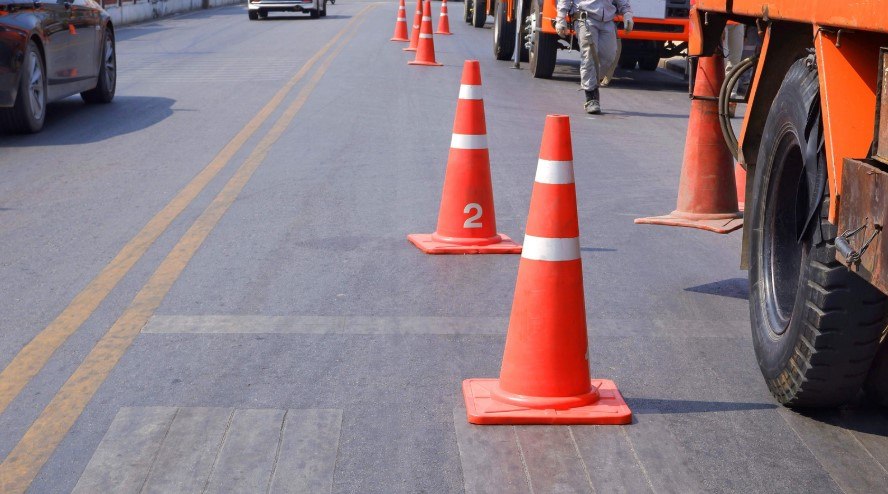
The whoosh of the semi’s air brakes was the only warning. A tractor-trailer, its driver asleep or on his phone, swerved onto the shoulder, missing our attenuator truck by inches. The blast of wind knocked a hard hat off. No one was hurt, but for ten seconds, every man on my crew held his breath. That’s our reality. Complacency is a killer. Read more about the roadside safety checklist in this blog. Why a Daily Roadside Safety Checklist Matters Let’s get straight to it. Struck-by incidents are the leading cause of death in road work zones, accounting for over half of all fatalities. These aren’t just statistics; they’re our brothers, sisters, sons, and daughters. And if that isn’t reason enough, OSHA doesn’t mess around. A single serious violation can cost you upwards of $15,625 (OSHA, 2023), and a willful one can cripple your company. A daily roadside safety checklist isn’t just another piece of paper. It’s a ritual. It’s a pact you make with your crew every single morning: “We are all going home tonight.” It turns good intentions into muscle memory. It’s the single most powerful tool you have to control the chaos. The 12-Point Roadside Safety Checklist Run through this list before every shift. No exceptions. No shortcuts. This isn’t bureaucracy; it’s survival. 1. Site Briefing & Role Assignments Before a single cone hits the pavement, huddle up. Discuss the day’s specific tasks, the traffic control plan (TCP), and any unique hazards. Assign clear roles: who is the spotter? Who is the competent person? Who is the primary radio contact? When everyone knows their job, confusion disappears. 2. Traffic-Control Devices Inventory Count your armor. Do you have the right number of cones for a proper taper? Is your arrow board functioning, with bright, clear LEDs? Most importantly, is your Truck Mounted Attenuator (TMA) ready for duty? This isn’t just a truck; it’s a shield. TMA crash truck safety begins with confirming your primary defense is in place and operational. 3. Equipment Walk-Around Inspections Every piece of equipment gets a walk-around. Check tires, fluids, lights, and hydraulics on the cone truck, the TMA, and any other vehicles. A leaky hose on an attenuator cushion or a dead light on an arrow board isn’t a minor issue—it’s a critical failure waiting to happen. 4. PPE Verification Look every crew member in the eye. Are they wearing ANSI-compliant, high-visibility Class 2 or 3 apparel? Hard hat on? Safety glasses, gloves, and proper footwear? Is hearing protection available for high-noise tasks? This is the last line of personal defense. Enforce it. 5. Communications Check Can you hear me now? Test all two-way radios on your designated channel. Review the hand signals for backing, stopping, and emergency alerts. In a high-noise environment, clear, non-verbal communication is a lifesaver. 6. Hazard Zone Delineation & Buffer Spacing This is your crew’s bubble of safety. Use the TCP to establish the warning area, the transition area (taper), the buffer space, and the work area. Is the longitudinal buffer space—the empty area between the taper and the crew—long enough for an errant vehicle to stop? Measure it. Don’t guess. 7. Vehicle and Pedestrian Ingress/Egress Routes How do your trucks get in and out of the work zone safely? Where do workers enter and exit on foot? These paths must be clearly defined, communicated to everyone, and kept free of obstructions. An unplanned shortcut can lead a worker directly into the path of moving equipment. 8. Weather & Visibility Assessment The weather you start with might not be the weather you end with. Is fog rolling in? Is rain making the pavement slick? Or is the setting sun causing a glare for oncoming traffic? Be prepared to add more lighting, adjust your signage, or even suspend operations if visibility becomes unsafe. 9. Emergency Plan & First-Aid Gear Review Hope for the best, plan for the worst. Where is the first-aid kit? Is it fully stocked? Who is trained in CPR and first aid? What is the exact physical address of your location for a 911 call? Review the rally point in case of an emergency evacuation. Five minutes of planning here can save a life. 10. Documentation & Permits on Hand The inspector is coming. Have your approved TCP, local permits, and any other required paperwork in a binder and accessible on-site. This simple step prevents costly shutdowns and demonstrates professionalism. 11. Post-Impact TMA Integrity Check This one is critical. If your attenuator takes a hit—any hit at all—it must be considered compromised until inspected. Even a low-speed impact can cause hidden structural damage. The unit must be pulled from service and checked by a qualified technician. It did its job; now let the experts confirm it can do it again. 12. End-of-Shift Debrief and Log Entry Before packing it in, do a quick “hot wash.” What went well? Were there any close calls? What can be improved for tomorrow’s shift? Log any incidents, no matter how minor. This creates a record of your diligence and provides lessons for the future. This comprehensive work zone checklist is your daily guide to a safer site. Checklist Item Risk Addressed Gear/Resource Needed 1. Site Briefing Confusion, Miscommunication Traffic Control Plan (TCP) 2. Device Inventory Inadequate Protection TMA Truck, Arrow Board, Cones 3. Equipment Walk-Around Mechanical Failure Pre-use Inspection Forms 4. PPE Verification Personal Injury Hi-Vis Vests, Hard Hats, etc. 5. Communications Check Signal Failure Two-Way Radios, Horns 6. Buffer Spacing Work Zone Intrusion Measuring Wheel, TCP 7. Ingress/Egress Routes Internal Collisions Site Plan, Signage 8. Weather Assessment Poor Visibility, Glare Light Towers, Extra Signage 9. Emergency Plan Delayed Medical Response First-Aid Kit, Emergency Contacts 10. Documentation Non-Compliance, Fines Permit Binder 11. Post-Impact Check Attenuator Failure S.P.A. Inspection Service 12. End-of-Shift Debrief Repeated Errors Daily Logbook How S.P.A. Equipment Simplifies Compliance Running through this checklist is easier when your equipment is reliable from the start. That’s where we come in. Attenuator Trucks: Our fleet of MASH-tested TMAs means you can
