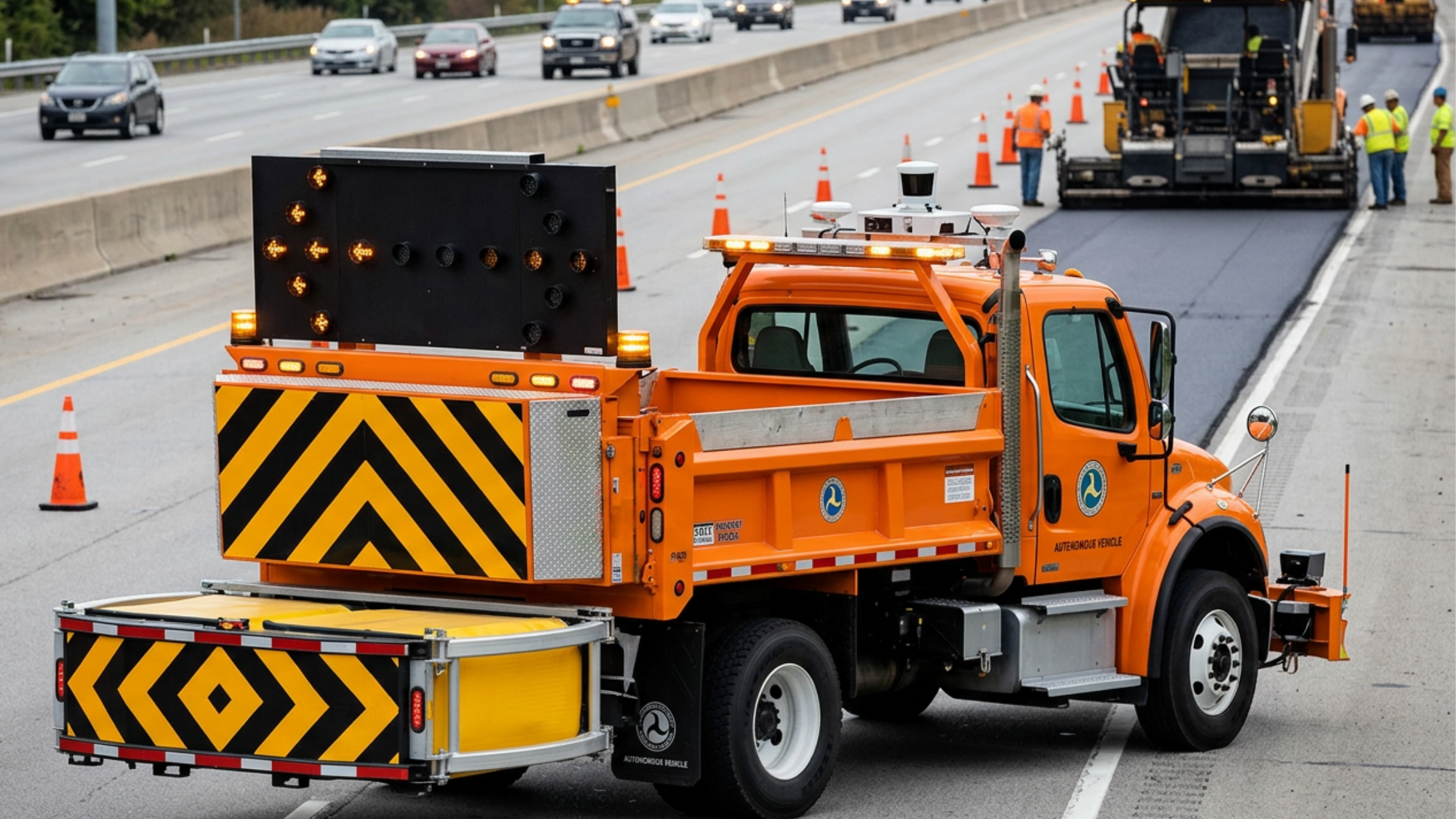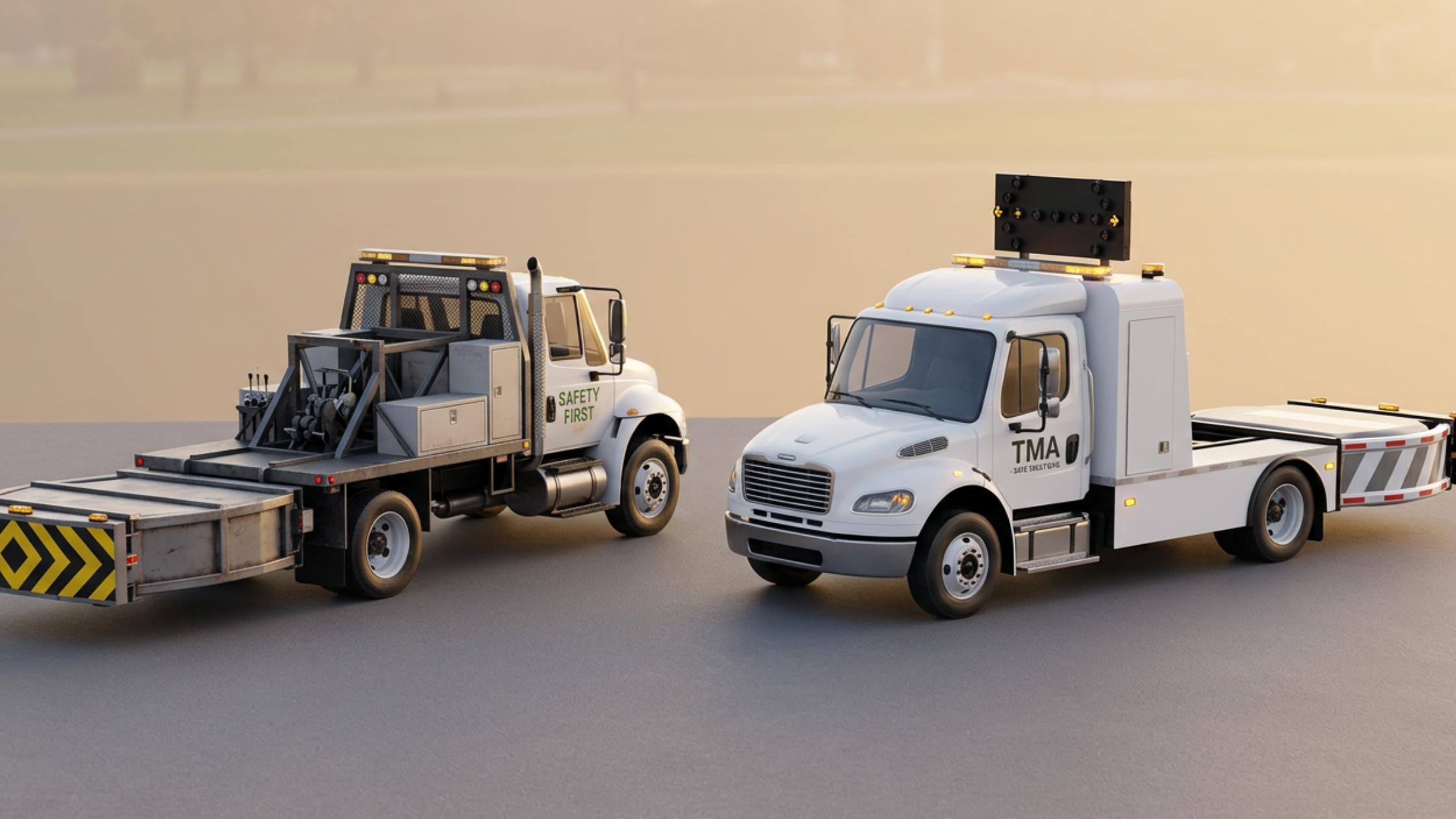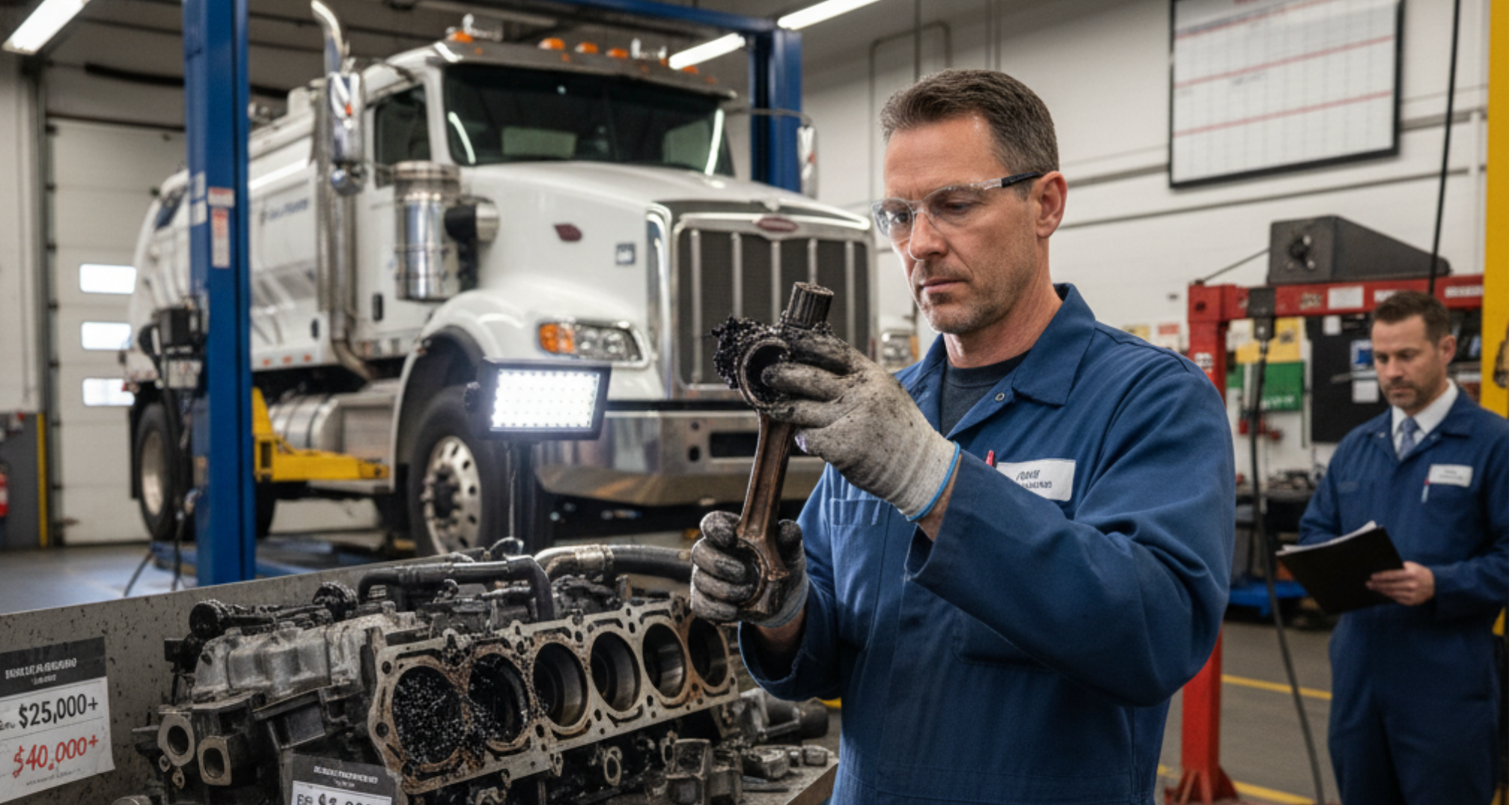
Running a TMA truck without keeping up on maintenance might seem like you’re saving money in the short term, but that’s not how it works out when the numbers come in. Every contractor who’s had an attenuator truck go down at the worst possible moment knows the feeling. The bid you thought would be profitable turns into a financial disaster when your equipment fails, and you’re scrambling to keep the job moving.
Industry data show that unplanned downtime on commercial trucks costs anywhere from $448 to $760 per day when ripple effects are factored in. For specialized equipment like TMA trucks with Scorpion attenuators or other highway safety gear, those numbers can climb even higher because you can’t just grab a replacement off the rental lot.
When your truck is the one providing impact protection on a DOT project, and it goes down, you’re looking at a situation where the entire job might stop until you solve the problem.
What Actually Happens When Your TMA Truck Breaks Down
Let’s walk through what a typical breakdown looks like when you’re in the middle of a highway safety project. Your crew shows up at 6 a.m. ready to set up a work zone. The truck won’t start, or the attenuator won’t deploy, or you’ve got a hydraulic failure that makes the equipment unsafe to operate. Right there, you’ve lost the day. Your crew is on the clock, but they’re not working. The general contractor is calling asking where you are. The DOT inspector might already be on site wondering why the required safety equipment isn’t in place.
Now you’re calling around trying to find a rental TMA truck. If you can even locate one available on short notice, you’re paying premium rates because they know you’re desperate. You might be looking at $250 to $400 per day for a rental, and that’s if you’re lucky enough to find one. In many regions, specialized safety equipment rentals aren’t sitting around waiting for your emergency. You could be waiting two or three days before you get a replacement on site.
Meanwhile, your own truck is sitting at a repair shop. If it’s a major component failure, you’re dealing with parts that might need to be ordered. Attenuator parts, hydraulic pumps for the deployment system, electrical components for the arrow boards or message signs—this stuff doesn’t always ship overnight. You could be looking at a week or more before the truck is back in service, and every single one of those days is costing you money.
The Real Numbers Behind Downtime
Let’s break down what one week of TMA truck downtime actually costs using real numbers from typical highway safety contractors.
Lost job revenue comes first. If your TMA truck normally generates $3,000 to $5,000 per week in billable work, that’s $3,000 to $5,000 you’re not collecting. The job is either on hold or you’re scrambling to cover it some other way, but either way, that revenue is gone.
Rental equipment costs add up fast. At $250 to $400 per day for a replacement TMA truck, seven days puts you at $1,750 to $2,800 just for the rental. And that’s assuming you found one immediately. If it takes you two days to locate a rental, you’ve lost two more days of job revenue on top of the rental cost once you finally get it.
Crew costs keep running whether the truck works or not. If you’ve got three guys on your highway safety crew and they’re sitting around for two days waiting for a rental truck to show up, that’s 48 hours of wages you’re paying with zero productivity. At $25 to $35 per hour per worker, that’s another $3,600 to $5,040 down the drain.
Overtime and expediting costs hit you when you’re trying to catch up. Once you finally get the truck situation sorted out, you’re behind schedule. You might need to pay your crew overtime to make up lost ground, pay expedited shipping on parts, and pay a premium to a repair shop to move your truck to the front of the line. All of that adds another $500 to $1,500 to the total.
Maintenance Costs Are Rising, But Breakdown Costs Are Rising Faster
The trucking industry has seen significant cost increases over the past few years, and maintenance is no exception. According to the American Transportation Research Institute, repair and maintenance costs jumped 8.6% in 2025, making it one of the fastest-growing line items in fleet operations. Parts costs are up more than 23% since 2020, and labor rates have climbed more than 33% over the same period.</span>
For a TMA truck owner, that means the $1,000 repair you would have paid in 2020 is now closer to $1,250 or $1,300. That stings, and it’s easy to look at those rising costs and think about delaying maintenance to save money. But here’s the problem. While planned maintenance costs have risen by 25% to 30%, emergency repair costs and unplanned downtime have risen even more.
Emergency repairs cost three to five times as much as the same repair would cost if you planned it. When you schedule a hydraulic system service during your slow season, you’re paying standard labor rates and regular parts pricing. When your hydraulic system fails on a Tuesday morning in the middle of a job, you’re paying for a tow truck, emergency labor rates, expedited parts shipping, and possibly even overnight freight charges if you need the truck back fast.</span>
The math is ugly, but it’s simple. A planned hydraulic service might run $800. The same repair done as an emergency after a failure could hit $2,400 or more. Multiply that across multiple systems on your truck, and you can see how a fleet that skips maintenance ends up spending far more on repairs than a fleet that stays on top of scheduled service.</span>
What the 53-Point Inspection Catches Before It Becomes a Breakdown
At S.P.A. Safety Systems, every truck in the rental fleet goes through a 53-point checklist to make sure it’s ready to work. That same inspection process is available for customer trucks, and it’s one of the smartest investments a TMA truck owner can make. The inspection covers everything that can take a truck out of service, from engine and transmission issues to attenuator function, hydraulic systems, braking, lighting, and all the safety equipment that has to work correctly on a highway job site.</span>
The goal of the inspection isn’t to find things to fix just for the sake of fixing them. It’s to catch problems before they become breakdowns. A hydraulic line that’s starting to weaken doesn’t fail during the inspection. It fails three weeks later when you’re 40 miles from the shop and in the middle of setting up a work zone. A brake component that’s worn to 20% remaining life doesn’t leave you stranded during the inspection. It leaves you stranded when you’re loaded and on your way to a job.
Catching those issues early means you can schedule the repair on your terms. You can order parts at regular pricing instead of paying expedited freight, bring the truck in during a slow week instead of pulling it off a job and plan around the downtime instead of having downtime forced on you at the worst possible moment.
The inspection also catches things that will get you cited during a DOT roadside inspection. Expired fire extinguisher tags, lighting that’s not functioning correctly, issues with your attenuator certification, missing or damaged safety equipment—DOT inspectors flag all of that and could place your truck out of service. If that happens during a roadside stop, you can’t drive the truck anywhere until you correct the violations.
DOT Violations and Out-of-Service Orders Add Thousands to Breakdown Costs
Speaking of DOT inspections, let’s talk about what happens when your poorly maintained TMA truck gets pulled over at a weigh station or during a roadside safety check. If the inspector finds serious violations, your truck gets placed out of service immediately. You’re not allowed to drive it. You’re not allowed to continue to the job. It sits exactly where it is until every violation is corrected and you can prove it.
Out-of-service violations include things like brake system defects, steering or suspension problems, lighting failures, tire issues, or problems with your attenuator that make it unsafe to operate. If your truck receives an out-of-service order, you’re looking at a minimum fine of $1,000 to $5,000 for the violation alone. If you try to operate the truck before the repairs are made, the fine jumps to $19,000 to $25,000.
On top of the fines, you’ve got all the same downtime costs we talked about earlier. Lost job revenue, crew sitting idle, rental equipment if you can find it, and the repair costs to fix whatever the inspector flagged. But now you’ve also got a violation on your DOT record, which can affect your safety rating and your ability to bid on certain jobs.
Contractors who work on federally funded highway projects know that DOT safety ratings matter. A poor safety score can disqualify you from bidding on lucrative contracts. Even if it doesn’t disqualify you completely, general contractors and project managers pay attention to safety records when they’re deciding who to hire. A fleet with a history of out-of-service violations looks risky, and risky contractors don’t get called back.
Why Small Fleets Get Hit Hardest by Maintenance Failures
If you’re running a small fleet of TMA trucks, cone trucks, or other highway safety equipment, the financial impact of a breakdown hits you harder than it hits a large fleet operator. That’s not because your trucks are any less reliable. It’s because you don’t have the same cushion to absorb the cost.
A large fleet with 50 or 100 trucks can usually shuffle equipment around when one truck goes down. They’ve got spare capacity built into their operations, and they’ve often got their own in-house maintenance staff and parts inventory. When a truck breaks, they can move another one to cover the job, pull parts from their warehouse, and get their own mechanics on it right away.
Small fleet operators don’t have that luxury. If you’re running three TMA trucks and one goes down, you just lost a third of your capacity. You probably don’t have a spare truck sitting around. You probably don’t have a full-time mechanic on staff. You’re calling an outside shop, waiting for an appointment, waiting for parts, and trying to figure out how to keep your contracts moving with two-thirds of your equipment.
The solution for small fleets is to be even more aggressive about preventive maintenance than large fleets. You can’t afford to have a truck out of service for a week because you don’t have the backup capacity.
How Skipping Maintenance Creates Bigger Breakdowns
Fleet owners keep making the same mistake: thinking you can skip maintenance on one part without it affecting everything else. Trucks don’t work that way. Put off fixing one component, and it starts beating up the surrounding parts. Before long, you’ve got multiple failures happening at once.
Here’s how it actually plays out:
Take a hydraulic system showing early warning signs. Fluid’s getting dirty, maybe a small leak, pressure drops a bit. You figure the truck still runs, so why spend money now?
What happens next:
- The pump cranks harder to keep pressure up, generating extra heat and wear
• Contaminated fluid eats away at seals and valves across the system
• Multiple parts start failing faster than normal
> • When it finally quits, you’re replacing the pump, lines, seals, and maybe cylinders too</span>
That $800 service call just became a $4,000 repair job.
Same story with engines. Skip oil changes, and wear accelerates. Dirty oil circulates contaminants that accelerate damage. Next thing you know: blown turbocharger, shot injectors, or complete engine failure. All preventable with basic upkeep.
Putting off maintenance doesn’t just delay problems. It multiplies them. When parts are connected, they fail together. A quick fix becomes a major overhaul. Your truck goes from a two-day repair to sitting in the shop for weeks.
The Hidden Costs That Don’t Show Up on Repair Invoices
We’ve talked about the obvious costs of downtime like lost revenue and repair bills, but other costs are harder to quantify but just as real. These are the hidden costs that chip away at your profitability and your reputation over time.
Customer relationships take a hit when you can’t deliver on your commitments. If you’ve committed to providing TMA truck coverage on a highway project and your equipment breaks down, the general contractor is left scrambling. They might be able to cover for you once, but if it happens repeatedly, they’ll start looking for a more reliable contractor.
Missed bid opportunities happen when your equipment is tied up in the shop instead of out working. If a new project comes up and you can’t commit because your trucks aren’t available, that’s revenue you’ll never recover. In a competitive market, being able to respond quickly to new opportunities is a huge advantage.
Employee morale suffers when your crew is constantly dealing with equipment problems. Good workers want to work for companies that have their act together. If your team is spending half their time sitting around waiting for trucks to get fixed, or dealing with breakdowns on job sites, or working longer hours to make up for lost time, they’re going to get frustrated.
Insurance costs can go up if you have a pattern of equipment-related incidents. If your TMA truck breaks down in a work zone and causes a safety issue, or if poorly maintained equipment contributes to an accident, your insurance company is going to take notice.
Why Attenuator and Safety Equipment Maintenance Can’t Be Skipped
For TMA trucks specifically, there’s another layer of maintenance that’s absolutely critical. Your attenuator system and all your highway safety equipment must work correctly every single time. This isn’t optional. It’s the whole point of the truck.
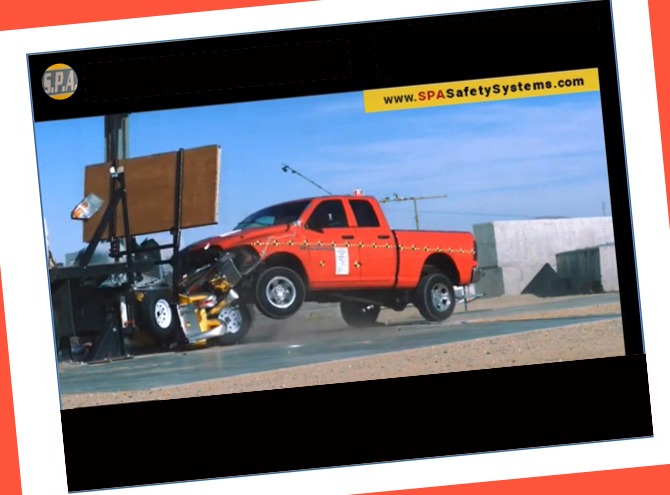
Scorpion attenuators, Trinity crash cushions, and other impact attenuation systems have specific maintenance requirements and certification schedules. If your attenuator isn’t maintained and certified in accordance with the manufacturer’s specifications, it might not perform properly in a crash. That’s a life-safety issue and a massive liability for your company.
If an attenuator fails to perform because you didn’t maintain it, you’re looking at potential lawsuits, insurance claims, and possibly even criminal liability if someone gets seriously injured or killed. Even if the worst doesn’t happen, operating a TMA truck with an attenuator that’s out of certification or not functioning correctly violates DOT regulations, and they can shut you down immediately.
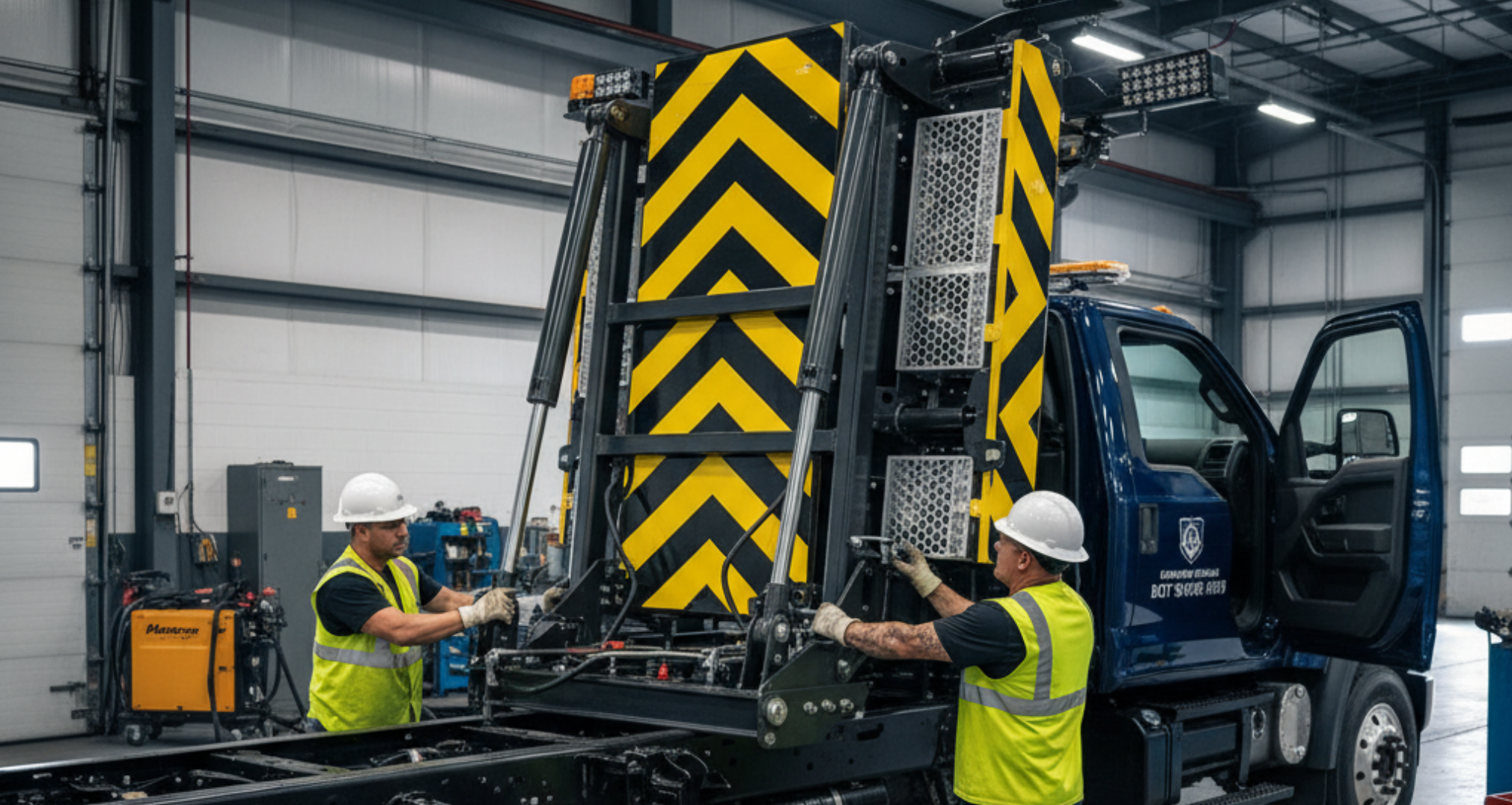
Beyond the attenuator itself, all your safety equipment must work. Arrow boards and message boards have to light up correctly. Flashing lights and beacons have to be visible and functioning. Hydraulic systems that deploy cones or raise scissor lifts have to operate smoothly. All of this equipment takes a beating in highway work environments, and it needs regular inspection and maintenance to stay reliable.
FAQs: TMA Truck Maintenance Costs
How much does it really cost when a TMA truck breaks down during a highway project?
When you add up all the real costs, a single breakdown during an active job can easily hit $10,000 to $15,000 or more depending on how long the truck is down. That includes the repair itself, lost job revenue while the truck isn’t working, rental equipment costs if you can find a replacement, crew wages while they’re sitting idle waiting for equipment, and costs associated with catching up on schedule once you’re back up and running. If the breakdown results in a DOT out-of-service violation, add another $1,000 to $5,000 in fines on top of everything else.
The repair bill itself usually accounts for the smallest share of the total cost. Most contractors get shocked when they actually track all the expenses that unplanned downtime generates because they’ve only been thinking about what the mechanic charged them.
What’s the difference in annual costs between a well-maintained TMA truck and one that only gets fixed when it breaks?
A solid preventive maintenance program for a TMA truck typically costs $3,000 to $5,000 per year depending on how heavily the equipment is used. That covers all your regular service, inspections, and addressing small issues before they become failures. A truck that only gets attention when something breaks will typically experience one to three major breakdown events per year, and each one costs $5,000 to $15,000 when you include repairs, downtime, and lost revenue. So you’re looking at $10,000 to $30,000 or more per year in breakdown costs versus $3,000 to $5,000 for planned maintenance. The fleet that invests in maintenance spends less overall and has significantly higher equipment availability, resulting in more revenue. The math isn’t even close.
Can regular maintenance actually prevent DOT violations and out-of-service orders?
Absolutely. The vast majority of DOT violations that result in out-of-service orders are completely preventable with basic maintenance and inspection. Brake issues, tire problems, lighting failures, hydraulic leaks, steering and suspension defects—all of these give you plenty of warning before they become violations. A comprehensive inspection like the 53-point checklist used at S.P.A. Safety Systems catches these issues before a DOT inspector ever sees your truck. The inspection also makes sure your attenuator certification is current, your safety equipment is functioning, and all your documentation is in order.
Inspectors find nothing to flag when fleets stay on top of maintenance, so they rarely issue out-of-service orders. The ones that skip maintenance sit on the side of the road with a $5,000 fine and a truck they can’t drive until they fix it.
Why the Best-Maintained Fleets Are the Most Profitable Fleets
At the end of the day, maintenance isn’t a cost center. It’s a profit driver. The contractors who understand this are the ones who consistently win bids, deliver on their commitments, build strong reputations, and run profitable operations year after year.
When your equipment works, you can say yes to more jobs. You can commit to tight schedules because you’re confident your trucks will show up and perform; build relationships with general contractors and DOT project managers who know they can count on you. Alongside this, you don’t lose days to breakdowns or spend money on emergency repairs and rental equipment.
The rental fleet at S.P.A. Safety Systems is proof that this approach works. We maintain every truck in that fleet to the same high standard, using the same 53-point checklist we use for customer trucks.
That fleet has become known as the best-maintained rental fleet on the road today because the investment in maintenance pays off in reliability. Customers rent those trucks knowing they’ll work, and they keep coming back because the equipment doesn’t let them down.
The real cost of skipping maintenance isn’t the oil change you didn’t do or the inspection you postponed. It’s the $15,000 breakdown. The lost contract. The DOT violation. The damaged reputation. All the downstream costs that pile up when equipment fails. Those costs are avoidable. Avoiding them is one of the smartest financial decisions you can make as a fleet owner.