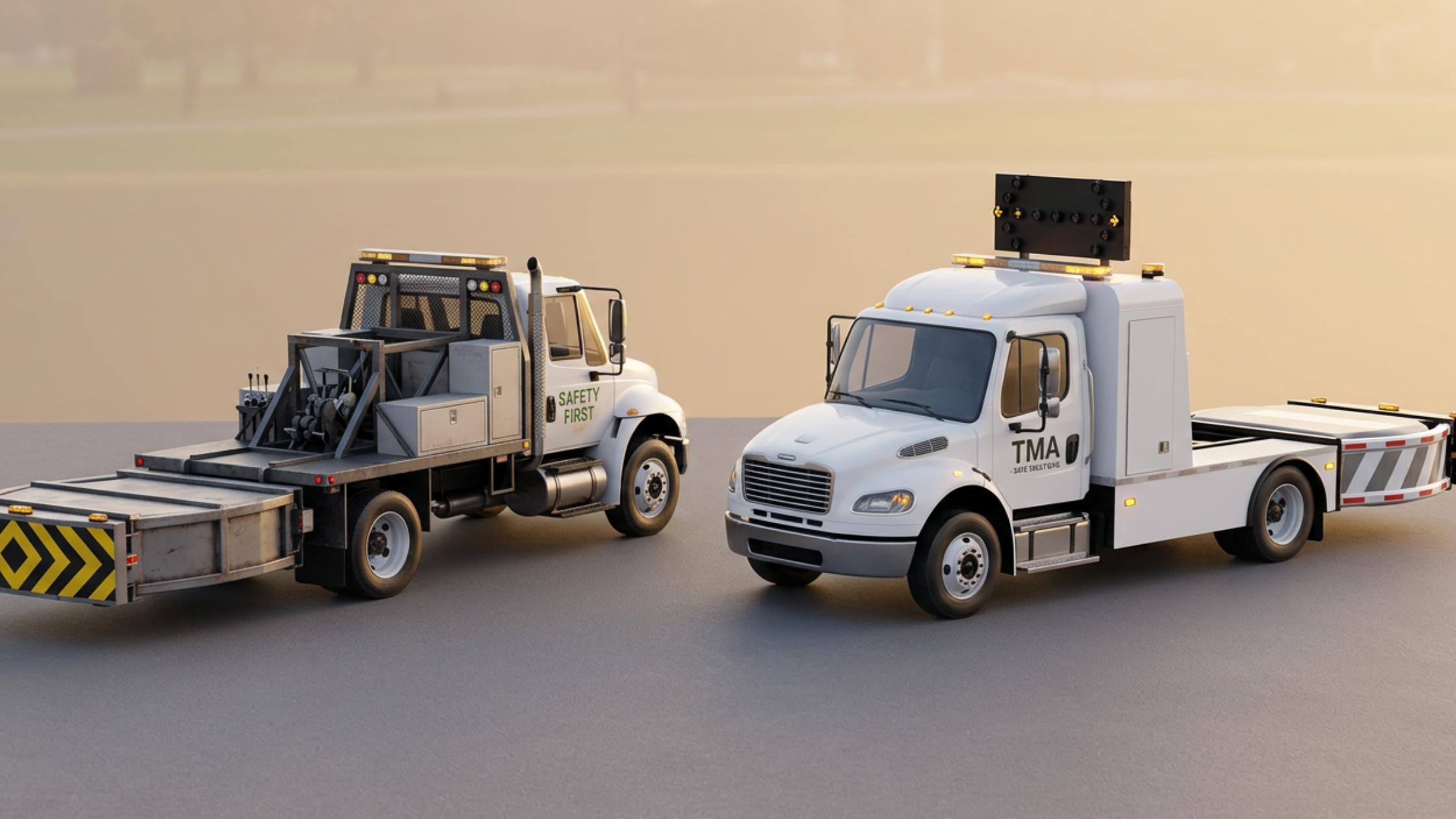
Most highway crews don’t need anything fancy. A standard attenuator truck does the job just fine, and you’ll find these things everywhere — equipment yards from New Jersey to California all carry pretty much the same TMA trucks for sale or rent.
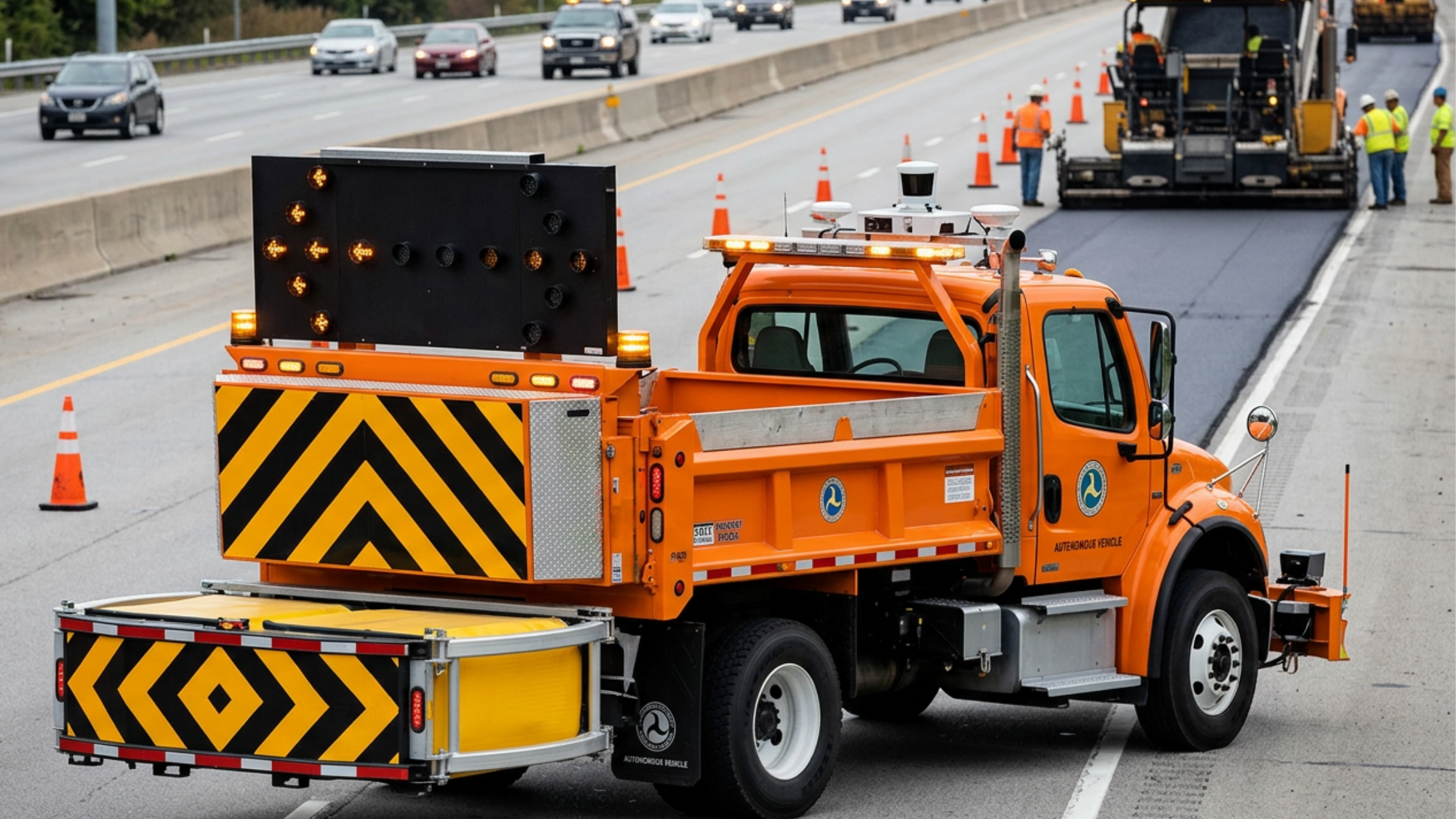
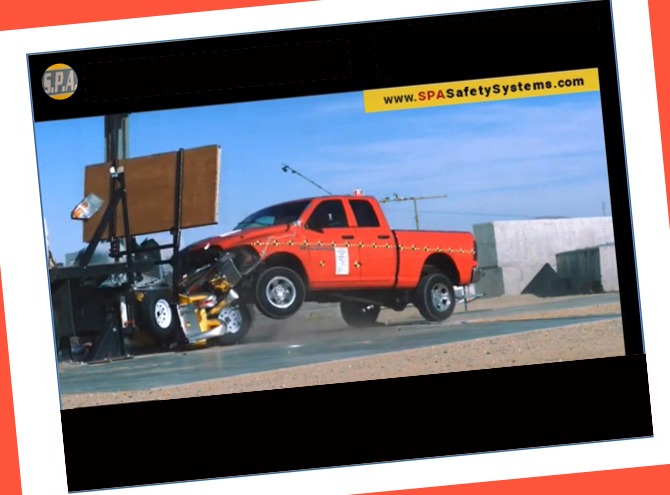
They’re built with MASH Test Level 3-certified attenuators bolted onto approved host vehicles, and honestly, their whole purpose comes down to one thing: keep workers alive by stopping cars that wander into the work zone.
For most contractors, the standard truck also makes more financial sense. It costs less, shows up faster, and when something breaks, parts and repairs aren’t some big mystery — the setup’s been used on thousands of job sites already, so there’s not a lot of guesswork involved.
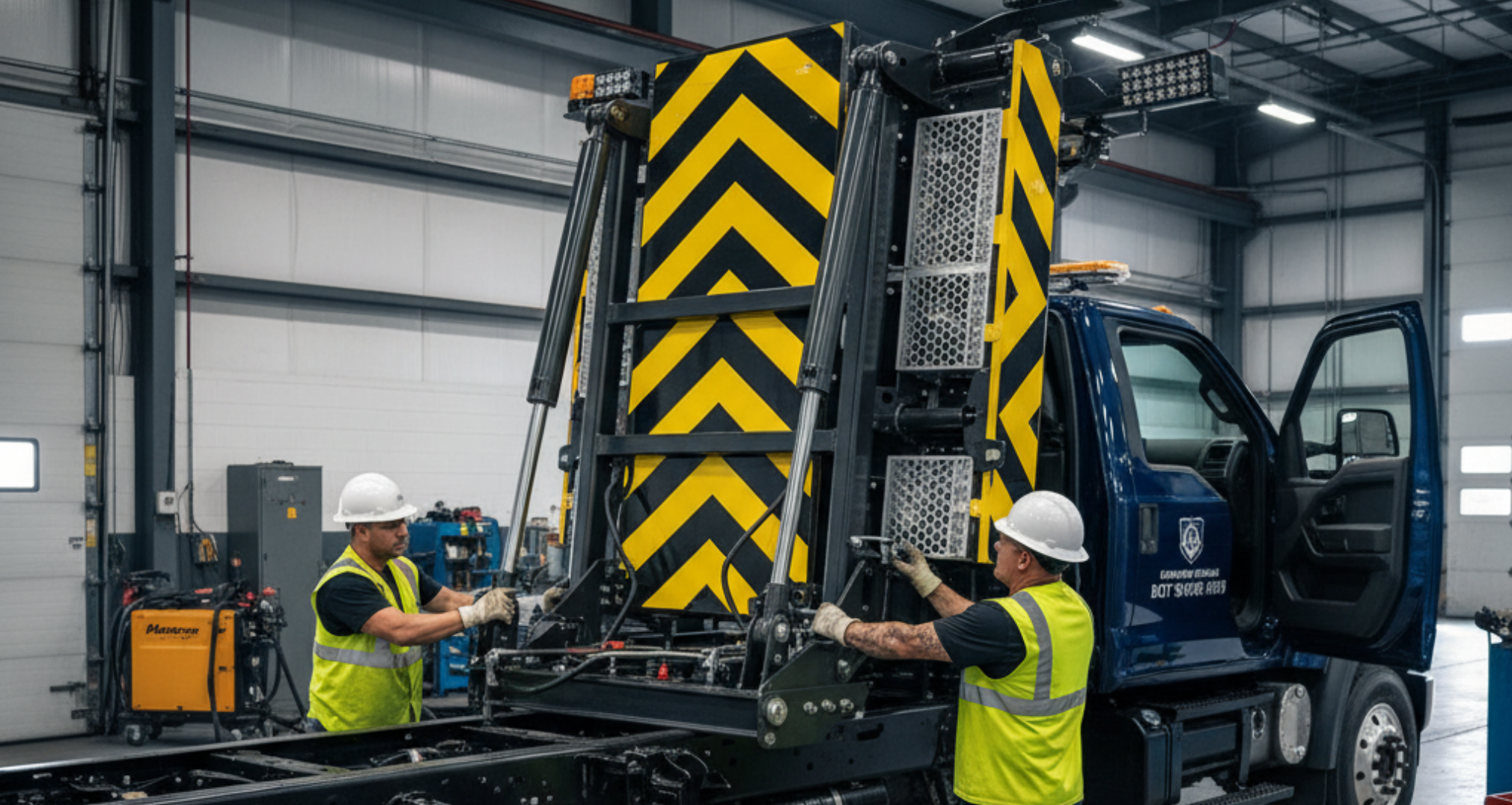
You might also need a custom rig if local DOT rules are strict, or if you’re trying to use one vehicle for several different jobs. Yeah, custom fabrication costs more up front — no way around that — but it’s worth looking at the bigger picture. If one specialized truck can do the work of two vehicles in your fleet, that upfront cost starts looking a lot more reasonable.
What a Standard TMA Truck Actually Does
A standard TMA is built for the day-to-day work—highway work, road repairs, the usual grind. It’s a MASH Test Level 3 crash cushion sitting on a heavy-duty truck approved to carry it. Once you lower it into position, it creates a buffer between your crew and oncoming traffic, and it typically sticks out about 12 to 13 feet behind the truck.
Most run on either cartridge or hydraulic systems to absorb the impact. Cartridge ones basically crumple when they get hit, and after that, you’re usually replacing parts. Hydraulic systems are a little different — sometimes they can reset themselves after a smaller hit, which honestly saves you a lot of downtime. Both meet the same safety standards, so it’s not really a safety question either way. It comes down to how fast you’re back up and running, and what it’s going to cost you when something actually gets hit.
And the host truck matters just as much as the attenuator, honestly — people forget that part. It has to fall within the right weight range, have a frame that can take the stress, and keep the TMA at the correct height. For steady, predictable jobs — resurfacing, bridge work, lane closures — a standard setup handles it all just fine. No drama, nothing fancy needed.
When Custom Actually Makes Sense
Some jobs just don’t fit the mold. Railroad work is the classic case — a hi-rail TMA truck with retractable steel rail wheels lets you move between pavement and tracks without hauling in a second vehicle. Saves time, saves headaches.
Tight city environments are another one. Narrow streets, tunnels, bridge approaches, concrete barriers everywhere — sometimes there’s not enough room for a full-width attenuator. A custom design can give your crew the protection they need without taking up space they don’t have.
And if your crew juggles many different tasks, a combo truck might be worth it. Something with a scissor lift and a TMA together can cover sign work, bridge inspections, lighting repairs, and traffic protection all in one vehicle.
MASH Compliance — What You Can Actually Mess With
Okay, this is the part you really need to pay attention to. FHWA eligibility letters basically tell you exactly what setup got crash-tested and signed off on. Start changing the big stuff, and you risk losing that approval.
But smaller tweaks?
Usually fine.
Like, if you need to move the mounting bracket a bit to fit a different wheelbase — that’s not going to blow up the whole system.
Cosmetic changes are the easy part, honestly. Paint, striping, reflective tape, arrow boards — go nuts, as long as you’re still hitting visibility requirements. But here’s the one thing you really can’t touch: the attenuator, the energy-absorbing parts, and the main mounting system need to stay basically the same as what got tested in the first place.
You’ve even got some room with how the thing deploys. If it was tested in the lowered position, it usually doesn’t matter whether you’re cranking it down by hand, using an electric motor, or going hydraulic—as long as it ends up in that same approved spot.
But here’s the thing — start messing with the attenuator’s size, its weight, the materials, or how crash force actually travels into the truck, and you’re asking for trouble. Real trouble. At that point you’re not really working with the same system anymore. Not the one that got tested, anyway.
Your FHWA letter? It might not even cover you now. And that means new MASH testing could be on the table. Which, yeah — that’s expensive. Like, really expensive.
Think about it. Engineering costs. Prototypes. Test vehicles. Facility time. Plus all the units you’re going to destroy just going through the process. Add it up, and you’re looking at somewhere between $150,000 and $300,000. Easily.
For one custom truck, that math doesn’t work. Not even close.
But if you’re a manufacturer? Rolling out a whole product line? That’s a completely different conversation. You spread that cost across dozens, maybe hundreds of trucks. Suddenly it makes a lot more sense.
So Do You Actually Need a Custom Truck?
Ask yourself a few honest questions before you commit.
Does a standard TMA actually work at most of your job sites? Be honest with yourself here. If yes, go standard. It’s cheaper, it shows up faster, it’s easier to fix when something breaks, and down the line, it’s a lot easier to sell too. No shame in going with what works.
But do you keep running into situations where standard equipment doesn’t hold up — rail crossings, tight streets, jobs where you really need one truck to pull double or triple duty? If that’s a regular thing for you- not an occasional headache but a regular thing- then custom stops being some nice-to-have. It’s just what the job needs. You’re not upgrading for the sake of it — you’re solving something that’s actually been costing you.
And try to look a little further out, past just what it costs today. Think three, maybe five years down the road. How much time does it save your crew on setup? Are there rentals you could finally stop paying for? Less downtime, fewer headaches, maybe even jobs you can finally say yes to instead of turning away? If those savings feel real — not hopeful, but real — a custom build might end up paying for itself sooner than you’d expect.
But if you run the numbers and they don’t add up… it’s okay to admit that too. Get the standard truck. It’s the simpler choice, and more often than not, it’s the smarter one.
Faqs: Custom TMA Fabrication
Can I just put a TMA on a heavy-duty truck I already own?
Not automatically, no. The frame, weight, mounting points, chassis — all of it has to match what the attenuator was tested with. This isn’t a place to guess. Send your truck’s specs to SPA Safety Systems before doing anything—they’ll tell you whether it’s a match or steer you toward something safer.
Do custom trucks wear out faster than standard ones?
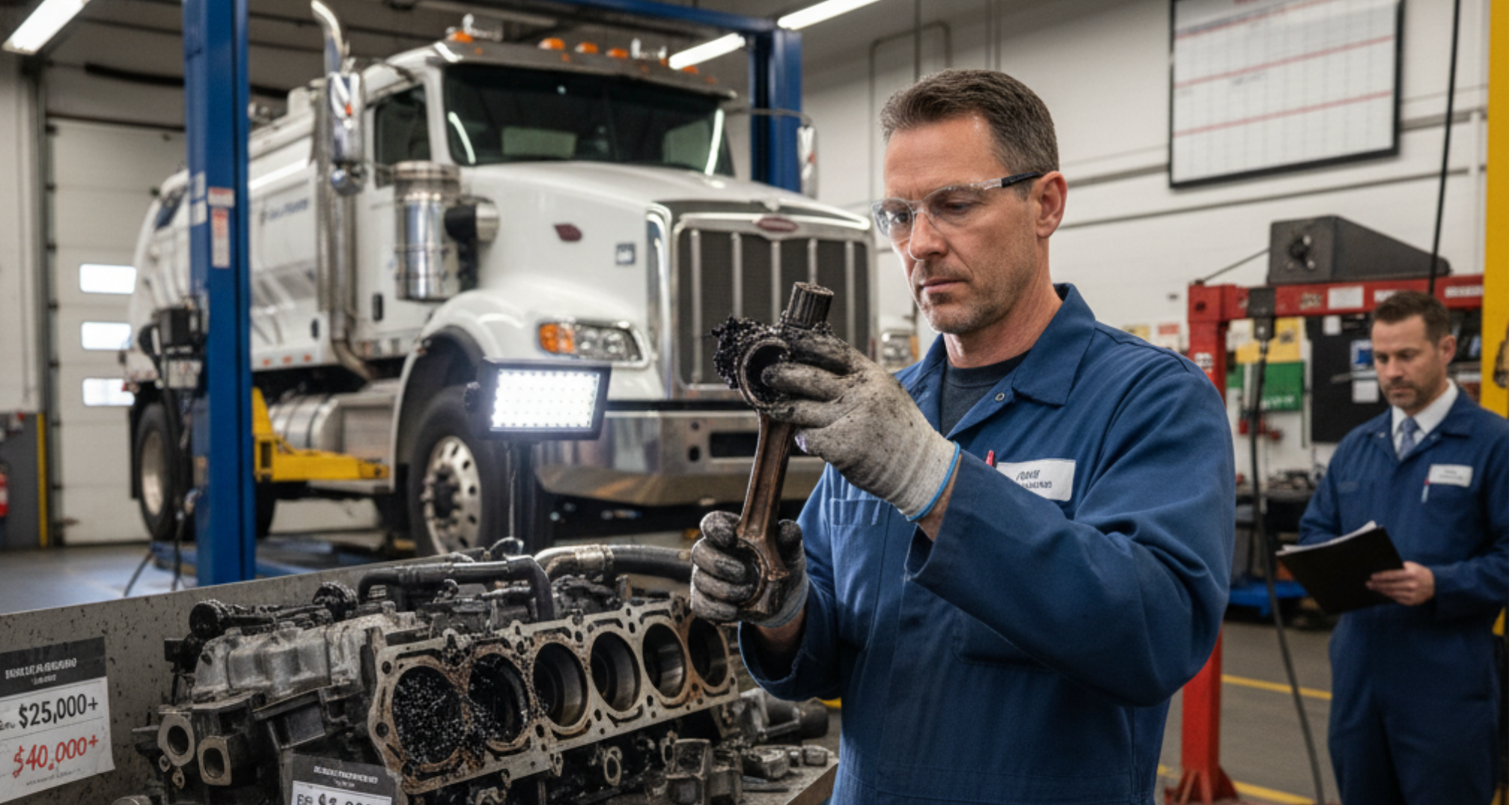
Not really, no. Both types can go 10 to 15 years if you keep up with maintenance. Now, custom trucks do tend to see harder use sometimes, so they might start showing wear a little sooner — but honestly, that’s more about the job than the build itself. Stay on top of inspections, swap out worn parts, and a custom truck will hold up just fine.
Will custom work void my warranty?
It can, yeah — especially if the work’s done half-assed or someone ignores what the manufacturer specs out. If you start messing with the frame, wiring, hydraulics, or mounting points without getting it approved first, you’re putting your chassis warranty on the line. That’s really why it matters so much who you choose to do the work.
A good shop is going to follow the rules, use methods that are actually approved, and tell you straight up how the work could affect your coverage. Before anything gets started, get it in writing — what’s still covered, what’s not anymore, and who’s responsible if something goes wrong down the road.
Working With SPA Safety Systems
If you’re thinking about going the custom route, show up prepared. Not perfectly prepared, mind you — nobody’s expecting a spreadsheet —you know, prepared enough to have a real conversation.
Grab some photos of your actual job sites. Bring whatever local DOT requirements you’re dealing with. And honestly, be ready to say, plainly, what your current equipment isn’t handling anymore. That part’s bigger than people think. A lot of folks skip right past it, but that’s usually where the real answer’s hiding.
SPA Safety Systems team will sit down with you and work through it — figure out together whether a few tweaks to a standard unit get you where you need to be, or whether you’re looking at something built from scratch. Either way, you’ll walk away knowing which one you actually need, instead of just guessing.
One more thing worth saying out loud — custom trucks take time. Real time. If you place an order in March hoping to have it rolling by April, you’ll probably be disappointed, and that’s not anyone being difficult; it’s just what building something right takes.