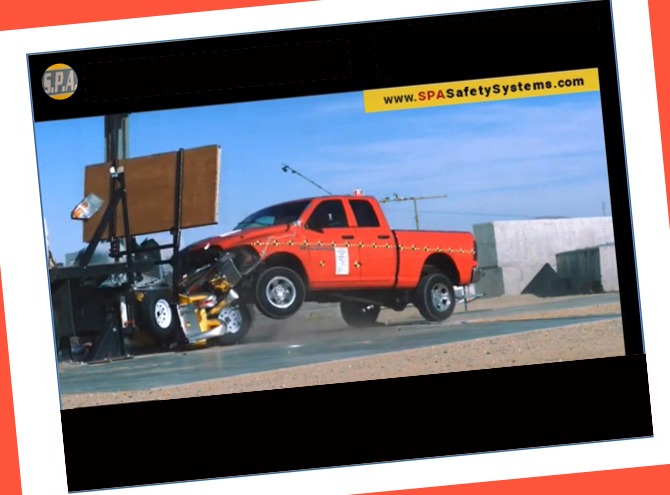
You know that sick feeling you get when you show up to the job site on Monday morning and realize something’s wrong? The gate’s been cut. Your trailer’s gone. And that $150,000 TMA truck you just bought six months ago? Vanished into thin air like it never existed.
Welcome to the fastest-growing crime wave nobody’s talking about in the construction industry. While everyone’s focused on catalytic converter theft and copper wire heists, there’s a sophisticated underground market for highway safety equipment that’s absolutely exploding right now, and chances are you have no idea how vulnerable your fleet really is.
I’m talking about organized crews who know exactly what they’re looking for, exactly how much your equipment is worth, and exactly where to move it before you even file the police report.
Let me walk you through what’s really happening out there, why your insurance company won’t save you, and what you can actually do to protect the equipment you’ve worked your entire life to build up.
Why Highway Safety Equipment Became Target Number One
Here’s what changed in the last five years that turned your TMA trucks and attenuator systems into prime targets for organized theft rings. Construction equipment has always been stolen, sure, but highway safety trucks specifically have become absolute gold for thieves, and there are three big reasons why.
High Demand, Limited Supply
First, the infrastructure bill pumped billions into highway projects across the country, which means demand for TMA trucks, scissor lifts, and crash attenuators went through the roof. When demand is high and supply is limited, prices skyrocket, and suddenly your used equipment is worth nearly as much as new equipment. Thieves figured this out real quick. A five-year-old TMA truck that you bought for $120,000 is still worth $80,000 to $100,000 on the secondary market, and that’s if someone’s selling it legitimately. On the black market? Thieves can move it for $40,000 to $60,000 cash, and the buyer still thinks they’re getting a steal of a deal.
Easy To Steal Stuff
Second, highway safety equipment is incredibly easy to steal compared to other construction machinery. Your excavators and bulldozers are huge, slow, and hard to move without attracting attention. But a TMA truck? That’s literally designed to be driven on highways at normal speeds. A thief with the right tools can break into your yard, hot-wire your truck, and be three states away before you even realize it’s gone.
No Tracking System
Third, and this is the part that’s going to make you mad, there’s basically no national database for tracking stolen construction equipment the way there is for cars. Your TMA truck doesn’t have a VIN system that every cop in America can instantly check. Sure, there are serial numbers, but good luck getting those flagged across state lines when local police departments have bigger problems to deal with.
Put all that together, and you’ve got a perfect storm. High value, easy to steal, hard to track, and massive demand. It’s honestly surprising more contractors haven’t been hit yet.
The Anatomy of a Professional Equipment Theft
Let me tell you how these operations actually work, because once you understand the playbook, you’ll realize how many vulnerabilities you’re leaving wide open right now.
The Initial Research
Professional theft crews scout jobs for weeks before they make a move. They’re not just driving around randomly looking for unlocked gates. They’re watching your patterns. They know what time your night security leaves, if you even have night security; which trucks have GPS and which ones don’t because they’ve been watching your guys move equipment around during the day; note which pieces are newer and worth more. They’re doing actual reconnaissance like this is a military operation.
Then they wait for the perfect window. Usually that’s a long weekend or right before a holiday when they know your equipment is going to sit untouched for three or four days. That gives them time to move the equipment far away and start altering it before you even file a police report.
The Actual Theft
The theft itself takes under ten minutes for a professional crew. They’ve got portable angle grinders that cut through chains and padlocks like butter; keyless entry tools that work on most trucks manufactured before 2020; and equipment to disable or remove GPS units if your truck has one installed.
And they work in teams, so while one guy’s getting into the truck, another’s watching for security patrols or cameras, and a third is already positioning a truck to block cameras or create a blind spot.
The Post-Theft Behavior
Once they’ve got your equipment, it’s on the move immediately. They’re not stopping at some chop shop three miles away. They’re driving that TMA truck eight to twelve hours away, usually to another state where it’s going to be harder for local police to coordinate. Some crews have connections with supposedly legitimate businesses in other states who’ll provide temporary “storage” for stolen equipment while the heat dies down.
Here’s where it gets really sophisticated. After about two weeks, they’ll begin giving your truck a new identity. Serial numbers get ground off and replaced with numbers from salvage titles. Registration documents get forged. Some crews even have connections with corrupt employees at DMVs or equipment registration offices who’ll process paperwork for stolen equipment in exchange for a cut.
Within 30 to 45 days, your $150,000 TMA truck is sitting on a lot in another state with completely different paperwork, and some contractor who thinks they’re getting a great deal on used equipment is about to buy it. That contractor has no idea they’re buying stolen property. The paperwork looks legitimate. The price is good but not suspiciously low. And unless they run the serial numbers through multiple databases and catch something the thieves missed, they’re never going to know until cops show up years later asking questions.
Why Your Insurance Won’t Save You (And What Actually Will)
Let’s talk about the insurance reality that nobody explains until after you’ve been robbed. You think you’re covered because you’ve got a commercial equipment policy. You’ve been paying premiums for years. You’ve got replacement value coverage. You’re good, right?
Wrong. Here’s what actually happens when you file a claim for stolen equipment.
First, your insurance company will investigate whether you had “adequate security measures” in place. If your equipment was stolen from an unfenced yard, they might deny the claim entirely. Insurance adjusters don’t work for you. They work for the insurance company, and their job is to pay out as little as possible.
Second, even if your claim gets approved, you’re dealing with depreciation. That TMA truck you bought for $150,000 three years ago? Insurance will value it at the current market rate minus depreciation, which could be $100,000 to $110,000. But good luck actually finding a replacement for that price in today’s market. You’ll probably have to pay $140,000 to $160,000 for a comparable used unit, or $ 180,000 or more for a new one. That gap comes out of your pocket.
Third, there’s the deductible you probably forgot about. Most equipment policies have deductibles ranging from $10,000 to $25,000 per incident. So even if everything goes perfectly with your claim, you’re still out twenty-five grand plus the coverage gap plus higher premiums.
So what actually works? Here’s what contractors who haven’t been robbed are doing differently.
The Real Protection Strategy That Actually Stops Thieves
Forget everything you think you know about equipment security, because most of it is useless. Here’s what actually works, based on conversations with contractors who’ve successfully prevented thefts and with security experts who specialize in construction equipment.
GPS tracking is non-negotiable, but only if you do it right. Those cheap battery-powered GPS trackers you can buy online? Thieves know how to find and deactivate those in under five minutes. What you need is hardwired GPS with hidden placement and real-time alerts. The system should notify you immediately if the equipment moves outside designated boundaries or operates outside normal hours.
The key is hidden installation. Don’t let your technician mount the GPS unit in the obvious spot under the dashboard where every thief knows to look. Pay extra to have it professionally concealed somewhere in the chassis or body where it’s nearly impossible to find without tearing the whole truck apart. Some contractors install multiple GPS units—one obvious decoy that thieves will find and disable, and one hidden backup that keeps transmitting after the thief thinks they’re safe.
Layered physical security beats fancy alarms every time.
Start with quality perimeter fencing at least 8 feet tall, with privacy slats so thieves can’t easily scout your yard. Add barbed wire or razor wire on top if local codes allow it. Use heavy-duty chains and disc locks on any wheeled equipment. For your most valuable trucks like TMA units, consider wheel boot locks that are extremely difficult to remove without power tools and make a ton of noise in the process.
Security cameras only work if someone’s actually watching
Recording footage is useless if nobody reviews it until after the theft. You need motion-detection cameras that send alerts to your phone immediately. You need a resolution high enough to read license plates and see faces.
But here’s the thing nobody tells you—cameras alone won’t stop a determined crew. They’ll wear masks and hoods. What cameras do is give police actual evidence to work with and give you documentation for insurance claims. They also let you respond in real time. If you get a motion alert at 3 AM and see someone cutting your fence on your phone, you can call the police while the crime is in progress, rather than discovering it eight hours later, when the thieves are in another state.
Strategic parking matters more than you think.
Don’t park your most valuable equipment near the fence or gate where it’s easy to access. Park it deep in your yard behind less valuable equipment. Box it in with other trucks and trailers so thieves would have to move multiple pieces to get to it. Face trucks toward walls or other obstacles so they can’t just jump in and drive straight out.
Build relationships with neighboring businesses and ask them to keep an eye on your yard
The auto body shop next door is there at weird hours. The 24-hour gas station across the street has cameras pointed at the road. Talk to these people. Give them your cell number. Offer to return the favor by watching their property too. The more eyes on your yard, the harder it is for thieves to operate.
Consider actual security patrols for high-value sites
If you’ve got multiple pieces of expensive equipment in one location, it might be worth paying for security patrols that check your property multiple times per night. This works especially well on active job sites where you can’t easily move equipment back to your main yard every day.
FAQs: Construction Equipment Theft
Q: Is construction equipment theft really increasing, or is it just getting more attention?
It’s definitely increasing, and the numbers back it up. The National Equipment Register reports that construction equipment theft has increased by over 20% in the last three years, with highway safety equipment specifically becoming a major target due to infrastructure spending and high resale values. What’s changed is both the volume of thefts and the sophistication of the theft rings. This isn’t random crime anymore—it’s organized operations that specifically target high-value equipment like TMA trucks, attenuators, and specialized safety vehicles because they’re easy to move and hard to trace.
Q: Will my insurance cover the full replacement cost if someone steals my TMA truck?
Probably not, and this surprises most contractors. Standard commercial equipment insurance typically covers actual cash value, which means your truck’s current market value minus depreciation. If you bought a TMA truck for $150,000 three years ago, your insurance might value it at $100,000 to $110,000, even though replacing it would cost $140,000 to $180,000 in today’s market. You can purchase replacement-cost coverage for a higher premium.
Q: What’s the single most effective thing I can do right now to protect my equipment?
Install professionally hidden GPS tracking with real-time alerts on every piece of equipment worth more than $50,000. This gives you the best chance of recovery and acts as a deterrent if thieves discover someone is tracking your equipment. But don’t just buy a cheap consumer GPS tracker. Rather invest in commercial-grade systems designed for construction equipment with hardwired power, hidden installation, and monitoring services. This will alert you immediately if your equipment moves outside designated areas or operates outside normal hours.
The Bottom Line About Equipment Security
A comprehensive security system for a small contractor yard—good fencing, lighting, cameras and GPS tracking for your most valuable equipment. This might cost $15,000 to $25,000 upfront, plus a few hundred bucks a month for monitoring. That sounds like a lot.
But remember that one stolen TMA truck costs you six to ten times that amount when you factor in everything.
Nobody thinks they’re going to be the next victim until they are, and by then it’s too late. Don’t let that be you.
Need help securing your TMA trucks, scissor lifts, or other highway safety equipment? SPA Safety Systems can connect you with security solutions and GPS tracking systems designed specifically for construction equipment. We’ve seen too many good contractors lose everything because they thought it wouldn’t happen to them. Don’t wait until you’re filing a police report to take security seriously.
Your equipment represents years of hard work and investment. Protect it like your livelihood depends on it, because it does.