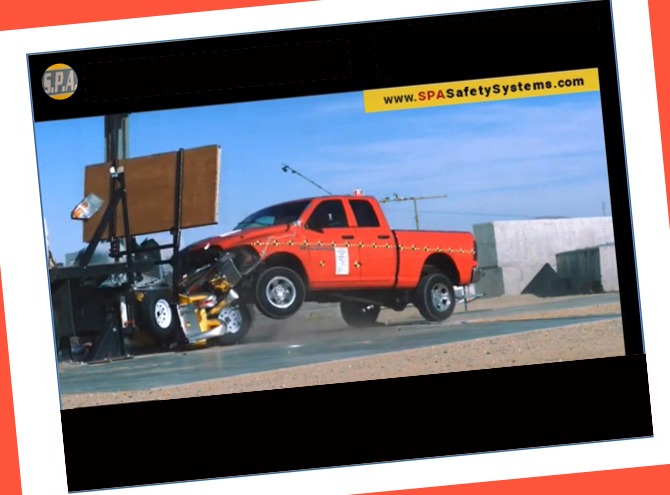
There is a specific kind of chaos that defines a highway work zone. You have the roar of diesel engines, the smell of asphalt, and the constant, unnerving whoosh of traffic passing just inches away from the cones. In this environment, the only thing standing between a distracted driver and a crew member is the shadow vehicle. And hanging off the back of that truck is the most critical piece of sacrificial gear on the site: the TMA equipment.
For safety managers and contractors, a Truck-Mounted Attenuator (TMA) is more than just a box to tick on a rental form. It is a mobile shield. But a shield is only useful if it remains intact when it takes a hit.
Far too many teams treat these trucks like they’re indestructible, simply parking them and assuming they’ll perform when it counts. In reality, a ten-minute walk-around of your TMA equipment is the cheapest insurance policy on the job site. It prevents accidents before they start, keeps inspectors satisfied, and ensures that, when the shift is over, your crew returns home safely.
Why Focus on TMA Equipment?
Complacency is a trap.
The engine starts, the lights flash, and we assume the rig is ready for the road. But the numbers paint a darker picture.
Beyond the immediate danger, there is the liability. We are living in the era of MASH-16 (Manual for Assessing Safety Hardware). If an accident occurs and the investigation reveals that your MASH-approved TMA wasn’t inspected or maintained in accordance with the manufacturer’s specifications, the negligence lawsuit won’t just be expensive; it could close your doors.
10-Minute TMA Equipment Daily Inspection Checklist
Exterior & Impact System
The cartridge is the heart of the system. It’s the honeycomb or tube structure designed to crumple.
- Shear Bolts and Fasteners: These are designed to fail at a specified load. If they are already loose, rusted, or missing, the system fails. Check that all bolts are present and tight.
- The Critical Pins: The most common failure point. Check the pins connecting the cartridge to the backup frame and the frame to the truck. Are the cotter pins or retaining clips installed? A pin without a clip will vibrate out after a few miles of driving.
- Skid Plates: Look at the bottom of the unit. If the skid plates are worn through or bent from dragging, they can snag on the pavement during an impact, causing the truck to vault or flip rather than slide.
Vehicle Chassis & Electronics
Your TMA equipment is useless if drivers can’t see it or if the truck can’t support it.
- Lighting Systems: Test the brake lights, turn signals, and clearance lights on the attenuator itself. Wiring harnesses often get pinched in the hinge points.
- Arrow Board and Strobes: These are your first line of defense. Ensure every pixel on the arrow board is firing and that the strobes are high-intensity. A dim light is a dangerous light.
- Hydraulics: Cycle the unit up and down. Does it move smoothly, or does it shudder? Listen for whining pumps. Look for fresh oil on the hoses or the ground. A hydraulic failure prevents the cushion from deploying, rendering the truck unusable.
- Back-Up Alarm: Since these trucks often reposition in reverse, a working alarm is non-negotiable.
Documentation & Tagging
In the eyes of an inspector, if you didn’t write it down, you didn’t do it.
- The Logbook: Record the odometer reading, engine hours, and the TMA equipment’s specific ID.
- Digital Verification: The best crews are moving to digital. Take a photo of the hitched unit and the pins. Upload it to your daily log. This timestamped proof is invaluable during an audit.
Training & Competency
Owning the gear is half the battle; knowing how to use it is the other.
The Toolbox Talk
Don’t let safety meetings become stagnant. We have seen success with dedicated “TMA Tuesday” toolbox talks.
- Topic Idea: “Roll-Ahead Distance.” Remind crews that if the shadow truck gets hit, it will move. Are they standing in the danger zone?
- Topic Idea: “The Blind Spot.” Have workers sit in the cab of the TMA truck to see exactly what the driver can and cannot see.
Common Myths About TMA Equipment (FAQ)
There is a lot of “jobsite wisdom” that turns out to be dead wrong. Let’s clear up the confusion regarding TMA equipment.
|
Myth |
Reality |
|
“New TMAs don’t need daily checks.” |
False. Vibration loosens bolts on brand-new units just as fast as old ones. Manufacturers require pre-shift inspections to maintain warranty validity. |
|
“All attenuators are MASH-approved.” |
False. Many older units on the road are NCHRP-350 compliant, which is an outdated standard. Only models with MASH Test Level 3 (TL-3) stamps meet current high-speed safety requirements. |
|
“I can use concrete blocks for ballast.” |
Dangerous. Ballast must be securely bolted to steel plates. Loose concrete blocks become deadly projectiles in a crash. |
| “If it’s just a dent, it’s fine.” |
Risky. A dent in the cartridge pre-weakens the structure. It might collapse too fast during a real crash, transferring fatal G-forces to the driver. |
Final Thoughts
The road construction industry operates on tight margins and deadlines. It is tempting to skip the walkaround to close the lane five minutes faster. But when you look at the twisted metal of a crash site, you realize that those five minutes are irrelevant. Getting help from experts at S.P.A. Safety Systems is worth every penny you spend.
Your TMA equipment is the last line of defence. It protects the motoring public and the men and women working with their backs to traffic. Treat it with respect. Check the pins. Test the lights. Verify the hydraulics.