
How AI and Telematics Are Revolutionizing Highway Work Zone Safety Trucks

Last month, a highway crew in Pennsylvania was setting up cones for emergency pothole repair on I-476. Standard procedure: TMA truck positioned as a barrier, arrow board flashing, workers doing their jobs. Then, a distracted driver going 70 mph plowed straight into the attenuator. The TMA truck absorbed the impact exactly as designed, the attenuator compressed, and every single worker walked away without a scratch. The truck? Totaled. But here’s the thing – the fleet manager knew about the impact within 15 seconds. GPS coordinates, impact force, speed at collision, everything. Emergency response to highway work-zone safety was already underway before the dust settled. That’s not science fiction. That’s telematics and AI working exactly as they should in 2026, and it’s completely changing how highway work zone safety operates in America. We’re not talking about minor improvements or fancy gadgets that sound cool but don’t matter. We’re talking about technology that’s actively preventing deaths, reducing injuries, and fundamentally transforming how construction crews, DOT workers, and utility companies protect their people on active highways. I’ve been in the highway safety truck business long enough to remember when “advanced technology” meant an arrow board that actually worked consistently. Now we’re dealing with trucks that communicate with each other, predict dangerous driver behavior before impact, and generate safety data that’s reshaping how entire states approach work zone protection. The change has been massive, and most people working in highway construction don’t fully understand what’s available right now – not five years from now, but today. The Brutal Reality of Highway Work Zone Deaths (And Why Traditional Safety Isn’t Enough) Let’s start with the numbers that keep safety managers awake at night. According to the Federal Highway Administration, there were 857 fatalities in highway work zones in 2020. That’s not just workers – it includes motorists too – but when you dig into the data, roughly 132 of those deaths were people who showed up to work that morning expecting to go home that evening. They didn’t. Because someone wasn’t paying attention, or weather conditions changed, or visibility was poor, or any of a hundred reasons that boil down to the same thing: work zones on active highways are incredibly dangerous places. The traditional approach to highway work zone safety has been pretty straightforward for decades. You set up warning signs starting a mile or more before the work zone. You deploy arrow boards to direct traffic. You position a TMA attenuator truck as the last line of defense between workers and traffic. You train everyone on proper procedures. And you hope – genuinely hope – that every driver approaching your work zone is alert, sober, and capable of processing what they’re seeing in time to slow down. That system works most of the time. But “most of the time” isn’t good enough when we’re talking about people’s lives. The problem is that human drivers are increasingly unreliable. Distracted driving from phones has skyrocketed. Driver assist systems like adaptive cruise control can create complacency. People are tired, stressed, impaired, or just flat-out not paying attention. And when a 5,000-pound vehicle going 60+ mph hits a work zone, the results are catastrophic, whether you followed every safety protocol or not. This is where AI and telematics come in, and why they’re not just helpful additions but a necessary evolution. Because the old approach assumed drivers would see your warnings and respond appropriately. The new approach assumes they won’t, and builds multiple layers of technological protection to compensate for human failure. What Telematics Actually Means for Highway Safety Trucks (Beyond Just GPS Tracking) Most people hear “telematics” and think it’s just fancy GPS tracking – knowing where your trucks are at any given time. That’s part of it, but it’s like saying a smartphone is just a device for making phone calls. Modern telematics systems on TMA trucks and other highway safety equipment are collecting and transmitting dozens of data points in real-time, creating a complete picture of what’s happening in and around every work zone. Here’s what a properly equipped telematics system is tracking right now on a modern attenuator truck: Location data: Obviously, precise GPS coordinates, but also geofencing capabilities that automatically alert dispatchers when trucks enter or leave designated work zones. This matters because you need to know if a TMA truck is where it’s supposed to be, and telematics makes accountability automatic rather than relying on radio check-ins. Impact detection: Advanced accelerometers detect when the attenuator is struck. The system immediately records impact force, speed, angle and sends automatic alerts to fleet managers and emergency services. This has been absolutely game-changing because it eliminates the delay between incident and response. Workers don’t need to radio for help while they’re potentially injured or amid chaos – help is already on the way. Vehicle diagnostics: Engine performance, brake system status, hydraulic pressure on scissor lifts, and electrical system health. Modern highway safety trucks are complex machines with multiple safety-critical systems. Telematics monitors everything continuously and alerts maintenance teams to problems before they cause breakdowns in active work zones. Breaking down in live traffic isn’t just inconvenient – it’s dangerous. Arrow board and lighting status: Are your warning lights actually functioning? Is your arrow board displaying the correct pattern? Telematics monitors this constantly. If a bulb burns out or the arrow board malfunctions, you know immediately, rather than discovering it during a DOT site inspection or, worse, after an incident. All of this data flows to central management systems, where it can be monitored in real time, analyzed for patterns, and used to improve safety protocols continuously. But here’s where it gets really interesting – that’s just the telematics side. When you add AI into the mix, the capabilities jump to another level entirely. How AI Is Making Highway Safety Trucks Actually Intelligent Artificial intelligence in highway work zone safety isn’t about robots replacing workers – it’s about computers processing vast amounts of data far faster than humans can, identifying dangerous patterns, and providing
State-by-State TMA Truck Requirements: Complete Guide for Multi-State Highway Contractor

Three weeks ago, a contractor from Pennsylvania called our facility in Flanders, completely frustrated. He’d just been kicked off a job site in Maryland because his TMA truck didn’t meet that state’s specific requirements. The equipment worked fine in Pennsylvania. He’d invested over $100,000 in the truck. But Maryland’s regulations were different enough that his setup wasn’t compliant. “Why doesn’t anyone publish this stuff in one place?” he asked. “I’ve been searching for days.” He’s right. TMA truck regulations vary significantly by state, and finding accurate, current information is surprisingly difficult. Most contractors learn the hard way—through rejected bids, job-site shutdowns, or costly citations. This guide changes that. Whether you’re operating in a single state or managing projects across multiple jurisdictions, understanding TMA truck regulations is essential for compliance, bidding accurately, and avoiding costly surprises. Understanding the Federal Foundation: MUTCD and MASH Standards Before diving into state-specific requirements, you need to understand the federal standards that form the foundation for all TMA truck regulations across the country. The Manual on Uniform Traffic Control Devices (MUTCD) The Federal Highway Administration publishes the MUTCD and provides national standards for all traffic control devices used on streets, highways, and bikeways. Every state must substantially conform to the MUTCD, though states can add their own supplements and modifications. For work zones, the MUTCD specifies when traffic control is required, which devices must be used, and how they should be deployed. Section 6F specifically addresses temporary traffic control zones and includes provisions for truck-mounted attenuators. The current MUTCD (11th Edition as of 2026) requires positive protection devices, such as TMAs, in certain high-speed, high-volume situations. However, the MUTCD itself doesn’t specify exact speed thresholds or mandatory usage—it provides guidance that states interpret and enforce through their own regulations. Manual for Assessing Safety Hardware (MASH) MASH is the standard that all roadside safety hardware must meet, including crash cushions and truck-mounted attenuators. It replaced the older NCHRP Report 350 standards. For TMA trucks, MASH Test Level 3 (TL-3) is the standard requirement across virtually all states. This means the attenuator system must successfully redirect or safely stop a vehicle in crash testing at specified speeds and angles. Your TMA attenuator truck must have a valid MASH TL-3 certification. This isn’t negotiable—non-compliant attenuators won’t be accepted on any federally funded project and will be rejected by most state DOTs regardless of funding source. The Regional Approach: How States Cluster on TMA Requirements While each state has unique TMA truck regulations, we can group them into regional patterns to make the landscape easier to understand. Northeast Corridor States (High Regulation) States including New York, New Jersey, Pennsylvania, Connecticut, Massachusetts, Rhode Island, Maryland, Delaware, and the District of Columbia tend to have the most stringent TMA requirements. Common characteristics: TMA is required for most highway work zones above 45 mph Strict enforcement with regular inspections Detailed deployment specifications in state supplements Higher citation amounts for non-compliance Many require additional safety features beyond basic MASH compliance Mid-Atlantic and Southeast States (Moderate to High) Virginia, North Carolina, South Carolina, Georgia, and Florida have comprehensive TMA regulations, but with slightly more flexibility than the Northeast states. These states see high traffic volumes, especially in urban corridors, but have longer rural stretches where requirements may be relaxed. Florida deserves special mention as having some of the most detailed TMA regulations in the country. The Florida DOT publishes extensive guidance on attenuator deployment, includes TMA requirements in most highway contracts, and actively enforces compliance. Mountain West (Moderate) Montana, Wyoming, Colorado, Utah, Idaho, and Nevada typically require TMAs on interstate highways and major state routes but allow more contractor judgment on secondary roads. Challenging terrain and weather conditions influence regulations in these states. West Coast (High Regulation) California, Oregon, and Washington have comprehensive TMA requirements similar to those of the Northeast states. California, in particular, has extensive regulations and pioneered many now-standard TMA practices. Southern Tier (Variable to Moderate) Texas, Oklahoma, Arkansas, Louisiana, Mississippi, Alabama, Tennessee, and Kentucky show moderate requirements with significant local variation. Texas, due to its size and the scale of its highway system, has developed comprehensive standards that influence neighboring states. Key Variations in State TMA Truck Regulations Understanding what specifically differs between states helps contractors prepare for multi-state operations. Here are the major variation points: Speed Threshold Requirements The speed at which TMA protection becomes mandatory varies significantly: 45 mph threshold: Most common, used by approximately 60% of states for highway work 50 mph threshold: Used by several Midwest and Southern states 55 mph threshold: A few states only mandate TMAs on interstate-level facilities Traffic Volume Considerations Certain states incorporate Average Daily Traffic (ADT) counts into their TMA requirements: High-volume thresholds: TMAs required when ADT exceeds 10,000-20,000 vehicles per day Combined factors: Speed AND volume are both considered in determining requirements Time-of-day variations: Some jurisdictions require TMAs during peak hours but not overnight Certification and Training Requirements States vary widely on operator qualifications: ATSSA certification required: Several states mandate Traffic Control Technician or similar ATSSA credentials State-specific training: Some states require their own training programs beyond national certifications Contractor certification: Who can operate TMAs—any employee or only specifically certified individuals? Refresher requirements: Annual, biennial, or no mandated recertification Equipment Specifications Beyond MASH While MASH TL-3 compliance is universal, states add various requirements: Arrow board specifications: Size, brightness, and message requirements Shadow vehicle requirements: Whether a separate shadow vehicle is needed in addition to the TMA truck Visibility enhancements: Additional lighting, striping, or signage beyond basic equipment Northeast State Deep Dive Let’s examine specific requirements in the heavily regulated Northeast region, where many contractors operate across multiple state lines. New York NYSDOT requires TMAs on all limited-access highways and recommends them on other facilities with posted speeds above 45 mph. Their Work Zone Traffic Control handbook provides detailed guidance on deployment. Key requirements: MASH TL-3 certified attenuators are mandatory The operator must complete the approved TMA training Specific positioning: TMA must be upstream of the workspace with appropriate warning
MUTCD 2026 Compliance Guide: What Highway Contractors Need to Know About New TMA Requirements

The Manual on Uniform Traffic Control Devices has been updated to its 11th Edition, and with it come important changes affecting how highway contractors approach work zone safety. For those operating TMA trucks and managing highway work zones, understanding MUTCD 2026 compliance isn’t just about avoiding citations—it’s about protecting workers, meeting contract requirements, and positioning your business for the next decade of highway work. This guide breaks down everything contractors need to know about the new MUTCD requirements, focusing specifically on what affects your daily operations and bottom line. Understanding the MUTCD and Why It Matters to Your Business Before diving into what’s new, let’s establish what the MUTCD actually is and why it controls so much of what happens on highway work sites. What Is the MUTCD? The Manual on Uniform Traffic Control Devices is the federal standard governing all traffic control devices used on public roads in the United States. Published by the Federal Highway Administration, it establishes requirements for signs, signals, pavement markings, and temporary traffic control—including work zone safety equipment. Think of the MUTCD as the rulebook that determines which equipment you can use, how you must deploy it, and what configurations are acceptable on any road receiving federal funding. Since most highway projects involve some federal money, the MUTCD effectively governs most of your work. The manual doesn’t just suggest best practices. States must substantially conform to MUTCD standards, meaning state departments of transportation incorporate MUTCD requirements into their own regulations and specifications. When you bid on a state highway project, MUTCD compliance is built into the contract, whether explicitly mentioned or not. The 11th Edition Timeline The FHWA officially published the 11th Edition of the MUTCD in late 2023, but implementation follows a phased timeline: December 2023: Official publication and federal adoption Throughout 2024-2025: States develop implementation plans and update state supplements End of 2026: Deadline for state substantial conformance 2027-2029: Full transition period for equipment and practices We’re currently in the middle phase, where states are updating their regulations to conform with the new MUTCD. This creates some temporary confusion as different states move at different speeds, but by the end of 2026, everyone needs to be on the same page. What “Substantial Conformance” Actually Means States don’t have to adopt the MUTCD word-for-word. They can add requirements, provide additional guidance, or adapt standards to state-specific conditions. However, they cannot reduce safety standards below MUTCD minimums. This means MUTCD 2026 compliance establishes your baseline requirements everywhere, while individual states may impose additional requirements on top of that foundation. Key Changes in the 11th Edition Affecting TMA Operations The 11th Edition includes hundreds of updates throughout its chapters. For contractors operating work zones with TMAs, these are the changes that matter most: Enhanced Positive Protection Requirements Section 6F, which covers temporary traffic control in work zones, has been strengthened to address positive protection devices such as truck-mounted attenuators. Previous MUTCD editions recommended positive protection in certain circumstances. The 11th Edition moves toward stronger language requiring positive protection devices in more situations, particularly: High-speed work zones (typically above 45 mph posted speed) Work zones on multi-lane facilities with high traffic volumes Stationary operations lasting more than short-duration periods For contractors, this means TMA attenuator trucks are becoming required equipment for an expanded range of projects, not just interstate work. Clearer Duration Definitions The 11th Edition provides more specific definitions around work duration categories: Short-duration: Operations lasting 60 minutes or less Intermediate: Operations lasting more than 60 minutes but less than 12 hours Long-term stationary: Operations lasting 12 hours or more These definitions matter because TMA requirements vary by duration. Short-duration operations have some flexibility in certain states, while intermediate and long-term operations face stricter positive protection mandates. Work Zone Speed Management New provisions address work zone speed limits and speed management strategies. While this doesn’t directly change TMA requirements, it affects the overall safety context in which TMAs operate. The 11th Edition emphasizes that posted work zone speeds should reflect actual conditions and be enforceable. Artificially low speed limits that drivers ignore don’t improve safety. This recognition leads to more realistic work zone speed limits, which in turn affects when TMAs are triggered by speed thresholds. Improved Technology Integration The 11th Edition acknowledges connected vehicle technology, intelligent work zone systems, and enhanced warning devices that didn’t exist when previous editions were written. For TMA operations, this opens the door to enhanced warning systems, telematics integration, and communication technologies that improve safety beyond the basic attenuator function. While not required immediately, contractors investing in technology-enhanced equipment position themselves well for future requirements. Updated Sign and Marking Standards Changes to work zone signing, arrow boards, and pavement marking requirements affect how you set up the entire work zone around your TMA truck. MUTCD 2026 Compliance Checklist for TMA Contractors Here’s what you need to verify for MUTCD 2026 compliance in your TMA operations: Equipment Specifications Your attenuator trucks must meet these baseline standards: ✓ Current MASH TL-3 certification: The MUTCD references the Manual for Assessing Safety Hardware (MASH) for crash testing standards. Your attenuator system must have a valid MASH TL-3 certification. Older NCHRP 350 certifications are no longer acceptable under the new edition. ✓ Arrow board compliance: Your arrow board must meet MUTCD standards for size, brightness, and message types. Type C arrow boards (largest size) are increasingly standard for highway work. ✓ Visibility enhancements: Retroreflective sheeting, warning lights, and other visibility features must meet MUTCD photometric standards, which have been updated in the 11th Edition for improved nighttime performance. ✓ Documentation availability: MASH certification letters and equipment specifications must be readily available for inspection on the job site. Deployment Practices How you position and operate TMAs must align with MUTCD Chapter 6 requirements: ✓ Appropriate application: TMAs must be used in situations meeting the criteria for positive protection devices—typically high-speed, stationary operations on multi-lane roads. ✓ Proper positioning: The TMA must be positioned to provide adequate shadow for the work area, typically with the
Renting vs. Buying Safety Truck: Making the Right Choices
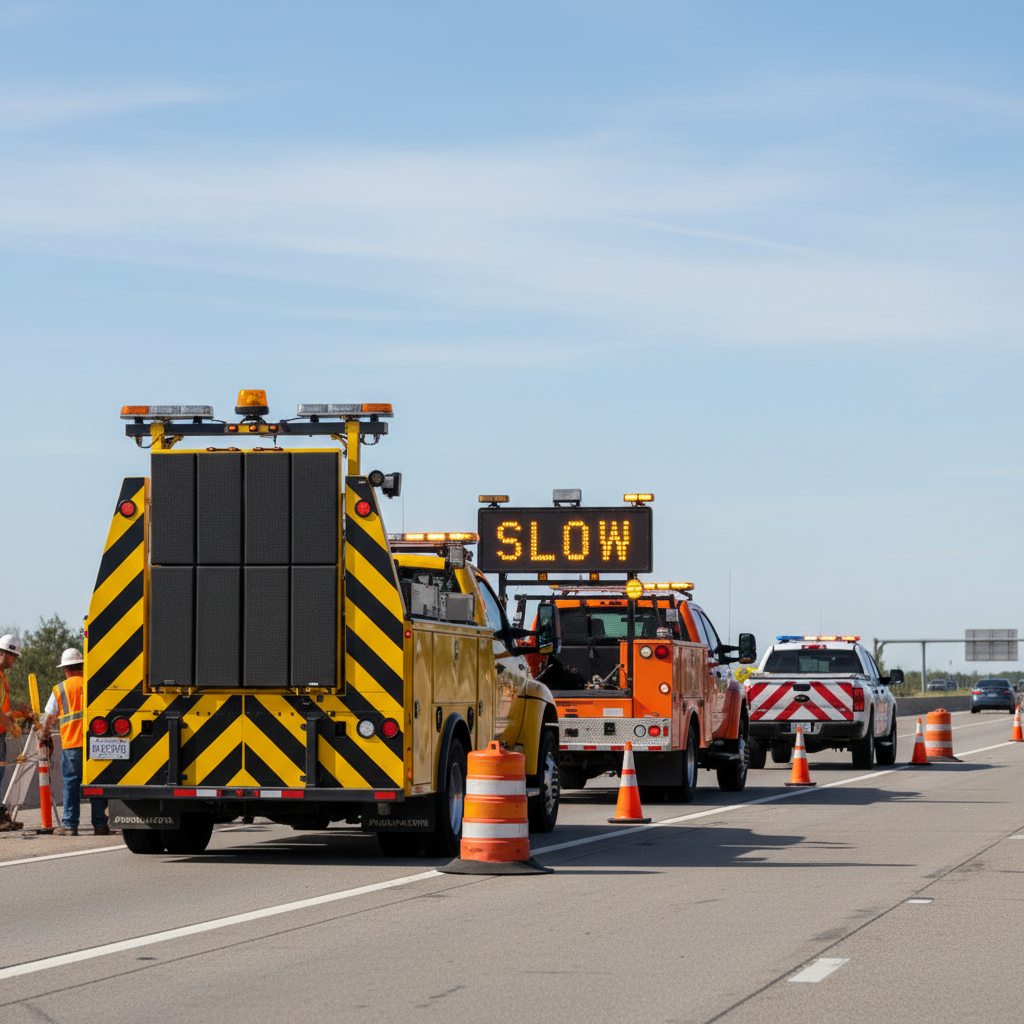
If you think that a safety truck is just equipment, you’re wrong! Basically, it’s the firewall between a routine shift and a catastrophe, and this is what every seasoned road crew knows. But the real question that keeps fleet managers up at night is ownership strategy: do you commit to buying, or do you rent per job? Buying gives you control, sure, but it also hands you the keys to every repair invoice, storage fee, and depreciation cost while the truck sits gathering dust between projects. Renting, on the other hand, is often the cleaner, more agile move. You take delivery of a unit that is already inspected, fully certified, and ready to hit the asphalt, all without the heavy anchor of long-term ownership. In this blog, we’ll break down exactly how buying or renting a safety truck impacts your uptime, your safety compliance, and ultimately, your bottom line. The Hidden Costs of Ownership Owning a safety truck can carry hefty fixed costs. A brand-new, MASH-tested crash attenuator truck can cost $120,000–$200,000. That capital is then tied up on your balance sheet even when the truck sits idle between projects or seasons. Additionally, all inspections and repairs are your responsibility. Safety trucks must meet stringent DOT and state standards, so you must budget for annual inspections, fluid changes, fall-protection recertifications, and any required retrofits. In S.P.A.’s guide on TMA trucks, they warn that as an owner, “you’re responsible for all DOT, NJ state, and MASH certification upkeep” and that “maintenance, annual inspections, and repairs are on your dime”. In practice, this can easily amount to $3,000–$7,000 in upkeep alone, not counting the hours spent on paperwork. Critically, owning only pays off if you use the truck almost full-time. A common rule of thumb is the “70% threshold”: if a vehicle is needed less than roughly 70% of the time, rentals are almost always cheaper. As one S.P.A. safety blog explains, if your boom or lift sits idle months on end (only needed a few days per month), “buying is a cash sink.” For example, a sign contractor who needed only a 40-ft lift for about a dozen days a year found that buying a $65,000 truck (plus $3K in annual maintenance) would tie up capital unnecessarily. Instead, renting for 12 days costs roughly $4,800, saving over $60,000 in the first year. Reliability: Offloading Maintenance Hassles One of the most significant advantages of renting a safety truck is reliability through service. Rental agreements typically bundle in routine maintenance and support. For example, S.P.A. explains that a good rental contract will include: Preventive maintenance before each delivery (fluids, brakes, safety sensors checked). 24/7 repair or swap-out service, so breakdowns don’t stall your project. All compliance documentation (DOT/MASH inspection records) is ready for any audit. Owning the truck means you’re responsible for scheduling and paying for those same service tasks – or risking wildly costly downtime if something fails on the job. In bullet form, renting offers: Maintenance and Repairs included: Technicians service the truck before each job, and if something breaks, replacement parts or a whole new truck can often be sent out immediately. This keeps the car on the road instead of in the shop. Regulatory Compliance: Rental houses stay current on DOT/OSHA/MASH requirements. You simply request the equipment, and it comes with all necessary inspection stickers and paperwork. (One S.P.A. guide bluntly advises: “Ask for documentation – reputable providers will supply it.”. Latest Safety Tech: Rental fleets turn over quickly, so you often get the newest models. That means features like hybrid powertrains, overload sensors, and telematics come standard. In effect, renting is like subscribing to smartphone updates – you enjoy cutting-edge safety designs without buying them outright. Flexibility: Matching Trucks to Every Task Some key flexibility benefits of renting safety truck include: Scale up/down to demand: Add or release units as projects grow or wrap up —no need to buy extra trucks for a one-off job. Access to diverse models: Switch between TMA crash trucks, scissor lifts, hi-rail units, etc., to match different projects – all from one rental partner. Avoid obsolescence: Since rental fleets are updated frequently, you always get a current model. Owning locks you into yesterday’s technology. Financial Trade-offs and Real-World ROI How do these factors add up in your ledger when you rent or purchase? In many cases, the math favors renting – especially for intermittent use. Rental rates are often a small fraction of the purchase price per day or week. For example, as a rule of thumb, a 6–7% monthly-use cost is typical: renting a scissor lift might run $900–$1,400 per week or around $3,000–$3,800 per month compared to a $50,000–$75,000 purchase price. Even a few months of rentals usually still costs far less cash up front than a full purchase loan. A concrete example: S.P.A. highlights (with real numbers) how renting trumps buying for light use. A Tulsa sign company needed a lift for only about a dozen days a year. Purchasing a new truck would have locked in $65,000 plus $3,000/year in upkeep, while simply renting 12 1-day periods costs about $4,800 – an immediate $60k+ savings. Even spread-out rentals (or short-term leases) often beat ownership for construction punch-list or seasonal jobs. That’s not to say buying never makes sense. If your usage is extremely heavy – think a paving contractor doing highway work most of the year – eventually rental fees could approach the cost of ownership. A guide on TMA safety trucks notes that renting is cheaper unless the vehicle is operated for more than 8–10 months per year. In fact, the same guide observes two real-life contractors: one small firm took a six-week night paving job and rented a TMA for $6,800 (saying “no headaches, no maintenance”, whereas a large contractor doing year-round highway projects chose to own two TMAs – valuing the guaranteed availability and control. Choosing What’s Right for You Ultimately, the “best” answer depends on your specific needs: Buy if: You run safety
Rent vs Buy TMA Attenuator Trucks: Total Cost Analysis for Highway Contractors

Let me guess—you’re staring at a bid that requires TMA attenuator trucks, and you’re trying to figure out whether to rent, buy, or pass on the project altogether. The rental quote seems high, but the purchase price makes your accountant nervous. Your competitor down the road owns three TMAs, but you heard they sit unused half the year. Here’s what nobody tells you: there’s no universal “right” answer. A small contractor with occasional highway work has completely different economics than a regional player with year-round DOT contracts. The $300/day rental that seems expensive might actually save you $40,000 compared to buying. Or that the $125,000 purchase price might pay for itself in eight months if you have consistent utilization. Let’s break down the real costs, run the numbers on real-world scenarios, and determine which option makes sense for your operation. Understanding What You’re Really Paying For Before we dive into spreadsheets, let’s make sure we’re comparing apples to apples. TMA attenuator trucks aren’t just trucks with a crash cushion bolted to the back. You’re paying for: The host truck: Typically, a heavy-duty chassis with specific GVWR, wheelbase, and frame-strength requirements. This alone costs $50,000 to $80,000, depending on specifications and market conditions. The attenuator unit: the actual cash cushion that has been MASH TL-3 tested and certified. Quality units range from $35,000 to $60,000, depending on the manufacturer and features. This isn’t where you want to cheap out—inferior attenuators mean non-compliance and potential liability. Arrow board and lighting package: DOT-compliant arrow boards range from $3,000 to $8,000. Full lighting packages with LED warnings, strobes, and proper visibility equipment add another $2,000-$5,000. Ballast systems: Proper weight distribution is critical for attenuator performance. Ballast systems and mounting hardware add $3,000 to $8,000. Total purchase price for a complete, DOT-ready TMA truck ranges from $95,000 to $165,000, depending on specifications. When you rent, you’re paying for all of this plus the rental company’s overhead, maintenance costs, insurance, and profit margin. When you buy, you’re responsible for maintenance, insurance, storage, and depreciation. Which total cost of ownership approach works better for your operation? The Real Cost of Renting TMA Attenuator Trucks Let’s start with rental economics because this is usually the easier calculation—and where contractors often make mistakes. Typical rental rates (2026 market): Daily rate: $250-$450 Weekly rate: $1,200-$2,500 Monthly rate: $3,500-$7,500 Long-term monthly (6+ months): $3,000-$6,000 What’s included in rental rates: Most reputable rental companies (like S.P.A. Safety Systems) include: Fully compliant, MASH-certified equipment All maintenance and repairs (except damage from misuse) Compliance documentation Equipment delivery and pickup Basic operator guidance Backup equipment if yours goes down Hidden rental costs contractors miss: Delivery and pickup fees: Many companies charge $200- $600 per trip. On a two-week rental, this adds $40-$100 per day to your effective rate. Minimum rental periods: The “daily” rate often requires a 3-5-day minimum. A two-day project might cost as much as a five-day project. Seasonal availability: During peak season, you may have to wait days or weeks for equipment to become available. This can kill tight project schedules. Rate increases mid-project: If your project runs long and you need to extend the rental, your negotiated rate might not apply to the extension. The actual math on a typical rental: Let’s say you need a TMA for a three-week highway resurfacing project. You negotiate a $1,800 weekly rate. Weekly rental: $1,800 × 3 weeks = $5,400 Delivery/pickup: $400 each way = $800 Insurance rider: $150/week × 3 = $450 Total cost: $6,650 That’s $317 per day over 21 days. Not terrible for a one-off project, but multiply this across multiple projects and the numbers add up fast. The Real Cost of Buying TMA Attenuator Trucks Now let’s look at ownership economics, which get complicated quickly because you’re dealing with capital costs, depreciation, maintenance, and opportunity costs. Upfront capital requirement: Purchase price: $125,000 (we’ll use a mid-range, fully equipped unit as our baseline) Cash purchase option: $125,000 upfront (no interest, but capital is tied up) Ongoing ownership costs: Insurance: Commercial auto insurance for a TMA truck ranges from $3,000 to $6,000 annually, depending on coverage limits, driving record, and state. Figure $4,000/year average. Registration and licensing fees: $500- $1,500 annually, depending on the state and weight class. Storage: If you don’t have secure storage, you’ll pay $100-$300 per month ($1,200-$3,600/year). TMAs need protected storage—leaving them outside accelerates deterioration. Post-impact costs: If your TMA gets hit (which is what it’s designed to do), you’re looking at: Minor impact: $5,000-$15,000 in repairs Major impact: $20,000-$50,000+ or total replacement Downtime while under repair: Lost revenue from unavailable equipment Depreciation: Heavy equipment depreciates significantly: Year 1: 25-30% ($31,250-$37,500) Years 2-5: 10-15% annually After 5 years, expect the truck to be worth $45,000-$55,000 (40-45% of purchase price) First-year total cost of ownership: Purchase price (financed): $25,000 down + ($1,980 × 12) = $48,760 Insurance: $4,000 Registration: $1,000 Storage: $2,400 Maintenance: $10,200 Total first-year cost: $66,360 Subsequent years (2-5): Loan payment: $23,760 annually Insurance: $4,000 Registration: $1,000 Storage: $2,400 Maintenance: $10,200 Annual ongoing cost: $41,360 Five-year total cost of ownership: $66,360 + ($41,360 × 4) = $231,800 But wait—you have an asset worth approximately $50,000 after five years. Net five-year cost: $181,800 ($36,360 per year average) Tax Considerations That Change the Math Now, let’s discuss something that significantly affects the real cost: tax treatment. Section 179 deduction: Under current tax law (2026), you may deduct the full purchase price of qualifying equipment in the year of purchase, up to $1,220,000 in total. What this means: If you buy a $125,000 TMA truck, you might be able to deduct the full $125,000 from taxable income in year one. At a 25% effective tax rate: $125,000 × 0.25 = $31,250 tax savings This effectively reduces your net purchase price from $125,000 to $93,750—a significant difference. Bonus depreciation: Alternatively, 100% bonus depreciation may apply, allowing an immediate write-off of the full cost (though it has been phased down in recent years). Rental expense deduction: TMA truck rental costs
Bucket Rental Truck vs. Scissor Truck: A Comparison
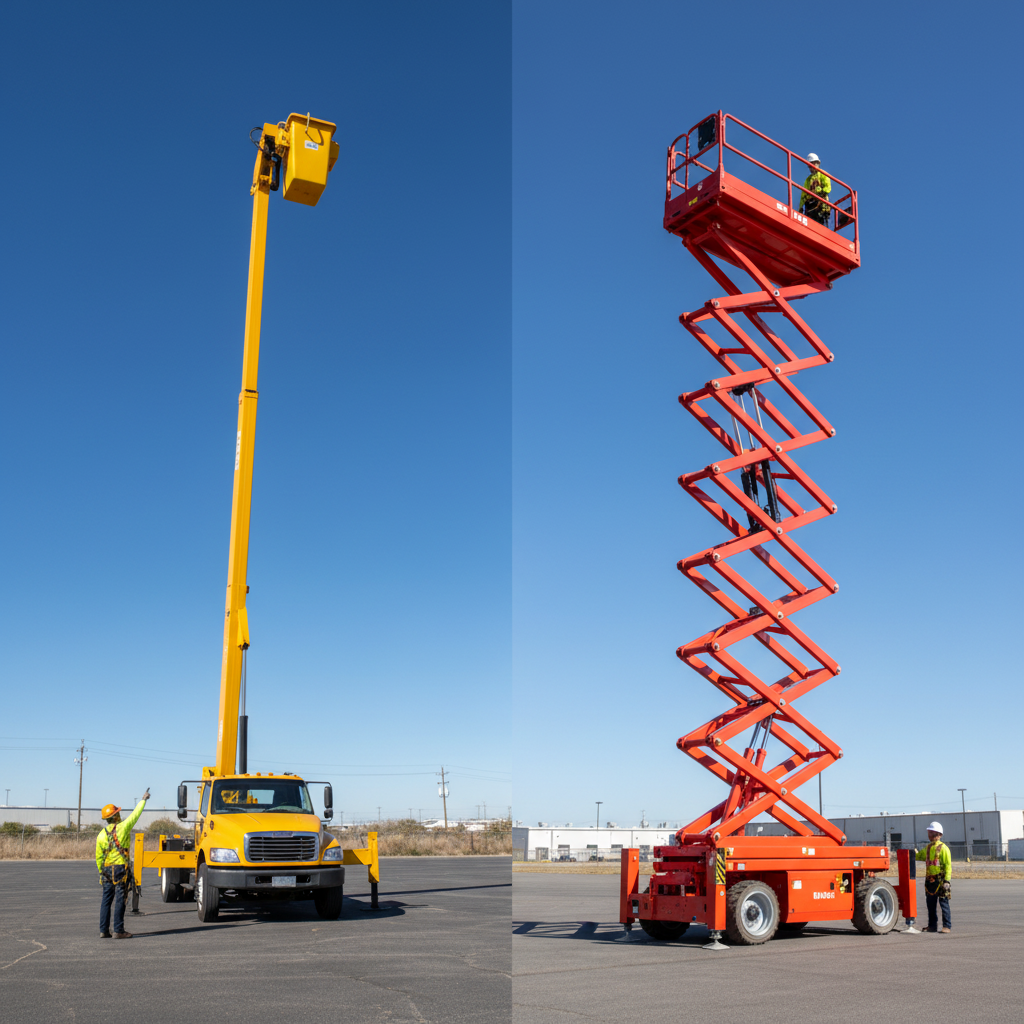
Getting your crew off the ground usually comes down to two main options: the scissor lift or the bucket truck. On paper, they seem to do the same thing—they lift people and tools into the air. But ask anyone who has actually run a job site, and they’ll tell you these machines are completely different animals. One gives you a wide, stable deck for heavy materials; the other gives you the reach to get over obstacles and out to the street. If you grab the wrong set of keys, you aren’t just looking at wasted rental fees. You’re dealing with stalled timelines, frustrated workers, and safety hazards you didn’t plan for. Here is a blog post that provides a practical breakdown to help you decide which machine is best suited to the job. Anatomy of Each Machine Scissor Lifts Vertical-only motion: stacked, crisscrossing arms extend straight up. • Flat work deck: typically, 29–60 in. wide and 4–16 ft long, with slide-out extensions. • Power source: electric for indoor use; diesel, dual-fuel, or hybrid for outdoors. • Steering: self-propelled on slab or rough-terrain tires. Bucket Trucks Telescoping or articulating boom mounted to a truck chassis. • Single fiberglass or metal bucket sized for one or two workers. • Hydraulic outriggers for stability. • Road-legal—drive it to the next site without a trailer. Height, Reach, and Workspace Platform Height Scissor lifts typically max out at around 60 ft, though most rentable units are in the 19–40 ft range. Bucket trucks soar from 35 ft to well over 100 ft. Horizontal Reach Scissor Lifts: These machines are strictly vertical. If you can’t park directly underneath the work area, you can’t reach it. Bucket Trucks: Designed for flexibility, rent a bucket truck because the boom can swing, extend, and bend, you can reach over obstacles like fences or parked cars—a necessity for utility work or painting difficult building exteriors. Workspace Size Scissor Lifts: Think of the deck as a floating workbench. There is ample room to stack pipes, fixtures, or tools, and two or three technicians can work side by side without bumping elbows. Bucket Trucks: It’s tight quarters. The bucket is designed for “point access,” meaning it fits one worker and a few essential tools. It isn’t a place to store materials. Site Conditions and Mobility Ground Bearing Electric slab scissor lifts demand smooth, level concrete and deliver tight turning radii—ideal for warehouses, data centers, and malls. Rough-terrain scissors ride on foam-filled tires, have four-wheel drive, and use auto-level jacks, but still require firm soil. Deep mud or soft sand bogs them down. Bucket rental truck can be set up almost anywhere a truck can park. If the soil under an outrigger is questionable, operators place cribbing blocks and continue rolling. Transport Logistics Scissors loaded onto a trailer or tilt-bed require tie-downs and add another item to the DOT inspection list. Bucket trucks drive themselves from job to job; for dispersed utility or tree-care routes, this is priceless. Set-Up Time Scissor: deploy pothole guards, raise railings, do a quick walk-around—two minutes tops. Bucket truck: park, level the chassis, drop outriggers, run a dielectric test if near energized lines—five to ten minutes. Regulatory and Licensing Nuances Bucket rental truck operators often need a Class B CDL for vehicles over 26,000 lb GVWR; some states add a utility-line or arborist endorsement. Scissor truck lifts ordinarily require only a site-specific “competent operator” card validated by the employer or rental house. Road-going bucket fleets incur FMCSA logs, IFTA fuel reporting, and DOT numbers—a paper trail absent from scissor lift ownership. Decision Matrix (Quick Reference) Primary Concern Choose a Scissor Lift When… Choose a Bucket Truck When… Vertical Height ≤ 60 ft > 60 ft Horizontal Reach 0 ft needed Up‐and‐over obstacles Workspace Multiple workers/material Single worker/light tools Terrain Smooth slab or graded pad Varied roadside or off-grid Daily Moves One site all day Multiple stops, spread miles apart Budget Lower purchase/rental Budget accommodates CDL chassis Electrical Proximity Indoor or de-energized Live utility lines need insulation Real-World Scenarios Warehouse Racking Upgrade – A 26 ft electric scissor glides through standard 8 ft aisles, lifts two installers plus a pallet of uprights. Bucket truck? Overkill and can’t get through the dock door. Downtown Streetlight Retrofit – Bucket rental truck parks curbside reaches over parked cars, and changes LED fixtures every 200 ft without unloading a trailer. A scissor lift would crawl through traffic lanes and demand police escorts. Solar Farm O&M – Rough-terrain scissor lifts carry wash systems and tool crates down endless rows of panels. The panels sit only 15 ft high, so reach is irrelevant; deck space is priceless. Conclusion There is no universal winner here. The scissor lift is a reliable workhorse for vertical jobs on stable ground, while the bucket truck is the specialist you need for reach and mobility. Making the right call means looking beyond the daily rental rate. You must match the machine to the site’s actual constraints—the terrain, obstacles, and crew size. Spend a few minutes planning the logistics before you sign the paperwork. It is much easier to fix a mistake on the ground than to realize you’re stuck with the wrong equipment sixty feet in the air. Need more information? Head towards S.P.A. Safety Systems and get your questions answered!
TMA Truck Requirements by State: 2026 Compliance Guide for Highway Contractors

If you’re bidding on highway projects this year, you already know the first question DOT inspectors ask: “Is your TMA truck compliant?” Get it wrong, and you’re not just facing fines—you could be pulled off the job entirely, losing thousands in contracts and credibility. The challenge? TMA truck requirements aren’t one-size-fits-all. What passes in Texas might get you shut down in California. MASH standards replaced NCHRP 350 years ago, yet confusion persists across job sites. And with 2026 bringing updated enforcement across multiple states, now’s the time to get your compliance house in order. Let’s cut through the confusion and get you the straight answers you need regarding TMA truck requirements. What Exactly is a TMA Truck? (And Why DOTs Care So Much) A Truck-Mounted Attenuator (TMA) is a crash cushion mounted on the back of a truck. When a vehicle strikes it, the attenuator absorbs impact energy, protecting both workers in the work zone and the occupants of the striking vehicle. Think of it as a mobile barrier that sacrifices itself to save lives. Why are state DOT work zone safety regulations so strict about these trucks? The statistics are brutal. According to FHWA data, over 100 workers die in work zone crashes every year, with hundreds more seriously injured. TMAs have proven to reduce fatality rates by up to 70% in mobile operations. That’s why every state DOT takes compliance seriously, and why you can’t afford to treat this as a paperwork exercise. MASH vs NCHRP 350: What Changed and Why It Matters Here’s where many contractors get tripped up. The old standard was NCHRP 350 (National Cooperative Highway Research Program Report 350). It was replaced by MASH (Manual for Assessing Safety Hardware) starting in 2011, with a transition period that technically ended years ago. But here’s the reality: some older equipment still bears NCHRP 350 certification, and contractors ask me regularly whether it’s still acceptable. Short answer: It depends on the state, but most now require full MASH compliance. MASH TMA certification requirements are more stringent than the old standard. The crash testing is more realistic—higher impact speeds, different vehicle types, and more demanding angles. MASH Test Level 3 (TL-3) is the standard for most highway applications, requiring the attenuator to handle: Pickup trucks at 62 mph Small cars at 62 mph Various impact angles up to 25 degrees The equipment either passes these tests or it doesn’t. There’s no gray area when it comes to compliance with attenuator truck standards. Federal Baseline: What FHWA Requires Nationwide Before we dive into state-specific TMA truck requirements, let’s establish the federal baseline that applies everywhere. The Federal Highway Administration requires that all work zone traffic control devices used on federal-aid highways meet MASH standards. This is based on the MUTCD (Manual on Uniform Traffic Control Devices) and associated federal regulations. At a minimum, your TMA truck must: Have MASH TL-3 certification (the actual attenuator unit) Display proper warning lights and markings It should be operated according to the manufacturer’s specifications Have documentation available on-site Undergo regular inspections and maintenance The host truck also matters. You can’t just bolt a MASH-certified attenuator onto any old truck and call it compliant. The vehicle must meet the attenuator manufacturer’s specifications for: Gross Vehicle Weight Rating (GVWR) Wheelbase length Frame strength Ballast requirements State-by-State TMA Requirements: The Details That Matter Now let’s get into the specifics. I’ll cover the states with the most highway work and the strictest requirements, plus note regional patterns that might affect your operations. Northeast Region New York: The NYSDOT requires MASH TL-3 certification and strictly enforces host-vehicle specifications. All TMAs on state projects must be on the approved products list (APL). Night work requires additional lighting beyond federal minimums. Expect inspections—NYSDOT doesn’t mess around. New Jersey: New Jersey DOT follows MUTCD requirements and requires MASH certification. Here at S.P.A. Safety Systems in Flanders, NJ, we see firsthand how seriously NJDOT takes compliance. They require quarterly maintenance documentation and will conduct spot inspections. The state also mandates specific arrow board configurations that must be used with your TMA. Pennsylvania: PennDOT has one of the more comprehensive TMA programs in the Northeast. They require MASH TL-3 and mandate specific operator training. You can’t just hand the keys to any worker—operators need documented training on deployment procedures and emergency protocols. PennDOT also requires annual inspections with documentation submitted to the district office. Massachusetts: MassDOT closely follows federal guidelines but adds requirements for high-visibility striping beyond the MUTCD minimums. They’re also strict about arrow board synchronization with the TMA unit. Mid-Atlantic Region Virginia: VDOT requires MASH certification and has specific guidelines for rural vs. urban deployments. They also mandate GPS tracking on TMA trucks for certain projects, which helps with compliance documentation but requires additional equipment. Southeast Region Florida: FDOT has extensive TMA requirements, especially for interstate work. They require MASH TL-3 certification, maintain a qualified products list, and mandate specific operator training. Florida also has detailed requirements for hurricane-season operations—TMAs must be secured or removed during specified weather events. Georgia: GDOT adheres to MASH standards and requires semiannual inspections. They’re strict about maintenance documentation and will disqualify equipment that shows excessive wear. North Carolina: NCDOT requires MASH TL-3 and maintains an approved products list. They’ve been aggressive about phasing out older NCHRP 350 equipment—if it’s not MASH certified, don’t bring it to an NCDOT project. Texas and the South Central Texas: TxDOT has some of the most detailed temporary traffic control requirements in the country. They require MASH TL-3 certification, maintain a strict approved products list, and mandate specific operator training. Texas also requires detailed traffic control plans (TCPs) that specify TMA placement for different scenarios. Here’s something many contractors miss: TxDOT has specific requirements for shadow vehicles (the truck carrying the TMA) regarding weight, braking systems, and even tire specifications. Read the special provisions carefully—Texas projects often have district-specific requirements beyond the statewide standards. Louisiana: LADOTD requires MASH certification and has specific requirements for work in high-traffic corridors. They’re
Work Zone Safety 2026: Daily Inspection Checklists for TMA Equipment

There is a specific kind of chaos that defines a highway work zone. You have the roar of diesel engines, the smell of asphalt, and the constant, unnerving whoosh of traffic passing just inches away from the cones. In this environment, the only thing standing between a distracted driver and a crew member is the shadow vehicle. And hanging off the back of that truck is the most critical piece of sacrificial gear on the site: the TMA equipment. For safety managers and contractors, a Truck-Mounted Attenuator (TMA) is more than just a box to tick on a rental form. It is a mobile shield. But a shield is only useful if it remains intact when it takes a hit. Far too many teams treat these trucks like they’re indestructible, simply parking them and assuming they’ll perform when it counts. In reality, a ten-minute walk-around of your TMA equipment is the cheapest insurance policy on the job site. It prevents accidents before they start, keeps inspectors satisfied, and ensures that, when the shift is over, your crew returns home safely. Why Focus on TMA Equipment? Complacency is a trap. The engine starts, the lights flash, and we assume the rig is ready for the road. But the numbers paint a darker picture. Beyond the immediate danger, there is the liability. We are living in the era of MASH-16 (Manual for Assessing Safety Hardware). If an accident occurs and the investigation reveals that your MASH-approved TMA wasn’t inspected or maintained in accordance with the manufacturer’s specifications, the negligence lawsuit won’t just be expensive; it could close your doors. 10-Minute TMA Equipment Daily Inspection Checklist Exterior & Impact System The cartridge is the heart of the system. It’s the honeycomb or tube structure designed to crumple. Shear Bolts and Fasteners: These are designed to fail at a specified load. If they are already loose, rusted, or missing, the system fails. Check that all bolts are present and tight. The Critical Pins: The most common failure point. Check the pins connecting the cartridge to the backup frame and the frame to the truck. Are the cotter pins or retaining clips installed? A pin without a clip will vibrate out after a few miles of driving. Skid Plates: Look at the bottom of the unit. If the skid plates are worn through or bent from dragging, they can snag on the pavement during an impact, causing the truck to vault or flip rather than slide. Vehicle Chassis & Electronics Your TMA equipment is useless if drivers can’t see it or if the truck can’t support it. Lighting Systems: Test the brake lights, turn signals, and clearance lights on the attenuator itself. Wiring harnesses often get pinched in the hinge points. Arrow Board and Strobes: These are your first line of defense. Ensure every pixel on the arrow board is firing and that the strobes are high-intensity. A dim light is a dangerous light. Hydraulics: Cycle the unit up and down. Does it move smoothly, or does it shudder? Listen for whining pumps. Look for fresh oil on the hoses or the ground. A hydraulic failure prevents the cushion from deploying, rendering the truck unusable. Back-Up Alarm: Since these trucks often reposition in reverse, a working alarm is non-negotiable. Documentation & Tagging In the eyes of an inspector, if you didn’t write it down, you didn’t do it. The Logbook: Record the odometer reading, engine hours, and the TMA equipment’s specific ID. Digital Verification: The best crews are moving to digital. Take a photo of the hitched unit and the pins. Upload it to your daily log. This timestamped proof is invaluable during an audit. Training & Competency Owning the gear is half the battle; knowing how to use it is the other. The Toolbox Talk Don’t let safety meetings become stagnant. We have seen success with dedicated “TMA Tuesday” toolbox talks. Topic Idea: “Roll-Ahead Distance.” Remind crews that if the shadow truck gets hit, it will move. Are they standing in the danger zone? Topic Idea: “The Blind Spot.” Have workers sit in the cab of the TMA truck to see exactly what the driver can and cannot see. Common Myths About TMA Equipment (FAQ) There is a lot of “jobsite wisdom” that turns out to be dead wrong. Let’s clear up the confusion regarding TMA equipment. Myth Reality “New TMAs don’t need daily checks.” False. Vibration loosens bolts on brand-new units just as fast as old ones. Manufacturers require pre-shift inspections to maintain warranty validity. “All attenuators are MASH-approved.” False. Many older units on the road are NCHRP-350 compliant, which is an outdated standard. Only models with MASH Test Level 3 (TL-3) stamps meet current high-speed safety requirements. “I can use concrete blocks for ballast.” Dangerous. Ballast must be securely bolted to steel plates. Loose concrete blocks become deadly projectiles in a crash. “If it’s just a dent, it’s fine.” Risky. A dent in the cartridge pre-weakens the structure. It might collapse too fast during a real crash, transferring fatal G-forces to the driver. Final Thoughts The road construction industry operates on tight margins and deadlines. It is tempting to skip the walkaround to close the lane five minutes faster. But when you look at the twisted metal of a crash site, you realize that those five minutes are irrelevant. Getting help from experts at S.P.A. Safety Systems is worth every penny you spend. Your TMA equipment is the last line of defence. It protects the motoring public and the men and women working with their backs to traffic. Treat it with respect. Check the pins. Test the lights. Verify the hydraulics.
Truck Mounted Attenuator Guidelines For Work Zone Protection
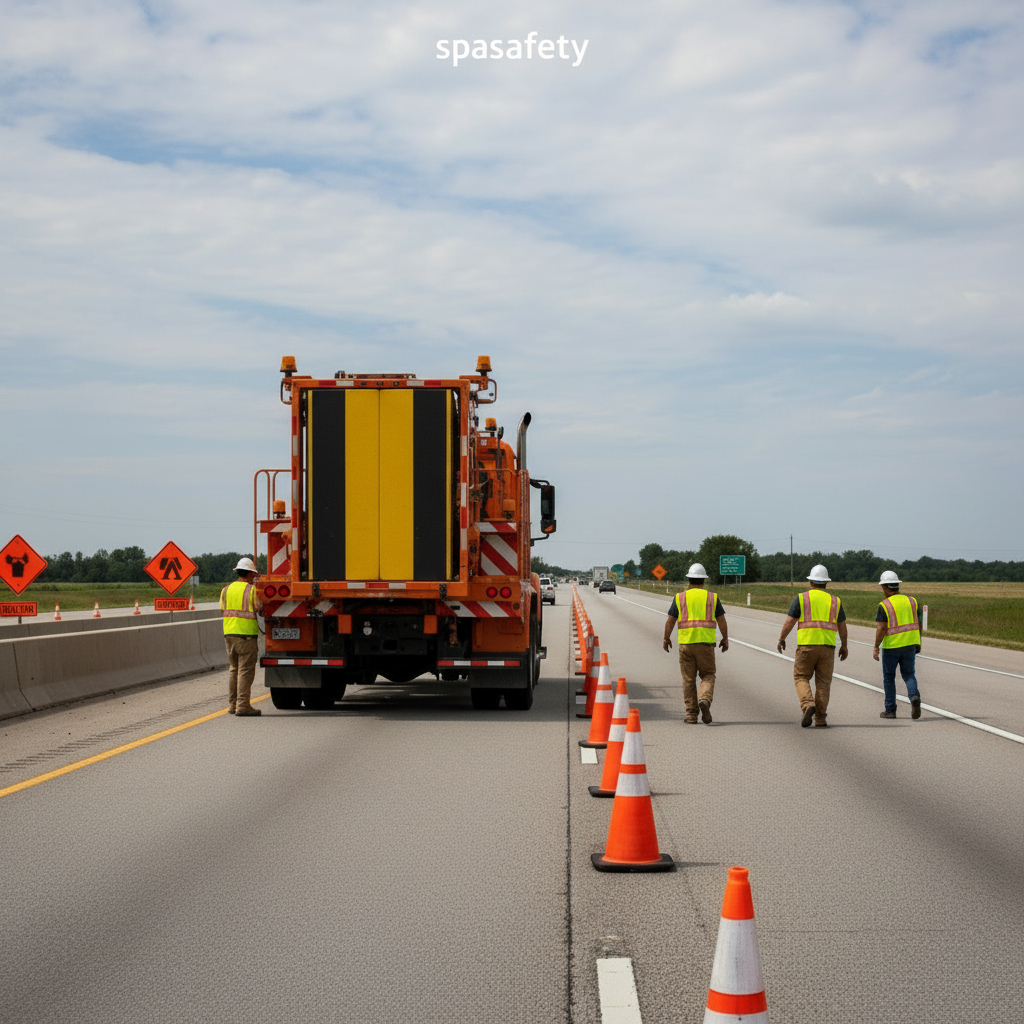
There is a specific kind of dread that comes with working on a highway. You’re pouring concrete or painting lines, your back turned to traffic, trusting a few plastic cones to keep you safe while 80,000-pound semis scream past at seventy miles an hour. What really separates a road crew from a distracted driver isn’t a cone or a sign—it’s the “shadow truck.” And hanging off the back of that truck is a piece of engineering that is designed to be destroyed: the Truck-Mounted Attenuator (TMA). It’s a mobile shield; a bodyguard made of steel and aluminium. Understanding how to use it, purchase it, and maintain it isn’t just about following regulations; it’s about ensuring everyone can clock out at the end of the shift. In this blog, we’ll discuss purchasing and maintaining it, which isn’t just about compliance. We will discuss attenuator crash trucks and how they enhance safety in work zones. How does the Shield work? At its core, a TMA is a sophisticated crash cushion. It bolts onto the back of a heavy vocational truck—usually a dump truck or a flatbed—and acts as a sacrificial lamb. When a car or rig slams into the back of a shadow truck, the TMA takes the hit. Inside the unit, cartridges made of aluminium honeycomb or steel tubes are designed to collapse in a very specific sequence. This buckling process does two things: it absorbs the impact’s energy, converting that kinetic energy into crumpled metal, and it prevents the shadow truck from being launched forward into the workers standing just a few feet away. The “MASH” Standard: Why It Matters? You will hear the term “MASH” used frequently. An important part of the truck mounted attenuator guidelines, it stands for the Manual for Assessing Safety Hardware. Specifically, you want equipment that meets MASH Test Level 3 (TL-3). This isn’t just paperwork. To pass this standard, a TMA has to survive a gauntlet. Engineers ram a 5,000-pound pickup truck into it at 62 mph. They do it straight on and at an angle. To pass, the TMA must keep the G-forces low enough for the driver of the crashing car to survive, and it must ensure the shadow truck doesn’t roll forward too far. If you are buying or renting a TMA, look for that MASH TL-3 rating. Anything less is a gamble you don’t want to take at highway speeds. One-Hit Wonders vs. The Resilient You have two main design choices: sacrificial or reusable. Sacrificial units are one-and-done. If they are struck, discard the cartridge and purchase a new one. Reusable units use hydraulic cylinders and spring steel. They can take a low-speed bump and reset. If you work in high-traffic city zones where “fender benders” are common, reusable might save you money. For high-speed interstate work, the focus is usually just on surviving the “big one.” Tactics on the Tarmac Having the gear is one thing; positioning it is another. The Rolling Blockade As per the truck mounted attenuator guidelines, for jobs such as striping or pothole patching, the shadow truck must move. It usually trails the crew by a specific distance. Too close, and a crash pushes the truck into the workers. Too far, and a confused driver might cut in between the truck and the crew. The “Quick” Job Trap The most dangerous words in road construction are, “It’ll only take a minute.” Crews often skip setting up the TMA for a quick debris removal or sign fix. That is when accidents happen. Whether the job takes ten minutes or ten hours, the shield needs to be up. Ramps and Exits Off-ramps are notorious for indecisive drivers. Placing a TMA here requires angling the truck so that, if it is struck, it doesn’t push into live traffic. It’s a game of geometry where the stakes are life and death. The Human Element We focus heavily on the steel and hydraulics, but the operator inside the shadow truck has one of the most grueling roles on the project. They aren’t just sitting behind the wheel; they are living in the rearview mirror—constantly gauging the speed of oncoming lights and bracing for a hit that could happen at any second. Daily Checks are Non-Negotiable Before the key turns, the operator must check the pins, hydraulics, and lights. A bent frame from a previous “love tap” might seem fine, but it could cause the unit to fail catastrophically during a real crash. Don’t Improvising Ballast You can’t just throw concrete blocks in the bed to meet the weight requirement. If they aren’t secured, those blocks become missiles in a crash. Use proper steel ballast plates bolted to the frame. The Future is Smart Technology is catching up. We are starting to see “Connected TMAs.” These units can detect a crash and automatically lock the truck’s brakes to prevent it from rolling forward. Some can even send an instant alert to the crew’s phones or headsets the moment an impact occurs, giving them a split-second head start to step aside. The Bottom Line A Truck-Mounted Attenuator is an expensive line item on a budget, which is why these truck mounted attenuator guidelines are worth considering. It requires maintenance, training, and a heavy truck to haul it. But when you strip away the regulations and the engineering specs, its purpose is simple. At 2:00 AM, in the pouring rain, when a driver falls asleep at the wheel and drifts into the work zone, that TMA is the only thing that prevents a tragedy. It turns a fatal headline into a repair bill. Treat the equipment with respect, and it will do the one thing that matters most: bring your crew home alive. Head towards S.P.A. Safety Systems for expert help and opinion.
Illuminating Night Work Zones with LED Arrow Boards

Driving through a work zone after dark without the LED arrow boards guiding you feels different from cruising the same road in broad daylight. When the city noise thins out and traffic lightens, the roadway can feel almost peaceful—like the danger has passed. But that calm is misleading. At night, visibility collapses, depth perception plays tricks, and your buffer for mistakes shrinks to almost nothing. One small slip—an unintentional lane drift, a moment of hesitation on the brakes—can turn an orderly construction area into a fast-moving emergency. That’s why nighttime work-zone safety lives or dies on one thing: drivers getting clear warnings early enough to act. Contractors can’t lean on the old-school, passive setups that used to be considered “good enough.” The modern standard demands more, and for good reason. LED arrow boards and Portable Changeable Message Signs (PCMS) have become essentials, not extras, because they communicate in the language drivers respond to fastest in the dark—bright, high-contrast, active light. It isn’t just preference; it’s biology. In low-light conditions, a driver’s eyes and brain lock onto movement and illumination far sooner than they register reflective cones or static metal signs. Flashing directional arrows and dynamic messages cut through the visual noise, trigger quicker recognition, and buy those critical extra seconds that prevent confusion, sudden swerves, and rear-end collisions. In a nighttime work zone, those seconds are the difference between a smooth merge and a chain reaction. In this blog, we will discuss the benefits of illuminating night work zones with LED arrow boards and message boards. The Four Horsemen of Night-Time Risk The night doesn’t just darken the road; it fundamentally alters the physics and biology of driving. Let’s see why advanced signalling isn’t just a luxury but a necessity. The Erosion of Visibility The most immediate threat is the degradation of the driver’s perceptual bandwidth. Darkness operates like a filter, stripping away critical data points. Peripheral vision narrows significantly, color washes out into grayscale, and the depth perception usually provided by shadows and horizon lines vanishes. Barriers that look solid and imposing at noon can dissolve into vague, gray shapes at midnight, blending dangerously with the pavement until a driver is nearly on top of them. The weather makes this infinitely worse. Rain on a dark highway turns the asphalt into a black mirror, scattering light and obliterating lane markers. The Biological Battle Against Fatigue Beyond the visual, there is the inescapable reality of human physiology. Fatigue is the silent, pervasive threat of the night shift. Our circadian rhythms are hardwired to demand rest between 11:00 p.m. and 5:00 a.m.—the exact window when overnight construction is most active. Drivers navigating these zones aren’t just bored; they are fighting a physiological war against sleep. Many are battling heavy eyelids and experiencing “microsleeps,” causing reaction times to plummet. The data is precise: drowsy driving is a leading culprit in severe nocturnal crashes, meaning the person behind the wheel may not even be fully conscious until impact is imminent. The Trap of the Open Road Ironically, the lack of traffic creates its own hazard: speed. The empty road offers a seductive, false sense of security. Without the “visual friction” of bumper-to-bumper traffic to slow them down, motorists unconsciously creep above the speed limit. This creates a deadly physics problem. A car moving at 80 mph needs a massive distance to stop, yet the driver’s visibility is limited to the short reach of their headlights. They are effectively overdriving their eyes—traveling faster than they can see. When a lane closure appears out of the gloom, the gap between their speed and their sight distance leaves zero room for error. Sensory Overload in the Work Zone Finally, we must consider the crew’s vulnerability. Inside the barrels, workers are facing a sensory storm. Precision work—whether it’s milling pavement or rigging steel—requires absolute tunnel vision. However, the work zone itself is an auditory and visual chaotic mess, filled with the screaming of diesel engines, the beep of backup alarms, and the harsh glare of balloon lights. In this environment, a worker’s senses are overwhelmed. They are unlikely to hear or see a speeding vehicle breaching the safety taper until the moment it is too late to move. The Technological Pivot: The Science of LED Arrow Boards The transition to Light Emitting Diode (LED) technology has revolutionized this sector. Modern LED arrow boards are not just brighter; they are more innovative and more efficient. Instantaneous Intensity Unlike incandescent bulbs, which require a split second to warm up to full brightness, LEDs are instant-on. This crisp, immediate activation creates a sharper visual signal that cuts through the visual clutter of a roadway. Energy Autonomy The leap in energy efficiency is transformative. Modern LED boards slash power consumption by up to 80% compared to legacy equipment, enabling them to operate autonomously for weeks on solar panels and onboard batteries alone. Optical Precision Modern LED’s use advanced optics to create directional, high-contrast beams. They are designed to pierce through headlight glare, fog, and rain. The light is explicitly focused where it is needed—at the driver’s eye level—rather than spilling uselessly into the night sky. Strategic Deployment: Best Practices for Safety Owning the right equipment is only half the battle; deploying it correctly is what saves lives. Traffic control managers must adhere to a rigorous set of best practices. 1. The Night-Time Audit Planning cannot happen solely on paper. Before a project begins, safety managers should conduct a nighttime drive-through audit at the posted speed limit. This reveals hazards that are invisible on a blueprint: a billboard that distracts from a warning sign, a curve that hides the taper, or vegetation that blocks a solar panel. 2. Pattern Selection One size does not fit all. Sequential chevrons are the gold standard for lane closures. However, for shoulder work where the lane remains open, a “caution mode” (flashing corners) should be used. Using a directional arrow when no lane change is required is dangerous and can cause motorists to drive into