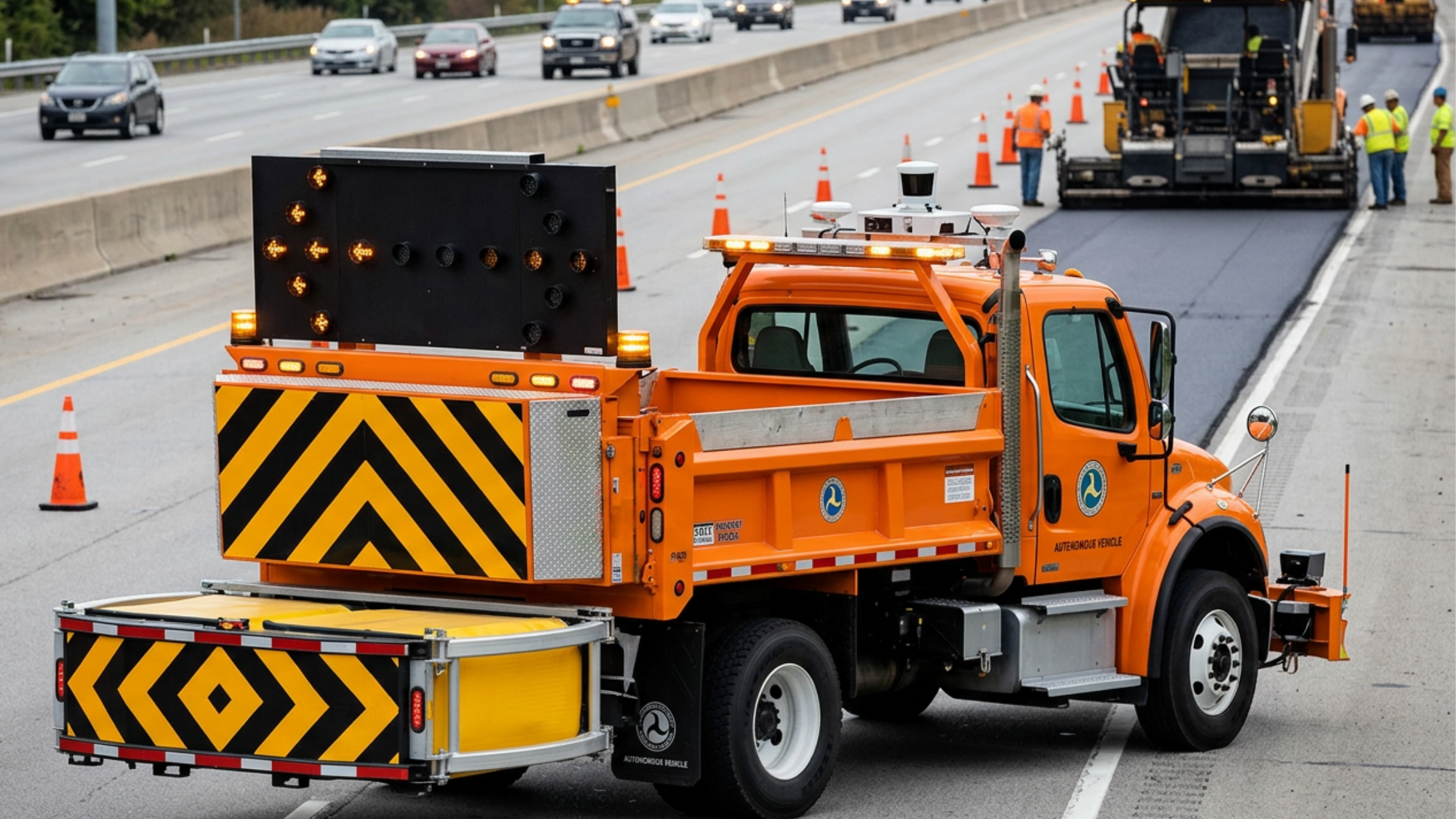
Every equipment dealer and manufacturer wants to sell you on electric TMA trucks right now. They’ll show you glossy brochures with impressive torque numbers, zero-emissions claims, and fuel-savings calculators that make it look like you’re throwing money away by sticking with diesel. But here’s what they’re not telling you: the ROI calculation for an electric TMA truck is way more complicated than “electricity costs less than diesel, therefore you save money.”
I’ve been watching contractors get burned by oversimplified electric vehicle pitches for the past three years. They buy into the hype, drop serious cash on electric equipment, and then six months later, they’re dealing with problems nobody warned them about. Range anxiety on projects far from charging infrastructure. Batteries that don’t hold a charge in cold weather. Charge times that leave equipment sitting idle when you need it working. Higher insurance premiums because repair shops don’t know how to work on electric drivetrains yet.
Don’t get me wrong – electric TMA trucks absolutely make sense for some contractors in some situations. The technology has come a long way, and for certain use cases, the numbers really do work out better than diesel. But the decision isn’t as simple as “electric good, diesel bad” like the sales guys want you to believe. You need to run the actual numbers for your specific operation, projects, and market conditions.
So let’s cut through the marketing nonsense and talk real numbers. What does an electric vs diesel attenuator truck comparison actually look like when you factor in everything – not just the stuff that makes electric look good, but all the hidden costs and operational realities that impact your bottom line?
The Upfront Cost Reality Check
Let’s start with the number that hits you first: purchase price. An electric TMA truck will cost you more upfront than a comparable diesel unit. How much more? That depends on the specific models, but you’re generally looking at a 30-50% premium for electric.
A quality diesel TMA attenuator truck might run you $180,000-$220,000, depending on specs and configuration. The electric equivalent? You’re looking at $235,000-$310,000. That $55,000-$90,000 difference is real money that has to come from somewhere – either your capital budget, a larger loan, or higher equipment rental rates passed to clients.
Here’s what actually determines if that upfront cost premium pays off:
Annual utilization hours matter way more than anything else. If you’re running that TMA truck 2,000 hours per year on active highway projects, the fuel savings add up fast enough to justify the premium potentially. If you’re only using it 400 hours per year because highway work is a small part of your business, you’ll never make that money back. The equipment will be obsolete before the savings catch up to the extra upfront cost.
Financing costs eat into electric’s advantage. That larger loan amount means higher monthly payments and more interest paid over the loan term. If you’re financing at 6% over five years, that extra $70,000 costs you an additional $11,000+ in interest alone. That’s $11,000 that has to come out of your fuel savings before you’re actually ahead.
Depreciation curves haven’t been determined yet for electric highway equipment. We’ve got decades of data on how diesel TMA trucks hold their value. Electric? It’s anyone’s guess. The technology is changing fast enough that today’s electric trucks might be viewed as obsolete junk in five years when better battery tech comes out. Or they might hold value better because operating costs are lower. Nobody actually knows, which makes calculating the true total cost of ownership basically impossible.
Fuel Costs: Where Electric Actually Wins
Electricity is cheaper than diesel per mile or per hour of operation. That’s just math. But the actual savings depend on how you’re charging and what you’re paying for electricity.
Best-case scenario: You’re charging at your own shop at commercial electricity rates of around $0.12- $0.15 per kWh. Your electric TMA truck uses roughly 2-3 kWh per mile at highway speeds (these trucks are heavy and not aerodynamic). That works out to about $0.24-$0.45 per mile in electricity costs. A diesel TMA truck getting 6-8 MPG at $4.00 per gallon of diesel costs you $0.50-$0.67 per mile in fuel. The electric saves you $0.15-$0.35 per mile.
If you’re putting 12,000 miles per year on that truck, you’re saving $1,800-$4,200 annually on fuel. Over five years, that’s $9,000-$21,000 in savings. Decent, but not enough on its own to justify a $70,000 premium.
Worst-case scenario: Your project sites are in areas without convenient charging infrastructure. You’re either running a generator to charge the electric truck (insanity, but I’ve seen it), paying premium prices at whatever charging you can find, or dealing with range limitations that require multiple charges per day. Now, electric is costing you more than diesel when you factor in time wasted, inconvenience costs, and premium charging rates.
The fuel savings are real, but only if your operational reality aligns with the ideal charging scenario. If you’re doing urban or suburban highway work where you can charge at your shop overnight and projects are within a reasonable range, great.
Maintenance: The Numbers Are Messier Than You Think
This is where electric vehicle advocates really oversell things. The pitch is that electric drivetrains have fewer moving parts, no oil changes, no transmission maintenance, and therefore cost way less to maintain. In theory, that’s true. In practice with highway safety trucks? It’s complicated.
What you actually save on with electricity:
No oil changes, obviously. That’s $15-$300 per service, depending on the oil type and capacity. On a diesel TMA truck getting changed every 3,000-5,000 miles, you might do 3-4 oil changes per year. Call it $600- $1,200 in annual savings.
No transmission maintenance. Diesel trucks have complex automatic transmissions that require fluid changes, filter replacements, and, eventually, expensive rebuilds. Over five years, you might spend $2,000-$4,000 on diesel transmission maintenance. Electric drivetrains don’t have traditional transmissions.
Simpler cooling system. Fewer fluids to change, fewer pumps to fail, less complexity overall. It could save you $300- $600 annually.
No diesel particulate filter hassles. DPF regeneration and cleaning are ongoing expenses and headaches with modern diesel engines. Electric skips that entirely.
Add it up, and you’re potentially saving $1,500-$2,500 per year on drivetrain maintenance. Over five years, that’s $7,500-$12,500. Again, meaningful but not enough on its own to justify a massive purchase premium.
What you don’t save on (and might actually spend more on):
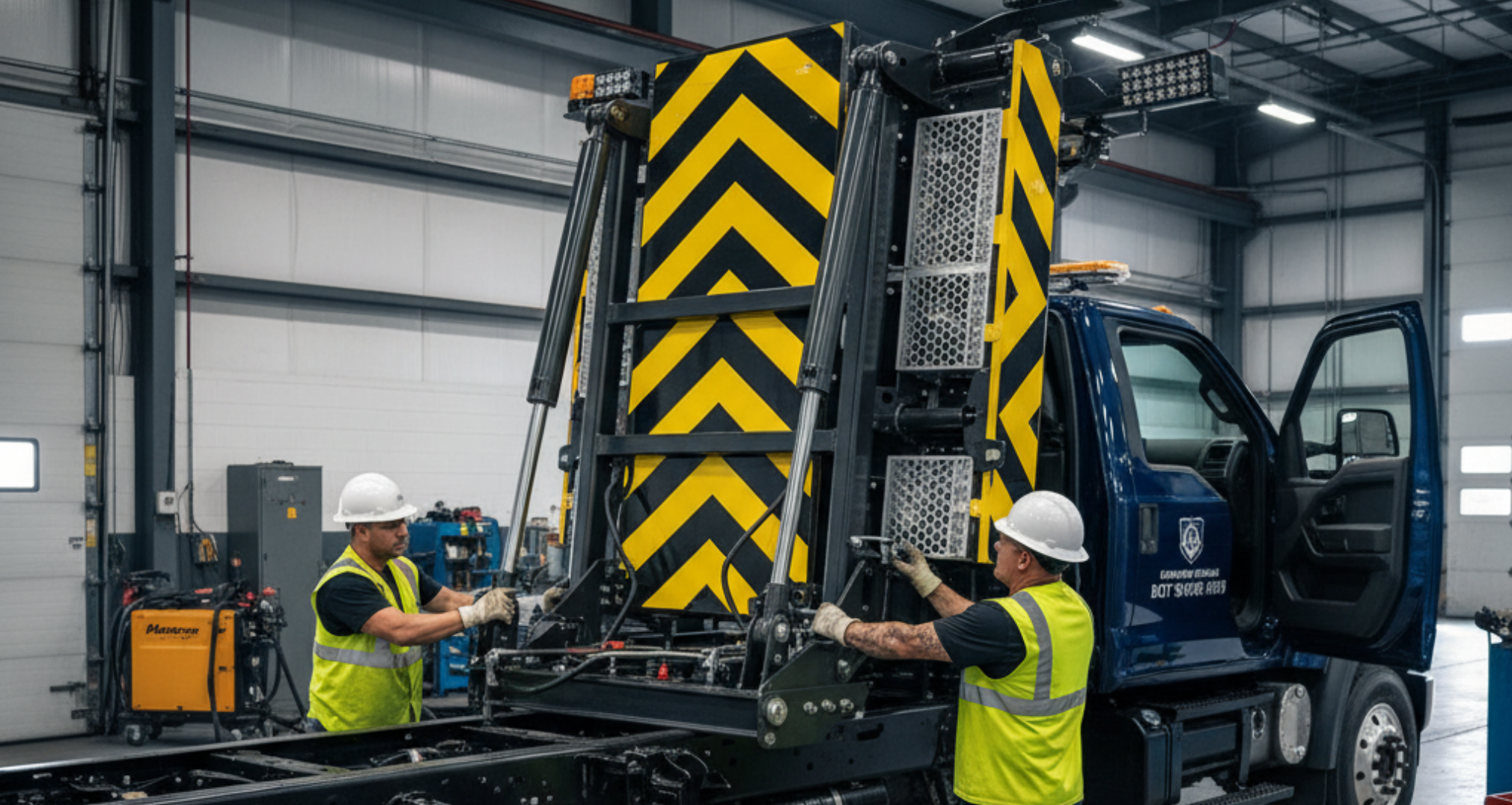
The TMA attenuator system itself is identical whether your truck is diesel or electric. Hydraulics, crash cushions, mounting systems and warning lights – all that stuff breaks the same way and costs the same to fix regardless of what’s powering the truck. This is probably 60-70% of your maintenance spend on these vehicles.
Brakes actually take more abuse on electric trucks because regenerative braking means you’re using the friction brakes differently. Some contractors report going through brake components faster on electric vehicles.
Tires might wear differently due to the instant torque characteristics of electric motors and the different weight distribution from battery packs. Jury’s still out on whether this is better or worse.
Electronics and specialized components on electric trucks are more expensive when they fail. You can’t take an electric TMA truck to any random diesel mechanic. You need shops with EV training and specialized diagnostic equipment. That limits your parts and repair options and often means higher labor rates.
Range and Charging: The Operational Headache
Here’s where theory smashes into reality hard. Electric range numbers are always given under optimal conditions. Real-world range on highway work zones? Way worse than the spec sheet.
A modern electric TMA truck might claim 150-200 miles of range. But that’s probably on flat ground, mild temperatures and no auxiliary loads. In the real world:
Highway speeds kill range. TMA trucks aren’t aerodynamic. At 55+ mph, you’re fighting serious wind resistance. Range drops 20-30% compared to city driving.
Cold weather murders batteries. Operating in 20°F weather? Your range might drop 40-50% compared to rated specs. Batteries hate the cold, and you’re running the heater too, which draws more power. If you’re working on winter highway projects in northern states, electric TMA truck performance can be borderline unusable.
Hot weather isn’t great either. Running AC in summer heat, battery cooling systems working overtime, all of it eats range. Not as bad as cold, but still a 15-25% range reduction.
Auxiliary loads matter more than people think. Your warning lights, arrow boards, attenuator hydraulics, radios, whatever else you’re running – all of it comes off the main battery pack. Heavy auxiliary use can cut your range by 10-20%.
Charging time is the killer for high-utilization operations. Even with Level 2 charging (240V, the fastest you’ll typically have access to), you’re looking at 6-10 hours for a full charge on a depleted battery. DC fast charging can cut that to 1-2 hours, but fast charging infrastructure for heavy trucks is rare outside major metros.
For contractors doing local urban highway work with predictable schedules and good charging access, this is manageable. For contractors doing long-distance work, rural projects, or unpredictable emergency response, the range and charging limitations are deal-breakers.
Cold Weather Performance: The Silent Killer
If you operate in northern states, this section might save you from an expensive mistake. Electric vehicles struggle in cold weather in ways that diesel trucks don’t.
Battery capacity drops dramatically. Lithium-ion batteries lose 20-40% of their capacity when operating in freezing temperatures. That 150-mile range truck is now a 90-105-mile range truck on a cold February morning. If you didn’t plan for this, you’re going to have trucks running out of charge in places you really don’t want them to.
Charging times increase. Cold batteries charge more slowly. They also need more energy to charge because you’re trying to warm them up at the same time. What took 8 hours to charge in summer might take 11-12 hours in winter. This squeezes your operational window even tighter.
Cabin heating is pure battery drain. Diesel trucks generate waste heat from the engine, so cabin heating is basically free. Electric trucks must use battery power to run their resistance heaters. In subzero weather, keeping the cab warm enough for your operator might require 3-5 kW of power continuously. That’s battery capacity, not going to propulsion. On a long shift in bitterly cold weather, cab heating alone might reduce your range by 25%.
Cold-weather workarounds exist but add costs. Some electric trucks have battery warming systems that preheat the pack before use. Great for performance, but you need to plug the truck in earlier and use more electricity. Some operations run heated garages to keep electric trucks warm overnight. That’s fine if you have the facility, but it’s an added cost.
If you’re in the Sun Belt, where winter means 50°F, electric is fine. If you’re dealing with real winter, the performance hit is severe enough that diesel starts looking a lot better.
Insurance and Liability: The Hidden Cost Surprise
Here’s something almost nobody factors into ROI calculations for electric TMA trucks: insurance costs are often higher for electric heavy equipment. Why?
Repair costs are higher and less predictable. Insurance companies know that when an electric truck gets damaged, it’s going to cost more to fix than a diesel truck. Fewer qualified repair shops, more expensive specialized parts, battery damage liability if the truck was in a crash – it all adds up. They pass those higher expected costs to you through higher premiums.
Battery fire risk freaks out underwriters. Lithium-ion battery fires are rare but catastrophic when they happen. They burn incredibly hot, they’re difficult to extinguish, and they can reignite hours or days after you think they’re out. Insurance companies charge more to cover that risk, especially on vehicles that might be involved in crashes (which is literally the point of TMA attenuator trucks).
Lack of actuarial data. Insurance companies have decades of data on diesel truck failure modes, accident outcomes, and repair costs. Electric highway trucks? They’ve got maybe three years of limited data. When underwriters lack reliable data, they price conservatively (which means higher premiums for you).
Some insurance companies are starting to offer better rates for electric commercial vehicles as they gather more data and get comfortable with the technology. But right now, in 2026, you should expect to pay a premium for insuring electric highway equipment.
Resale Value: The Big Unknown
When you’re calculating the ROI for an electric TMA truck, you need to factor in what the truck will be worth when you’re done with it. This is where things get really uncertain because the market for used electric highway equipment barely exists yet.
Diesel TMA trucks have predictable depreciation. A well-maintained diesel unit loses maybe 40-50% of its value over five years, then levels off. You can look at comparable sales, check equipment auction results, and have a pretty good idea what your truck will be worth when you’re ready to sell.
Electric? Total crapshoot. The technology is changing so fast that today’s electric trucks might be obsolete in five years. Better batteries, improved range, more efficient drivetrains – all that stuff is coming. Will anyone want to buy your 2026 electric truck in 2031 when 2031 models have twice the range and cost less? Maybe not.
On the flip side, if diesel fuel costs spike, if emissions regulations get dramatically tighter, or if electric technology stabilizes and becomes the clear standard, your used electric truck might actually hold its value better than a diesel truck.
The honest answer is nobody knows. This makes it impossible to calculate the total cost of ownership. You’re making your best guess and hoping you’re right.
The safe assumption for planning purposes is that electric trucks will depreciate faster than diesel, simply because the technology is less mature and changing faster. Plan for 50-60% value loss over five years rather than 40-50%. If you’re wrong and the truck holds value better, great. But don’t count on it when making your purchase decision.
The Grid and Infrastructure Reality
You can’t talk about electric vehicle ROI without talking about charging infrastructure. This is where the rubber meets the road, literally.
Urban and suburban operations: If you’re doing highway work in and around cities with good electrical infrastructure, charging is relatively straightforward. You can usually get Level 2 charging installed at your shop for $3,000-$8,000, depending on your electrical service capacity. Project sites might have power available from utility companies or temporary services. This is the environment where electric trucks make the most sense.
Rural operations: If you’re doing highway work in rural areas, charging becomes a nightmare. Your project site might be 50 miles from the nearest substantial electrical service. You’re either running the truck within a very limited range from wherever you can charge, or you’re dealing with the time and expense of bringing in temporary power, or you’re relying on portable charging solutions that are slow and expensive.
If you were going to buy new TMA trucks regardless, and you’ve got 10+ years of planned use ahead of you, the longer timeframe makes electric’s higher upfront costs easier to amortize. The first generation of electric truck buyers is essentially beta testing the technology. Second- and third-generation buyers will have better equipment at lower prices.
When Diesel Still Makes More Sense
Conversely, there are plenty of scenarios where diesel remains the smarter choice despite the electric hype.
You’re a low- to medium-utilization contractor. If you’re only running highway work occasionally, maybe putting 400-800 hours per year on your TMA trucks, you’ll never generate enough fuel savings to justify the premium of electric. Stick with diesel.
You operate in extreme climates. Brutally cold winters or extreme heat that pushes equipment to its limits – diesel handles temperature extremes better than batteries do. If your trucks need to perform reliably in harsh conditions, diesel is still more dependable.
You need maximum flexibility and uptime. Multiple shifts, unpredictable schedules, emergency response requirements – if you need equipment available 24/7 without planning around charging windows, diesel gives you that flexibility. Electric requires more operational discipline and planning.
Used equipment is your market. The used electric heavy equipment market barely exists. If you normally buy 3-5-year-old equipment rather than new, diesel is currently your only real option. Give the electric market a few more years to mature.
Running Your Own Numbers
Estimate realistic electric costs. Look at your local electricity rates. Figure out where you’d be charging and what you’d pay. Add in infrastructure costs if you need electrical upgrades at your shop. Be conservative – assume you’ll sometimes need to use expensive public charging.
Calculate your real utilization. How many miles do you actually put on TMA trucks annually? How many hours are they running? Be honest. Aspirational numbers don’t help you make good decisions.
Factor in financing costs. Don’t just compare sticker prices. Look at monthly payments, total interest paid, and the opportunity cost of having more capital tied up in more expensive equipment.
Add up the maintenance differences. Use the realistic numbers from earlier in this article, not manufacturer claims—maybe $1,500-$2,500 annual savings for electric once you factor in everything.
Include insurance. Get actual quotes from your insurance company for both diesel and electric. Don’t assume they’ll cost the same.
If electric comes out ahead by $30,000-$50,000 over five years, it’s probably worth it. If it’s a wash or only ahead by $5,000-$10,000, the operational headaches probably aren’t worth the marginal savings. If diesel comes out cheaper, obviously stick with diesel.
Technology Trajectory: What’s Coming
Before making a significant investment in either electric or diesel, it’s worth considering where the technology is heading.
Battery technology is improving fast. Energy density keeps increasing, meaning more range from the same size/weight battery pack. Charging speeds are getting faster. Costs per kWh of battery capacity keep dropping. The electric trucks available in 2028-2029 will likely be significantly better than 2026 models at similar or lower prices.
Charging infrastructure is expanding. More Level 2 and DC fast charging locations are being installed specifically for commercial vehicles. Grid capacity is being upgraded in many areas. The infrastructure challenges that make electric vehicles difficult today will be less severe in a few years.
But if you can wait 2-3 years, electric vehicles will likely be significantly more attractive—with better range, faster charging, more infrastructure, cheaper batteries, and more mature used-equipment markets. Sometimes the smartest move is to keep nursing your current equipment along and wait for better options.
Making the Decision: A Framework
Let me give you a simple decision framework to cut through all the complexity:
Choose Electric If:
- You put 1,500+ hours/year on TMA trucks
- Your work is primarily urban/suburban within 50 miles of base
- You have reliable charging access at your facility and project sites
- You operate in mild climates without temperature extremes
- You can take advantage of $20,000+ in combined incentives
- Your clients demand or prefer low-emission equipment
- You’re comfortable being an early adopter of evolving technology
Choose Diesel If:
- You put under 1,000 hours/year on TMA trucks
- You regularly work in rural or remote locations
- You operate in extreme cold or heat
FAQs: Electric TMA Truck ROI
What’s the realistic payback period for an electric TMA truck compared to a diesel?
The honest answer is that it depends entirely on your utilization and operational scenario. For high-use contractors putting 2,000+ hours annually on equipment in urban settings with good charging access, you might see payback in 4-6 years through fuel savings, lower maintenance costs, and potentially available incentives. For medium-use contractors doing 1,000-1,500 hours per year in mixed conditions, you’re looking at 7-10 years or possibly never achieving full payback. The key variables are how many miles you drive annually, your local electricity versus diesel costs, your ability to charge efficiently, and what incentives you qualify for. Run your own numbers rather than trusting generic calculators.
How does cold weather actually affect electric TMA truck performance, and what can contractors do about it?
Cold weather absolutely hammers electric vehicle performance in ways that surprise contractors who don’t plan for it. Battery capacity drops 20-40% in freezing temperatures, so your 150-mile range truck becomes a 90-105-mile truck on a February morning in Chicago. Charging times increase by 30-50% because cold batteries charge more slowly and require additional energy to warm up. Cabin heating becomes a massive battery drain since electric trucks can’t use waste engine heat like diesel – running resistance heaters in subzero weather might consume 3-5 kW continuously, cutting your range by another 20-25% on top of the cold-weather capacity loss.
Should I buy or rent electric TMA trucks, and what’s the crossover point at which ownership makes more sense than renting?
This calculation differs between electric and diesel vehicles due to the higher purchase price premium and faster technological evolution. Generally speaking, renting makes sense if you use the equipment fewer than 150-200 days per year, if you’re in the testing/evaluation phase with electric technology, or if you lack the charging infrastructure at your facility to support owned electric equipment. Rental daily rates for electric TMA trucks typically range from $400 to $650, depending on location and provider. This may be expensive, but it includes maintenance, insurance coverage, and shifts the depreciation risk to the rental company. Over a year, 150 days of rental costs you $60,000-$97,500.
Final Thoughts: Look Past the Hype
The push toward electric vehicles in highway construction is real and probably inevitable in the long term. But we’re still in the early stages. The technology works, but it’s not yet universally better than diesel. It’s better in some scenarios, worse in others, and about equal in many.
Don’t let manufacturers, dealers, or environmental activists pressure you into buying electric before it makes sense for your operation. This is a business decision, not a moral one. Your job is to buy equipment that makes you money and keeps your crews safe and productive. If electric does that better than diesel for your situation, great. If it doesn’t, stick with diesel and revisit the question in a few years.
If you want to talk through your specific situation and get honest advice about whether electric or diesel makes more sense for your operation, contact SPA Safety Systems at 973-347-1101 or reach out to Austin at austin@westchestermachinery.com. They’ve got both electric and diesel attenuator trucks available for purchase or rental, and can help you figure out what actually works for your projects without the sales pressure.