Let me guess—you’re staring at a bid that requires TMA attenuator trucks, and you’re trying to figure out whether to rent, buy, or pass on the project altogether. The rental quote seems high, but the purchase price makes your accountant nervous. Your competitor down the road owns three TMAs, but you heard they sit unused half the year.
Here’s what nobody tells you: there’s no universal “right” answer. A small contractor with occasional highway work has completely different economics than a regional player with year-round DOT contracts. The $300/day rental that seems expensive might actually save you $40,000 compared to buying. Or that the $125,000 purchase price might pay for itself in eight months if you have consistent utilization.
Let’s break down the real costs, run the numbers on real-world scenarios, and determine which option makes sense for your operation.
Understanding What You’re Really Paying For
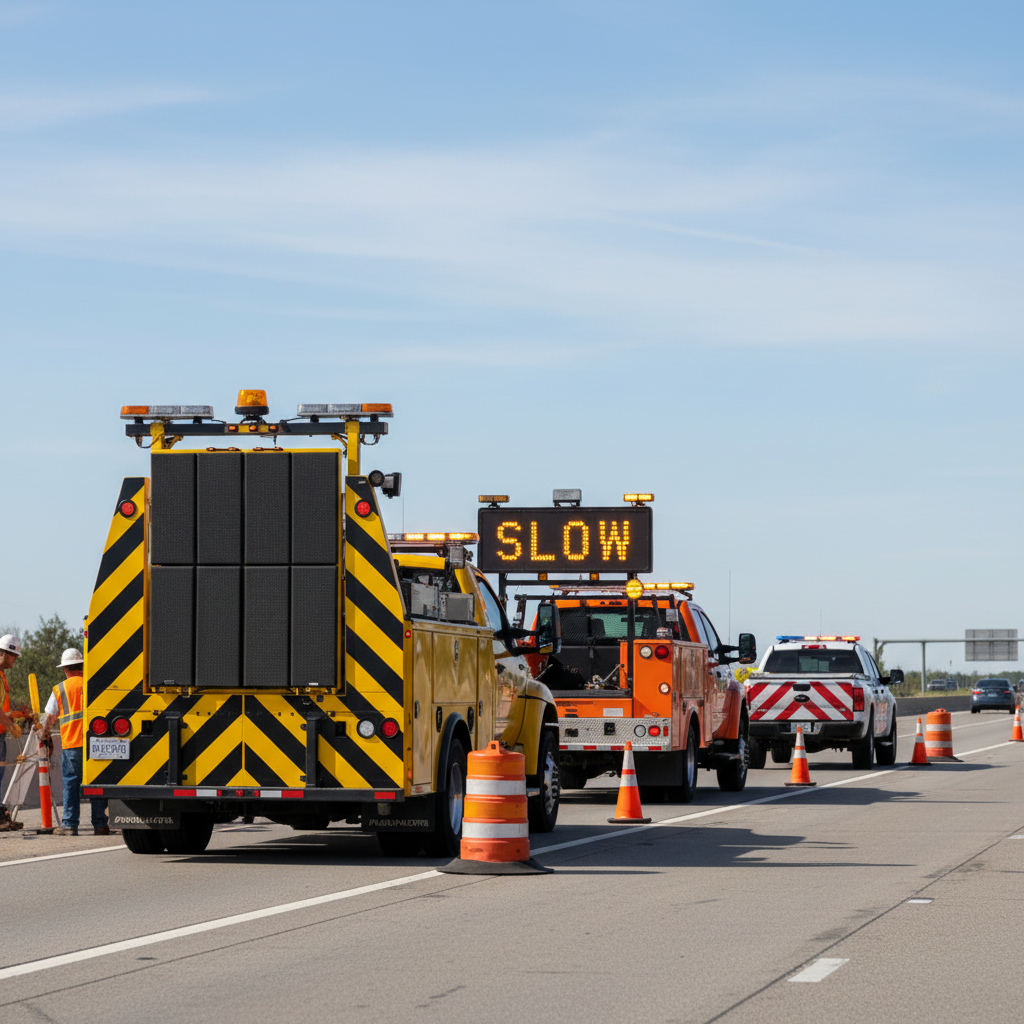
Before we dive into spreadsheets, let’s make sure we’re comparing apples to apples. TMA attenuator trucks aren’t just trucks with a crash cushion bolted to the back. You’re paying for:
The host truck: Typically, a heavy-duty chassis with specific GVWR, wheelbase, and frame-strength requirements. This alone costs $50,000 to $80,000, depending on specifications and market conditions.
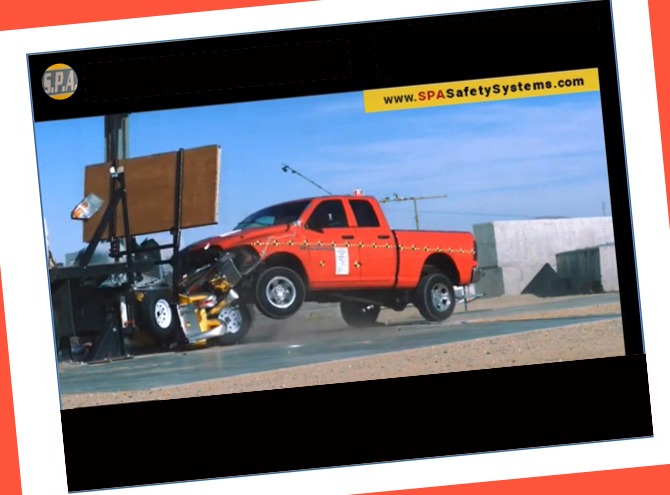
The attenuator unit: the actual cash cushion that has been MASH TL-3 tested and certified. Quality units range from $35,000 to $60,000, depending on the manufacturer and features. This isn’t where you want to cheap out—inferior attenuators mean non-compliance and potential liability.
Arrow board and lighting package: DOT-compliant arrow boards range from $3,000 to $8,000. Full lighting packages with LED warnings, strobes, and proper visibility equipment add another $2,000-$5,000.
Ballast systems: Proper weight distribution is critical for attenuator performance. Ballast systems and mounting hardware add $3,000 to $8,000.
Total purchase price for a complete, DOT-ready TMA truck ranges from $95,000 to $165,000, depending on specifications.
When you rent, you’re paying for all of this plus the rental company’s overhead, maintenance costs, insurance, and profit margin. When you buy, you’re responsible for maintenance, insurance, storage, and depreciation.
Which total cost of ownership approach works better for your operation?
The Real Cost of Renting TMA Attenuator Trucks
Let’s start with rental economics because this is usually the easier calculation—and where contractors often make mistakes.
Typical rental rates (2026 market):
- Daily rate: $250-$450
- Weekly rate: $1,200-$2,500
- Monthly rate: $3,500-$7,500
- Long-term monthly (6+ months): $3,000-$6,000
What’s included in rental rates:
Most reputable rental companies (like S.P.A. Safety Systems) include:
- Fully compliant, MASH-certified equipment
- All maintenance and repairs (except damage from misuse)
- Compliance documentation
- Equipment delivery and pickup
- Basic operator guidance
- Backup equipment if yours goes down
Hidden rental costs contractors miss:
Delivery and pickup fees: Many companies charge $200- $600 per trip. On a two-week rental, this adds $40-$100 per day to your effective rate.
Minimum rental periods: The “daily” rate often requires a 3-5-day minimum. A two-day project might cost as much as a five-day project.
Seasonal availability: During peak season, you may have to wait days or weeks for equipment to become available. This can kill tight project schedules.
Rate increases mid-project: If your project runs long and you need to extend the rental, your negotiated rate might not apply to the extension.
The actual math on a typical rental:
Let’s say you need a TMA for a three-week highway resurfacing project. You negotiate a $1,800 weekly rate.
- Weekly rental: $1,800 × 3 weeks = $5,400
- Delivery/pickup: $400 each way = $800
- Insurance rider: $150/week × 3 = $450
- Total cost: $6,650
That’s $317 per day over 21 days. Not terrible for a one-off project, but multiply this across multiple projects and the numbers add up fast.
The Real Cost of Buying TMA Attenuator Trucks
Now let’s look at ownership economics, which get complicated quickly because you’re dealing with capital costs, depreciation, maintenance, and opportunity costs.
Upfront capital requirement:
Purchase price: $125,000 (we’ll use a mid-range, fully equipped unit as our baseline) Cash purchase option: $125,000 upfront (no interest, but capital is tied up)
Ongoing ownership costs:
Insurance: Commercial auto insurance for a TMA truck ranges from $3,000 to $6,000 annually, depending on coverage limits, driving record, and state. Figure $4,000/year average.
Registration and licensing fees: $500- $1,500 annually, depending on the state and weight class.
Storage: If you don’t have secure storage, you’ll pay $100-$300 per month ($1,200-$3,600/year). TMAs need protected storage—leaving them outside accelerates deterioration.
Post-impact costs: If your TMA gets hit (which is what it’s designed to do), you’re looking at:
- Minor impact: $5,000-$15,000 in repairs
- Major impact: $20,000-$50,000+ or total replacement
- Downtime while under repair: Lost revenue from unavailable equipment
Depreciation: Heavy equipment depreciates significantly:
- Year 1: 25-30% ($31,250-$37,500)
- Years 2-5: 10-15% annually
- After 5 years, expect the truck to be worth $45,000-$55,000 (40-45% of purchase price)
First-year total cost of ownership:
- Purchase price (financed): $25,000 down + ($1,980 × 12) = $48,760
- Insurance: $4,000
- Registration: $1,000
- Storage: $2,400
- Maintenance: $10,200
- Total first-year cost: $66,360
Subsequent years (2-5):
- Loan payment: $23,760 annually
- Insurance: $4,000
- Registration: $1,000
- Storage: $2,400
- Maintenance: $10,200
- Annual ongoing cost: $41,360
Five-year total cost of ownership:
$66,360 + ($41,360 × 4) = $231,800
But wait—you have an asset worth approximately $50,000 after five years.
Net five-year cost: $181,800 ($36,360 per year average)
Tax Considerations That Change the Math
Now, let’s discuss something that significantly affects the real cost: tax treatment.
Section 179 deduction:
Under current tax law (2026), you may deduct the full purchase price of qualifying equipment in the year of purchase, up to $1,220,000 in total.
What this means: If you buy a $125,000 TMA truck, you might be able to deduct the full $125,000 from taxable income in year one.
At a 25% effective tax rate: $125,000 × 0.25 = $31,250 tax savings
This effectively reduces your net purchase price from $125,000 to $93,750—a significant difference.
Bonus depreciation:
Alternatively, 100% bonus depreciation may apply, allowing an immediate write-off of the full cost (though it has been phased down in recent years).
Rental expense deduction:
TMA truck rental costs are fully deductible as operating expenses. If you spend $24,000 on rentals, you deduct $24,000.
At 25% tax rate: $24,000 × 0.25 = $6,000 tax savings
Net rental cost: $18,000
The tax-adjusted comparison:
Ownership annual cost: $36,360
Less first-year Section 179 benefit: $31,250 (one-time)
Effective first-year cost: $5,110
Rental annual cost (6 months): $24,000
Less tax deduction: $6,000
Net rental cost: $18,000
Even with significant tax benefits, ownership only makes sense if utilization is high enough.
Important caveat: Tax situations vary dramatically. These are simplified examples. Consult with your CPA about your specific situation, especially regarding:
- Whether you have sufficient taxable income to utilize deductions
- Alternative Minimum Tax implications
- State tax considerations
- Cash flow timing of deductions vs. expenses
The Hidden Costs Everyone Forgets
Whether you rent or buy, some costs don’t show up on quotes but definitely show up in your bottom line.
Downtime costs:
Owned equipment: When your TMA is down for maintenance or repairs, you’re either pulling workers off projects (lost revenue) or renting backup equipment anyway (double cost)—average downtime: 10-15 days annually for routine maintenance plus any emergency repairs.
Lost revenue from downtime: If your daily project revenue is $5,000-$10,000, two weeks of downtime costs $50,000-$100,000.
Rental equipment: If rental equipment fails, it’s the rental company’s problem. They provide backup equipment. Your downtime: minimal.
Operator training costs:
TMAs require trained operators. Training costs $400-$800 per person and should be refreshed annually.
This applies whether you rent or own, but owned equipment requires more trained operators (you can’t just assign anyone).
Project mobilization costs:
Owned equipment: You need someone to transport the TMA to the job site. If it’s across state lines or hours away, this includes labor costs, fuel, and equipment wear.
Rental equipment: Often included in delivery fees, or at least factored into rental rates.
Opportunity cost of capital:
If you put $125,000 into a TMA truck, that’s $125,000 you can’t invest elsewhere. If you could achieve an 8% return on that capital invested in business growth (e.g., more profitable equipment, additional crews), the opportunity cost is $10,000 annually.
This doesn’t show up on any invoice, but it’s real money not earned.
Insurance complexity:
Owned equipment: You need to ensure proper coverage levels, including:
- Collision and comprehensive
- Liability (high limits for work zone equipment)
- Lost equipment coverage
- Sometimes, it’s separate commercial inland marine policies
Rental equipment: Your general liability policy typically covers rental equipment, though you may add a rider. Much simpler.
Resale hassles:
When you eventually sell owned equipment, you’re dealing with:
- Finding buyers (could take months)
- Negotiating prices (buyers know you’re motivated)
- Paperwork and transfer
- Lost time managing the sale
Equipment doesn’t sell itself. Factor in 20-40 hours of management time to sell a used TMA, worth $2,000-$4,000 in opportunity cost.
When Renting Makes More Sense (Even for Large Contractors)
There are scenarios where even large contractors with high utilization should rent TMA Attenuator Trucks rather than buy:
Market testing:
You’re entering highway work for the first time or expanding into new markets. Rent for the first year to validate demand before committing capital.
Project-specific requirements:
A single large project requires 5 TMA or more over 6 months, but you typically need only 2. Rent the additional 3 rather than buying equipment you won’t use after project completion.
Cash flow constraints:
Your capital is better deployed elsewhere (bonding capacity for larger projects, equipment you’ll use more frequently, hiring key personnel).
Maintenance capacity limitations:
You lack skilled mechanics and service infrastructure for TMAs.
Geographic spread:
You have projects across multiple states. Renting regionally is cheaper than transporting owned equipment across the country.
Seasonal operations:
Your highway work is purely seasonal (6 months or less). Owning equipment that sits unused half the year rarely makes sense.
Testing before buying:
Rent for 6-12 months to validate utilization before committing to purchase. Think of it as a paid trial period.
When Buying Makes More Sense (Even for Small Contractors)
Conversely, there are scenarios where even smaller contractors should consider buying trucks:
Consistent long-term contracts:
You have multi-year DOT contracts guaranteeing consistent work. The revenue predictability justifies the capital commitment.
Competitive advantage:
In your market, owned equipment gives you a bidding advantage. You can price more competitively without rental costs.
Rental availability issues:
Your market has limited rental options or high demand during peak season. Owned equipment ensures availability.
Additional revenue opportunities:
You can rent your TMA to other contractors during downtime, creating a revenue stream that offsets ownership costs.
Expansion strategy:
You’re deliberately growing your highway work. Buying signals commitment and capability to DOT clients and creates capacity for growth.
Partnership or cooperative ownership:
You partner with 2-3 other contractors to share ownership costs. Each uses it during their peak season, spreading costs across higher utilization.
Tax situation:
Your tax situation makes Section 179 or bonus depreciation especially valuable. Sometimes tax benefits tip the scales toward purchase.
Strong balance sheet:
Your bonding company or lenders value owned equipment on your balance sheet. The asset strengthens your financial position for bidding on larger projects.
The Hybrid Strategy: Best of Both Worlds
Here’s what sophisticated contractors often do: they own baseline equipment and rent for peaks and valleys.
Example: Regional paving company
They own:
- 2 TMA Attenuator Trucks for year-round baseline work
- These are always deployed on their largest, most profitable jobs
- Ownership cost: $72,720 annually
They rent:
- 1-3 additional TMAs during peak season (May-October)
- Short-term rentals for small projects
Total cost: $90,720 annually
Compare to:
- Owning 4 TMAs (their peak need): $145,440 annually
- Renting everything: $144,000 annually (3 trucks × 12 months × $4,000)
The hybrid approach saves them $53,000+ annually compared to owning everything, while ensuring equipment availability and maintaining some ownership benefits.
Advantages of a hybrid strategy:
- Lower capital requirements than full ownership
- Equipment is always available when needed
- Owned equipment for the most profitable work
- Rental flexibility for variable demand
- Backup options built in
- Can upgrade owned equipment over time
Working with S.P.A. Safety Systems: How We Help You Make the Right Decision
Here’s how we approach this question with contractors—because our goal isn’t just to sell you TMA Attenuator Trucks, it’s to help you make the right business decision.
We start with an honest assessment:
When you call us, we don’t immediately try to sell you a TMA. We ask questions:
- How much highway work do you do?
- How consistent is it?
- What’s your growth trajectory?
- Do you have maintenance capabilities?
- What’s your capital situation?
Based on your answers, we might recommend renting, even though selling would earn us more. Why? Because contractors who make good decisions come back. Contractors who make bad decisions (and blame their supplier) don’t.
Bottom Line: It’s About Your Business, Not the Equipment
Here’s what I want you to take away from all these numbers and scenarios:
The rent-vs-buy decision isn’t really about TMA attenuator trucks. It’s about your business strategy, growth plans, risk tolerance, and capital allocation.
There’s no universal right answer. A small contractor renting is just as smart as a large contractor buying—if the decision matches their business reality.
The contractors who succeed are the ones who:
- Understand their actual utilization (not their hoped-for utilization)
- Calculate real costs honestly (not just purchase price)
- Match decisions to their financial situation
- Revisit the decision as circumstances change
- Focus on total business profitability, not just equipment costs
The key is to make the decision based on your numbers, your situation, and your strategy, not on what your competitor does or what “real contractors” supposedly do.
Next steps:
- Calculate your actual TMA usage over the past 12 months (or projected usage if you’re starting)
- Get rental quotes for your specific needs
- Get purchase quotes for comparable equipment
- Run the break-even analysis using your real numbers
- Factor in your tax situation, capital availability, and strategic plans
- Make a decision based on math, not emotion
If you need help working through the numbers or understanding your options regarding renting or buying the TMA Attenuator Trucks, that’s exactly what S.P.A Safety is here for. Give us a call at 973-347-1101 or email austin@westchestermachinery.com.
We’ll help you determine the right solution for your operation—whether that’s renting from us, buying from us, or something in between.