
How Much Does a TMA Truck Actually Save You? The Real ROI Breakdown
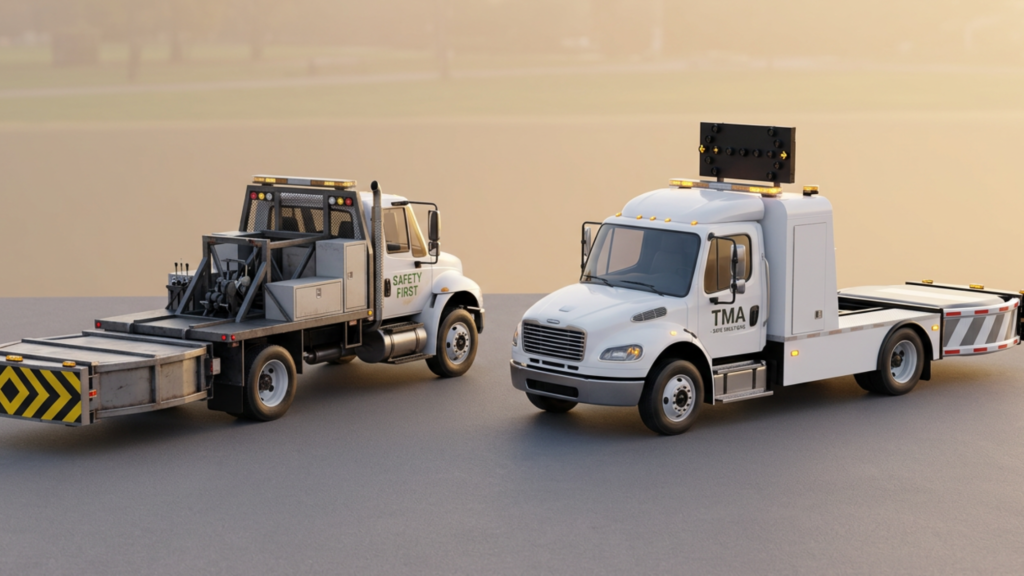
Real talk, running a highway contracting business in the US is incredibly stressful right now. You are constantly balancing tight margins with the massive responsibility of keeping your crew safe. Every single day, your team is out there on the asphalt. They are working inches away from cars flying by at 75 miles per hour. One distracted driver looking at their phone can change everything in a split second. That is the harsh reality we deal with in this industry. As a fleet owner, I know you are always looking at the bottom line. You want to secure the bag and keep your business profitable. But you also know safety isn’t just a buzzword. It is the literal foundation of a successful contracting company. Today, we are going to break down the actual return on investment of a TMA truck. We will look at the hard numbers and see why this equipment is a massive W for your business. UNDERSTANDING THE BASICS OF A TMA TRUCK Before we get into the math, let us make sure we are on the same page. TMA stands for Truck Mounted Attenuator. These are heavy-duty safety vehicles. They’re designed to take a massive hit so your crew doesn’t have to. You park these trucks at the start of your work zone. They act as a physical barrier between your workers and oncoming traffic. They feature a massive crash cushion on the back. This cushion absorbs the kinetic energy of a high-speed impact. The truck itself is weighted down to prevent rolling forward. They are covered in high-visibility reflective tape and strobe lights. At SPA Safety Systems, we live and breathe these trucks. We know exactly how they perform when things go wrong on the highway. THE UPFRONT COST VERSUS THE LONG-TERM VALUE Let us address the elephant in the room right away. Buying or renting a TMA truck is a significant investment. You might look at the price tag and think it is a major hit to your budget. But that is the wrong way to look at it. You have to view a TMA truck as an insurance policy that actually physically protects you. It is not just a line item on a spreadsheet. When you break down the cost over the vehicle’s lifespan, the math starts to make a lot of sense. The daily cost of operating a TMA truck is incredibly low compared to the alternative. Taking an L on a massive lawsuit because you did not have proper safety equipment will bankrupt your company. A TMA truck prevents that completely. HOW TMA TRUCKS SLASH YOUR INSURANCE PREMIUMS One of the highest hidden costs in highway contracting is insurance. Your general liability and workers’ compensation premiums are probably through the roof. Insurance companies base their rates on risk. Highway work zones are basically the highest risk environment possible. When you tell your insurance provider that you use certified TMA trucks on every job, the vibe shifts entirely. They know you are actively mitigating risk. Providers often offer significant discounts for fleets using advanced safety gear. Fewer accidents mean fewer claims filed against your policy. A clean safety record keeps your premiums locked in at a lower rate. You avoid the massive rate hikes that follow a severe work zone incident. Over five years, the savings on your insurance premiums alone can literally pay for the entire truck. That is a major financial W. PROTECTING YOUR MOST VALUABLE ASSET Your crew is the heartbeat of your operation. Without your skilled workers, your business simply does not function. Finding reliable, hard-working people is tougher than ever. When you find a good crew, you have to do everything in your power to keep them safe. If a civilian car crashes into your work zone without a TMA truck present, the results are catastrophic. We are talking about severe injuries or worse. The medical costs, legal fees, and workers’ compensation payouts are astronomical. A single severe injury claim can easily exceed $1 million. A TMA truck absorbs that impact. The driver of the civilian car survives, and your crew goes home to their families. The ROI on saving a human life is infinite. SAVING YOUR EXPENSIVE CONSTRUCTION EQUIPMENT Let us talk about the other hardware on your job site. You probably have millions of dollars worth of equipment out there. Pavers, excavators, milling machines, and specialized utility trucks are not cheap. They are also incredibly difficult to replace quickly. If a distracted driver plows into your active work zone, they’ll hit whatever is in their path. Without a TMA truck blocking the lane, they will hit your expensive machinery. Replacing a damaged paver can take months due to supply chain issues. A wrecked excavator completely stops your project timeline. Repairing heavy machinery costs far more than renting a TMA. TMA trucks act as a shield for your entire operational fleet. By putting a TMA truck at the front of the line, you are protecting your capital investments. It is just smart business. DOWNTIME IS THE ULTIMATE ENEMY OF PROFIT In the contracting world, time is literally money. Every hour your crew sits idle, you bleed cash. When an accident happens in your work zone, everything stops. The police arrive, the road is shut down, and the investigation begins. If a civilian hits your unprotected crew or equipment, that job site might be shut down for days. You miss your deadlines and ruin your reputation with the state DOT. If a civilian hits your TMA truck, the situation is entirely different. The crash cushion does its job, the police take their report, and nobody gets hurt. You simply swap out the damaged TMA truck for a fresh one from SPA Safety Systems. Your crew gets right back to work, and your downtime is minimized. WINNING MORE BIDS WITH A FLAWLESS SAFETY RECORD To secure the biggest and best contracts, you need a flawless safety record. State and federal agencies do not play games with safety.
The Hidden Cost of Cheap TMA Trucks: Why Buying Used Could Bankrupt Your Company
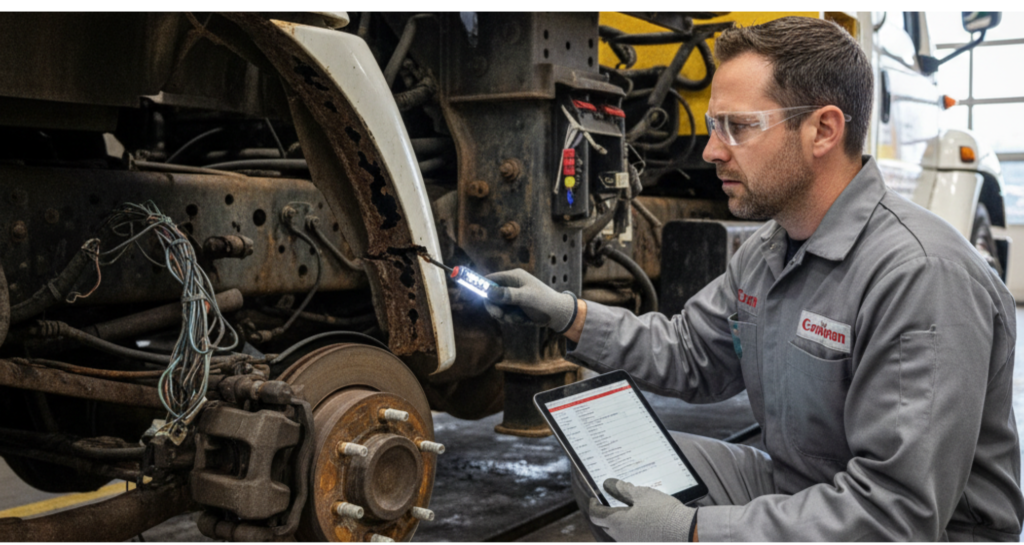
Every highway contractor knows the sticker shock that comes with pricing out a new TMA truck. When you’re looking at $150,000 or more for a brand-new attenuator truck from a reputable manufacturer like SPA Safety Systems, the temptation to save money with a used unit becomes almost irresistible. That classified ad for a “fully functional” TMA truck at $40,000 looks smart when money’s tight and you need equipment now for a new contract. Unaware of its consequences, you are tempted by the cheap TMA trucks. Here’s what nobody says until it’s too late: that bargain might be the worst decision your company ever makes. What separates a real deal from a total disaster are details most buyers never check. Contractors across the country learn this the hard way when their “great deal” becomes a liability threatening to sink their whole business. Why Used TMA Trucks Flood the Market Understanding why so many used attenuator trucks hit the market helps explain why prices seem so attractive. The MASH Compliance Crisis The biggest wave of cheap used TMA trucks came after the industry transitioned from NCHRP 350 standards to MASH (Manual for Assessing Safety Hardware) requirements. Contractors who bought equipment right before the switch found themselves holding trucks that could no longer be used on federal-aid projects. Rather than investing in upgrades or eating the total loss, many decided to offload the equipment to unsuspecting buyers who didn’t fully understand the compliance situation. State DOTs started removing older equipment around 2019 and 2020, when the FHWA made it clear they wouldn’t accept NCHRP 350 attenuators anymore. Overnight, thousands of trucks that had run perfectly fine became useless for work. Accident Damage and Hidden Repairs TMA trucks exist specifically to get hit. That’s their whole purpose. When they do their job correctly, the attenuator absorbs the impact and protects the workers downstream. But here’s what happens next in many companies. The truck gets sent to a local body shop or the company’s own maintenance crew, who repair the visible damage without properly recertifying the attenuator system. End of Lease Dumps Large rental companies cycle through TMA truck fleets on regular schedules. When equipment reaches a certain age or hour threshold, it gets sold off to make room for newer models. These trucks aren’t necessarily in bad shape, but multiple operators have beaten them up, with zero personal investment in proper maintenance. Renters tend to be harder on equipment than owners, running trucks past service intervals and ignoring minor problems that become major failures down the road. The rental company makes its money on the rental fees, not the resale value. Their goal is to quickly liquidate the used inventory to free up capital for new purchases. That means pricing these trucks aggressively low to move them fast. As a buyer, you’re getting a truck that’s been run hard by people who didn’t care about it, with maintenance records that may not tell the full story of what it’s been through. What to Look for When Considering Used Equipment If you’re absolutely determined to buy used, going in with eyes wide open and knowing what to check can mean the difference between a reasonable deal and a disaster. Verify Certification Status Directly with the Manufacturer Don’t trust the seller’s word about certification. Get the truck’s serial number and contact the manufacturer directly. SPA Safety Systems and other reputable manufacturers maintain lifetime records on every unit they build. They can tell you exactly what certification that specific truck holds, when it was built, and whether it’s ever been recertified after an impact. Demand Complete Maintenance Records A well-maintained truck should have a detailed service history showing regular oil changes, hydraulic system services, inspections, and repairs. The absence of maintenance records tells you the previous owner either didn’t maintain the truck properly or doesn’t want you to know what was done to it. Neither scenario is good. Get an Independent Inspection Hire a qualified mechanic who specializes in TMA trucks to inspect any unit you’re seriously considering. This costs a few hundred dollars and could save you tens of thousands. A good inspector will check the structural integrity of the attenuator, test all hydraulic and electrical systems, examine the chassis for frame damage, and review the overall condition of the truck. Understand the True Age and Usage Odometer readings don’t tell the whole story on a TMA truck. A truck with 50,000 miles that spent most of its life sitting stationary on highway shoulders might have more wear on its hydraulic systems and attenuator mechanisms than a truck with 100,000 miles that was driven between job sites but saw less actual deployment time. Ask how many impacts the attenuator has taken. A truck that’s been hit five times in three years is either working in a very dangerous environment or there’s something wrong with how it’s being deployed. Either way, that attenuator has taken a beating. Find out whether it was recertified after each impact. If the seller doesn’t know or can’t prove recertification happened, assume it didn’t. Why New Equipment from SPA Safety Systems Makes Financial Sense Buying new from an established manufacturer may look expensive up front, but it makes sense when you consider the full picture. Companies like SPA Safety Systems have been building TMA trucks since the industry began and literally set the standards that everyone else follows. Guaranteed Compliance and Certification When you buy new from SPA Safety Systems, you get equipment that’s fully MASH compliant with all the documentation you need to prove it: no questions, no worries, no inspector rejections. The truck comes with certification paperwork that meets all DOT requirements in the country. You can bid on any project with confidence, knowing your equipment meets the requirements. This peace of mind has real financial value. You’re not gambling on whether your equipment will be accepted; you’re not explaining to clients why your truck was rejected. At the same time, you are working and making money from day one
TMA Truck Winter Operations: Cold Weather Challenges & Solutions 2026

Winter transforms highway work zones into some of the most challenging environments for maintaining worker safety. When temperatures plummet, snow blankets roadways, and ice creates treacherous conditions, the TMA trucks that protect utility crews, highway maintenance workers, and emergency responders face their toughest operational tests. Understanding how cold weather affects these critical safety vehicles—and knowing proven solutions to overcome winter challenges—means the difference between reliable protection and dangerous equipment failures when workers need it most. TMA truck winter operations are quite different from those in the summer. For organizations operating across the northern United States, winter isn’t just another season—it’s the most demanding period for traffic management attenuator systems. Power companies respond to storm-related outages affecting thousands of customers. Water utilities handle frozen pipe emergencies. Highway departments work around the clock, clearing snow and treating icy roads. Emergency services see accident rates spike on slippery highways. All this critical work takes place under conditions that push equipment and operators to their limits. The reality is that TMA truck winter operations’ cold-weather performance directly impacts worker safety, operational efficiency, and your organization’s ability to respond when communities need you most. This comprehensive guide draws on decades of real-world experience helping organizations maintain reliable attenuator truck operations under the harshest winter conditions. How Cold Weather Attacks TMA Truck Systems Understanding exactly how winter conditions affect different truck systems helps you anticipate problems and take preventive action before equipment fails in the field. Cold weather is remarkably effective at revealing and exploiting weaknesses in vehicle systems. Hydraulic Systems Face Viscosity Challenges The hydraulic systems controlling TMA deployment encounter immediate problems when temperatures drop. Hydraulic fluid thickens dramatically in cold weather, transforming from free-flowing liquid into something closer to molasses. This viscosity change creates multiple operational problems that compound as temperatures fall further. Pumps strain to move thickened fluid through lines and valves, sometimes overheating from the excessive workload. Deployment and retraction cycles that take seconds in warm weather may require minutes when the fluid is cold. Control valves respond sluggishly or not at all when fluid won’t flow freely through small passages. Seals designed for normal-viscosity fluid may leak when forced to handle thick, cold oil under high pressure. The solution starts with proper fluid selection. Winter-grade hydraulic oils maintain workable viscosity across temperature ranges from well above freezing down to 30 or even 40 degrees below zero Fahrenheit. These specialized fluids use different base stocks and additive packages than standard hydraulic oils, engineered specifically for cold-weather performance. Organizations serious about winter readiness convert their entire TMA fleet to cold-weather hydraulic fluid before winter arrives rather than waiting for problems to develop. Battery Systems Struggle with Cold Temperatures Battery chemistry works against you in cold weather—the electrochemical reactions generating electrical current slow dramatically as the temperature drops. A battery that provides robust cranking power at 70 degrees Fahrenheit might deliver only half that capacity at 0 degrees. Meanwhile, engine oil thickens, requiring more cranking power to turn the engine over. Cold weather creates the perfect storm—batteries produce less power precisely when engines need more. This problem intensifies for TMA trucks because of their operational profile. These vehicles often idle for hours during work zone deployments, slowly draining batteries without the benefit of highway driving that would fully recharge them. Cold weather accelerates this drain while simultaneously reducing the battery’s ability to accept charge from the alternator. After a long cold-weather deployment, operators sometimes discover their truck won’t restart—a serious problem when you need to relocate equipment or respond to another emergency quickly. Proper battery maintenance becomes absolutely critical for winter operations. Load testing before winter identifies weak batteries that might survive summer but will fail under cold-weather stress. Replacement is far less expensive than field failures during emergency response. Battery terminals must be spotlessly clean and properly tightened—resistance at the connections increases when available power is already reduced by cold. Some organizations invest in battery blankets or heating systems that maintain battery temperature during cold weather. These systems draw power from shore power when trucks are parked or from the vehicle’s electrical system during operation, keeping batteries warm enough to deliver full capacity even in extreme cold. While adding complexity and cost, they virtually eliminate cold-weather starting failures. Impact Attenuators Respond Differently in Cold The energy-absorbing materials inside TMA units—typically aluminum honeycomb structures, foam cartridges, or composite materials—have been engineered and tested to perform across wide temperature ranges. However, material properties do change with temperature. Some materials become slightly more brittle in extreme cold, potentially affecting their crushability and impact energy absorption. Traction and Handling Become Critical Concerns TMA trucks often operate in locations with marginal traction, even in good weather—on narrow shoulders, steep grades, or in tight work zones. Add snow, ice, and the weight distribution changes that come with deploying a rear-mounted attenuator, and you have a recipe for positioning difficulties or even getting stuck. All-season tires adequate for three-quarters of the year may prove insufficient for serious winter operations. Dedicated winter tires with aggressive tread patterns and rubber compounds formulated for cold temperatures deliver dramatically better traction on snow and ice. The investment in seasonal tire changes pays dividends in reduced incidents, fewer stuck trucks requiring recovery, and improved operator confidence when positioning in challenging locations. Tire chains provide another level of traction insurance for truly extreme conditions. While not practical for routine use, chains enable operation in snow depths or ice conditions that would otherwise make work impossible. TMA trucks should carry properly sized chains along with operators who know how to install them quickly when conditions warrant. Tire pressure monitoring becomes more important in winter because pressure drops significantly as temperatures fall. A tire properly inflated at 70 degrees might be 15% under-inflated at 10 degrees, reducing traction, increasing fuel consumption, and causing uneven wear. Daily pressure checks and adjustments should be standard practice throughout winter. Comprehensive Pre-Winter Preparation Protocols A systematic approach to pre-winter preparation addresses known vulnerabilities and positions your TMA fleet for reliable performance
Smart TMA Truck Technology 2026: AI, Telematics & Safety Innovations for Utility Work Applications

The landscape of highway work zone safety is experiencing a dramatic transformation in 2026, driven by artificial intelligence, advanced telematics systems, and innovative safety technologies integrated into modern TMA trucks. In 2026, the smart TMA truck technology is making sure things go smoothly on the highway. For utility companies, emergency responders, and highway maintenance crews, these technological advances aren’t just improving safety—they’re fundamentally changing how organizations approach roadside work protection and operational efficiency. The Evolution of TMA Truck Technology Truck-mounted attenuators have come a long way from their origins as simple impact-absorbing barriers. Today’s smart TMA trucks represent the convergence of crash-protection engineering, real-time data analytics, artificial intelligence, and connected-vehicle technology. These systems work together to create work zones that are safer, more efficient, and significantly more cost-effective than ever before. The traditional approach to work zone protection relied heavily on manual setup, human judgment, and reactive safety measures. Workers would arrive at a site, deploy traffic control devices, position the attenuator truck, and hope that approaching drivers would notice the warnings and slow down appropriately. This system worked reasonably well but had significant limitations—human error, inconsistent positioning, delayed response to changing conditions, and limited visibility into actual traffic patterns and risks. Artificial Intelligence Transforming Work Zone Safety Artificial intelligence has emerged as perhaps the most significant advancement in TMA trucks’ utility work applications. Modern AI systems integrated into attenuator trucks perform functions that were impossible just a few years ago, fundamentally changing how work zones operate and how safe they can be. Intelligent Traffic Pattern Recognition AI-powered camera systems mounted on TMA trucks continuously analyze approaching traffic, identifying patterns that indicate potential danger. These systems can detect vehicles traveling at unsafe speeds, erratic driving behavior suggesting distracted or impaired drivers, vehicles drifting toward the work zone, and changes in traffic density that might require adjusted positioning. When the AI identifies a high-risk situation, it immediately alerts the operator through visual and audible warnings, providing critical seconds of advance notice that can prevent incidents. The sophistication of these systems is remarkable. They don’t just detect vehicles—they analyze driving behavior with nuance that rivals human perception. The AI can distinguish between a vehicle that’s simply changing lanes and one that’s veering dangerously toward the work zone due to driver inattention. It recognizes the difference between normal traffic flow slowdown and the sudden deceleration pattern that suggests an impending rear-end collision upstream from the work zone. Predictive Risk Assessment Beyond real-time monitoring, AI systems analyze historical data to predict when and where high-risk situations are most likely to occur. By examining factors like time of day, weather conditions, traffic volume, road geometry, and past incident patterns, these systems help fleet managers and safety coordinators make informed decisions about resource deployment and work scheduling. Automated Impact Response When impacts do occur, AI systems instantly analyze the collision severity, automatically notify emergency services if needed, document the incident with video and sensor data, and provide immediate guidance to operators on appropriate response actions. This automated response reduces confusion during high-stress situations and ensures that critical steps aren’t overlooked in the aftermath of an incident. The documentation capabilities alone represent enormous value for fleet managers. Instead of relying on operator recollection and limited information to understand what happened during an incident, organizations now have comprehensive data that show exactly what occurred, how the TMA performed, and whether any procedural improvements could prevent similar situations in the future. Telematics Revolutionizing Fleet Management Advanced telematics systems have become standard equipment on modern TMA trucks, providing fleet managers with unprecedented visibility into vehicle operations, equipment performance, and safety compliance. For organizations operating multiple attenuator trucks across large service territories, these systems transform fleet management from educated guesswork into data-driven decision making. Real-Time Location and Status Monitoring Fleet managers can now view the exact location and operational status of every TMA truck in their fleet through intuitive dashboard interfaces accessible from any device. These systems show which trucks are currently deployed at work zones, in transit, available for assignment, or requiring maintenance or repairs. This real-time visibility enables dynamic resource allocation, ensuring that the right equipment is always available where it’s needed most. The operational efficiency gains are substantial. When an emergency call comes in requiring TMA protection, dispatchers can immediately identify the nearest available truck and route it to the site, significantly reducing response times. When work at one site completes earlier than expected, managers can quickly reassign that truck to another location rather than having it sit idle. Comprehensive Performance Analytics Modern telematics systems capture detailed data about every aspect of TMA truck operations, including deployment frequency and duration, fuel consumption and efficiency, impact events and severity, maintenance needs and schedules, operator behavior and compliance, and equipment utilization rates. This data provides actionable insights to optimize operations, reduce costs, and improve safety across the entire fleet. Predictive Maintenance Capabilities Rather than following fixed maintenance schedules regardless of equipment condition, smart TMA trucks now continuously monitor component health and predict when maintenance will be needed based on actual usage patterns and wear indicators. Sensors track hydraulic pressure in attenuator systems, monitor structural integrity of impact-absorbing components, measure electrical system performance, and assess mechanical wear on moving parts. Connected Vehicle Technology and V2X Communication Vehicle-to-everything (V2X) communication represents the next frontier in work zone safety, and 2026 is seeing rapid adoption of these technologies in TMA trucks. V2X enables attenuator trucks to communicate directly with approaching vehicles, other work-zone equipment, traffic management systems, and infrastructure such as smart traffic signals. When equipped with V2V capability, TMA trucks broadcast their position and status to nearby vehicles also equipped with compatible systems. Approaching drivers receive automatic alerts about the work zone ahead, well before they can see it visually, giving them more time to slow down and merge safely. This technology is particularly valuable in conditions of reduced visibility—at night, in fog or rain, or on curves where work zones aren’t visible until drivers are dangerously close. As more passenger
Beyond Highways: TMA Trucks in Utility, Rail & Emergency Applications 2026
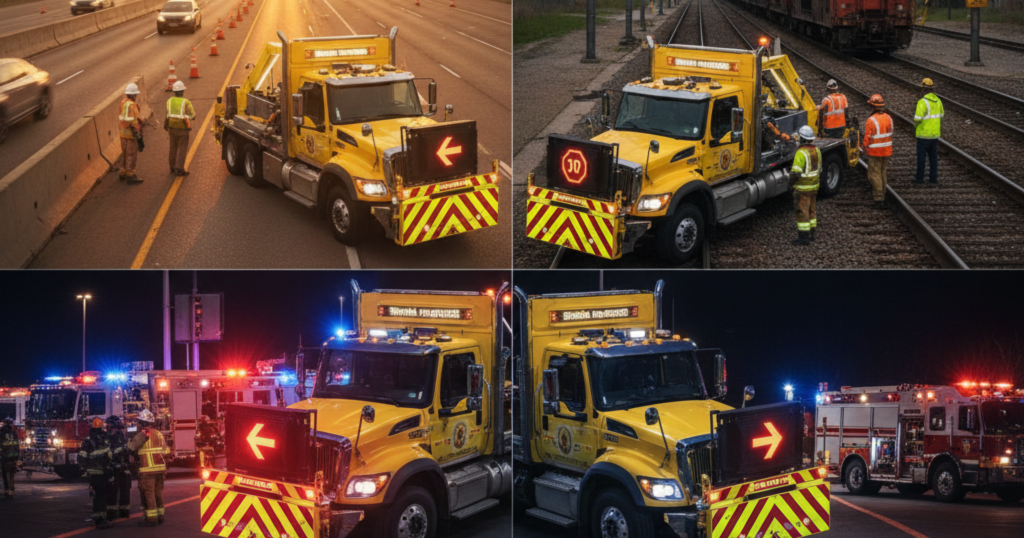
When most people think of TMA (Truck Mounted Attenuator) trucks, they picture orange-and-white vehicles protecting construction crews on Interstate highways. That mental image is accurate—but it’s only scratching the surface of what these versatile safety machines actually do. Walk through any utility yard in New Jersey, peek into a railroad maintenance facility in Pennsylvania, or observe an emergency response staging area in New York, and you’ll see TMA trucks hard at work in TMA trucks’ utility work applications that have nothing to do with traditional highway construction. These specialized vehicles protect workers in environments most people never see: beneath bridges during infrastructure inspections, alongside active railroad tracks during signal maintenance, inside industrial facilities during equipment installation, and at emergency scenes where every second counts. The reality is that TMA trucks’ utility work applications have expanded dramatically over the past decade. As workplace safety regulations have tightened and as organizations have recognized the life-saving value of mobile impact protection, TMA technology has migrated from highways into dozens of specialized applications. Utility companies depend on them for roadside pole work. Railroads can’t operate maintenance crews without them. Emergency responders deploy them at crash scenes and hazmat incidents. Industrial facilities use them during equipment moves and facility modifications. Let’s talk about this in detail here! Understanding TMA Technology Beyond Highway Applications Before diving into specific applications, let’s establish what makes TMA trucks valuable across such diverse work environments. The Core Protection Principle At its heart, a TMA truck provides mobile impact protection. The truck positions itself between workers and approaching traffic, absorbing collision energy if an errant vehicle strikes the work zone. The mounted attenuator system—essentially a sophisticated crash cushion—crushes in a controlled manner during impact, decelerating the striking vehicle while protecting both the work crew and the TMA truck occupants. This protection principle applies whether you’re on Interstate 287 or on a rural county road doing utility work. The physics of impact protection don’t change by location, which is precisely why TMA technology translates so effectively across diverse applications. Mobility as the Key Advantage Unlike stationary barriers or water-filled crash cushions, TMA trucks move with the work zone. When utility crews work their way down a street replacing poles, the TMA truck repositions every few hundred feet. When railroad maintenance moves from one signal location to the next, the hi-rail TMA truck travels right along the tracks. This mobility means continuous protection regardless of how frequently work locations change. For operations involving multiple short-duration work sites—which describes most utility, rail, and emergency applications—mobility is essential. Setting up and breaking down stationary barriers at each location would be impossibly time-consuming and expensive. Visibility and Warning Enhancement Beyond physical impact protection, TMA trucks provide crucial visibility enhancement. Their size, conspicuity striping, warning lights, and often-integrated arrow boards or message boards make work zones dramatically more visible to approaching traffic. This visibility component is particularly valuable in utility and emergency applications where work zones pop up unexpectedly in locations where motorists don’t anticipate encountering workers. The TMA truck’s presence draws the driver’s attention and prompts appropriate speed reduction and lane changes. Utility Company Applications Electric, gas, water, and telecommunications utilities represent one of the largest and fastest-growing segments of TMA truck deployment beyond traditional highway construction. Overhead Line Work and Pole Replacement Electric utilities replacing damaged poles or upgrading distribution lines work alongside active roadways constantly. These operations require bucket trucks, material staging, and work crews—all positioned in or adjacent to travel lanes. TMA trucks provide mobile protection as crews move from pole to pole. The attenuator truck positions downstream of the work site, protecting against errant vehicles while bucket truck operators focus on overhead work rather than watching for approaching traffic. Many utilities now require TMA protection for any pole work on roads with posted speeds above 35 mph or ADT (Average Daily Traffic) counts exceeding 2,000 vehicles. Underground Infrastructure Work Water utilities, sewer departments, and gas companies frequently excavate in roadways for main repairs, service line replacements, and infrastructure upgrades. These excavations create significant traffic hazards—open trenches, excavation equipment, material piles, and work crews all occupying travel lanes or shoulders. TMA trucks protect these work zones by positioning upstream of excavation sites. As work progresses along a street—common when replacing aging water mains or gas distribution lines—the TMA truck advances with the crew, maintaining consistent protection. For utilities, TMA trucks often provide better value than deploying and retrieving multiple crews to set up and take down traffic control devices at each location. One TMA truck can protect sequential work sites throughout a shift, with minimal setup and takedown time compared to traditional traffic control. Telecommunications and Fiber Optic Installation Telecommunications companies installing fiber optic networks work extensively in roadway right-of-ways. Boring equipment, splice vaults, and cable installation require protected work zones, often in locations with moderate-to-high traffic volumes. The mobile nature of fiber installation—progressing continuously along routes rather than remaining stationary for extended periods—makes TMA trucks an ideal protection solution. The truck advances as installation progresses, providing continuous protection without constant reconfiguration of traffic control. Many telecommunications contractors have added TMA trucks to their fleets specifically for fiber installation projects. The investment pays off through faster project completion (fewer hours spent on traffic control setup), improved safety records (fewer vehicle incursions into work zones), and better regulatory compliance. Emergency Utility Response When storms knock down power lines, or accidents damage gas mains, utilities must respond immediately—often in the dark, in bad weather, and amid chaotic traffic. These emergency responses can’t wait for an elaborate traffic control setup. TMA trucks deployed for emergency utility response provide immediate work zone protection. Crews arrive, position the TMA truck appropriately, and begin emergency repairs, confident that they have professional-grade impact protection between them and approaching traffic. Railroad and Hi-Rail Applications Railroad maintenance is a specialized TMA application that requires unique vehicle configurations—namely, hi-rail trucks capable of operating on both highways and railroad tracks. Track Maintenance Protection Railroad track maintenance crews replace rails, adjust switches, or repair
TMA Truck vs. Traditional Traffic Control: ROI Analysis for Highway Construction Companies

Last month, I sat across from a highway contractor in Newark who’d just lost a $2.3 million project because his work zone safety plan didn’t meet the new requirements. He’d been using traditional traffic control—cones, barrels, and flaggers—for 20 years. It had always worked until it didn’t. “Should’ve invested in a TMA truck three years ago,” he told me, staring at the rejection letter. “Would’ve paid for itself twice over by now.” That’s when the TMA truck ROI becomes a topic of discussion. He’s not alone. Across America, highway contractors are facing a critical decision: stick with traditional traffic control methods or invest in Truck Mounted Attenuator (TMA) systems. The upfront cost difference is substantial. But the real TMA truck ROI calculation tells a completely different story than most people expect. Let’s break down the actual numbers, because this decision affects your bottom line, your safety record, your insurance premiums, and your ability to win contracts in 2026. Understanding the True Cost of Traditional Traffic Control Traditional traffic control seems cheaper on paper. Rent some cones, hire a few flaggers, maybe add some barrels and signs. The daily costs look manageable. But that’s only part of the picture. What Traditional Setup Actually Costs A typical highway work zone using traditional methods requires substantial equipment and personnel. For a standard maintenance operation on a major highway, you’re looking at: Traffic cones: 100-200 units at $15-30 each for quality cones. That’s $3,000 to $ 6,000 just for cones. They need to be replaced every 18-24 months due to wear, sun damage, and vehicles running over them. Channelizing devices and barrels: Another $2,000- $ 4,000 for a proper setup. These get damaged constantly. Budget 30-40% replacement annually. Flagger vehicles: Two trucks with amber lights, $100-150 daily rental each if you don’t own them. Setup and breakdown time: 2-3 hours daily at full labor rates. This non-productive time costs $200- $ 400 per day. A conservative estimate for traditional traffic control on a standard highway project runs $1,200-2,000 per day once you factor in everything. That’s $30,000 to $ 50,000 for a one-month project. The Hidden Costs Nobody Calculates The real expenses of traditional traffic control are often hidden until problems arise, and contractors often overlook them. Liability exposure is massive. When a vehicle crashes into your work zone and injures someone, your traditional traffic control setup will be scrutinized. Lawsuits routinely seek millions. One serious incident can bankrupt a small contractor. Insurance premiums reflect this risk. Contractors using only traditional methods pay significantly higher premiums for general liability and auto coverage. We’re seeing differences of $15,000 to $ 30,000 annually for mid-sized operations. Project delays from traffic control issues cost serious money. Traditional setups take longer to deploy and adjust. Weather delays? You’re paying flaggers to stand around. Equipment failure? Everything stops while you replace a damaged barrel or sign. Worker injuries from vehicles entering work zones happen far too frequently with traditional control. Beyond the human cost, each incident means workers’ comp claims, OSHA investigations, potential fines, and project delays. DOT violations and fines are increasing. State DOTs are enforcing work zone safety standards more aggressively. Fines for non-compliant setups range from $500 to $ 5,000 per violation. Get cited multiple times, and you’ll face contract restrictions. Lost contract opportunities might be the highest hidden cost. More state DOTs and prime contractors now require TMA trucks for certain project types. If you don’t have one, you can’t bid. That’s revenue you’ll never capture. The Real Investment: TMA Truck Costs Breakdown Let’s talk actual numbers for investing in a TMA attenuator truck. Purchase Costs A new TMA truck typically runs $85,000-150,000, depending on specifications. That’s the complete truck—base vehicle, attenuator system, arrow board, and necessary equipment. Mid-range units around $100,000-120,000 represent the sweet spot for most contractors. You get reliable equipment that meets all MASH standards without unnecessary bells and whistles. Used TMA trucks offer another option. Quality used units run $45,000-75,000 depending on age, hours, and condition. SPA Safety Systems maintains an inventory of trucks for sale, including well-maintained used options. Financing Options Few contractors pay cash for TMA trucks. Financing spreads the cost and preserves capital for other needs. Traditional equipment loans: 4-7 year terms at 6-9% interest (2026 rates). A $100,000 truck financed over 5 years at 7% interest costs about $1,980 per month or $23,760 annually. Operating Costs Fuel: TMA trucks are working vehicles, not just transport. Figure 8-12 MPG depending on chassis and usage. At $3.50/gallon and 10,000 miles annually, that’s $2,900-4,400 yearly. Attenuator cartridge replacement: The crash cushion cartridge must be replaced after impacts. Costs vary by system, but budget $8,000-15,000 per cartridge. Most contractors go years between actual impact replacements. Insurance: Adding a TMA truck increases your insurance costs by $3,000-6,000 annually, but reductions in liability premiums offset this. Registration and compliance: Annual registration, DOT inspections, and compliance requirements range from $500 to $ 1,200, depending on your state. Rental Alternative Not ready to purchase? TMA truck rentals offer flexibility. Daily rental rates range from $250 to $ 400, depending on region, duration, and included equipment. For contractors who need TMA trucks occasionally, renting makes perfect sense. Use it for specific projects requiring attenuator protection, then return it when done. The crossover point is typically around 80-100 rental days annually. If you’re renting a TMA truck more than that, purchasing becomes more economical. Breaking Down TMA Truck ROI: The Real Numbers Now we get to what matters—actual return-on-investment calculations based on real contractor experiences. Direct Cost Savings Labor reduction is immediate and substantial. A TMA truck eliminates the need for multiple flaggers in most applications. Instead of two flaggers at $400-560 daily, you need one trained operator at $200-280 daily. That’s $200-280 saved every single working day. Over a year with 200 working days, that single change saves $40,000-56,000. Right there, you’ve covered 35-55% of your TMA truck purchase price in year one. Equipment costs drop significantly. While you’ll still need some cones and signs
State-by-State TMA Truck Requirements: Complete Guide for Multi-State Highway Contractor

Three weeks ago, a contractor from Pennsylvania called our facility in Flanders, completely frustrated. He’d just been kicked off a job site in Maryland because his TMA truck didn’t meet that state’s specific requirements. The equipment worked fine in Pennsylvania. He’d invested over $100,000 in the truck. But Maryland’s regulations were different enough that his setup wasn’t compliant. “Why doesn’t anyone publish this stuff in one place?” he asked. “I’ve been searching for days.” He’s right. TMA truck regulations vary significantly by state, and finding accurate, current information is surprisingly difficult. Most contractors learn the hard way—through rejected bids, job-site shutdowns, or costly citations. This guide changes that. Whether you’re operating in a single state or managing projects across multiple jurisdictions, understanding TMA truck regulations is essential for compliance, bidding accurately, and avoiding costly surprises. Understanding the Federal Foundation: MUTCD and MASH Standards Before diving into state-specific requirements, you need to understand the federal standards that form the foundation for all TMA truck regulations across the country. The Manual on Uniform Traffic Control Devices (MUTCD) The Federal Highway Administration publishes the MUTCD and provides national standards for all traffic control devices used on streets, highways, and bikeways. Every state must substantially conform to the MUTCD, though states can add their own supplements and modifications. For work zones, the MUTCD specifies when traffic control is required, which devices must be used, and how they should be deployed. Section 6F specifically addresses temporary traffic control zones and includes provisions for truck-mounted attenuators. The current MUTCD (11th Edition as of 2026) requires positive protection devices, such as TMAs, in certain high-speed, high-volume situations. However, the MUTCD itself doesn’t specify exact speed thresholds or mandatory usage—it provides guidance that states interpret and enforce through their own regulations. Manual for Assessing Safety Hardware (MASH) MASH is the standard that all roadside safety hardware must meet, including crash cushions and truck-mounted attenuators. It replaced the older NCHRP Report 350 standards. For TMA trucks, MASH Test Level 3 (TL-3) is the standard requirement across virtually all states. This means the attenuator system must successfully redirect or safely stop a vehicle in crash testing at specified speeds and angles. Your TMA attenuator truck must have a valid MASH TL-3 certification. This isn’t negotiable—non-compliant attenuators won’t be accepted on any federally funded project and will be rejected by most state DOTs regardless of funding source. The Regional Approach: How States Cluster on TMA Requirements While each state has unique TMA truck regulations, we can group them into regional patterns to make the landscape easier to understand. Northeast Corridor States (High Regulation) States including New York, New Jersey, Pennsylvania, Connecticut, Massachusetts, Rhode Island, Maryland, Delaware, and the District of Columbia tend to have the most stringent TMA requirements. Common characteristics: TMA is required for most highway work zones above 45 mph Strict enforcement with regular inspections Detailed deployment specifications in state supplements Higher citation amounts for non-compliance Many require additional safety features beyond basic MASH compliance Mid-Atlantic and Southeast States (Moderate to High) Virginia, North Carolina, South Carolina, Georgia, and Florida have comprehensive TMA regulations, but with slightly more flexibility than the Northeast states. These states see high traffic volumes, especially in urban corridors, but have longer rural stretches where requirements may be relaxed. Florida deserves special mention as having some of the most detailed TMA regulations in the country. The Florida DOT publishes extensive guidance on attenuator deployment, includes TMA requirements in most highway contracts, and actively enforces compliance. Mountain West (Moderate) Montana, Wyoming, Colorado, Utah, Idaho, and Nevada typically require TMAs on interstate highways and major state routes but allow more contractor judgment on secondary roads. Challenging terrain and weather conditions influence regulations in these states. West Coast (High Regulation) California, Oregon, and Washington have comprehensive TMA requirements similar to those of the Northeast states. California, in particular, has extensive regulations and pioneered many now-standard TMA practices. Southern Tier (Variable to Moderate) Texas, Oklahoma, Arkansas, Louisiana, Mississippi, Alabama, Tennessee, and Kentucky show moderate requirements with significant local variation. Texas, due to its size and the scale of its highway system, has developed comprehensive standards that influence neighboring states. Key Variations in State TMA Truck Regulations Understanding what specifically differs between states helps contractors prepare for multi-state operations. Here are the major variation points: Speed Threshold Requirements The speed at which TMA protection becomes mandatory varies significantly: 45 mph threshold: Most common, used by approximately 60% of states for highway work 50 mph threshold: Used by several Midwest and Southern states 55 mph threshold: A few states only mandate TMAs on interstate-level facilities Traffic Volume Considerations Certain states incorporate Average Daily Traffic (ADT) counts into their TMA requirements: High-volume thresholds: TMAs required when ADT exceeds 10,000-20,000 vehicles per day Combined factors: Speed AND volume are both considered in determining requirements Time-of-day variations: Some jurisdictions require TMAs during peak hours but not overnight Certification and Training Requirements States vary widely on operator qualifications: ATSSA certification required: Several states mandate Traffic Control Technician or similar ATSSA credentials State-specific training: Some states require their own training programs beyond national certifications Contractor certification: Who can operate TMAs—any employee or only specifically certified individuals? Refresher requirements: Annual, biennial, or no mandated recertification Equipment Specifications Beyond MASH While MASH TL-3 compliance is universal, states add various requirements: Arrow board specifications: Size, brightness, and message requirements Shadow vehicle requirements: Whether a separate shadow vehicle is needed in addition to the TMA truck Visibility enhancements: Additional lighting, striping, or signage beyond basic equipment Northeast State Deep Dive Let’s examine specific requirements in the heavily regulated Northeast region, where many contractors operate across multiple state lines. New York NYSDOT requires TMAs on all limited-access highways and recommends them on other facilities with posted speeds above 45 mph. Their Work Zone Traffic Control handbook provides detailed guidance on deployment. Key requirements: MASH TL-3 certified attenuators are mandatory The operator must complete the approved TMA training Specific positioning: TMA must be upstream of the workspace with appropriate warning
TMA Truck Requirements by State: 2026 Compliance Guide for Highway Contractors

If you’re bidding on highway projects this year, you already know the first question DOT inspectors ask: “Is your TMA truck compliant?” Get it wrong, and you’re not just facing fines—you could be pulled off the job entirely, losing thousands in contracts and credibility. The challenge? TMA truck requirements aren’t one-size-fits-all. What passes in Texas might get you shut down in California. MASH standards replaced NCHRP 350 years ago, yet confusion persists across job sites. And with 2026 bringing updated enforcement across multiple states, now’s the time to get your compliance house in order. Let’s cut through the confusion and get you the straight answers you need regarding TMA truck requirements. What Exactly is a TMA Truck? (And Why DOTs Care So Much) A Truck-Mounted Attenuator (TMA) is a crash cushion mounted on the back of a truck. When a vehicle strikes it, the attenuator absorbs impact energy, protecting both workers in the work zone and the occupants of the striking vehicle. Think of it as a mobile barrier that sacrifices itself to save lives. Why are state DOT work zone safety regulations so strict about these trucks? The statistics are brutal. According to FHWA data, over 100 workers die in work zone crashes every year, with hundreds more seriously injured. TMAs have proven to reduce fatality rates by up to 70% in mobile operations. That’s why every state DOT takes compliance seriously, and why you can’t afford to treat this as a paperwork exercise. MASH vs NCHRP 350: What Changed and Why It Matters Here’s where many contractors get tripped up. The old standard was NCHRP 350 (National Cooperative Highway Research Program Report 350). It was replaced by MASH (Manual for Assessing Safety Hardware) starting in 2011, with a transition period that technically ended years ago. But here’s the reality: some older equipment still bears NCHRP 350 certification, and contractors ask me regularly whether it’s still acceptable. Short answer: It depends on the state, but most now require full MASH compliance. MASH TMA certification requirements are more stringent than the old standard. The crash testing is more realistic—higher impact speeds, different vehicle types, and more demanding angles. MASH Test Level 3 (TL-3) is the standard for most highway applications, requiring the attenuator to handle: Pickup trucks at 62 mph Small cars at 62 mph Various impact angles up to 25 degrees The equipment either passes these tests or it doesn’t. There’s no gray area when it comes to compliance with attenuator truck standards. Federal Baseline: What FHWA Requires Nationwide Before we dive into state-specific TMA truck requirements, let’s establish the federal baseline that applies everywhere. The Federal Highway Administration requires that all work zone traffic control devices used on federal-aid highways meet MASH standards. This is based on the MUTCD (Manual on Uniform Traffic Control Devices) and associated federal regulations. At a minimum, your TMA truck must: Have MASH TL-3 certification (the actual attenuator unit) Display proper warning lights and markings It should be operated according to the manufacturer’s specifications Have documentation available on-site Undergo regular inspections and maintenance The host truck also matters. You can’t just bolt a MASH-certified attenuator onto any old truck and call it compliant. The vehicle must meet the attenuator manufacturer’s specifications for: Gross Vehicle Weight Rating (GVWR) Wheelbase length Frame strength Ballast requirements State-by-State TMA Requirements: The Details That Matter Now let’s get into the specifics. I’ll cover the states with the most highway work and the strictest requirements, plus note regional patterns that might affect your operations. Northeast Region New York: The NYSDOT requires MASH TL-3 certification and strictly enforces host-vehicle specifications. All TMAs on state projects must be on the approved products list (APL). Night work requires additional lighting beyond federal minimums. Expect inspections—NYSDOT doesn’t mess around. New Jersey: New Jersey DOT follows MUTCD requirements and requires MASH certification. Here at S.P.A. Safety Systems in Flanders, NJ, we see firsthand how seriously NJDOT takes compliance. They require quarterly maintenance documentation and will conduct spot inspections. The state also mandates specific arrow board configurations that must be used with your TMA. Pennsylvania: PennDOT has one of the more comprehensive TMA programs in the Northeast. They require MASH TL-3 and mandate specific operator training. You can’t just hand the keys to any worker—operators need documented training on deployment procedures and emergency protocols. PennDOT also requires annual inspections with documentation submitted to the district office. Massachusetts: MassDOT closely follows federal guidelines but adds requirements for high-visibility striping beyond the MUTCD minimums. They’re also strict about arrow board synchronization with the TMA unit. Mid-Atlantic Region Virginia: VDOT requires MASH certification and has specific guidelines for rural vs. urban deployments. They also mandate GPS tracking on TMA trucks for certain projects, which helps with compliance documentation but requires additional equipment. Southeast Region Florida: FDOT has extensive TMA requirements, especially for interstate work. They require MASH TL-3 certification, maintain a qualified products list, and mandate specific operator training. Florida also has detailed requirements for hurricane-season operations—TMAs must be secured or removed during specified weather events. Georgia: GDOT adheres to MASH standards and requires semiannual inspections. They’re strict about maintenance documentation and will disqualify equipment that shows excessive wear. North Carolina: NCDOT requires MASH TL-3 and maintains an approved products list. They’ve been aggressive about phasing out older NCHRP 350 equipment—if it’s not MASH certified, don’t bring it to an NCDOT project. Texas and the South Central Texas: TxDOT has some of the most detailed temporary traffic control requirements in the country. They require MASH TL-3 certification, maintain a strict approved products list, and mandate specific operator training. Texas also requires detailed traffic control plans (TCPs) that specify TMA placement for different scenarios. Here’s something many contractors miss: TxDOT has specific requirements for shadow vehicles (the truck carrying the TMA) regarding weight, braking systems, and even tire specifications. Read the special provisions carefully—Texas projects often have district-specific requirements beyond the statewide standards. Louisiana: LADOTD requires MASH certification and has specific requirements for work in high-traffic corridors. They’re
The Silent Bodyguard on the Shoulder: How TMA Trucks Reduce Roadside Risks
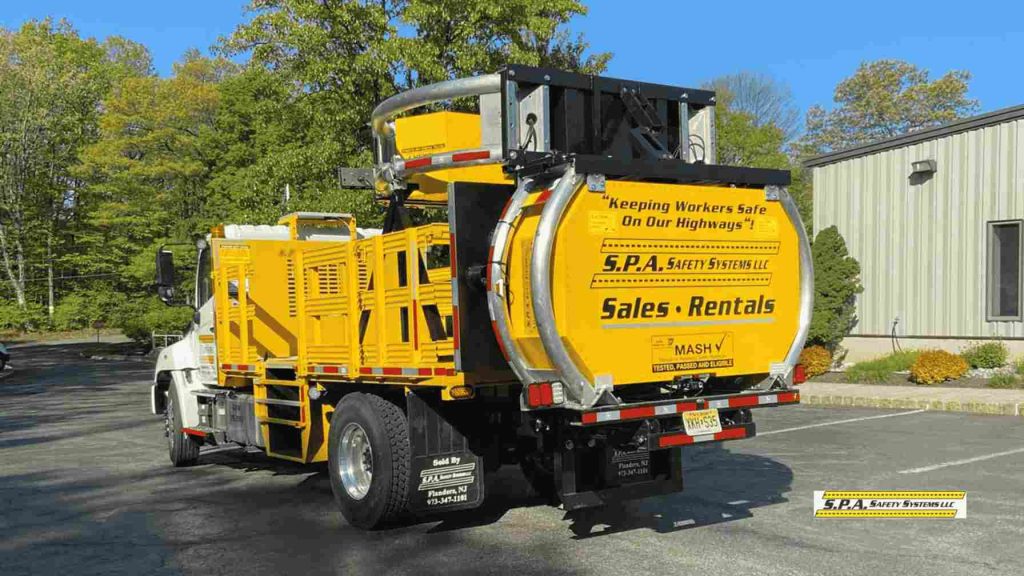
Highways are among the busiest—and most hazardous—work environments in the world. Every day, road crews face speeding traffic, distracted drivers, and unpredictable conditions that put both workers and motorists at risk. That’s where TMA trucks reduce roadside risks, acting as a silent bodyguard on the shoulder. These specialized vehicles, equipped with crash cushions and warning systems, not only protect construction zones—they also save lives. By absorbing impact and signaling drivers to slow down, TMA trucks have become an essential part of modern traffic management and highway safety. 1. Hook & Human Story It’s 2:13 a.m. on a Tuesday. A five-person maintenance crew crouches over fresh asphalt on I-75, their cones forming a fragile orange ribbon between them and the dark river of traffic. In the distance, a single pair of headlights drifts, weaving—then crossing the solid white line at 68 mph. The flagger can only shout. Steel meets aluminum with a thunder-crack. The intruding pickup erupts in sparks and accordion folds, but the workers feel only a gust of air. Between them and catastrophe sat a truck-mounted attenuator (TMA)—an unblinking guardian that accepted the impact, crumpled by design, and transformed what could have been five funerals into a tow-away fender-bender. Stories like this play out more often than most travelers realize. This article peels back the curtain on how TMA trucks mitigate roadside risks, why every modern traffic control plan requires them, and what the numbers—both human and financial—reveal. 2. What Are TMA Trucks? A TMA truck is two machines married into one purpose: 1. The host vehicle Medium or heavy-duty chassis (16,000 – 20,000 lb). Flashing arrow or message board, high-intensity strobes, brake upgrades. 2. The truck-mounted attenuator A collapsible cartridge of aluminum honeycomb, steel struts, or proprietary energy-absorbing cells bolted to the rear. Hydraulics raise or lower the cushion for travel or deployment. Think of it as a crash-tested shield on wheels—one that’s been smashed in controlled labs dozens of times so crews won’t be during the one uncontrolled moment that truly matters. The Federal Highway Administration classes TMAs as “impact protection vehicles,” and most units now meet MASH TL-3 criteria—meaning they safely arrest a 5,000 lb pickup striking at 62 mph.¹ 3. The Science of Impact Protection Physics is merciless: Impact energy rises with the square of speed. A 4,000 lb car at 60 mph carries ~480,000 ft-lb of kinetic energy—about the punch of 200 sticks of dynamite. Rigid obstacles return that energy to occupants in milliseconds; bodies can tolerate roughly 20–25 G before fatal trauma. TMAs stretch the stopping distance to lower that “G-whip.” How it works: Progressive Crush – Honeycomb cells collapse sequentially, much like crumpling one soda can at a time instead of the whole six-pack at once. Momentum Transfer – The heavy host truck absorbs residual force and rolls forward slightly, further bleeding energy. Occupant Survival Zone – Deceleration inside the striking vehicle is slowed to <20 G and <40 ft/s delta-V—thresholds shown by NHTSA to keep seat-belted drivers alive with survivable injuries.² MASH tests film high-speed dummy motion; neck and chest loads plummet by 70–80 % when a TMA replaces a rigid trailer, proving the life-versus-death delta. 4. Why Roadside Risks Are Rising Traffic Volume Up – U.S. vehicle-miles traveled hit a record of 3.26 trillion in 2023.³ Distracted Driving Epidemic – 31 % of drivers admit to texting behind the wheel in the past month.⁴ Higher Operating Speeds – Posted limits have inched from 55 to 70+ mph on many corridors. The result: work-zone fatal crashes jumped 56 % from 2010 to 2022, outpacing overall roadway deaths.⁵ Behind every hard hat is someone’s spouse or child; every shift begins with the unspoken hope that all cones get picked up by the same hands that set them out. Highways, like restless beasts, strike without warning—TMAs stand as the trainer’s shield. 5. How TMA Trucks Reduce Risks Impact Absorption – The core mission. A 2020 Texas A&M study tracked 62 real-world TMA impacts, resulting in zero worker injuries and two minor injuries to motorists.⁶ Mobile Warning Beacon – High-mounted arrow boards and 360° strobes catch drivers’ eyes sooner than cones do, buying precious reaction time. Dynamic Buffer Zone – During moving operations (striping, sweeping), the TMA shadow vehicle maintains a 50–100 ft gap, expanding the safety envelope around slow equipment. Night-Work Illumination – LED scene lights on modern units turn blacktop into daylight, reducing slips, trips, and fall hazards for the crew. Psychological Brake – Motorists naturally lift off the gas when they see a large truck blocking a lane, softening approach speeds even when no crash occurs. Case in Point: Florida DOT After mandating one TMA per crew on limited-access highways in 2018, the FDOT recorded a 73% reduction in serious work-zone intrusions in the first two years. Insurance payouts to contractors fell by $8.6 million—a fiscal echo of lives not lost. 6. Beyond Safety: Economic and Legal Benefits Liability Shield – A single fatal work-zone crash can exceed $11.4 million in litigation and societal costs (USDOT VSL, 2024). Preventing even one pays for an entire state’s fleet of TMAs. Insurance Premium Leverage – Underwriters often grant 10–30 % discounts when certified attenuators are standard operating equipment. Regulatory Compliance – MUTCD Part 6 and OSHA 29 CFR 1926 reference impact protection vehicles for most lane closures >45 mph; non-use can trigger citations or project shutdowns. Schedule Resilience – Crews avoid days-long investigations and equipment loss after a serious crash, protecting critical-path timelines and contract incentives. 7. Real-World Examples & Success Stories of TMA Trucks Missouri, June 2023 – A drowsy box truck hit a stationary TMA at 64 mph. The driver walked away; the paving crew, 90 feet downstream, continued working. Damage: $32k. Savings: six uninjured workers. Queensland, AUS, 2021 – An autonomous “follower” TMA, shadowing a paint rig, took the hit from a sedan; because no one was in the cab, zero injuries occurred. Technology is now being exported to U.S. pilots. New Jersey Turnpike, 2019 – Winter pothole patrol
Buying vs Renting a Truck Mounted Attenuator in NJ: What’s Best for Your Project?

Introduction: The TMA Truck Decision – Buy or Rent? You’re a New Jersey contractor about to kick off a big road project. The DOT specs are precise: you need a truck-mounted attenuator (TMA) to keep your crew safe and your project compliant. But here’s the dilemma that keeps many project managers up at night: Should you buy a TMA truck—or rent one for the job? It’s a question with no one-size-fits-all answer. Your choice impacts your upfront costs, flexibility, risk, and even your reputation with DOT inspectors. As one local project manager put it: “We used to rent TMA trucks for every job. Now that we’re doing highway work year-round, owning made sense. But for short jobs, renting is a no-brainer.” This guide breaks down the financial, operational, and compliance implications of buying vs renting TMA truck NJ—helping you make the right decision for your New Jersey project. Financial Factors: Upfront Cost vs Long-Term Expense Buying a TMA Truck in NJ Upfront Cost: New MASH-compliant crash attenuator trucks typically cost between $120,000 and $200,000, depending on specifications and truck chassis. Financing/Leasing: Some suppliers offer leasing or financing, but you’ll still need a sizable down payment. Resale Value: Well-maintained units can be resold, but depreciation is a factor to consider. Renting a TMA Truck in NJ Rental Rates: Expect to pay $1,500–$2,500 per week or $5,500–$8,500 per month for NJ DOT-approved TMA trucks. No Upfront Investment: Rental lets you preserve cash for other project needs. All-Inclusive: Maintenance, inspections, and sometimes even 24/7 roadside service are bundled in. Cost Comparison Table Operational Considerations: Flexibility and Availability Buying Truck Mounted Attenuator: Pros & Cons Pros: Always available for your team—no waiting for rental trucks. Customizable to fit your specific needs (tool racks, lights, branding). Control over maintenance schedules and usage. Cons: Ties up capital and may sit idle between projects. You handle storage, insurance, and compliance paperwork. Renting Truck Mounted Attenuator: Pros & Cons Pros: Perfect for short-term or variable workloads. Scale up or down as projects demand. No need to worry about storage or off-season costs. Newest models and specs since rental fleets update frequently. Cons: May face limited availability during peak DOT season. Repeated rentals can add up over long periods; at some point, buying becomes more cost-effective. Real-World Example A small NJ paving contractor landed a six-week night job on I-78. They rented a TMA truck for a total of $6,800. “No headaches, no maintenance, and it went back when we were done.” For a firm running year-round projects, a large contractor said, “We own two TMAs—availability and control are worth it.” Compliance and Maintenance Responsibilities Buying You’re responsible for all DOT, NJ state, and MASH certification upkeep. Must keep up with MASH TL-3 or the latest standards. Maintenance, annual inspections, and repairs are on your dime. If regulations change, you may need to retrofit or replace equipment. Renting Compliance is the rental company’s job. (Ask for documentation—reputable providers will supply it.) Regular inspections, repairs, and upgrades are handled for you. Peace of mind: If there’s a breakdown, you get a replacement—fast. When Buying Truck Mounted Attenuator Makes Sense You run TMA trucks daily or on most projects year-round. You want control over customization, branding, or specific equipment features. Your business is growing, and the long-term project pipeline is strong. You have the capital (or financing) and can handle maintenance and storage. When Renting Truck Mounted Attenuator Is the Smarter Choice You have short-term, seasonal, or unpredictable project schedules. You want to avoid significant upfront costs and complex compliance paperwork. You need the latest DOT-approved crash attenuator trucks—without the risk of owning outdated equipment. You prefer having maintenance, repairs, and inspections bundled in. Conclusion + Next Steps There’s no “right” answer for every contractor. If you’re a large firm with steady highway work, buying a TMA truck in NJ can save money over time. For everyone else—especially those with variable workloads or tight budgets—renting offers unmatched flexibility, lower risk, and up-to-date compliance. Still unsure? Get a tailored quote for both options. Providers like SPA Safety Systems offer honest advice, whether you’re ready to purchase or need a short-term rental. The right choice is the one that fits your business and your budget and keeps your crew protected—shift after shift. FAQs: Buy vs Rent TMA Truck NJ 1. How do I calculate the break-even point for buying vs renting a TMA truck? Add your expected annual rental costs and compare them to the purchase price (plus yearly maintenance and depreciation). Many contractors find renting is cheaper unless they need a TMA for more than 8–10 months per year. 2. What are typical maintenance costs for an owned TMA truck? Budget $3,000–$7,000 per year for inspections, parts, and repairs—plus time spent on compliance paperwork. 3. Is rented equipment always DOT-approved and up-to-date? Reputable companies provide MASH TL-3 or better trucks and complete compliance records. Always request documentation before starting your job. 4. Can I lease a TMA truck as a middle ground? Yes—equipment leasing offers lower upfront costs and often includes maintenance, but be sure to check the contract for early-return fees or buyout terms. 5. What happens if my rented TMA truck breaks down? Quality rental partners will send a replacement quickly—often within hours—to keep your project on schedule. Ready to make the best choice for your next NJ project? Contact SPA Safety Systems for side-by-side pricing and expert guidance—no pressure, just practical help.