It was 2 a.m. on I-80, and the call came in. Our brand-new cone truck, the centerpiece of an overnight paving operation, was dead on the shoulder. A fifty-cent hydraulic fitting had failed, shutting down the conveyor and stranding a ten-man crew. The state police weren’t happy. The project manager was furious. We lost six hours of a critical closure window, all for a part I could hold in my palm. After 30 years with grease under my nails, I can tell you this: safety trucks don’t fail on a schedule. They fail when you need them most. That’s why basing your maintenance on the owner’s manual alone is a recipe for disaster. You need a plan built for the real world, and that starts with understanding proper safety truck service intervals.
Why Service Intervals Aren’t One-Size-Fits-All
The manual in your glove box is a starting point, written for “normal” operating conditions. But there is nothing normal about a work zone. The Federal Highway Administration (FHWA) has noted that work zone congestion, often caused by incidents such as equipment failures, is a major source of project delays and public frustration.
Your trucks live in a world of “severe duty.” Think about it:
- Extreme Heat: Idling for hours next to 300-degree asphalt.
- Constant Dust: Concrete, dirt, and milling debris clog filters and contaminate fluids.
- Stop-and-Go Abuse: Creeping through traffic puts immense strain on transmissions and brakes.
- High Engine Hours, Low Miles: The odometer lies. A truck that idles for 8 hours before driving 20 miles has put a full day’s wear on its engine, oil, and cooling system.
Your maintenance plan has to account for this abuse. Sticking to mileage-based intervals meant for over-the-road hauling will leave your fleet vulnerable.
Manufacturer vs. Real-World Intervals
The key is to shift your mindset from mileage to engine hours and calendar time. An engine hour meter is the single most honest piece of equipment on your truck. It tells you exactly how long that engine has been working, idling, and generating heat. For equipment without an hour meter, you have to track it by shifts or days. This is the foundation of a real-world safety truck maintenance schedule.
Recommended Safety Truck Service Intervals
Every truck in your fleet has different needs. A TMA truck and a bucket truck might share a chassis, but their mission-critical systems are worlds apart. Here’s a breakdown based on what I’ve seen work for two decades.
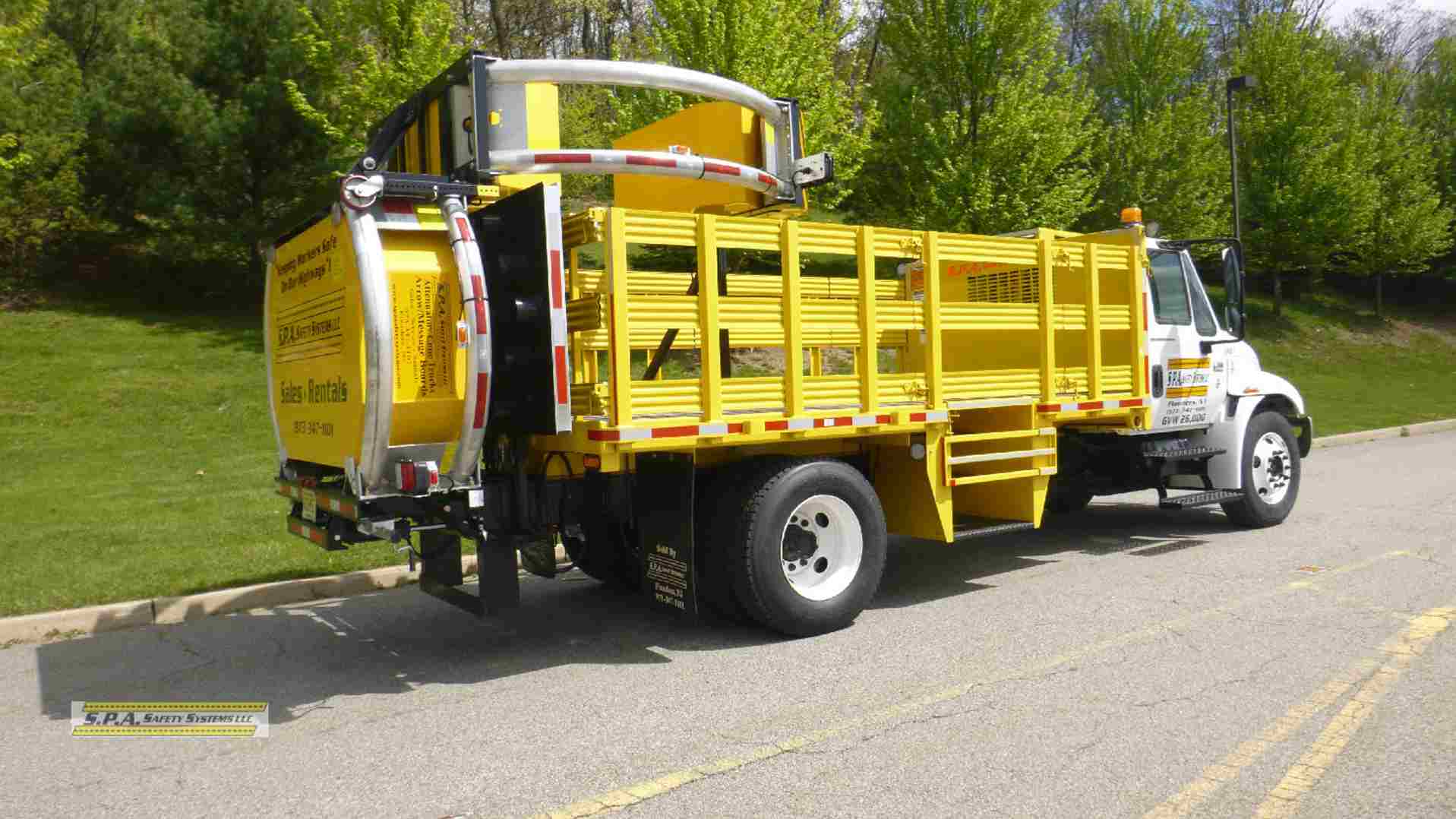
TMA Crash Trucks
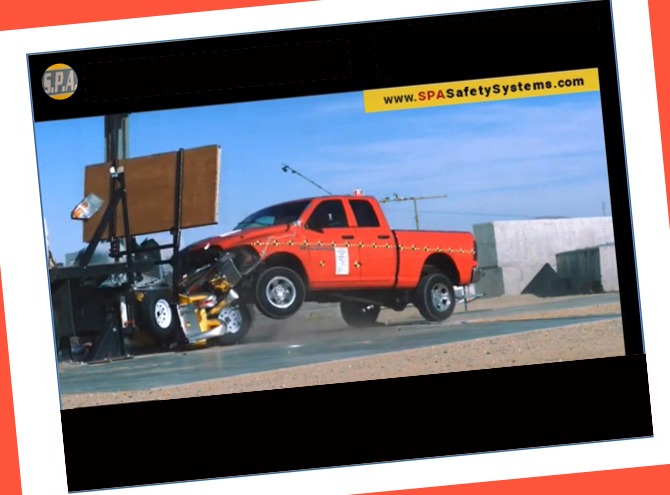
Your TMA is your crew’s bodyguard. Its maintenance is non-negotiable.
- Engine & Chassis: Follow a severe-duty schedule. Oil and filter changes every 250 engine hours or quarterly, whichever comes first. Don’t stretch it. That oil is breaking down from heat and contaminants.
- Attenuator Cartridge: This is a daily visual inspection. Look for cracks, damage, or fluid leaks. After any impact, no matter how minor, it needs a full inspection and likely replacement. Follow the manufacturer’s guidelines for cartridge lifespan, even without an impact.
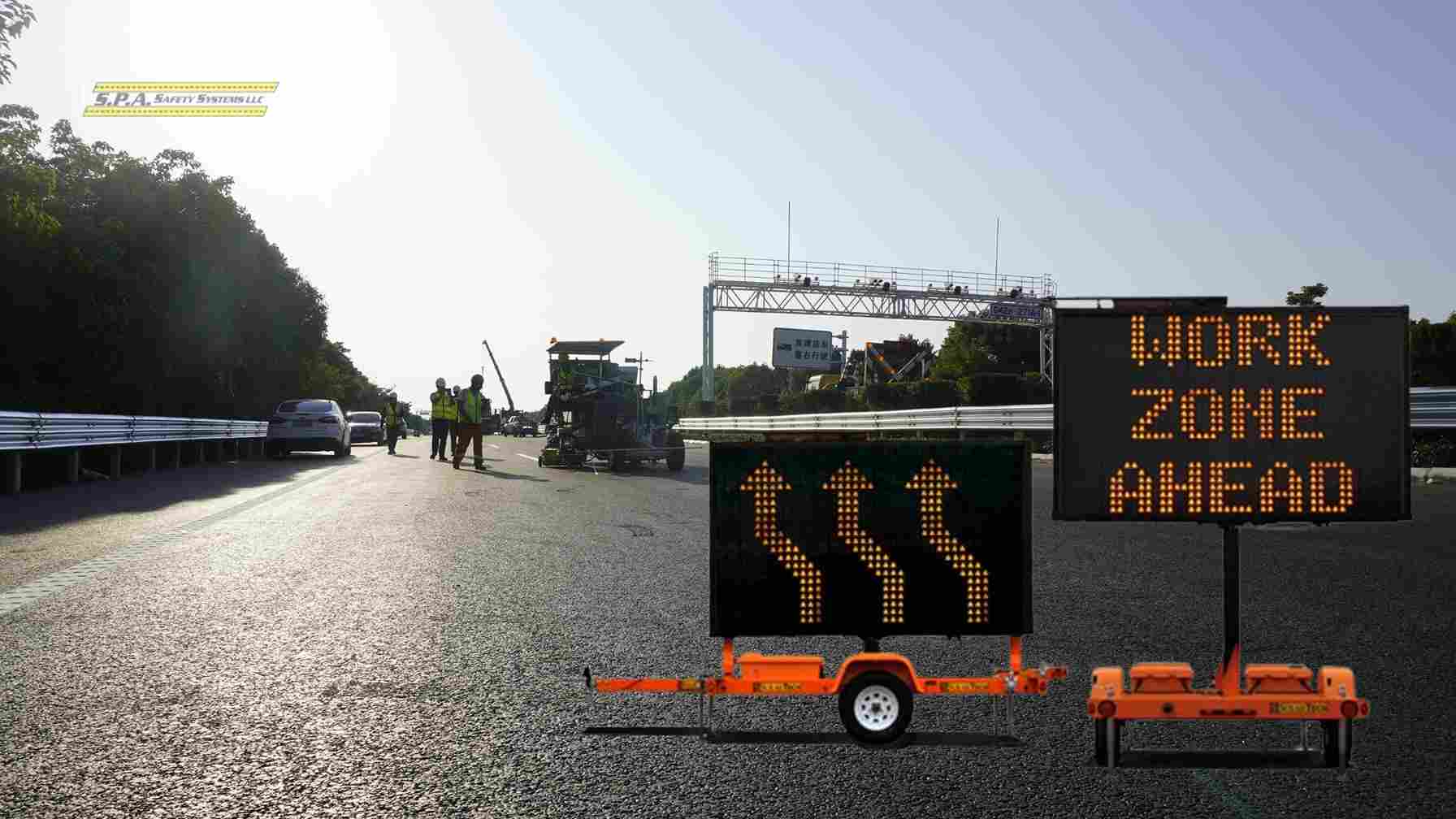
- Arrow Board/Lights: Check the function daily during your pre-trip. A single burnt-out bulb can confuse and lead to a crash.
Cone/Barrel Deployment Trucks
These are the workhorses. Their biggest failure points are hydraulic and mechanical.
- Hydraulics: Check fluid levels daily. Change hydraulic fluid and filters every 500 hours or annually. Contaminated fluid is the #1 killer of hydraulic pumps and motors.
- Conveyor Belts/Lifts: Inspect daily for tears, tracking issues, and tension. A failed belt during a cone-setting operation can bring the entire job to a halt.
Arrow Board & Message Board Trucks
These trucks are your primary means of communication. Their reliability hinges on the electrical system.
- Batteries & Charging System: Test batteries quarterly. Clean terminals and check connections. On solar-powered units, wipe down the solar panels weekly to ensure they’re charging efficiently.
- Controller & Display: Perform a full function test daily. Cycle through all patterns and messages to ensure the controller and pixels are working perfectly.
Scissor & Bucket Trucks
For these aerial lift trucks, maintenance is an OSHA-level concern.
- Hydraulic Rams & Hoses: Daily visual inspection for leaks is a must. Any hose that weeps or bulges needs immediate replacement.
- Pins, Bushings & Welds: These are part of your frequent and annual inspections per ANSI A92.2 standards. Look for signs of wear, stress, or cracking.
- Non-Destructive Testing (NDT): Depending on the manufacturer and hours, critical welds and load-bearing components require periodic NDT (like magnetic particle or ultrasonic testing) to find invisible stress fractures. This is a job for certified specialists.
Fleet Service Interval Cheat Sheet
|
Truck Type |
Daily Pre-Trip Inspection | 250-Hours / Quarterly | Annually | Biennially |
|
TMA Truck |
Check the attenuator, lights, and fluids | Engine oil & filters | Full chassis service, transmission fluid | Coolant flush, differential fluids |
|
Cone Truck |
Inspect conveyor, hydraulics | Hydraulic filter, grease chassis | Hydraulic fluid change |
Inspect hydraulic pumps/motors |
| Arrow Board Truck | Test all light patterns and batteries | Test batteries, clean solar panels | Deep cycle battery test |
Inspect wiring harnesses |
| Bucket/Scissor Truck | Inspect hydraulics, controls, and pins | Grease all points, hydraulic filter | Full ANSI inspection, fluid change |
Non-Destructive Testing (NDT) |
Telematics: Your Maintenance Alarm Clock
Trying to track all this on a whiteboard in the shop is a losing battle. This is where modern telematics becomes your best friend. It’s your eyes and ears on the entire fleet.
S.P.A. Safety Systems offers simple, plug-and-play Telematics trackers that monitor engine hours, location, and fault codes. You get an alert on your phone or computer when a truck hits its 250-hour service mark. No more guesswork. We also provide durable QR-code decals for each vehicle. A mechanic can scan it with their phone, pull up the complete service history, and log their work on the spot. It turns your entire fleet’s service record into a living document.
Cost of Skipping a Single Interval
Still thinking of stretching that oil change? Let’s look at the real math.
|
Scenario |
Cost Breakdown | Total Financial Impact |
|
Planned Maintenance |
Oil/Filter: $150<br>Labor: $100<br>Scheduled Downtime: 2 hours |
≈ $250 |
| Roadside Breakdown | Towing: $800+<br>Emergency Repair: $1,500+<br>Lost Crew OT: $5,000+<br>Late Penalties: $??,??? |
$7,300+ |
You can service your entire TMA fleet for a year for less than the cost of a single preventable after-hours breakdown. Proactive roadside equipment PM isn’t an expense; it’s the highest-ROI investment you can make.
Case Study: How Jersey Marking & Stripe Cut Downtime
A pavement marking contractor in Central Jersey was constantly battling its fleet. A failed arrow board on one job, a leaky hydraulic line on another. They were losing nearly two nights of work a month to unplanned repairs. After implementing S.P.A.’s hour-based interval plan and mobile service, they saw a dramatic change. Our mobile techs performed PMs during the day, so trucks were always ready for the night shift. The result? They reduced unplanned downtime by 38% and significantly increased billable hours.
10-Step Maintenance Plan Implementation Checklist
Ready to take control of your fleet? Here’s how to start.
- Install hour meters or telematics devices on all powered equipment.
- Establish a baseline for each truck’s current hours and condition.
- Use our interval table as a starting point for your new schedule.
- Assign responsibility: Who will track hours and schedule the work?
- Create a digital service log for every single asset.
- Stock common fleet parts (filters, belts, fluids).
- Train operators on how to perform thorough daily pre-trip inspections.
- Schedule a “fleet health” meeting monthly to review service records.
- Post the service interval chart in the shop and break room.
- Partner with a reliable service provider (like S.P.A.) for mobile PM and heavy repairs.
FAQs: Safety Truck Service Intervals
1. Will using a third-party service void my truck’s warranty?
No. As long as the service is performed by qualified technicians using OEM-spec parts and fluids, and the work is documented, your warranty remains intact.
2. What are the lead times for critical parts like attenuator cartridges?
This varies, which is why we maintain a deep inventory of common cartridges and parts at S.P.A. Our goal is to get you back on the road in hours, not weeks. Check out our Parts & Repairs page for more info.
3. How far does your mobile service travel?
Our fully equipped mobile service vans cover the entire tri-state area and beyond. We bring the shop to your yard or job site, saving you the time and expense of transporting equipment.
4. How should we keep records for an OSHA audit?
Digitally. A system like our QR-code logs provides a time-stamped, un-editable record of every inspection and repair, which is precisely what an auditor wants to see. Paper logs get lost or damaged.
5. Can you help us prepare for our next fleet safety inspection?
Absolutely. We can perform pre-inspection audits to identify and correct any potential violations, from worn tires to missing decals, ensuring you pass with flying colors.
Stop Gambling with Breakdowns
Your safety fleet is the most critical asset on any road construction project. Treating its maintenance as an afterthought is a gamble you can’t afford to lose.
Take control of your safety truck service intervals. Let the team at S.P.A. Safety Systems build a custom maintenance plan that guarantees uptime, protects your crew, and preserves your bottom line. Call us today at (973) 347-1101 or send a message through our Contact page. Let’s keep your fleet rolling.