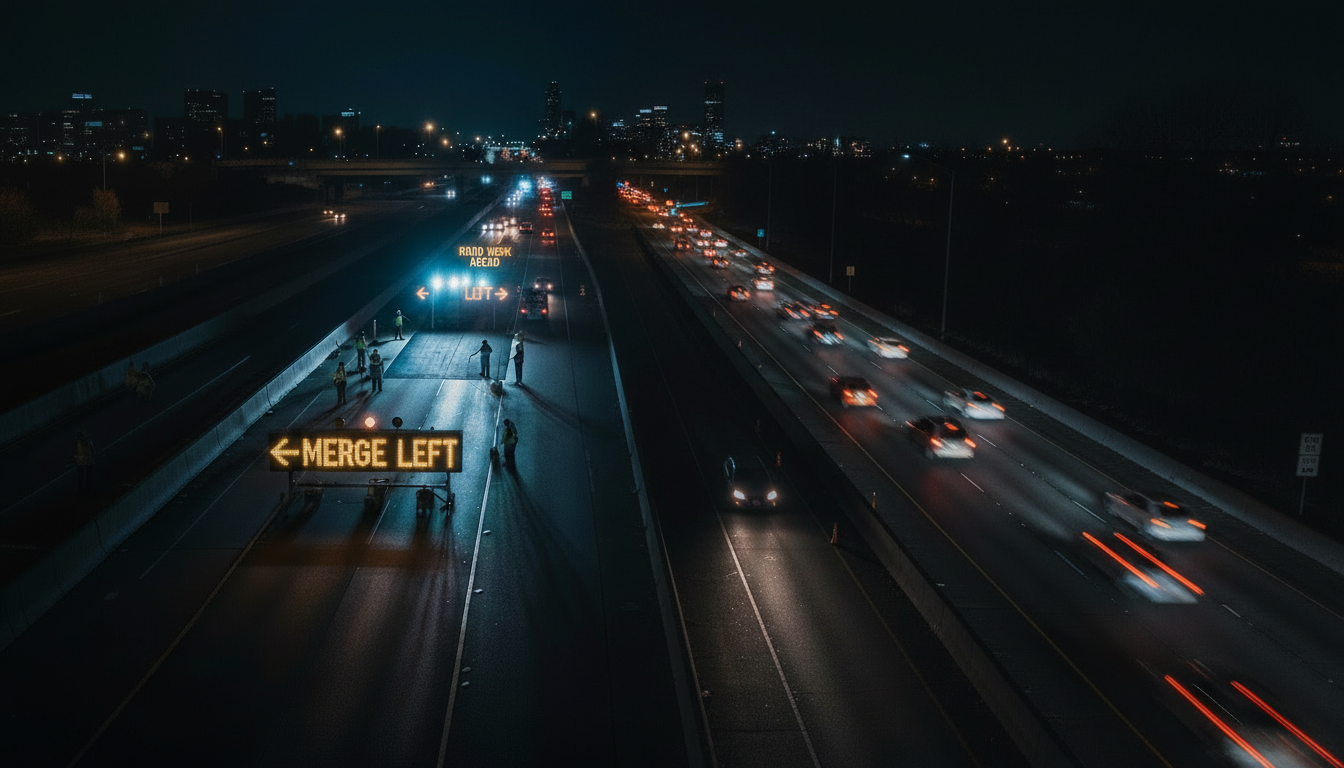
Driving through a work zone after dark without the LED arrow boards guiding you feels different from cruising the same road in broad daylight. When the city noise thins out and traffic lightens, the roadway can feel almost peaceful—like the danger has passed. But that calm is misleading. At night, visibility collapses, depth perception plays tricks, and your buffer for mistakes shrinks to almost nothing. One small slip—an unintentional lane drift, a moment of hesitation on the brakes—can turn an orderly construction area into a fast-moving emergency.
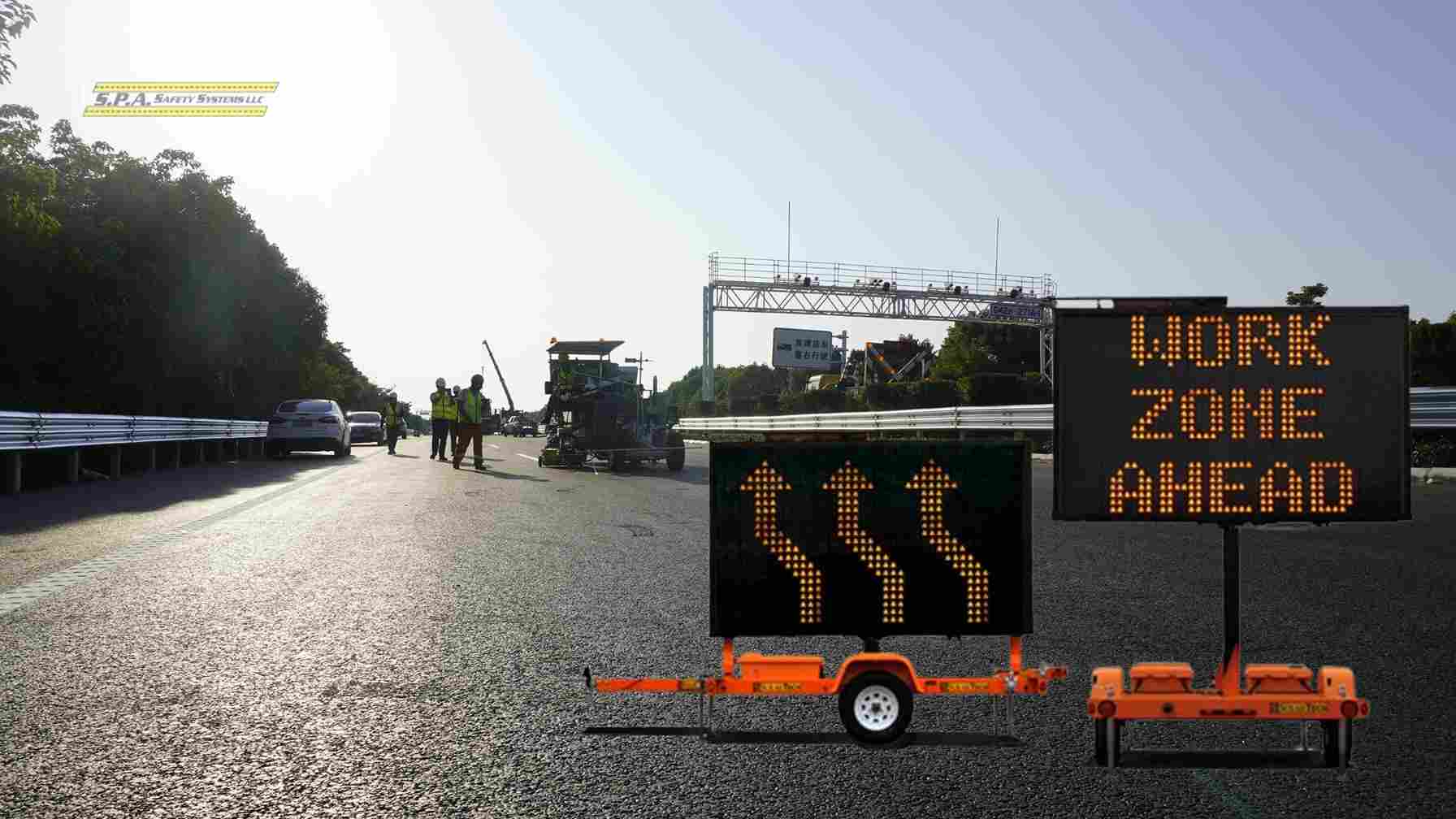
That’s why nighttime work-zone safety lives or dies on one thing: drivers getting clear warnings early enough to act. Contractors can’t lean on the old-school, passive setups that used to be considered “good enough.” The modern standard demands more, and for good reason. LED arrow boards and Portable Changeable Message Signs (PCMS) have become essentials, not extras, because they communicate in the language drivers respond to fastest in the dark—bright, high-contrast, active light.
It isn’t just preference; it’s biology. In low-light conditions, a driver’s eyes and brain lock onto movement and illumination far sooner than they register reflective cones or static metal signs. Flashing directional arrows and dynamic messages cut through the visual noise, trigger quicker recognition, and buy those critical extra seconds that prevent confusion, sudden swerves, and rear-end collisions. In a nighttime work zone, those seconds are the difference between a smooth merge and a chain reaction.
In this blog, we will discuss the benefits of illuminating night work zones with LED arrows and message boards.
The Four Horsemen of Night-Time Risk
The night doesn’t just darken the road; it fundamentally alters the physics and biology of driving. Let’s see why advanced signaling isn’t just a luxury but a necessity.
The Erosion of Visibility
The most immediate threat is the degradation of the driver’s perceptual bandwidth. Darkness operates like a filter, stripping away critical data points. Peripheral vision narrows significantly, color washes out into grayscale, and the depth perception usually provided by shadows and horizon lines vanishes.
Barriers that look solid and imposing at noon can dissolve into vague, gray shapes at midnight, blending dangerously with the pavement until a driver is nearly on top of them. The weather makes this infinitely worse. Rain on a dark highway turns the asphalt into a black mirror, scattering light and obliterating lane markers.
The Biological Battle Against Fatigue
Beyond the visual, there is the inescapable reality of human physiology. Fatigue is the silent, pervasive threat of the night shift. Our circadian rhythms are hardwired to demand rest between 11:00 p.m. and 5:00 a.m.—the exact window when overnight construction is most active.
Drivers navigating these zones aren’t just bored; they are fighting a physiological war against sleep. Many are battling heavy eyelids and experiencing “microsleeps,” causing reaction times to plummet. The data is precise: drowsy driving is a leading culprit in severe nocturnal crashes, meaning the person behind the wheel may not even be fully conscious until impact is imminent.
The Trap of the Open Road
Ironically, the lack of traffic creates its own hazard: speed. The empty road offers a seductive, false sense of security. Without the “visual friction” of bumper-to-bumper traffic to slow them down, motorists unconsciously creep above the speed limit.
This creates a deadly physics problem. A car moving at 80 mph needs a massive distance to stop, yet the driver’s visibility is limited to the short reach of their headlights. They are effectively overdriving their eyes—traveling faster than they can see. When a lane closure appears out of the gloom, the gap between their speed and their sight distance leaves zero room for error.
Sensory Overload in the Work Zone
Finally, we must consider the crew’s vulnerability. Inside the barrels, workers are facing a sensory storm. Precision work—whether it’s milling pavement or rigging steel—requires absolute tunnel vision.
However, the work zone itself is an auditory and visual chaotic mess, filled with the screaming of diesel engines, the beep of backup alarms, and the harsh glare of balloon lights. In this environment, a worker’s senses are overwhelmed. They are unlikely to hear or see a speeding vehicle breaching the safety taper until the moment it is too late to move.
The Technological Pivot: The Science of LED Arrow Boards
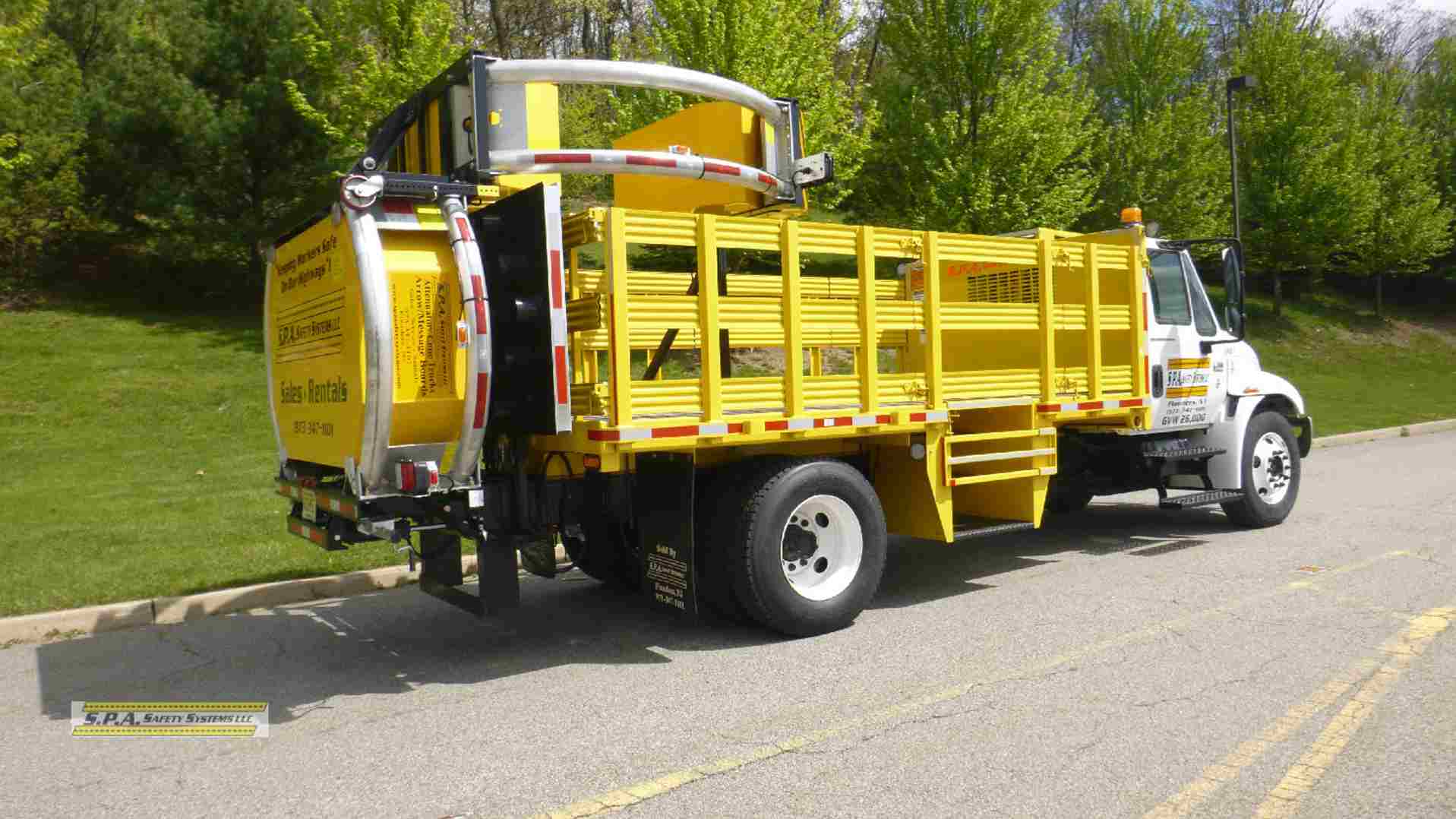
The transition to Light Emitting Diode (LED) technology has revolutionized this sector. Modern LED arrow boards are not just brighter; they are more innovative and more efficient.
Instantaneous Intensity
Unlike incandescent bulbs, which require a split second to warm up to full brightness, LEDs are instant-on. This crisp, immediate activation creates a sharper visual signal that cuts through the visual clutter of a roadway.
Energy Autonomy
The leap in energy efficiency is transformative. Modern LED boards slash power consumption by up to 80% compared to legacy equipment, enabling them to operate autonomously for weeks on solar panels and onboard batteries alone.
Optical Precision
Modern LEDs use advanced optics to create directional, high-contrast beams. They are designed to pierce through headlight glare, fog, and rain. The light is explicitly focused where it is needed—at the driver’s eye level—rather than spilling uselessly into the night sky.
Strategic Deployment: Best Practices for Safety
Owning the right equipment is only half the battle; deploying it correctly is what saves lives. Traffic control managers must adhere to a rigorous set of best practices.
1. The Night-Time Audit
Planning cannot happen solely on paper. Before a project begins, safety managers should conduct a nighttime drive-through audit at the posted speed limit. This reveals hazards that are invisible on a blueprint: a billboard that distracts from a warning sign, a curve that hides the taper, or vegetation that blocks a solar panel.
2. Pattern Selection
One size does not fit all. Sequential chevrons are the gold standard for lane closures. However, for shoulder work where the lane remains open, a “caution mode” (flashing corners) should be used. Using a directional arrow when no lane change is required is dangerous and can cause motorists to drive into the median.
3. Upstream Synchronization
The warning chain must start early. PCMS units should be placed 1 to 2 miles in advance of the work zone. If traffic backs up beyond the first sign, a second unit must be deployed further upstream. The goal is never to let a driver encounter the “back of the queue” without a warning.
4. Remote Fleet Management
Modern safety is digital. Managers should utilize remote diagnostic dashboards to monitor their fleet. These systems can alert the office if a battery is low, if pixels have failed, or if a unit has been knocked out of alignment by a collision.
FAQs: LED Arrow Boards
1. Can these units actually run indefinitely on solar power?
Modern LED arrow boards are designed for what we call “autonomy.” Because LEDs sip energy rather than gulping it like the old incandescent bulbs, the onboard battery banks are usually sufficient to run the unit for 20 to 30 days without a single ray of sunlight.
2. Why does the “angularity” of the LED arrow boards matter so much?
You might see “angularity” on a spec sheet—it’s just a fancy way of asking, “Can you see the arrow if you aren’t looking at it dead-on?” This is critical on curved roads or multi-lane highways. If an arrow board has poor angularity, the light fades out the moment a driver changes lanes or enters a curve.
3. Do I still need to send a crew member out to the site to change the display pattern?
In most cases, no. The industry has pivoted toward remote fleet management. Most modern boards come equipped with a modem and a GPS. This allows your traffic control manager to sit at a desk, log in to a dashboard, and instantly switch a board from a “Left Merge” arrow to “Caution Mode” (flashing corners).
The Road Ahead
The future of work zone safety is connected.
Now is the time to move toward “smart LED arrow boards” that not only flash but also broadcast digital alerts directly to the navigation screens of approaching vehicles (V2X communication). We are seeing radar-integrated boards that automatically adjust their messaging based on the speed of approaching traffic.
Ready to upgrade your work zone safety profile? Contact ABC Traffic Solutions at (800) 555-1234 or email sales@abctraffic.com for expert consultation, fleet rentals, and 24/7 technical support.