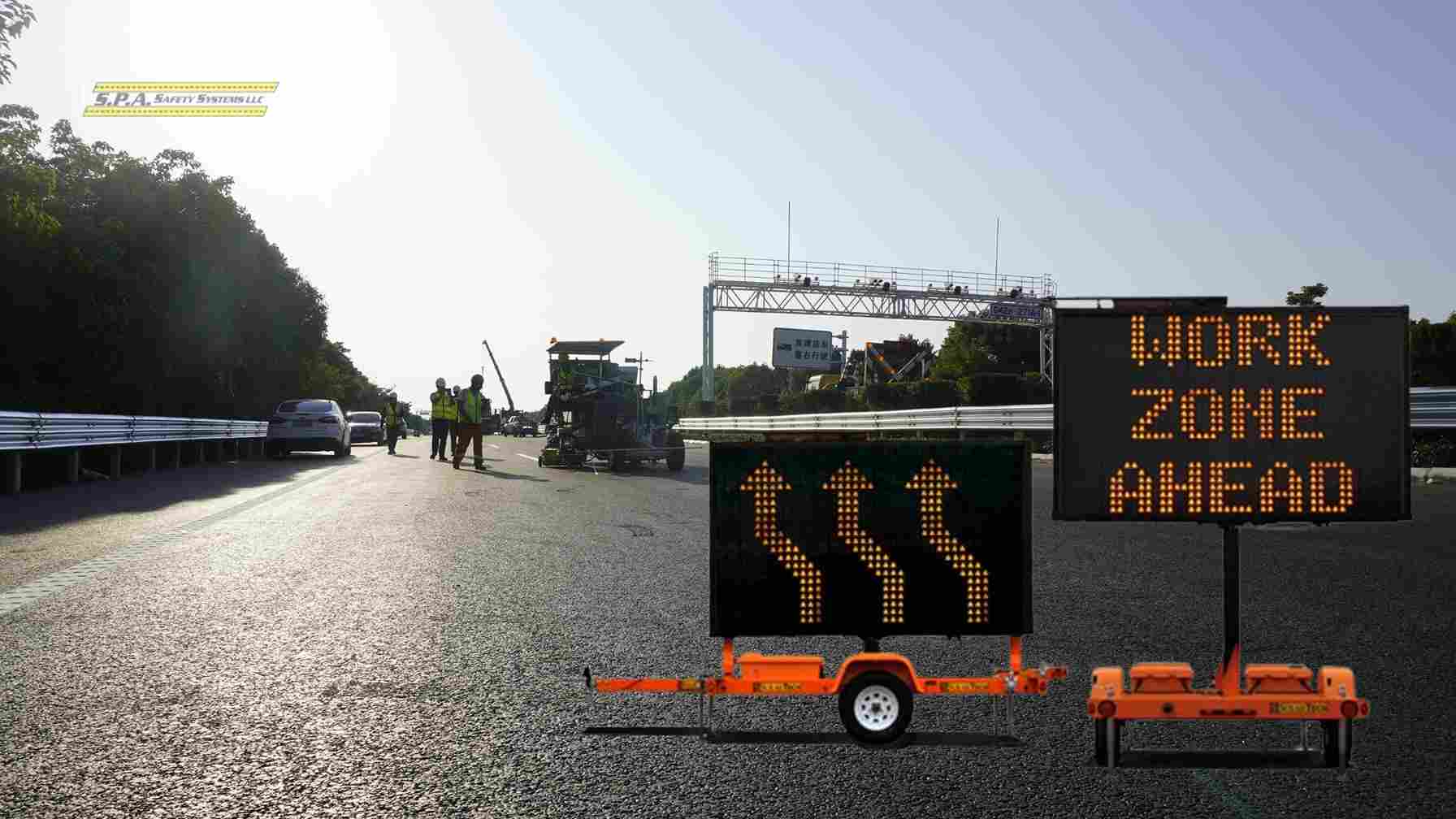
I remember standing on a Route 46 overpass in the chilly 3 a.m. air, the hiss of air brakes the only sound. My foreman and I were in a heated debate. We had a tight lane closure window, and the choice was simple but critical: drag the big trailer arrow board into a tight spot, or could we get away with a couple of compact stand boards and beat the sun? That decision—trailer vs stand boards—is one every crew faces. Get it right, and you’re efficient and safe. Get it wrong, and you’re burning payroll, missing deadlines, and creating unnecessary risk. This isn’t just about hardware; it’s about mastering your setup.
Why Board Selection Shapes Safety—and Payroll
In traffic control, time is everything. A recent Federal Highway Administration (FHWA) study suggests that for every minute a lane closure is delayed during setup, the cost in lost productivity and potential congestion penalties can be substantial. When your crew is wrestling with a heavy trailer on a narrow shoulder or trying to find a flat spot for a hitch, you’re not just wasting time—you’re spending money.
The right board for the job streamlines your setup, reduces your crew’s exposure to live traffic, and gets your work zone operational faster. The wrong board does the opposite, turning a simple task into a logistical headache. The central question of trailer vs stand boards is a financial and safety calculation before it’s an equipment one.
Trailer vs Stand Boards: The Feature Face-Off
Let’s break down the practical differences. I’ve set up hundreds of both, and each has its place. This isn’t about which is “better,” but which is smarter for your specific application.
| Feature | Trailer-Mounted Board | Stand-Mounted Board |
| Setup Time | 15–20 minutes (unhitching, leveling, locking) | 1–2 minutes (unfold, place, secure) |
| Footprint & Storage | Large; requires dedicated yard space | Compact; fits in a truck bed or job box |
| Power Source | Solar panels with a deep-cycle battery bank | Swappable 12V or 24V lithium batteries |
| Runtime | 20–30 days on a full charge (solar dependent) | 5–7 days per battery; requires swaps |
| Wind-Load Rating | High (rated for 80+ mph winds when deployed) | Moderate (rated for 40-50 mph; needs sandbags) |
| Towing Requirements | Requires a pickup truck with a pintle or ball hitch | None; easily carried by one or two people |
| Ideal Speed Zone | High-speed (55+ mph) interstates & highways | Low-speed (≤45 mph) urban, local, rural roads |
| Typical Rental Rate | ~$150–$250 / day | ~$75–$125 / day |
This message board comparison makes it clear: trailers are built for high-speed, long-duration projects where their visibility and stability are paramount. Stand boards offer unmatched speed and flexibility for short-term, low-speed, or space-constrained jobs.
Cost & ROI Snapshot: Ownership vs. Hassle-Free Rental
Buying a board seems like a good investment, but the total cost of ownership tells a different story. You have to factor in maintenance, battery replacements, storage, and insurance. For many contractors, renting is a smarter financial move.
3-Year Total Cost of Ownership (TCO) – Single Trailer Board
| Cost Category | Purchased Board | S.P.A. Rental Solution |
| Upfront Cost | $18,000 | $0 |
| Maintenance & Repairs | $2,500 | $0 (Included) |
| Storage & Insurance | $1,800 | $0 (Included) |
| Total 3-Year Cost | $22,300 | ~$15,000 (Based on 10 weeks/year rental) |
| Advantage | Asset on books | 28% Lower Cost & Zero Headaches |
When you rent from S.P.A. Safety Systems, you get a fully charged, perfectly maintained board delivered to your site. No storage costs, no dead batteries, no surprise repair bills. You just get the right portable traffic boards for the job, every time.
Safety & Compliance Factors You Can’t Ignore
The Manual on Uniform Traffic Control Devices (MUTCD) is our bible. Section 6F.61 outlines the specific requirements for arrow and message boards, including legibility distance and placement. Furthermore, OSHA’s Part 1926 construction standards require us to protect our workers from the motoring public.
Here’s the bottom line:
- High-Speed Roads (≥45 mph): The MUTCD generally requires a larger, trailer-mounted board for adequate visibility and to command driver respect.
- Low-Speed/Urban Roads (<45 mph): A properly placed stand board often meets or exceeds the legibility requirements and is far safer to deploy in tight quarters.
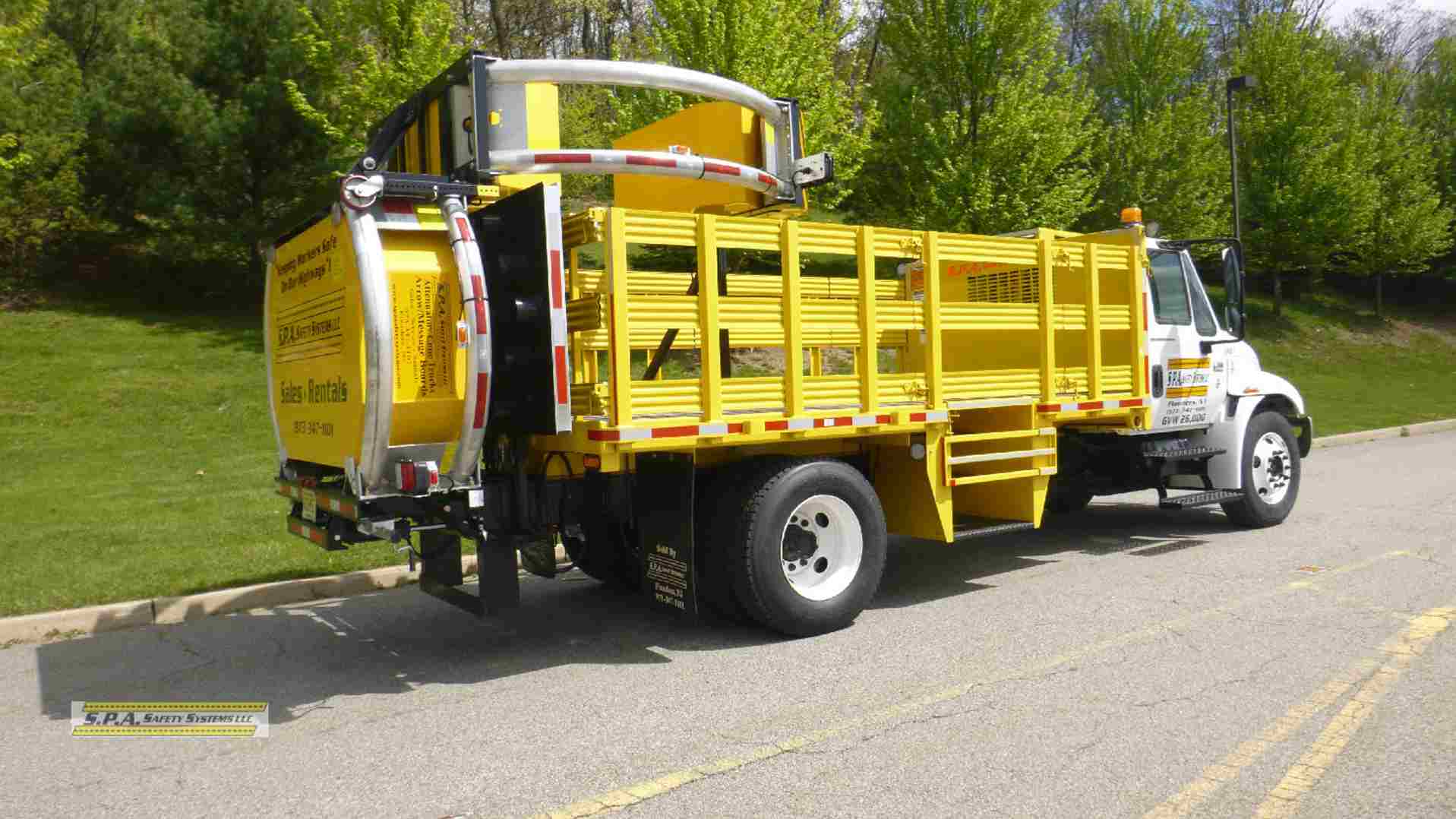
At S.P.A., our entire fleet of Message Boards and Arrow Boards is MUTCD-compliant and built to exceed federal standards. We use ultra-bright LEDs for maximum visibility day or night and ensure every unit is structurally sound and ready for deployment.
Case Study: Paterson Paving Cuts Setup Time by 40%
A paving crew out of Paterson, NJ, was struggling with nightly milling operations on tight city streets. They were losing nearly 30 minutes per closure, fighting to position their trailer arrow board around parked cars and tight corners. After a consultation, we switched them to our lightweight stand boards. The crew could carry the boards into position by hand in minutes. The result? They cut their average lane-closure setup time by 40%, adding nearly 2 hours of productive paving time to each week’s shift.
Decision Matrix: Which Board Fits Your Work Zone?
Still on the fence? Use this simple matrix. Find your job conditions and see which board is the smarter call.
| Factor | Trailer Board is the Best Choice | Stand Board is the Best Choice |
| Speed Limit > 50 mph | ✔️ | |
| Shoulder Width < 4 ft | ✔️ | |
| Crew Size < 3 people | ✔️ | |
| Project > 2 weeks | ✔️ |
The Verdict on Trailer vs Stand Boards
This grid simplifies the choice. For high-speed, long-term jobs with ample space, the trailer is your workhorse. For everything else—urban streets, short-duration work, small crews—the stand board delivers superior speed and flexibility.
FAQs: Trailer vs Stand Boards for Your Work Zone
1. How long do the stand board batteries really last on a night job?
Our message boards use high-capacity lithium batteries that reliably last 5-7 full shifts. With our rental program, we provide fully charged spares, so you can hot-swap a battery in under 60 seconds with zero downtime.
2. Do my drivers need a special license to tow a message board trailer?
No. Most message and arrow board trailers are under the weight threshold that would require a Commercial Driver’s License (CDL). Any company pickup truck with a standard hitch is sufficient.
3. How much lead time do you need for a rental?
We can often accommodate same-day requests, but we recommend calling us 24-48 hours in advance, especially for multiple units. This guarantees we have the exact boards you need ready for your job.
4. Is there any training required to operate these boards?
The basics are simple, but proper programming and placement are key. When we deliver a rental, our technicians provide a quick 10-minute on-site training session for your crew to ensure they are comfortable and compliant.
5. What happens if a board fails mid-shift?
Call us. That’s the beauty of renting from S.P.A. We have a 24/7 support line and can dispatch a replacement unit immediately. You’re never left stranded with a dead board in a live lane.
Make the Right Call, Right Now.
Choosing between trailer vs stand boards shouldn’t be a 3 a.m. debate on the side of the highway. It should be a strategic decision that saves you time and money and protects your crew.
Stop guessing and start planning. Let our team of work zone signage experts help you select the perfect board for your next project. We’ll handle the logistics, maintenance, and delivery, so you can focus on getting the job done.
Call S.P.A. Safety Systems today at (973) 347-1101 or visit our Contact page to get a quote. Let’s make your next setup your fastest one yet.