
THE HIDDEN COSTS OF IGNORING HI RAIL TRUCK MAINTENANCE
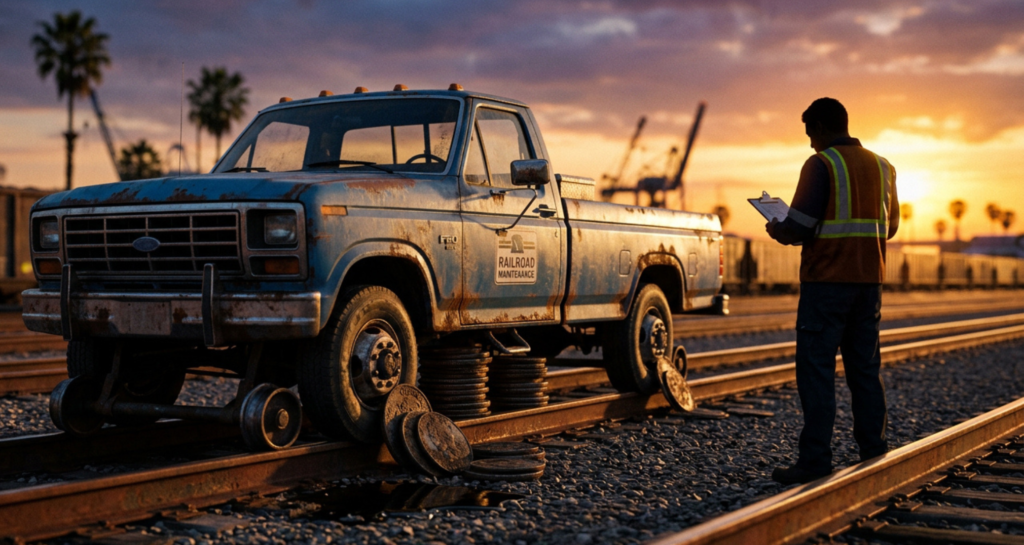
Running a business in 2026 is stressful enough without your equipment actively working against you. If you manage a fleet of utility vehicles, you already know the pressure of tight margins and impossible deadlines. You spend your days putting out fires, managing crews, and trying to keep your overhead manageable. But one area is where cutting corners will absolutely destroy your bottom line. I am talking about hi-rail truck maintenance. These dual-purpose vehicles are the backbone of railway infrastructure operations. They are incredibly complex machines that require meticulous care and attention. When you ignore their maintenance schedules, you are not saving money. You are simply borrowing time against a massive future catastrophe. Today we are going to break down the real financial impact of neglecting your fleet. We will look at the hidden costs that can bankrupt a contractor and ruin a reputation. UNDERSTANDING THE BEAST Before we dive into the costs, we need to understand what we are dealing with. Hi-rail trucks are not your average pickup trucks or standard commercial vehicles. They are highly specialized machines designed to operate on both standard roads and railway tracks. This dual functionality requires a complex system of hydraulics, specialized wheels, and alignment gear. The transition from road to rail puts immense stress on the vehicle chassis and suspension. Every single component must work in perfect harmony to keep the truck safely on the tracks. When one small part fails, the entire system is compromised. That is why specialized hi-rail truck maintenance is absolutely non-negotiable for fleet owners. THE REALITY OF RAILWAY PROJECTS Railway maintenance and infrastructure operations operate on incredibly strict schedules. Track time is limited, highly regulated, and extremely expensive to secure. When your crew gets the green light to access the rails, they need to move immediately. There is zero room for equipment failure when you are blocking an active train route. If your truck breaks down on the tracks, you are not just delaying your own project. You are delaying commercial freight and passenger trains, which comes with massive financial penalties. HIDDEN COST ONE: CATASTROPHIC GEAR FAILURE The most obvious risk of ignoring maintenance is failure of the hi-rail gear itself. The guide wheels take a massive beating from the steel tracks every single day. If you don’t grease the bearings and check the alignment, the wheels will wear unevenly. Hydraulic blowouts: Old hoses will burst under pressure, leaving your truck stranded. Alignment issues: Misaligned gear can cause the truck to derail literally. Structural fatigue: Micro cracks in the mounting brackets can lead to complete detachment. Brake failure: Rail operations require specialized braking systems that must be tested daily. Fixing a catastrophic failure in the field costs far more than routine shop maintenance. You have to pay for emergency towing, specialized recovery crews, and expedited parts shipping. HIDDEN COST TWO: MASSIVE PROJECT DELAYS Time is literally money in the infrastructure business. When your hi rail truck goes down, your entire crew is left standing around doing nothing. You are still paying their hourly wages, but zero work is getting done. If the breakdown causes you to miss your track time window, you might have to wait weeks to get back on the schedule. These delays destroy your project profitability. Clients do not care why you are late. They only care that the job is not finished. Consistent delays will ruin your reputation and cost you future contracts. HIDDEN COST THREE: SAFETY LIABILITIES This is the cost that should keep every fleet owner awake at night. Ignoring hi-rail truck maintenance puts your crew in direct physical danger. A derailment, even at low speeds, can cause severe injuries to the operators inside the cab. If a hydraulic line snaps, highly pressurized fluid can cause terrible burns or blindness. When an accident happens because of neglected maintenance, liability falls entirely on your company. OSHA investigations: You will face massive fines for operating unsafe equipment. Workers’ compensation: Your insurance premiums will skyrocket after an injury claim. Lawsuits: Injured workers or third parties can sue your company for negligence. Loss of license: Severe safety violations can result in losing your operating permits entirely. As a business owner, protecting your crew should always be your number one priority. HIDDEN COST FOUR: PREMATURE FLEET REPLACEMENT Hi-rail trucks are massive capital investments. A well-maintained truck can last for decades and generate incredible ROI for your business. But if you skip routine service, you can cut that vehicle’s lifespan in half. Operating with worn-out gear stresses the truck’s core components. The engine works harder, the transmission slips, and the frame bends. Eventually, the truck becomes too expensive to repair, and you are forced to buy a new one years before you planned. Replacing a truck prematurely completely wrecks your long-term financial forecasting. THE DAILY INSPECTION PROTOCOL The best way to avoid these hidden costs is to implement a strict daily inspection routine. Your operators must take ownership of their vehicles before they ever hit the road. A quick walkaround is not enough. They need a documented, step-by-step checklist. Visual inspection: Check all hydraulic lines for leaks, bulges, or excessive wear. Wheel check: Inspect the rail wheels for chips, cracks, and proper flange thickness. Pin verification: Ensure all safety pins and locking mechanisms are fully engaged. Function test: Cycle the hi rail gear up and down before leaving the yard. If an operator finds an issue, ground the truck immediately until it is fixed. Do not let anyone pressure you into sending a compromised truck out into the field. WHY DIY REPAIRS ARE A TERRIBLE IDEA I know the temptation to fix things in-house to save a few bucks. Unless you have a certified high-rail technician on your payroll, DIY repairs are a massive mistake. These systems require specialized diagnostic tools and exact torque specifications. A standard diesel mechanic does not have the training to calibrate rail alignment properly. If you botch a repair, you are taking on 100 percent of the liability if that truck fails
The Real Cost of Skipping Maintenance on Your TMA Truck
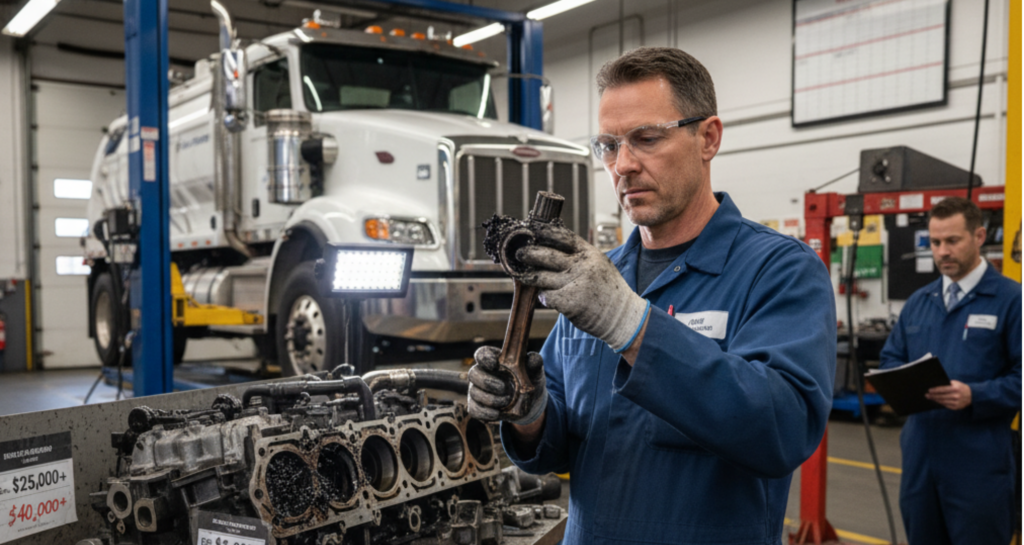
Running a TMA truck without keeping up on maintenance might seem like you’re saving money in the short term, but that’s not how it works out when the numbers come in. Every contractor who’s had an attenuator truck go down at the worst possible moment knows the feeling. The bid you thought would be profitable turns into a financial disaster when your equipment fails, and you’re scrambling to keep the job moving. Industry data show that unplanned downtime on commercial trucks costs anywhere from $448 to $760 per day when ripple effects are factored in. For specialized equipment like TMA trucks with Scorpion attenuators or other highway safety gear, those numbers can climb even higher because you can’t just grab a replacement off the rental lot. When your truck is the one providing impact protection on a DOT project, and it goes down, you’re looking at a situation where the entire job might stop until you solve the problem. What Actually Happens When Your TMA Truck Breaks Down Let’s walk through what a typical breakdown looks like when you’re in the middle of a highway safety project. Your crew shows up at 6 a.m. ready to set up a work zone. The truck won’t start, or the attenuator won’t deploy, or you’ve got a hydraulic failure that makes the equipment unsafe to operate. Right there, you’ve lost the day. Your crew is on the clock, but they’re not working. The general contractor is calling asking where you are. The DOT inspector might already be on site wondering why the required safety equipment isn’t in place. Now you’re calling around trying to find a rental TMA truck. If you can even locate one available on short notice, you’re paying premium rates because they know you’re desperate. You might be looking at $250 to $400 per day for a rental, and that’s if you’re lucky enough to find one. In many regions, specialized safety equipment rentals aren’t sitting around waiting for your emergency. You could be waiting two or three days before you get a replacement on site. Meanwhile, your own truck is sitting at a repair shop. If it’s a major component failure, you’re dealing with parts that might need to be ordered. Attenuator parts, hydraulic pumps for the deployment system, electrical components for the arrow boards or message signs—this stuff doesn’t always ship overnight. You could be looking at a week or more before the truck is back in service, and every single one of those days is costing you money. The Real Numbers Behind Downtime Let’s break down what one week of TMA truck downtime actually costs using real numbers from typical highway safety contractors. Lost job revenue comes first. If your TMA truck normally generates $3,000 to $5,000 per week in billable work, that’s $3,000 to $5,000 you’re not collecting. The job is either on hold or you’re scrambling to cover it some other way, but either way, that revenue is gone. Rental equipment costs add up fast. At $250 to $400 per day for a replacement TMA truck, seven days puts you at $1,750 to $2,800 just for the rental. And that’s assuming you found one immediately. If it takes you two days to locate a rental, you’ve lost two more days of job revenue on top of the rental cost once you finally get it. Crew costs keep running whether the truck works or not. If you’ve got three guys on your highway safety crew and they’re sitting around for two days waiting for a rental truck to show up, that’s 48 hours of wages you’re paying with zero productivity. At $25 to $35 per hour per worker, that’s another $3,600 to $5,040 down the drain. Overtime and expediting costs hit you when you’re trying to catch up. Once you finally get the truck situation sorted out, you’re behind schedule. You might need to pay your crew overtime to make up lost ground, pay expedited shipping on parts, and pay a premium to a repair shop to move your truck to the front of the line. All of that adds another $500 to $1,500 to the total. Maintenance Costs Are Rising, But Breakdown Costs Are Rising Faster The trucking industry has seen significant cost increases over the past few years, and maintenance is no exception. According to the American Transportation Research Institute, repair and maintenance costs jumped 8.6% in 2025, making it one of the fastest-growing line items in fleet operations. Parts costs are up more than 23% since 2020, and labor rates have climbed more than 33% over the same period.</span> For a TMA truck owner, that means the $1,000 repair you would have paid in 2020 is now closer to $1,250 or $1,300. That stings, and it’s easy to look at those rising costs and think about delaying maintenance to save money. But here’s the problem. While planned maintenance costs have risen by 25% to 30%, emergency repair costs and unplanned downtime have risen even more. Emergency repairs cost three to five times as much as the same repair would cost if you planned it. When you schedule a hydraulic system service during your slow season, you’re paying standard labor rates and regular parts pricing. When your hydraulic system fails on a Tuesday morning in the middle of a job, you’re paying for a tow truck, emergency labor rates, expedited parts shipping, and possibly even overnight freight charges if you need the truck back fast.</span> The math is ugly, but it’s simple. A planned hydraulic service might run $800. The same repair done as an emergency after a failure could hit $2,400 or more. Multiply that across multiple systems on your truck, and you can see how a fleet that skips maintenance ends up spending far more on repairs than a fleet that stays on top of scheduled service.</span> What the 53-Point Inspection Catches Before It Becomes a Breakdown At S.P.A. Safety Systems, every truck in the rental fleet goes through a 53-point
Summer Construction Season Kickoff: 5 TMA Truck Maintenance Checks That Prevent Mid-Project Breakdowns

Last June, a contractor in Pennsylvania learned an expensive lesson about preventive maintenance. His crew was three weeks into a major highway resurfacing project when their TMA truck’s hydraulic system failed during morning setup. The attenuator wouldn’t deploy. Work stopped immediately. The cost? Two days of downtime, a $15,000 emergency repair bill, penalty fees from the state DOT, and crew wages for workers sitting idle. The worst part? A $200 pre-season inspection would have caught the issue before it became a crisis. We see this scenario play out every summer. Construction season hits full throttle in June, and suddenly, equipment that’s been sitting through a mild winter or working sporadically in spring is expected to perform flawlessly for twelve-hour shifts in 90-degree heat. That’s when the cracks show up—literally and figuratively. Why Summer Is Make-or-Break Season for Highway Safety Equipment The summer construction window is sacred. In northern states, you’ve got maybe four to five months of optimal working weather. Contractors stack projects back-to-back, and state DOTs push to complete as much work as possible before the first frost. There’s zero tolerance for equipment failure because there’s zero room in the schedule to accommodate it. Your TMA truck isn’t just another piece of equipment during these months. It’s the piece of equipment that determines whether your crew can work at all. No functioning attenuator means no MUTCD compliance, which means no work zone, which means no project. Everything else on your site—the pavers, the rollers, the dump trucks—becomes irrelevant if your crash truck isn’t operational. The Five Critical Checks That Save Your Season 1. Attenuator Cartridge Inspection and Crush Element Assessment The attenuator is the heart of your TMA truck. It’s engineered to absorb impact and save lives, but that engineering only works if the system is maintained properly. Start with a visual inspection of the cartridge housing. Look for any signs of corrosion, particularly around welds and mounting points. Salt from winter roads is insidious—it weeps into seams and joints, weakening metal over time. A corroded mounting bracket might look fine until an actual impact tests it, and by then it’s too late. Run your hands along the surfaces. Feel for any soft spots, areas where the material gives more than it should. Look for any discoloration or rust bleeding through. If you’ve got any doubts at all about the integrity of a crush element, replace it. The cost of a new element is negligible compared to the cost of an attenuator that fails to perform during an actual crash. Check all hydraulic lines running to the attenuator. These lines handle significant pressure during system deployment and retraction. Winter cold makes rubber brittle. Summer heat makes it expand. The combination creates stress points. Look for any cracking, especially near fittings and clamps. A hydraulic line that bursts while you’re deploying the attenuator in live traffic creates exactly the kind of dangerous situation your equipment is supposed to prevent. 2. Electrical System Analysis—The Part Everyone Neglects Until It’s Too Late Electrical issues account for roughly 40% of the service calls we receive during the summer months. They’re also the most frustrating because they’re often intermittent. A connection works fine in the morning, fails during the afternoon heat, then mysteriously works again the next day. By the time you bring the truck in for diagnosis, the problem has disappeared. Start with the batteries. Heat kills batteries faster than cold does, despite what most people think. Cold weather gets the blame because that’s when batteries fail, but the damage happens during summer. Heat accelerates the chemical reactions inside the battery, causing the electrolyte to evaporate and internal components to corrode. Load-test your batteries. A voltage reading isn’t enough. You need to know how they perform under actual operating conditions. Most auto parts stores will do this for free if you pull the batteries out, but it’s worth investing in your own load tester if you run multiple trucks. Battery failure in the middle of a project isn’t just an inconvenience—it can mean your arrow board doesn’t light up, your attenuator won’t deploy. Your truck becomes a very expensive paperweight. Inspect every ground connection on the truck. Grounds are boring, so people ignore them, but they’re the source of more electrical gremlins than any other single factor. Road vibration loosens connections over time. Moisture causes corrosion. A ground that’s 95% connected might work fine for basic functions, but fail when you’re drawing higher current for specialized equipment. Remove each ground wire, clean the connection point down to bare metal, apply dielectric grease, and reattach it. Yes, this takes time and is tedious. But it will save you from pulling your hair out when you’re troubleshooting a mysterious electrical problem in three months. Check your wiring harnesses. Engine heat degrades wire insulation. Vibration causes wires to rub against metal brackets, slowly wearing through the protective covering. A wire that’s 90% intact will work until the day it doesn’t, usually at the worst possible moment. Look at your fuse panel and relay box. Are the fuses correctly rated? We’ve seen trucks where someone replaced a blown 15-amp fuse with a 30-amp because that’s what they had on hand. That’s not a repair—it’s an electrical fire waiting to happen. Fuses are safety devices. They’re designed to fail before something more expensive (or dangerous) does. 3. Hydraulic System Comprehensive Review The hydraulic system on a TMA truck does more than deploy the attenuator. It often powers stabilizers, operates dump beds, controls lifts, and handles various other functions depending on your truck’s configuration. It’s a complex system with multiple potential failure points. Start by checking your hydraulic fluid level and condition Low fluid means you’ve got a leak somewhere, even if you can’t see it. Hydraulic systems are closed systems—fluid doesn’t just disappear. Find the leak before it becomes catastrophic. Look at the fluid itself. Draw a sample and examine it in good light. Fresh hydraulic fluid is clear or slightly amber. Dark fluid indicates contamination. Milky
Guide to Preventive Maintenance for Trucks – S.P.A.

I’ll never forget the call. 2 a.m. A crew was setting a taper on I-287 when their cone truck’s lift gate hydraulics gave out, trapping a pallet of cones and freezing the entire operation. They lost their lane closure window, the job fell behind schedule, and the penalty clauses kicked in. All because of a $50 hose that was never inspected. That’s the brutal reality of a break-fix maintenance mindset. It’s always more expensive, more dangerous, and happens at the worst possible moment. A proactive plan for Preventive maintenance for trucks isn’t just about avoiding breakdowns; it’s about controlling your schedule, your budget, and your reputation. Why a Preventive Plan Beats Break-Fix Every Time Let’s talk numbers. The American Trucking Associations (ATA) estimates that the average roadside repair costs four times as much as a scheduled repair in the shop. That figure doesn’t even account for the lost revenue, project delays, or the safety risk posed by a disabled truck on a live highway shoulder. A break-fix approach puts you in a constant state of emergency. You’re paying premium rates for mobile mechanics, rush shipping on parts, and overtime for your crew while they wait. A well-designed fleet PM program flips the script. You dictate the downtime, control the costs, and catch small problems before they become catastrophic failures. It’s the difference between steering the ship and plugging holes in a sinking one. Core Intervals You Can’t Ignore Specialty work-zone trucks aren’t long-haul semis. Their engines idle for hours, their hydraulic systems work hard, and their safety components are under constant stress. Your truck maintenance schedule needs to reflect this unique duty cycle. Here are the non-negotiable intervals I’ve built my career on. Daily Walk-Around Checks This is the most critical 10 minutes of the day. Before that engine ever turns over, the operator needs to be the first line of defense. What to Check: Tires, lights, fluid levels (oil, coolant, hydraulic), horn, backup alarm, and a visual check of the truck’s specialty equipment (attenuator, boom, lift gate). Look for leaks, damage, or anything that looks out of place. Why it Matters: This simple habit catches 80% of the problems that lead to roadside breakdowns. A low tire, a frayed hydraulic line, a burnt-out warning light—these are the easy fixes that prevent major incidents. 250-Hour Fluid & Filter Changes For work-zone trucks, hours are a better measure than miles. Long idle times are tough on engines, shearing oil and loading up emissions systems. What to Do: Change the engine oil and filter, fuel filters, and hydraulic filters. Take oil samples and send them for analysis. This tells you the internal health of the engine and hydraulic system, flagging wear metals long before a failure. Why it Matters: Clean fluids are the lifeblood of your equipment. Dirty oil grinds away at engine components, and contaminated hydraulic fluid destroys expensive pumps and valves. This is the cheapest insurance you can buy for your powertrain. Quarterly Cartridge/Attenuator Absorber Swaps This is a critical part of preventative maintenance for trucks equipped with TMAs. The energy-absorbing cartridges in an attenuator have a shelf life and can degrade due to weather and road salts. What to Do: Inspect the entire attenuator for cracks, corrosion, and damage. For cartridge-style attenuators, follow the manufacturer’s replacement schedule, typically on a quarterly or semi-annually, depending on the environment. Why it Matters: A TMA with compromised absorbers won’t perform as designed in a crash. You’re not just ticking a box; you’re ensuring the device will actually save a life. Annual Hydraulic System Flush Your bucket trucks, scissor lifts, and cone trucks live and die by their hydraulic systems. Over time, the fluid breaks down and gets contaminated with water and microscopic debris. What to Do: Once a year, drain the entire hydraulic system—including the reservoir, lines, and cylinders—and replace the fluid with fresh, manufacturer-spec oil. Replace all filters at once. Why it Matters: A full flush removes contaminants that cause sluggish performance, seal failures, and catastrophic pump failures. It restores system performance and significantly extends its life. Biennial Boom & Scissor Pin NDT Inspection The pins and welds that hold a boom or scissor lift together are under immense stress. A failure here is unthinkable. What to Do: Every two years, have a certified technician perform a Non-Destructive Test (NDT) on all critical welds and structural pins. This typically involves magnetic particle or dye penetrant testing to find microscopic cracks invisible to the naked eye. Why it Matters: This is a core requirement for ANSI compliance and a fundamental safety practice. It’s the only way to verify the structural integrity of your aerial equipment. Building Your 12-Month PM Calendar A plan on paper is a plan in action. Use this template to map out your year. Customize it for each specific truck in your fleet. Month Tasks Est. Labor Hours S.P.A. Parts Kit Est. Downtime Jan Annual Service: Lube, Oil & Filters, Full Chassis Inspection 6 hrs PM-KIT-A 1 Day Feb Daily Walk-Arounds 15 min/day – 0 Mar 250-Hour Service: Engine & Hyd. Filters, Oil Samples 4 hrs PM-KIT-B 0.5 Day Apr Quarterly Attenuator Inspection & Cartridge Swap 3 hrs TMA-CART-Q1 0.5 Day May Daily Walk-Arounds 15 min/day – 0 Jun 250-Hour Service: Engine & Hyd. Filters, Oil Samples 4 hrs PM-KIT-B 0.5 Day Jul Semi-Annual Service: Full Brake & Tire Inspection 5 hrs – 1 Day Aug Daily Walk-Arounds 15 min/day – 0 Sep 250-Hour Service: Engine & Hyd. Filters, Oil Samples 4 hrs PM-KIT-B 0.5 Day Oct Quarterly Attenuator Inspection & Cartridge Swap 3 hrs TMA-CART-Q3 0.5 Day Nov Prep for Winter: Coolant System Check, Battery Test 4 hrs – 0.5 Day Dec Annual Hydraulic Flush / Biennial NDT Inspection 8-16 hrs HYD-FLUSH-KIT 2-3 Days Telematics & Alerts: Set-It-and-Never-Forget-It Tired of chasing down drivers for engine hours? Stop guessing. Modern telematics is the key to automating your PM schedule. At S.P.A. Safety Systems, we offer simple, plug-and-play [Telematics trackers] that install in minutes. These devices report engine hours,